
The Piccinni Theatre, inaugurated in 1854, is an active neoclassical gem with elegant interiors and exceptional acoustics. It offers a rich cultural programme and tours that reveal historic dressing rooms and backstage areas.
Events nearby

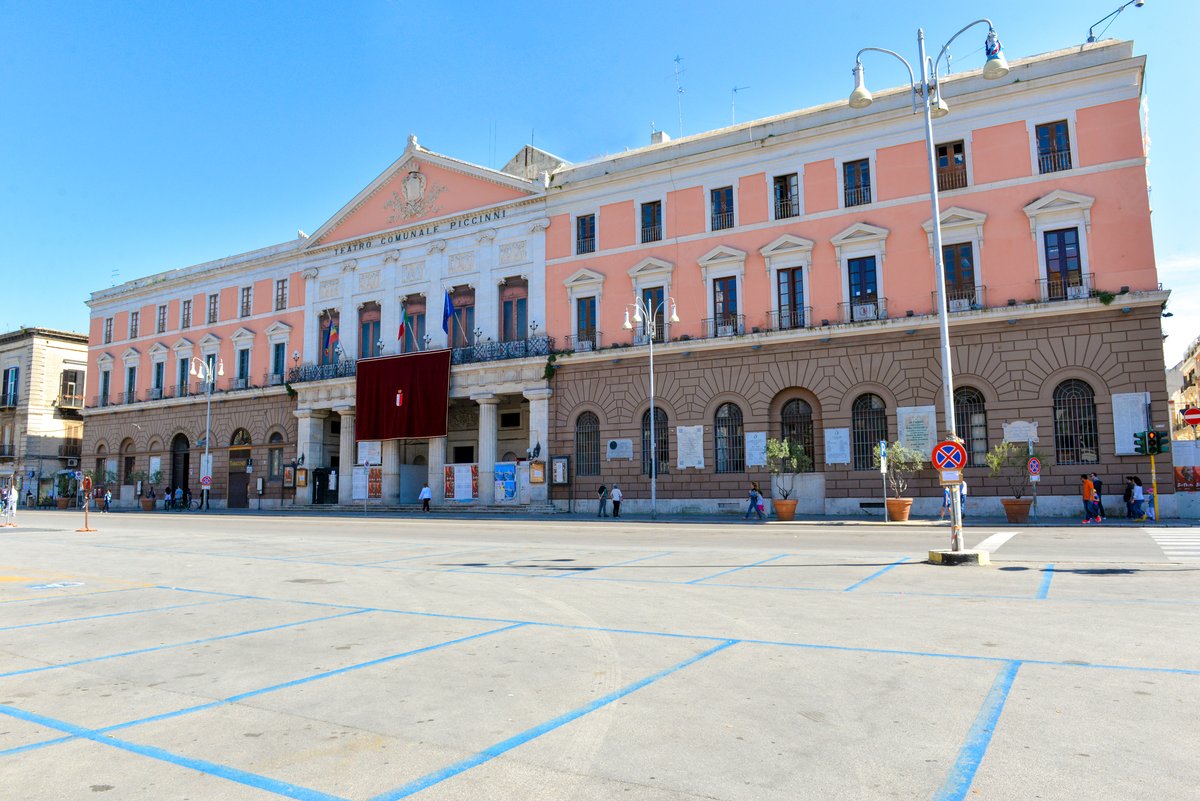
Neoclassical theatre from 1854 in the heart of Bari Vecchia, featuring a three-tiered box seating hall, seasons of drama, opera, and dance, and backstage guided tours.
- Corso Vittorio Emanuele Secondo, Bari (BA)
- Open in Google Maps
- View on Google Images Teatro Piccinni a Bari
Good to know
A Hidden Gem
Do you ever wander through Bari Vecchia and feel a bit disoriented among the narrow alleys? Then, suddenly, you emerge into Piazza Piccinni and Teatro Piccinni appears like a neoclassical epiphany. It’s not just a building; it’s a sight that stops you in your tracks. The understated façade, with those Ionic columns that seem to hold up centuries of history, contrasts dramatically with the surrounding popular architecture. The first time I saw it, I stood there with my mouth agape, thinking how easy it is to walk right past without noticing, if you don’t know where to look. Inside, it’s another story: the foyer welcomes you with discreet elegance, and you immediately sense that you’re here not just to watch a performance, but to breathe in a piece of Bari’s soul, its most cultured and refined side. It’s not your typical monumental theatre; it has an intimacy that makes you feel at home, even if you’re just passing through.
A Story in a Few Lines
The story of Piccinni is one that seems straight out of a novel. Founded in 1854, it takes its name from the Bari-born composer Niccolò Piccinni, an 18th-century celebrity. It wasn’t born as a theatre, but as the headquarters of the Società del Casino, a venue for the city’s bourgeoisie. Imagine: here, people discussed politics, organized parties, and only later was it decided to dedicate it to performances. It has experienced glorious periods, with important premieres, and dark moments, like its closure during the wars. In the 1990s, it was carefully restored, returning it to its former splendor. Today, it is a traditional theatre, but it hasn’t lost that versatile character of its origins. I like to think that, in a way, it continues to be a ‘casino’ in the best sense: a place where the community gathers.
- 1854: inauguration as the Casino’s headquarters
- Late 1800s: transformation into a permanent theatre
- 1990s: conservation restoration
- Today: seasons of drama, opera, and dance
Behind the Scenes
If you think a theater is just about the audience and the stage, Piccinni will change your mind. One of the most fascinating things I discovered almost by chance are the guided tours that take you to places normally off-limits. They’re not always available, but when they are, they’re worth booking. They let you step onto the stage, see the suspended grid, and enter the historic dressing rooms (small, with antique mirrors that seem to tell stories of actors). There’s a side rehearsal room with a grand piano that has surely witnessed countless notes. And then, backstage: a maze of corridors and staircases that feels like a film set. That’s where you understand the theater machine, made of details and hidden work. It’s not a static museum visit—you smell the wood and magnesium dust, and you feel like part of the company for an hour. For me, it was a chance to appreciate the neoclassical architecture not just as aesthetics, but as functional to the magic of the show.
Spine-Tingling Acoustics
Okay, the visual aspect is breathtaking, but it’s when the lights go down that the Piccinni reveals its true trump card: the acoustics are simply perfect. I’m no expert, but I attended a chamber music concert and I can assure you that every note resonates clearly, without strange echoes or dead spots. The horseshoe-shaped hall, with its three tiers of boxes and gallery, seems designed to envelop the audience. Sitting in the stalls, I felt the cello as if it were right beside me, and the actors’ whispers during a performance came through clearly even to the back row. They say this acoustic quality is the result of careful restoration that preserved the original materials. It’s a total sensory experience: you don’t just see the show, you literally feel it on your skin. If you’re a music or theatre enthusiast, it’s a detail that makes all the difference, and one you’ll find in few other places here in Bari.
Why It’s Worth the Ticket
So, why should you include Piccinni in your Bari itinerary? First, it’s a plunge into timeless elegance, a beautiful contrast to the creative chaos of the nearby alleys. Second, it offers a varied program: not just big names, but also local productions and young companies, making it vibrant and accessible. Third, the guided tours are a rare opportunity to see a theater ‘behind the scenes’, and I assure you it changes your perspective. And then, there’s a practical reason: it’s in the heart of Bari Vecchia, so you can easily pair it with a lunch of orecchiette or a stroll along the city walls. It’s not a mandatory stop to rush through in half an hour, but a place to allow yourself a moment of beauty, perhaps before diving into the sea of folk traditions surrounding the theater.
The Right Moment
When to go? Good question. I’d advise against the midday hours on a sweltering summer day: Bari Vecchia can feel like an oven, and the theater, if there’s no performance, might seem a bit lifeless. My heartfelt advice is late afternoon in autumn or early spring. The slanting light of October or April caresses the stone facade, creating shadow plays that highlight the columns. The air is cool, tourists are fewer, and you can enjoy the square at your leisure. If you can, pair your visit with an evening show: stepping out of the theater as the lights of the old town come on is an unforgettable experience. In winter, it’s magical for a concert or a theatrical piece: the warmth of the hall contrasts with the cold outside, and you feel embraced by the atmosphere. In short, avoid the summer heat and aim for the shoulder seasons or winter evenings.
After the Theater
After leaving Piccinni, don’t rush away. Bari Vecchia is a treasure to explore step by step. Just a two-minute walk away, you’ll find the Cathedral of San Sabino, with its fascinating crypt and rose window that lights up in the evening. It’s a leap from neoclassical to Apulian Romanesque, and the contrast is stimulating. If you’re in the mood for something more ‘down-to-earth’, head to the street of orecchiette (via Arco Basso), where women work fresh pasta outdoors, as per tradition. It’s a parallel spectacle to the theatrical one, made of ancient gestures and scents that bring you back to reality. Or, to continue on the cultural theme, take a quick trip to the Swabian Castle, also just a few steps away: it’s not just a fortress, but often hosts interesting temporary exhibitions. The ideal is not to plan too much, but to let yourself be guided by curiosity: the beauty of this area is that every alley holds a surprise.
Itineraries nearby


💡 Did You Know…?
The theater owes its name to Niccolò Piccinni, an 18th-century Bari-born composer famous throughout Europe. During the bombings of World War II, the roof was severely damaged, but the structure held. A local legend says that the ghost of an old caretaker still wanders among the boxes on full moon nights. Today, during guided tours, you can access the 19th-century foyer, with its original mirrors and chandeliers, and discover the historic mechanism of the stage curtain.