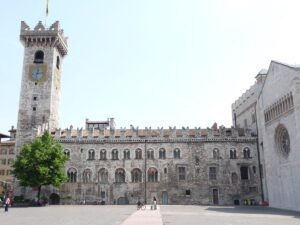
Castel Trauttmansdorff in Merano combines world-class botanical gardens with Italy’s unique tourism museum. Perched on a scenic hill, the site includes 12 hectares of gardens organized into 4 macro-areas that recreate environments from around the planet, from the World Woods to Water Landscapes. Inside the castle, the Touriseum tells 200 years of travel in South Tyrol through 20 interactive rooms. The location is convenient, just minutes from Merano’s center, with breathtaking views of the city and mountains.
- 12 hectares of botanical gardens with 4 global thematic areas: World Woods, South Tyrol Landscapes, Sun Gardens, and Water Landscapes
- Touriseum: Italy’s only Alpine tourism museum with 20 rooms telling 200 years of history
- Breathtaking panoramas of Merano and surrounding mountains from the scenic hill
- Historical connection with Empress Sissi, who stayed here in 1870 and 1889
An Enchanted Oasis Above Merano
Castel Trauttmansdorff is not just a castle: it’s an experience that envelops you as soon as you pass through the entrance. Perched on a panoramic hill above Merano, it offers breathtaking views of the city and surrounding mountains, but the real treasure lies in its 12 hectares of botanical gardens, a true journey through the world’s climates. Strolling among flower-filled terraces, shaded paths, and themed environments, you’ll feel as though you’re exploring different continents in just a few hours. The atmosphere is magical, with streams flowing among exotic plants and quiet corners where you can pause to breathe in intense fragrances. It’s the perfect place for those seeking a unique blend of history, nature, and beauty, away from the hustle and bustle, yet just steps from Merano’s center. Here, you don’t just visit a monument; you live a sensory experience that leaves a lasting impression.
Historical Background
The castle’s origins date back to the 14th century, but its fame is primarily linked to Empress
Sissi (Elisabeth of Austria), who stayed here in 1870 and 1889, drawn by Merano’s mild climate. She oversaw the manor’s renovation in the neo-Gothic style, transforming it into an elegant residence. After periods of abandonment, the castle was fully restored and reopened to the public in 2001, becoming home to the
Gardens of Castel Trauttmansdorff and the
Touriseum, the provincial tourism museum. Today, it is one of South Tyrol’s most visited sites, a symbol of how history and nature can blend harmoniously.
- 14th century: earliest records of the castle
- 1870 and 1889: Empress Sissi’s stays
- 2001: reopening with gardens and Touriseum
The Botanical Gardens: A World in Miniature
The Gardens of Trauttmansdorff Castle are organized into four main thematic areas that recreate natural environments from around the planet. In the World Forests Zone, you’ll find sequoias, bamboo, and Japanese maples, while the South Tyrolean Landscapes Zone immerses you in local flora with apple orchards and terraced vineyards. The Sun Gardens Zone is a burst of color with Mediterranean plants, olive trees, and citrus fruits, and the Water and Terraced Landscapes Zone offers ponds, small waterfalls, and a charming aviary with peacocks. Don’t miss the Garden of the Senses, where you can touch and smell aromatic plants, and the Labyrinth, fun for both adults and children. Every corner is meticulously detailed, with informative panels explaining the species present, making the visit educational as well.
The Touriseum: The Birth of Tourism
Inside the castle, the Touriseum is a unique museum in Italy, dedicated to the history of Alpine tourism. Through 20 exhibition rooms, it tells the story of 200 years of travel in South Tyrol, from the first 19th-century aristocrats to today’s mass tourism. The installations are interactive and engaging: you’ll see reconstructions of old inns, vintage carriages, historical mountaineering equipment, and even a 1950s hotel room. It’s fascinating to discover how Merano became a renowned spa destination and how the region transformed. The museum is not boring: it uses videos, sounds, and objects to bring the past to life, and it’s also suitable for children, with playful routes. It perfectly complements the visit to the gardens, adding an unforgettable cultural piece.
Why Visit
First, for the incredible variety of plants and landscapes concentrated in one place: in half a day, you go from a conifer forest to a Japanese garden without needing to move. Second, for the Touriseum, which isn’t the usual dusty museum but a fun and educational journey through time, perfect if it’s raining or you want a break in the shade. Third, for the panoramic location: from here, you see Merano as if from a postcard, with mountains as a backdrop, ideal for memorable photos. Plus, it’s well-organized, with services like a café and shop, and trails accessible to everyone. It’s a place that satisfies both nature lovers and those seeking culture, without requiring excessive effort.
When to Go
The most enchanting time is late spring, when the gardens burst into a myriad of colors with tulips, rhododendrons, and roses in bloom, and the air is fresh and fragrant. Autumn also offers magical atmospheres, with leaves turning red and gold, and days still mild. To avoid crowds, steer clear of summer weekends in July and August during peak hours; it’s better to arrive early in the morning or in the late afternoon, when the light is warmer and visitors thin out. In winter, the castle and Touriseum are open, but the gardens have a more subdued charm, with some areas closed. Always check the website for special events, such as illuminated evenings or themed guided tours.
In the Surroundings
After your visit, head down to Merano for a stroll through the historic center: walk along the Passirio River, cross its characteristic bridges, and admire the medieval arcades. Don’t miss the Merano Thermal Baths, a modern complex with pools and a spa, perfect for relaxing after a day of walking. If you enjoy wine, stop by one of the wineries along the South Tyrolean Wine Road in the area to sample Gewürztraminer or Lagrein. For a nature experience, the Sissi Path connects the castle to the city center via a scenic pedestrian route, following in the footsteps of the empress. These spots enrich your outing, adding relaxation, flavor, and a bit of local history.