
🧭 What to Expect
- Ideal for enthusiasts of ancient history, archaeology, and breathtaking landscapes between sea and mountains.
- Combines Norman and Aragonese castles perched on hills with Magna Graecia sites like Sybaris and Laos.
- Includes unique museums: from the UNESCO-listed Codex Purpureus to the Licorice Museum in Rossano.
- Offers an interactive map with all locations for trip planning.
The Province of Cosenza is a land rich in history and nature, where Norman castles dominate breathtaking landscapes and the archaeological area of Sibari tells the story of ancient Magna Graecia. Don't miss the Norman-Swabian Castle of Morano Calabro, perched on a rocky spur, and the Laos Archaeological Park in Santa Maria del Cedro, which preserves traces of the ancient Lucanian city. In Cosenza, the Swabian Castle and the Bilotti Open-Air Museum offer a blend of art and history, while in Cassano all'Ionio the National Archaeological Museum of Sibaritide displays unique artifacts. Villages like Rossano, with the Diocesan Museum and Codex, and Scalea, with the Torre Talao overlooking the Tyrrhenian Sea, complete an itinerary between culture and pristine landscapes.
Overview
- Norman-Swabian Castle of Morano Calabro
- Sybaris
- Laos Archaeological Park
- National Archaeological Museum of Sibaritide
- Diocesan Museum and the Codex
- Swabian Castle of Cosenza
- Bilotti Open-Air Museum
- Torre Talao
- Amantea Castle
- Aragonese Castle
- Demological Museum of San Giovanni in Fiore
- Rossano Licorice Museum
- Aragonese Castle of Belvedere Marittimo
- Paola Castle
- Timpone della Motta
Itineraries nearby


Norman-Swabian Castle of Morano Calabro
- Go to the page: Norman-Swabian Castle of Morano: Medieval Fortress with Pollino Views and Layered Architecture
- Via Ferrante, Morano Calabro (CS)
- https://www.isentieridelpollino.it/castelli-rupestri-parco-pollino/castello-normanno-svevo-Morano-Calabro-Pollino.html
- Open in Google Maps
- View on Google Images
- iatmorano@libero.it
- +39 0981 31203
 Reaching the Norman-Swabian Castle of Morano Calabro is like taking a leap back in time. This imposing fortress dominates the medieval village from above, included in the list of Italy's Most Beautiful Villages, offering a breathtaking view over the Coscile river valley and the peaks of Pollino. Originally built during the Norman period in the 11th century and later expanded by the Swabians, the castle still preserves its most significant architectural features intact. The cylindrical towers and perimeter walls tell centuries of history, from Norman and Swabian dominations to subsequent transformations. Today, although partly in ruins, the castle maintains a particular charm, especially at sunset when the stones take on warm colors. Its strategic location explains why it was chosen as a control point for the territory: from here, the communication routes between the Tyrrhenian coast and the Ionian Sea are dominated. Visiting the castle also means immersing yourself in the unique atmosphere of Morano Calabro, with its narrow, winding alleys climbing up the hill. The path to reach the fortress is an experience in itself, through paved streets that seem to come straight out of a medieval painting. Inside, you can still recognize the main areas, such as the reception halls and service rooms, although unfortunately the interior spaces are not visitable. However, the external perimeter and the panoramic view alone are absolutely worth the climb. For photography enthusiasts, this is one of Calabria's most evocative spots for capturing unforgettable images, especially in the early morning hours when the light is softer.
Sybaris
- Go to the page: Sybaris: Ruins of Magna Graecia with Ancient Thermal Baths and Hydraulic Systems
- Strada Statale 106 Jonica, Cassano all'Ionio (CS)
- http://www.archeocalabria.beniculturali.it/archeovirtualtour/calabriaweb/sibari1.htm
- Open in Google Maps
- View on Google Images
 Visiting Sybaris means immersing yourself in one of the most fascinating testimonies of Magna Graecia in Calabria. Founded in 720 BC, this ancient city became famous for its wealth and luxurious lifestyle, so much so that the term 'sybarite' still today signifies refinement. The Sybaris Archaeological Park extends over a vast, flat area where you can admire the remains of dwellings, roads, and temples that characterized the settlement. A distinctive feature is the advanced water system, with cisterns and channels that testify to the ingenuity of the ancient inhabitants. The site is closely linked to the National Archaeological Museum of the Sibaritide, located nearby, which houses unique artifacts such as pottery, coins, and sculptures unearthed during excavations. Sybaris was destroyed in 510 BC by its rival Croton, but its cultural legacy is palpable in the area. Today, the park offers well-marked paths and explanatory panels that guide visitors through the history of this legendary city. The location, near the mouth of the Crati River, adds a touch of scenic charm, with views of the surrounding hills. For those who love ancient history, Sybaris is an unmissable stop, combining archaeology and storytelling in an authentic and well-preserved context.
Laos Archaeological Park
- Go to the page: Laos Archaeological Park: Ancient Magna Graecia City with Panoramic Tyrrhenian Sea Views
- Sp. 9, Santa Maria del Cedro (CS)
- Open in Google Maps
- View on Google Images
 The Laos Archaeological Park in Santa Maria del Cedro is a window into the history of Magna Graecia in Calabria. This site, situated on a hill overlooking the Tyrrhenian coast, preserves the remains of the ancient city of Laos, founded in the 6th century BC by settlers from Sybaris. Walking among the ruins, you can clearly recognize the orthogonal urban layout typical of Greek cities, with streets intersecting at right angles forming regular blocks. The most significant structures include the remains of the defensive walls, private houses with well-defined rooms, and a sacred area. Particularly interesting is the water drainage system, which demonstrates the advanced hydraulic engineering of the era. The artifacts uncovered during excavations - pottery, coins, and everyday objects - tell the story of a community that thrived thanks to maritime trade and agriculture, until its decline during the Roman period. The park's location also offers splendid panoramic views of the Tyrrhenian Sea and the plain of Santa Maria del Cedro, famous for its production of citron, a crop with ancient roots in this area.
National Archaeological Museum of Sibaritide
- NSA331, Cassano all'Ionio (CS)
- http://www.parcosibari.it/
- Open in Google Maps
- View on Google Images
- pa-sibari@cultura.gov.it
- +39 0981 79392
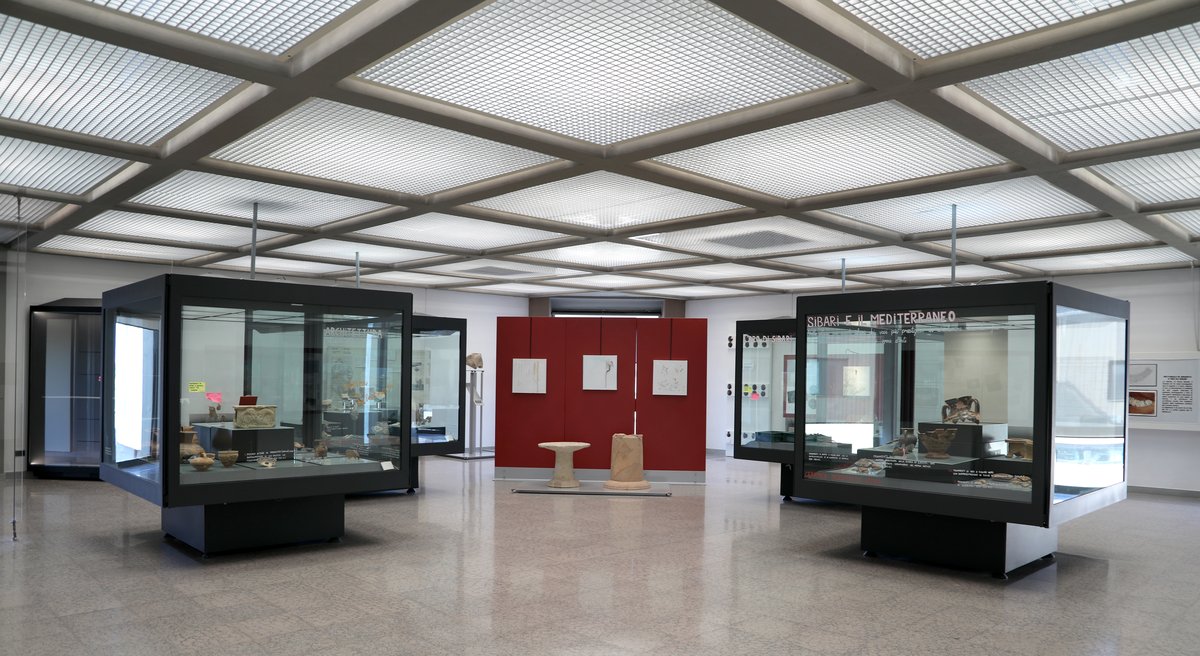 If you love ancient history, the National Archaeological Museum of Sibaritide is an essential stop in the province of Cosenza. Located in Cassano all'Ionio, this museum takes you straight to the heart of Magna Graecia, telling the stories of Sybaris, the city famous for its unrestrained luxury, and the subsequent Thurii, founded by Pericles. The exhibition route unfolds over two floors, with artifacts ranging from the Bronze Age to the Roman era. Among the most significant pieces stand out the archaic marble statues, the funerary assemblages from local necropolises, and the architectural fragments from temples. Don't miss the section dedicated to underwater discoveries, with amphorae and anchors that testify to the intense commercial activity of these ancient colonies. The museum is modern and well-organized, with clear explanatory panels that make the visit accessible even to non-experts. To complete the experience, you can combine your visit with the nearby Archaeological Park of Sybaris, where you can admire the remains of the ancient cities in their original context. A practical tip: check the opening hours on the official website, as they may vary depending on the season. If you're traveling with children, note that the museum occasionally organizes educational workshops, ideal for introducing the little ones to archaeology.
Diocesan Museum and the Codex
- Via Arcivescovado 5, Rossano (CS)
- https://www.museocodexrossano.it/
- Open in Google Maps
- View on Google Images
- info@museocodexrossano.it
- +39 0983 525263
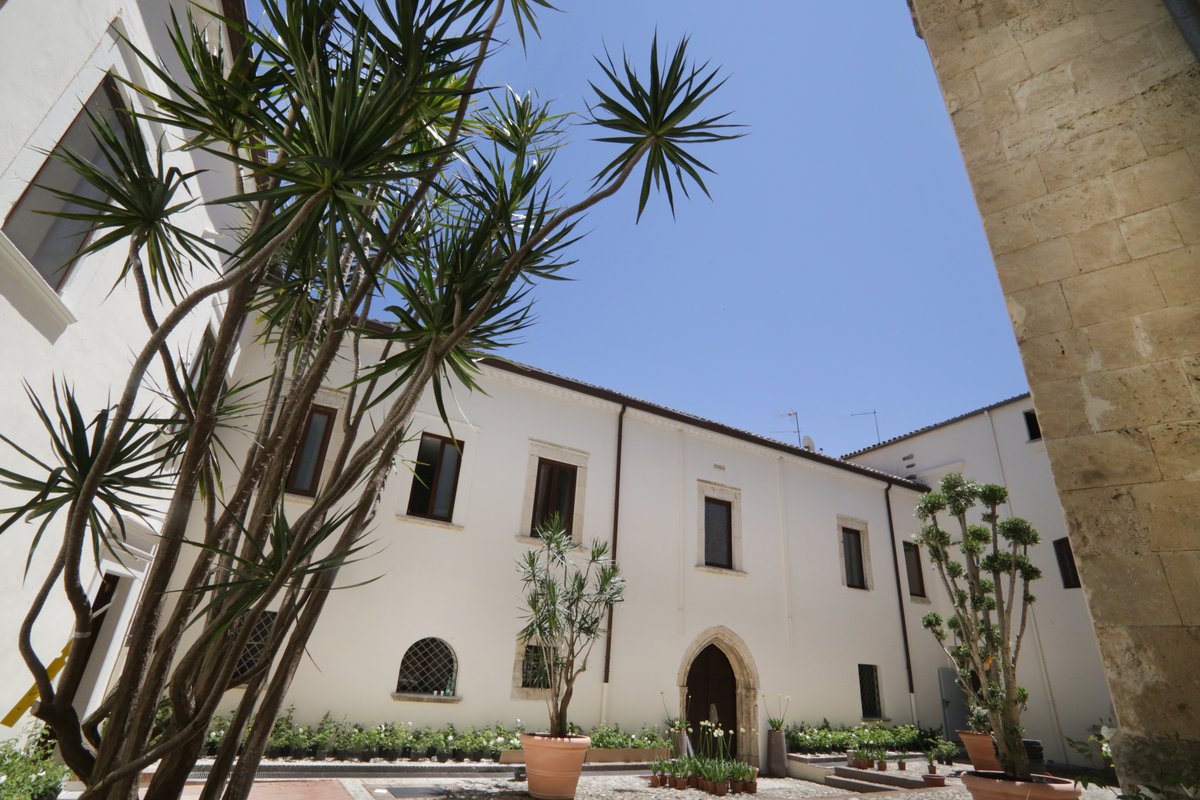 The Diocesan Museum and the Codex in Rossano is a cultural gem that houses one of the world's most precious manuscripts: the Codex Purpureus Rossanensis. This 6th-century Greek Gospel book, recognized by UNESCO as a World Heritage Site, stands out for its purple-dyed parchment pages and gold and silver miniatures depicting episodes from the life of Christ. A visit to the museum immerses you in the Byzantine history of Calabria, with a collection that also includes sacred icons, liturgical vestments, and archaeological artifacts from the Cathedral of Maria Santissima Achiropita. The exhibition route, divided into three sections, guides you through the religious and artistic history of Rossano, highlighting the city's role as an important cultural center during Byzantine rule. Don't miss the room dedicated to the Codex, where you can admire its illuminated pages up close and discover the secrets of its preservation. The museum, located in the historic center of Rossano, offers a unique experience for art and history enthusiasts, with a modern setup that enhances the heritage without distorting its essence.
Swabian Castle of Cosenza
- Via del Castello, Cosenza (CS)
- Open in Google Maps
- View on Google Images
 The Swabian Castle of Cosenza dominates Pancrazio Hill with its imposing silhouette, offering one of the most breathtaking views over the historic center and the Crati Valley. Built by the Normans in the 11th century and later expanded by Frederick II of Swabia, this fortress represents an exceptional example of medieval military architecture in Calabria. Its walls made of local stone tell centuries of history: from the Swabian splendors to the Aragonese transformations, up to the recent restoration that enhanced its structure. Inside, visitors can admire the exhibition halls hosting temporary exhibitions and archaeological finds, while the patrol walkway offers a stunning panoramic view of the old town with its characteristic alleys. Particularly fascinating is the keep tower, the highest point of the castle from which the entire town and surrounding mountains can be seen. The castle is not just a monument, but a vibrant cultural hub that organizes events, concerts, and historical reenactments, making the visit an immersive experience in Cosenza's tradition. Its strategic location makes it easily reachable on foot from the center, ideal for a stop during the exploration of ancient Cosenza.
Bilotti Open-Air Museum
- Go to the page: Bilotti Museum Cosenza: 24 Contemporary Sculptures for Free in the Historic Center
- Corso Giuseppe Mazzini, Cosenza (CS)
- Open in Google Maps
- View on Google Images
 The Bilotti Open-Air Museum represents one of the most original cultural experiences that Cosenza has to offer. Located along Corso Mazzini in the historic city center, this open-air museum hosts a permanent collection of contemporary sculptures donated by entrepreneur and collector Carl Bilotti. Walking through the alleys of the center, you'll encounter works by international artists such as Mimmo Rotella, Sacha Sosno, and Salvatore Anselmo, which engage in dialogue with the city's historic architecture. The distinctive feature of this museum is its free accessibility and integration with the urban fabric, allowing visitors to discover contemporary art while exploring the beating heart of Cosenza. The sculptures, made from various materials including bronze, marble, and steel, create a striking contrast with the historic buildings and ancient churches that characterize the area. Among the most iconic works stands out 'The Great Disc' by Pietro Consagra, a monumental sculpture that dominates one of the main squares. The museum unfolds without a predetermined route, inviting visitors to a random and personal discovery, enriching the stroll among typical shops and local venues with moments of artistic reflection. This innovative approach makes art an integral part of daily life, transforming a simple city center visit into an immersive cultural experience.
Torre Talao
- Via C. Manco, Scalea (CS)
- Open in Google Maps
- View on Google Images
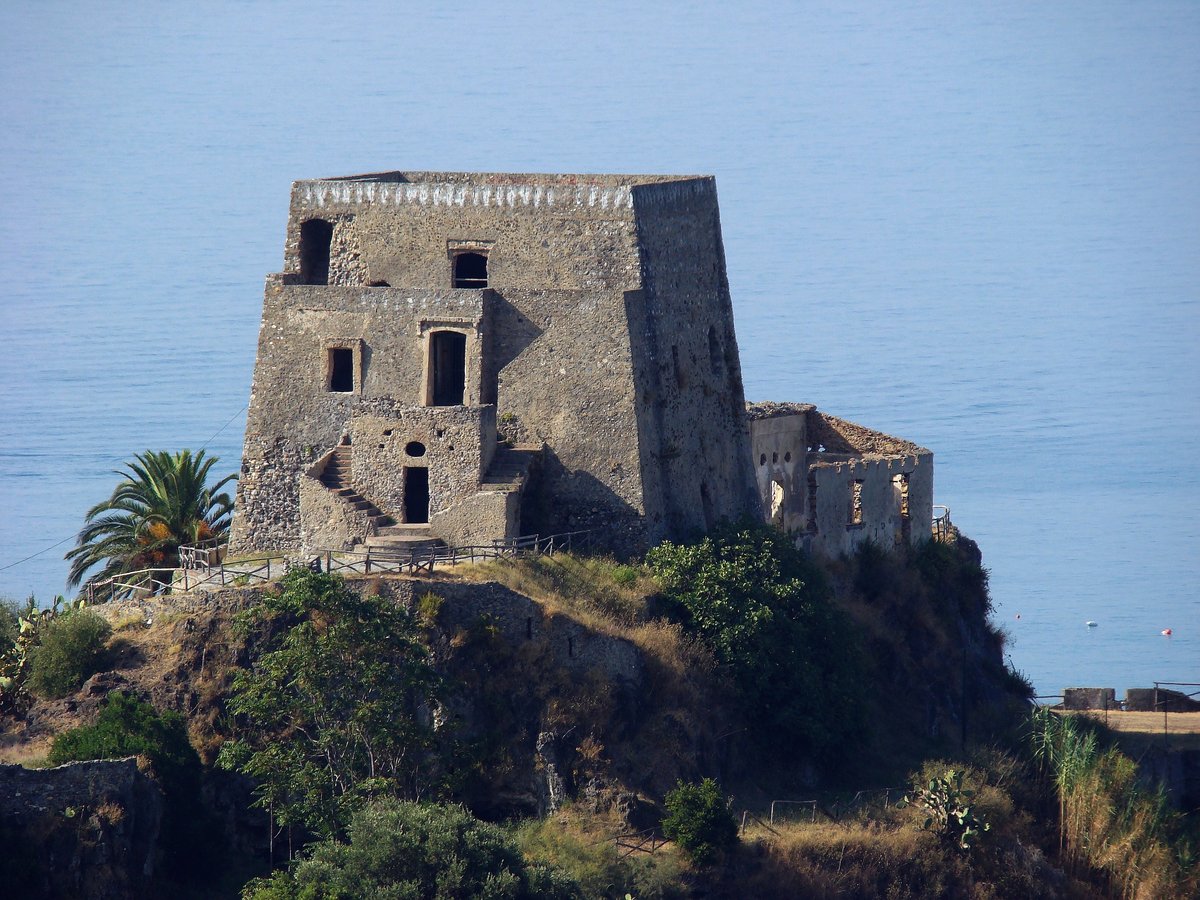 Torre Talao is one of the most recognizable symbols of Scalea, an imposing defensive structure that rises on a cliff overlooking the Tyrrhenian Sea. Built in the 16th century as part of the surveillance system against Saracen raids, this coastal tower represents a perfect example of Aragonese military architecture. Its strategic position, isolated on a rocky spur connected to the mainland by a thin strip of sand, creates a spectacular image especially at sunset, when the fading sunlight reflects off its stone walls. Today, the tower, restored and well-preserved, is not open to visitors inside but constitutes an essential landmark for anyone arriving in Scalea. The panorama enjoyed from its base embraces the entire Gulf of Scalea, from the beach below to the historic center perched on the hill. The walk along the beach leading to the tower is an experience not to be missed, especially on summer evenings when the night lighting creates evocative plays of light on the ancient structure. For photographers, the best time is the blue hour, when the sky is tinged with purple hues and the tower stands out against the horizon like a silent guardian of the sea.
Amantea Castle
- Via castello, Amantea (CS)
- Open in Google Maps
- View on Google Images
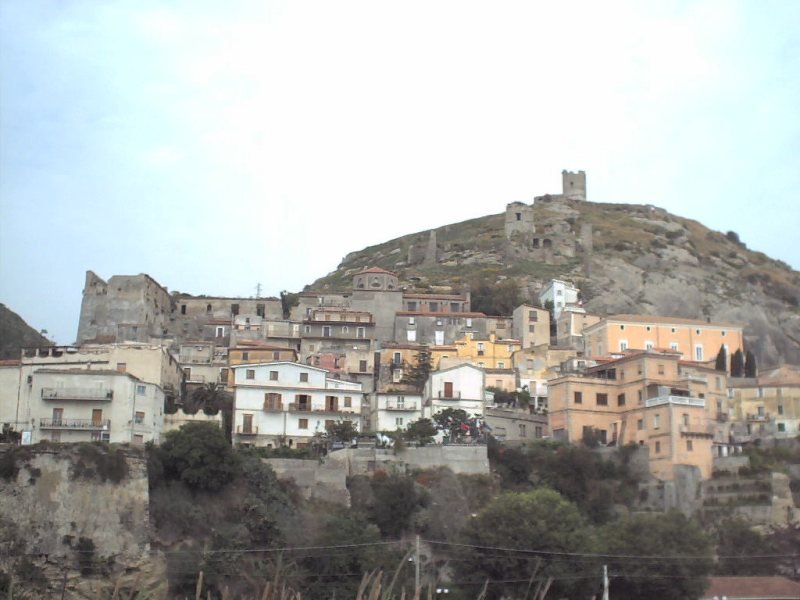 Amantea Castle stands on a rocky spur overlooking the sea, offering one of the most spectacular views of the Calabrian Tyrrhenian coast. Built during the Norman period between the 11th and 12th centuries, this fortress has witnessed centuries of history, from Angevin and Aragonese dominations to the dramatic sieges of 1806-1807 during the French occupation. Today, what remains are the imposing perimeter walls, the quadrangular tower, and the evocative ruins that tell stories of battles and resistance. The castle's strategic position was no coincidence: it controlled the important communication route between the Tyrrhenian Sea and the Calabrian hinterland. Climbing to the top, you're rewarded with a breathtaking panorama that stretches from the Gulf of Sant'Eufemia to the Aeolian Islands on the clearest days. The site is easily accessible from Amantea's historic center through a short but steep climb that's absolutely worth tackling. The atmosphere you breathe among these ancient stones is unique, especially at sunset when the walls take on warm colors and the sea below shines like a diamond. A tip: don't forget your camera, because every corner here offers unforgettable glimpses.
Aragonese Castle
- Via Castello Aragonese, Castrovillari (CS)
- Open in Google Maps
- View on Google Images
- +39 0981 25238
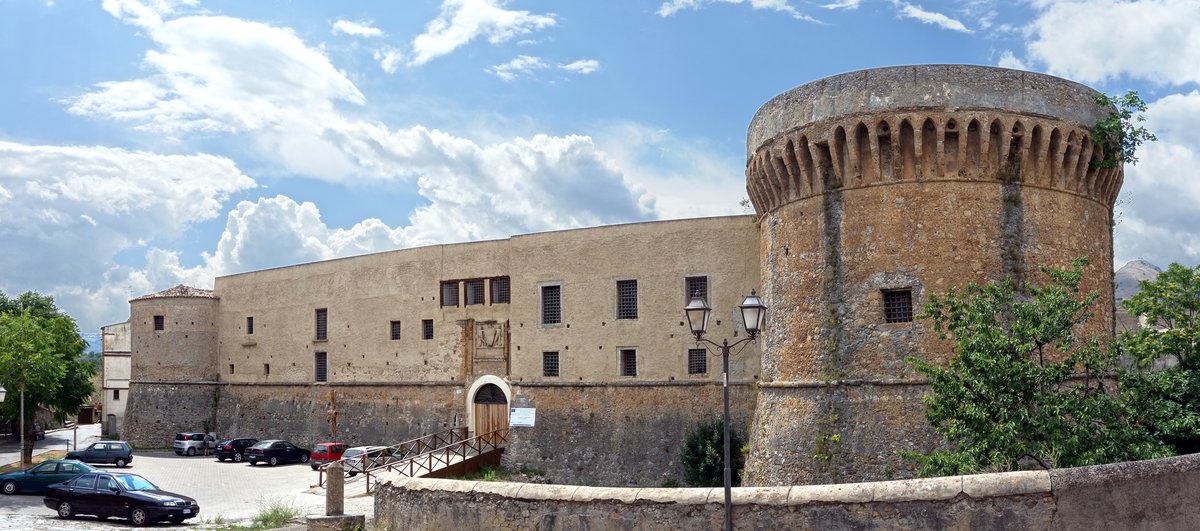 The Aragonese Castle of Castrovillari dominates the historic center with its imposing defensive structure, a witness to centuries of Calabrian history. Built in the 15th century at the behest of Ferdinand I of Aragon, the castle represents one of the best-preserved examples of Aragonese military architecture in Calabria. Its strategic position, on a hilltop overlooking the Crati River valley, explains its historical importance as a defensive stronghold of the territory. Today, visiting the castle, you can admire the massive perimeter walls, the corner bastions, and the moat that still partially surrounds the structure. Inside, the spacious courtyards and restored halls often host temporary exhibitions and cultural events. Particularly interesting is the main tower, from which you can enjoy a breathtaking panoramic view of the city and the Calabrian Apennines. The castle has also become the home of the Archaeological Museum of Sibaritide, which preserves artifacts from ancient Sybaris and other archaeological sites in the province. During your visit, don't miss the opportunity to observe up close the architectural details such as the arquebus loopholes and the corbels crowning the walls, elements that tell of the building's military function. The complex is easily accessible on foot from the center of Castrovillari and represents an essential stop for anyone wanting to understand the medieval history of Calabria.
Demological Museum of San Giovanni in Fiore
- Via Monastero 9, San Giovanni in Fiore (CS)
- http://www.iresudcalabria.it/museo.asp?id=38
- Open in Google Maps
- View on Google Images
- museosgfiore@asmecert.it
- +39 0984 97005
- 3892147191
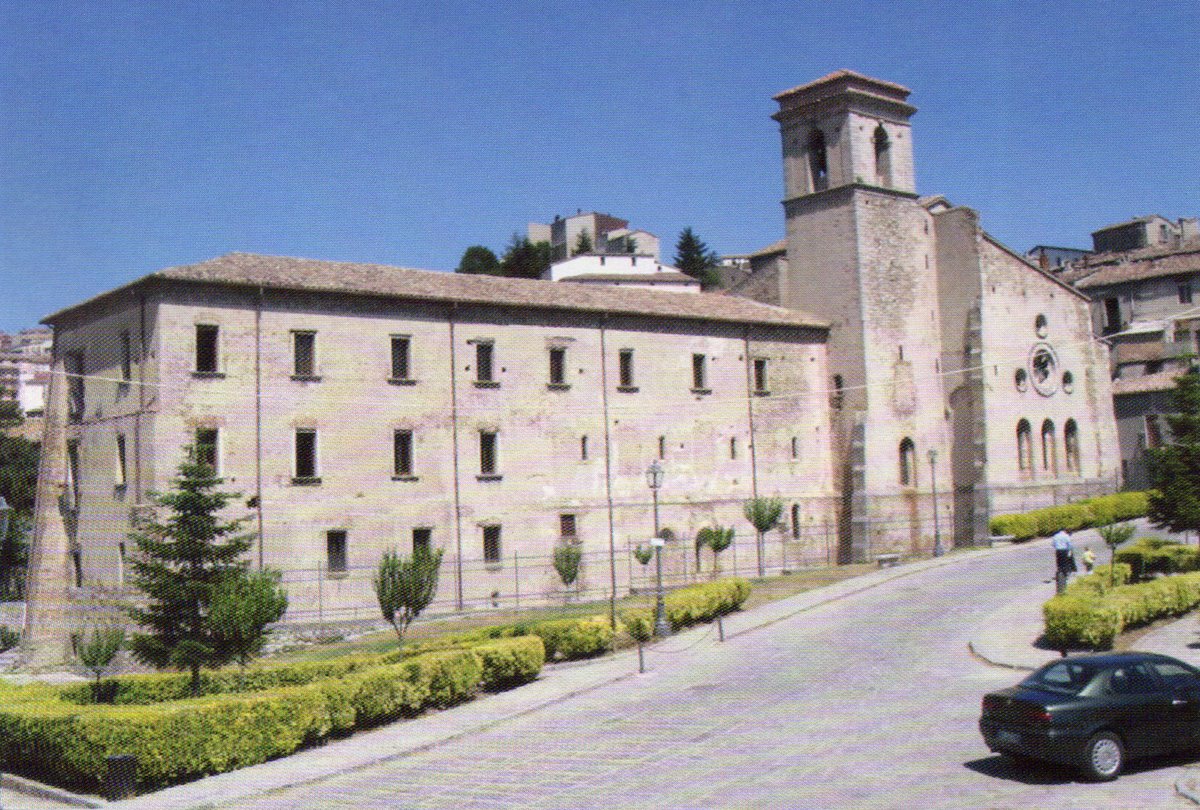 The Demological Museum of Economy, Labor and Social History of Sila in San Giovanni in Fiore is an unmissable stop for anyone wanting to truly understand the identity of inland Calabria. This museum is not merely a collection of objects, but a living narrative of the communities that have shaped the Sila territory over the centuries. The distinctive feature lies in its interdisciplinary approach that combines economics, anthropology, and social history, offering a comprehensive view of daily life in the mountainous areas.
Inside, you can admire faithful reconstructions of traditional work environments: from looms for wool weaving to woodworking workshops, from pastoral equipment to tools of mountain agriculture. Every object tells a story - that of charcoal burners, shepherds, and farmers who for generations lived in symbiosis with the Sila forest. Particularly noteworthy is the section dedicated to transhumance, with maps and documents illustrating the ancient routes followed by flocks.
The museum stands out for its attention to material and immaterial culture, preserving not only artifacts but also oral testimonies, historical photographs, and documents that reconstruct social relationships and forms of community organization. The visit thus becomes an immersive experience in the collective memory of these lands, far from the beaten tourist paths but essential for understanding the deep roots of Calabria.
Rossano Licorice Museum
- Contrada Amarelli, Rossano (CS)
- https://www.museodellaliquirizia.it/
- Open in Google Maps
- View on Google Images
- info@museodellaliquirizia.it
- +39 0983 511219
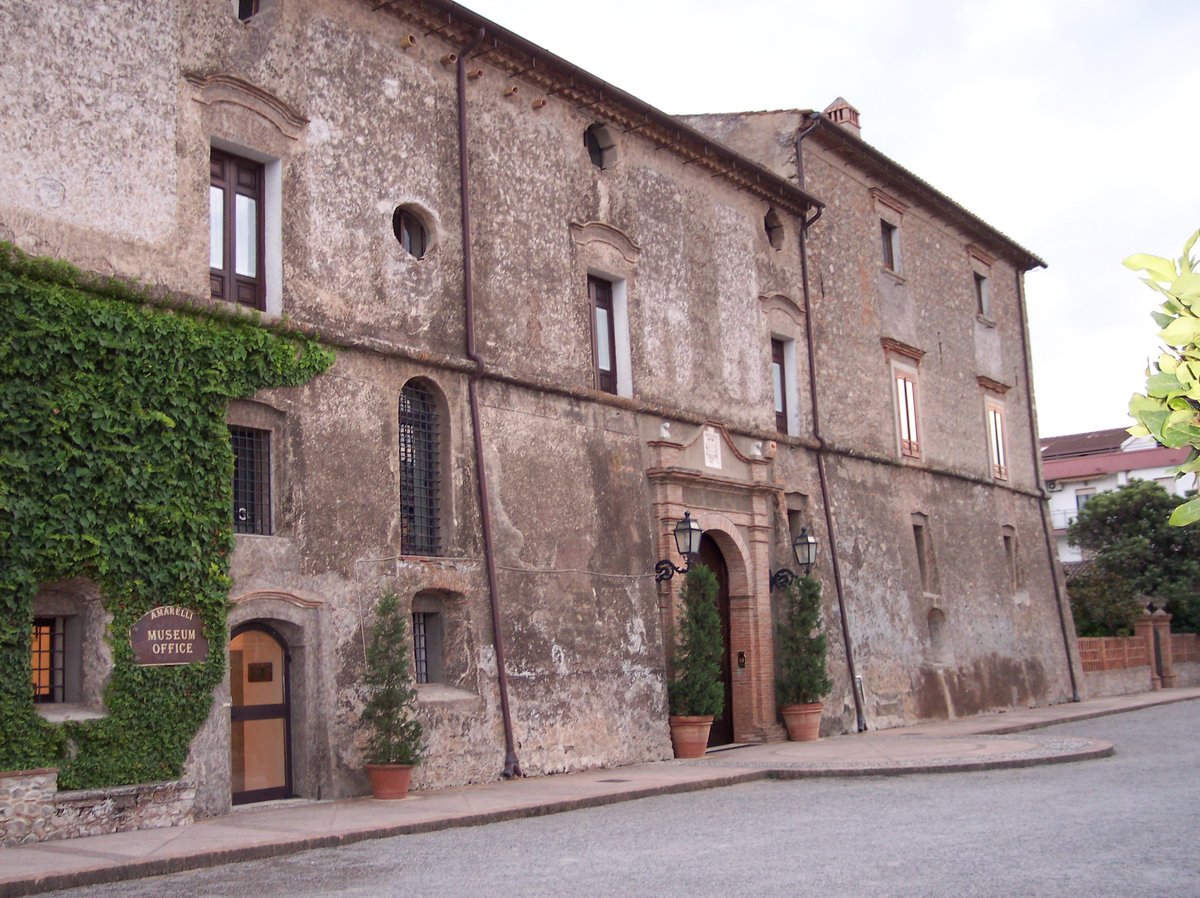 If you think licorice is just a candy, the Rossano Licorice Museum will change your mind. Located in the heart of Calabria, this museum celebrates Rossano licorice, considered among the best in the world for its high glycyrrhizin content. The exhibition path, housed in an ancient palace, guides you through the history of this plant, from its arrival in Italy with the Basilian monks to industrial production. You'll discover the traditional tools used for harvesting and processing, such as hoes and drying racks, and the historic recipes that made Calabrian licorice famous. There's no shortage of curiosities, like the dried roots on display that show the raw material in its purest form. The museum is passionately managed by local experts, who often organize guided tastings to help visitors appreciate the different varieties, from classic to infusions with Calabrian aromatic herbs. For visitors, it's an opportunity to understand how a simple product has shaped the economy and culture of this area, with references to the Calabria Licorice PDO. The atmosphere is warm and familiar, perfect for those who want to explore an authentic aspect of the territory.
Aragonese Castle of Belvedere Marittimo
- Via Parco del Pollino, Belvedere Marittimo (CS)
- Open in Google Maps
- View on Google Images
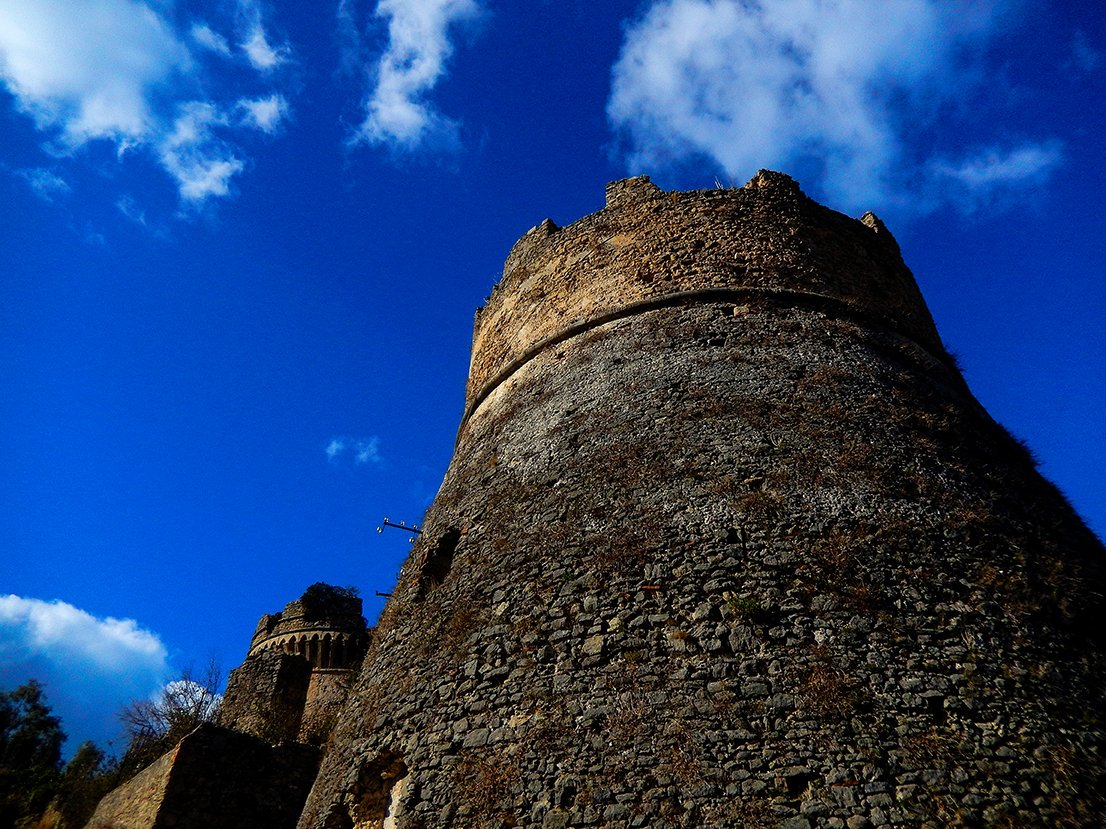 The Aragonese Castle of Belvedere Marittimo stands imposingly on a rocky spur overlooking the sea, offering one of the most spectacular views of the Cosenza Tyrrhenian coast. Built in the 11th century by the Normans and later reinforced by the Aragonese in the 15th century, this fortress represents a perfect example of medieval military architecture in Calabria. Its crenellated walls and cylindrical towers characterize the profile of the ancient village, creating an image that seems to come straight from a tale of times gone by. Today the castle is open to visitors and often hosts exhibitions and cultural events, but its main attraction remains the authentic atmosphere you experience walking through the inner courtyards and climbing the towers. From here, the view stretches from the blue of the Tyrrhenian Sea to the mountains inland—a panorama that alone makes the journey worthwhile. Inside, you can admire the underground passages once used as prisons and storerooms, while the chapel preserves traces of the original frescoes. Particularly evocative is the visit at sunset, when the warm light envelops the ancient stones and the medieval village below comes to life with its cobblestone alleys and stone houses. The castle is not just a monument, but the beating heart of Belvedere Marittimo, a witness to battles, sieges, and the daily life of a community that has preserved its heritage through the centuries.
Paola Castle
- Via Francesco Miceli Picardi, Paola (CS)
- Open in Google Maps
- View on Google Images
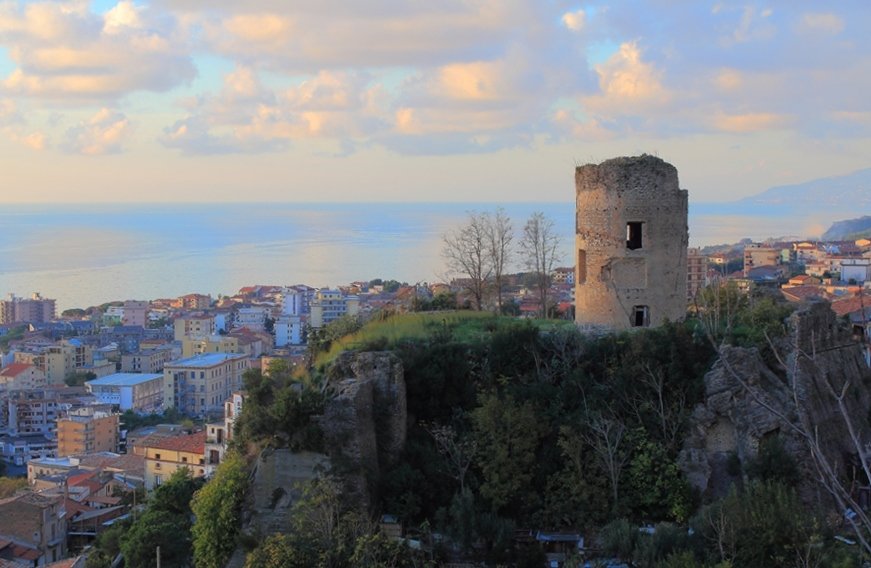 The Paola Castle stands majestically on a rocky spur overlooking the Tyrrhenian Sea, offering one of the most spectacular views of the Calabrian coast. Built between the 11th and 12th centuries during Norman rule, this fortress has witnessed centuries of history, passing through the hands of the Swabians, Angevins, and Aragonese. Today, although partially ruined, it retains the charm of ancient defensive structures intact, with its perimeter walls, watchtowers, and walkways that allow visitors to imagine medieval life. The castle's strategic position was no accident: it controlled communication routes between the coast and the hinterland, protecting the village below from pirate raids. Climbing to the summit rewards visitors with a 360-degree panorama stretching from the Gulf of Paola to the Sila mountains, a breathtaking sight that alone makes the visit worthwhile. Access is free, and the path, although somewhat steep, can be covered in a few minutes. The castle is particularly evocative at sunset, when the fading sunlight tints the ancient stones and the sea below in shades of red. On clear days, the view can extend as far as the Aeolian Islands, offering an unforgettable visual experience. For those visiting Paola, this fortress represents a plunge into local history, a place where the past merges with natural beauty in perfect harmony.
Timpone della Motta
- Strada Provinciale 263 ex SS105 di Castrovillari, Francavilla Marittima (CS)
- Open in Google Maps
- View on Google Images
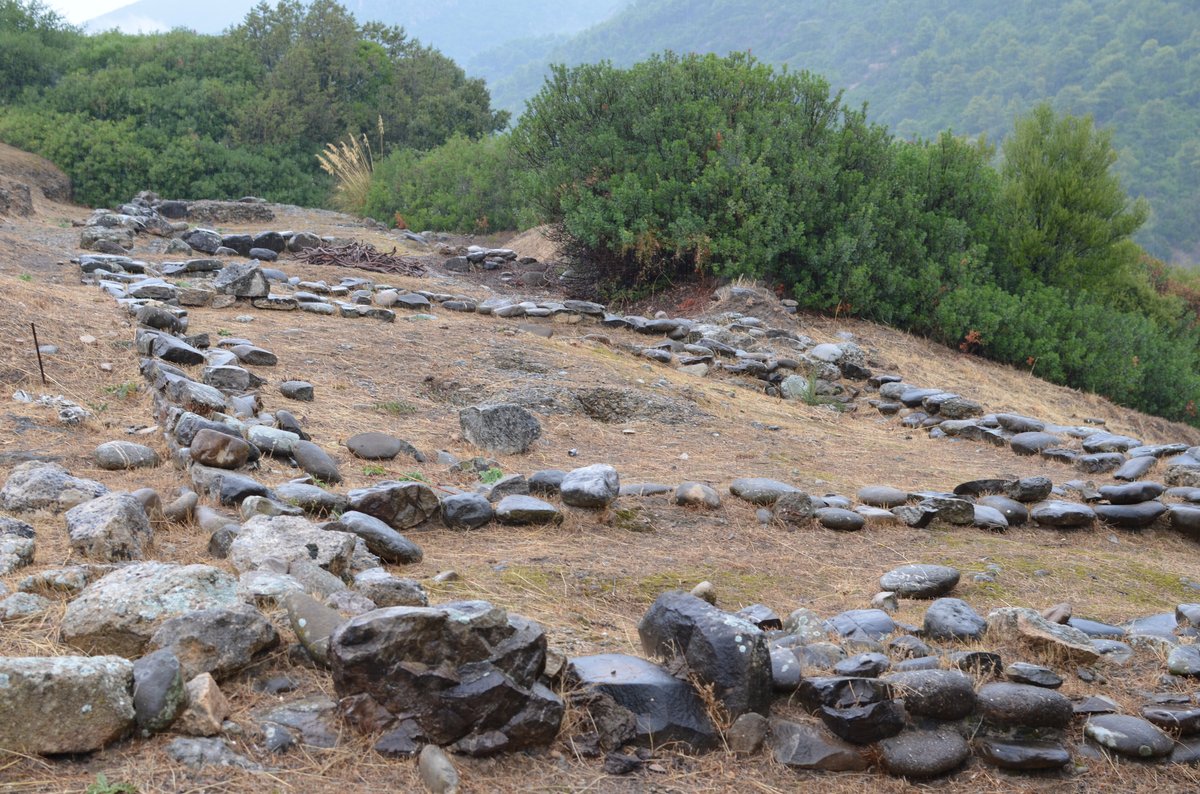 The Timpone della Motta is one of Calabria's most fascinating archaeological sites, a hill overlooking Francavilla Marittima and the Sibari plain. This place preserves traces of an Enotrian settlement dating back to the Iron Age, later Hellenized with the arrival of the Greeks. Walking among the remains, you immediately sense the historical significance: here stood a sanctuary dedicated to Athena, of which the foundations and some ceramic artifacts remain. The strategic location offers a breathtaking panoramic view of the Ionian Sea and the surrounding hills, making the visit an immersive experience between archaeology and landscape. The site is less crowded than other destinations in the province, ideal for those seeking tranquility and deeper exploration. The findings include votive objects and fragments of geometric ceramics, evidence of the cults practiced in antiquity. To access it, simply follow the directions from the center of Francavilla Marittima: a well-marked path leads to the summit, where the sea breeze blends with the silence of history. Don't forget to bring water and a camera: the sunsets here are unforgettable, with the colors of the sky reflecting on the sea below. The Timpone della Motta is a gem for archaeology enthusiasts and those who want to discover the most ancient roots of Calabria, away from conventional tourist routes.