Mont’Alfonso Fortress: Renaissance Architecture and Panoramic Views of Garfagnana

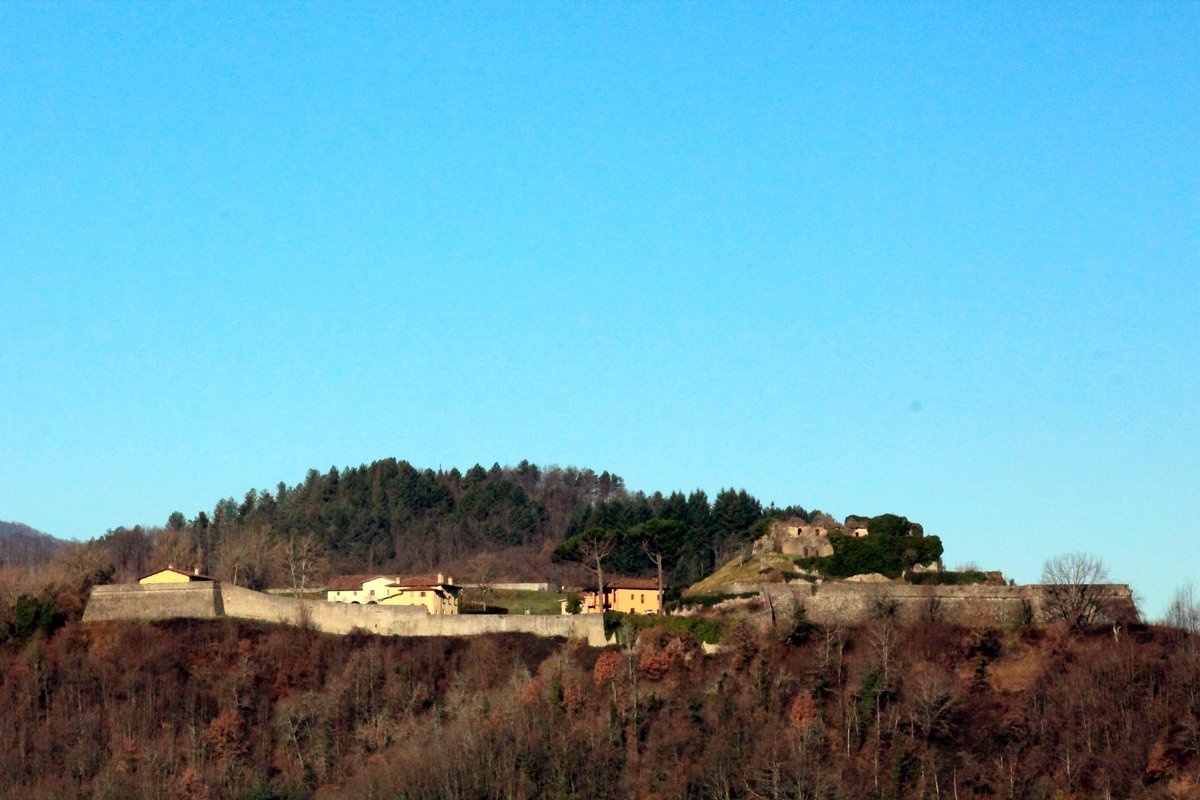
Mont’Alfonso Fortress, built in 1579 for Alfonso II d’Este, offers spectacular views of the Serchio Valley and the Apuan Alps. After restoration, it has become a cultural hub with events and exhibitions, accessible through a well-marked trail that provides glimpses of the surrounding villages.

  • Unique panorama of Garfagnana with views of Castelnuovo and the Apuan Alps
  • Perfectly preserved Renaissance architecture with imposing walls and bastions
  • Inner courtyards and spaces used for cultural events and exhibitions
  • Panoramic access trail suitable for all, with paths along the walls


Events nearby


Copertina itinerario Mont'Alfonso Fortress: Renaissance Architecture and Panoramic Views of Garfagnana
16th-century fortress in Castelnuovo di Garfagnana with imposing walls, bastions, and an inner courtyard. A cultural hub for events and exhibitions, accessible via a scenic trail on the Apuan Alps.

Good to know


Introduction

Upon arrival, Mont’Alfonso Fortress welcomes you with a breathtaking panorama. It’s not just a ruin, but a natural balcony overlooking the Garfagnana, with the Apuan Alps seemingly within reach. The feeling is one of being suspended between sky and earth, with Castelnuovo di Garfagnana spread out at your feet like a nativity scene. The structure, imposing and austere, tells centuries of history, but it’s the atmosphere that strikes you: silence broken only by the wind and a light that constantly changes. Personally, I stopped to gaze at that landscape for quite a while, almost forgetting to explore the rest. It’s one of those places that makes you feel small, but in a beautiful way, like part of something greater.

Historical Background

The fortress was built in 1579 at the behest of Alfonso II d’Este, Duke of Ferrara, with a specific purpose: to defend the northern border of the Duchy from incursions. It was not merely a military outpost but a symbol of power, strategically positioned to control the Serchio Valley. In the 17th century, it came under the rule of the Grand Duchy of Tuscany, gradually losing its military significance. Today, following restoration work, it has been transformed into a cultural hub, yet walking among its walls, one can still sense that atmosphere of vigilance. The stones tell tales of guards, sieges, and a Garfagnana that was once borderland. At times, I imagine the sentinels standing guard on these ramparts, gazing at the same panorama but with far more watchful eyes.

  • 1579: Construction begins for Alfonso II d’Este
  • Around 1600: Transition to the Grand Duchy of Tuscany
  • Subsequent centuries: Military decline and partial abandonment
  • Recent restorations: Rejuvenation as a cultural space

Exploring the Walls and Bastions

Don’t just look from the entrance: the true charm lies in walking along the perimeter of the walls. They are accessible and offer different perspectives on the landscape. On one side, you see the village of Castelnuovo with its bell tower; on the other, the mountains become wilder, with Monte Pisanino dominating the scene. The bastions, massive and well-preserved, still show the cannon embrasures. Walking around them, you notice how the structure perfectly adapts to the ridge of the hill, almost as if it were part of the rock itself. It’s an easy path, suitable for everyone, but with that thrill of history under your feet. I recommend bringing a camera: the afternoon light, in particular, creates spectacular shadow plays on the stones.

The Heart of the Fortress: Courtyards and Inner Spaces

Beyond the walls, courtyards and rooms reveal the daily life of the garrison. The central area, often used for events today, was likely the soldiers’ gathering point. Traces of water cisterns and service structures can be glimpsed. Don’t expect elaborate furnishings or complex internal museums: the charm lies in its simplicity. The spaces are wide, airy, and leave room for imagination. In one corner, I found a small restored chapel, a detail that recalls the spiritual dimension of those who lived here. It’s a place that invites you to slow down, sit on a low wall, and listen to the echo of centuries. It may not be rich in decorations, but it has an authenticity that many more touristy sites have lost.

Why Visit

First, for the unique panorama of the Garfagnana: from here you truly understand the geography of the valley, with its villages, rivers, and mountains. Second, for the tangible history: it’s not a reconstruction, but a place that has witnessed centuries of events, and you can feel it. Third, for its versatility: it’s suitable for a quick visit, a picnic with a view, or for those seeking a bit of tranquility away from the crowds. Additionally, it’s an ideal starting point for exploring Castelnuovo, which deserves a stroll through its historic center. In short, it combines culture, nature, and that sense of discovery that makes a trip memorable.

When to Go

The best time? Late autumn afternoons, when the low sun paints the stones gold and the mountains turn red and orange. The atmosphere is magical, with fewer visitors and light that highlights every detail. In summer, early morning is perfect to avoid the heat and enjoy the coolness. In winter, if there’s a bit of snow on the Apuan Alps, the spectacle becomes even more striking, but check the weather conditions as it can be windy. Personally, I have a preference for the shoulder seasons, when nature is more vibrant and the place feels more intimate.

In the Surroundings

After the fortress, head down to Castelnuovo di Garfagnana for a stroll through the historic center: the Rocca Ariostesca, linked to the poet Ludovico Ariosto, and the medieval alleyways are worth a visit. If you enjoy nature, take a trip to the Orecchiella Park, just a few kilometers away, with trails among beech and fir trees and panoramic viewpoints over the Apuan Alps. It’s an excellent combination for a day blending culture and outdoor activities, typical of this area of Tuscany. Take your time, of course.

Itineraries nearby


💡 Did You Know…?

The fortress was built in just three years, between 1579 and 1582, to control the strategic communication route between Modena and Lucca. During World War II, it was used as an observation and defense post, and traces of that era can still be seen today. A local legend says that on full moon nights, the footsteps of the Este sentinels can still be heard along the walls. Moreover, from the main square, on clear days, the Rocca Ariostesca in the center of Castelnuovo can be clearly seen, creating a suggestive visual connection between the two fortresses.