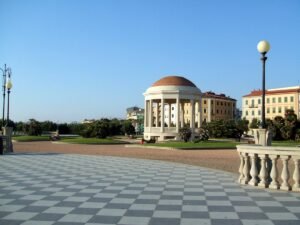
If you think Pisa is only about the Leaning Tower, get ready to discover an authentic and surprising side of the city. This one-day itinerary takes you beyond the most beaten tourist paths, to explore the ancient medieval walls that still surround the historic center, the defensive towers that tell centuries of history, and the hidden squares where time seems to have stood still. It's the perfect route for those seeking a more intimate experience away from the crowds, immersing themselves in the atmosphere of a lesser-known yet equally fascinating Pisa. We'll guide you step by step through historic gates, quiet alleys, and history-rich corners, providing all the practical information to best organize your day.
🗺️ Your trip at a glance
Discover an authentic side of Pisa with this one-day itinerary dedicated to its ancient medieval walls, defensive towers, and lesser-known squares. A walking route that takes you away from the more beaten tourist paths, in search of tranquil and historic corners.
- Ideal for curious travelers seeking a more intimate experience away from the crowds, appreciating the authentic atmosphere of a lesser-known Pisa.
- Highlights: includes 8 specific stops such as Sant'Agnese Tower, the Guelfa Tower (sometimes accessible inside), Porta a Mare, Piazza Chiara Gambacorti, Porta a Lucca, Piazza Venti Settembre, Porta del Parlascio, and the Baths of Nero, with an interactive map for easy navigation.
- Perfect for those who wish to discover the city's medieval and Roman historical heritage, exploring places where time seems to have stood still, without the rush of tourist crowds.
Itinerary stops
Stop no. 1
Tower of Sant'Agnese
 Let's begin this itinerary dedicated to Pisa's medieval walls and towers with a place many tourists pass by without noticing: the Tower of Sant'Agnese. It's located along the pedestrian avenue Charles Darwin, a green and tranquil area near the Arno River, away from the crowds of Piazza dei Miracoli. This tower was part of the ancient city walls and today appears as a slender, well-preserved red brick structure, though not accessible inside. What strikes you is the atmosphere: here you breathe an authentic air, with students cycling by and locals taking a stroll. The view from the base allows you to appreciate its grandeur and imagine how it once served as a strategic control point. It's a perfect start for those wanting to discover a corner of Pisa off the usual tourist trails, without rush, savoring the silence and history emanating from its stones.
- Viale pedonale Charles Darwin, Pisa (PI)
- Open in Google Maps
- View on Google Images

You should go if...
Stop no. 2
Guelfa Tower
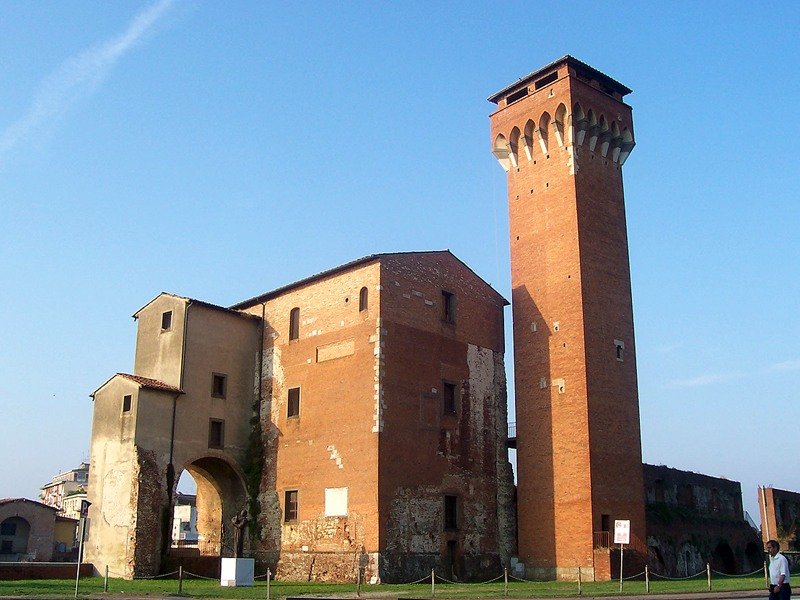 After exploring the first walls, Guelfa Tower surprises with its strategic position on Lungarno Ranieri Simonelli. Built in the 14th century, this tower was part of the city's defensive system, but today it offers something different: it's not just a monument to admire from the outside. If you're lucky and find it open, you can climb its narrow stone steps for a view few know about. From up there, the Arno seems to flow slower, and you can glimpse the roofs of medieval houses mixed with distant bell towers. I was struck by how less touristy it is compared to other towers – sometimes there are only a few locals passing by for a quiet walk. The red brick structure has a robust, almost severe appearance, but details like the arrow slits tell stories of guards and battles. It's worth stopping for a moment, even just to imagine what it must have been like to live here centuries ago, when the river was a vital trade route.
- Lungarno Ranieri Simonelli, Pisa (PI)
- Open in Google Maps
- View on Google Images
You should go if...
Stop no. 3
Porta a Mare
 Leaving the Guelfa Tower behind, you approach Porta a Mare, a spot that often goes unnoticed but has a particular charm. Located in Largo Degazia, this gate was part of the medieval walls and was the direct access to the river port when the Arno was a crucial trade route. Today it appears as a massive brick structure, with its pointed arch that still seems to guard stories of ships and merchants. I was struck by how it has remained authentic, without overly invasive restorations – you can still see the marks of time on the stones. The surrounding area has a tranquil atmosphere, away from the tourist bustle, perfect for a quick stop. Observing the details, you notice traces of hinges and chains that once held the drawbridge. It's worth imagining how lively this corner must have been centuries ago, with boats loading goods headed toward the sea. A small gem that reminds us how much Pisa was tied to its waterways.
- Largo Degazia, Pisa (PI)
- Open in Google Maps
- View on Google Images
You should go if...
Stop no. 4
Piazza Chiara Gambacorti
 After Porta a Mare, you almost stumble upon this intimate square, a corner that seems suspended in time. Piazza Chiara Gambacorti is dedicated to a fourteenth-century female figure, wife of a Pisan lord and mother of another, making it a rare tribute to a woman in an era dominated by men. I was struck by how small and cozy it is, surrounded by brick buildings that retain an ancient air, far from the tourist spotlight. There are no striking monuments, but the atmosphere is authentic: you can breathe in the Pisa of old, made of alleyways and family stories. Looking closely, you notice details like the arched windows and stones worn by time. It's worth stopping for a moment to imagine what it must have been like to live here centuries ago, with voices echoing between these walls. A perfect spot for a quiet break, perhaps sitting on a bench and absorbing the silence. Personally, I like to think of Chiara Gambacorti as a symbol of resilience in a city often remembered only for its tower.
- Piazza Chiara Gambacorti, Pisa (PI)
- Open in Google Maps
- View on Google Images
You should go if...
Stop no. 5
Porta a Lucca
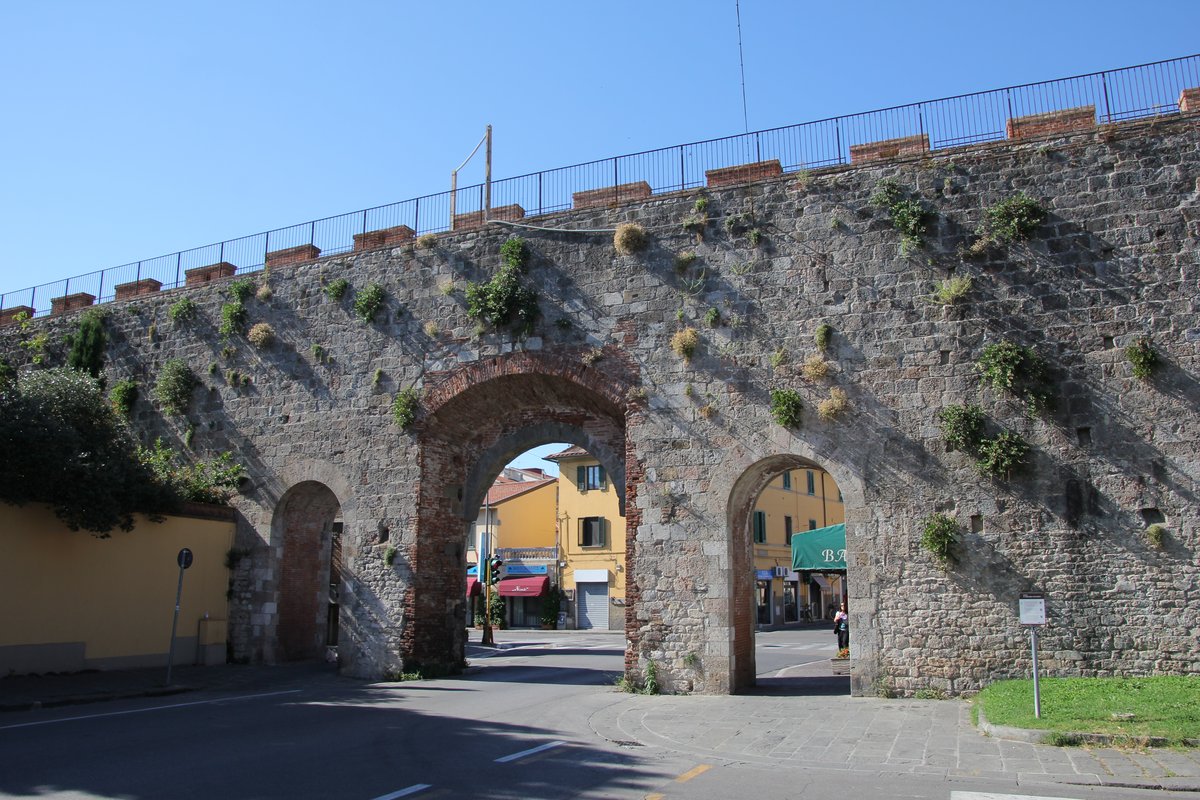 Leaving behind the intimacy of Piazza Chiara Gambacorti, one approaches Porta a Lucca, one of the city's most imposing and best-preserved medieval gates. Situated along the fourteenth-century walls, this red brick structure impresses with its solidity: the pointed arch, arrow slits, and traces of hinges speak of a past when it controlled access from the north toward Lucca. I've always been fascinated by how, despite the centuries, it maintains an air of severe elegance, far from the crowds that gather elsewhere. Observing it up close, one notices details like the worn stones and marks of time that lend it authenticity. It's worth pausing to imagine the merchants and travelers who passed through here, perhaps under the watchful gaze of guards. Personally, I find it a perfect spot to appreciate Pisan defensive engineering, often overlooked in favor of more famous attractions. A corner where history still seems to breathe, ideal for a photo or a brief moment of reflection.
- Mura di Pisa, Pisa (PI)
- Open in Google Maps
- View on Google Images
You should go if...
Stop no. 6
Piazza Venti Settembre
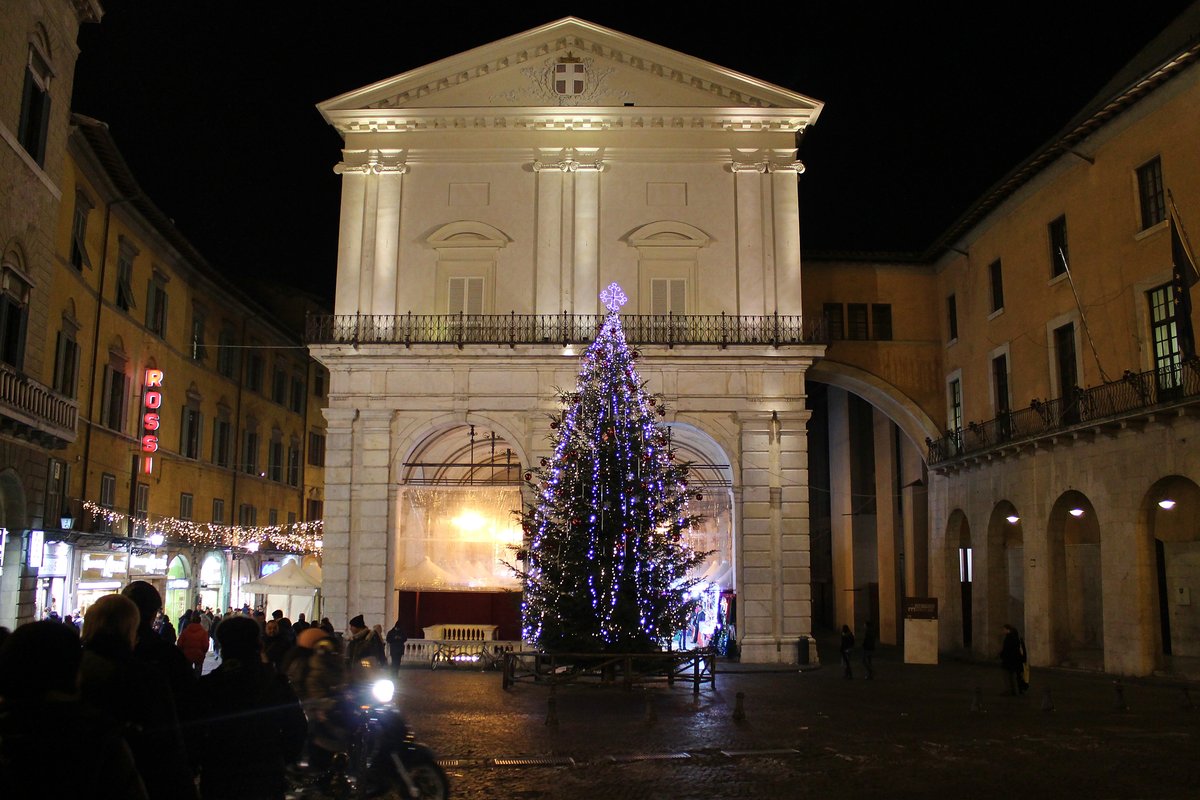 After admiring the sturdy Porta a Lucca, you immerse yourself in a more intimate and lesser-known corner: Piazza Venti Settembre. This space, often overlooked by the more beaten tourist paths, is a true gem for those seeking authenticity. Surrounded by historic brick and stone buildings, the square has a cozy and tranquil atmosphere, far from the chaos of the city center. I'm always struck by how time seems to flow more slowly here, with locals chatting on the steps and cats basking in the sun. At the center, a commemorative plaque stands out, recalling past events—a detail that invites you to pause and reflect. Personally, I love observing the building facades, with their faded plaster and green shutters, which tell stories of everyday Pisan life. It's the perfect spot for a refreshing break, perhaps sitting on a bench watching the discreet comings and goings. A place to breathe in the true essence of Pisa, without the rush of crowds.
- Piazza Venti Settembre, Pisa (PI)
- Open in Google Maps
- View on Google Images
You should go if...
Stop no. 7
Porta del Parlascio
 Leaving behind the tranquility of Piazza Venti Settembre, you approach another piece of Pisan history: the Porta del Parlascio. This ancient gate, set within the medieval walls, is a fascinating example of defensive architecture that often goes unnoticed. Built in the 13th century, it still bears the marks of time, with its brick and stone structure that seems to tell tales of battles and daily passages. I enjoy observing the details, such as the arrow slits and traces of hinges, which give an idea of how it functioned in the past. The surrounding area is quiet, away from the tourist bustle, allowing you to imagine medieval life without distractions. Personally, I find it interesting how this gate was an integral part of the defensive system, connected to other structures like the nearby Porta a Lucca. It's a perfect spot for those who love discovering less-trodden corners, where history can be touched firsthand. A tip: look up to notice the decorative elements, often overlooked, that add character.
- Mura di Pisa, Pisa (PI)
- Open in Google Maps
- View on Google Images
You should go if...
Stop no. 8
Baths of Nero
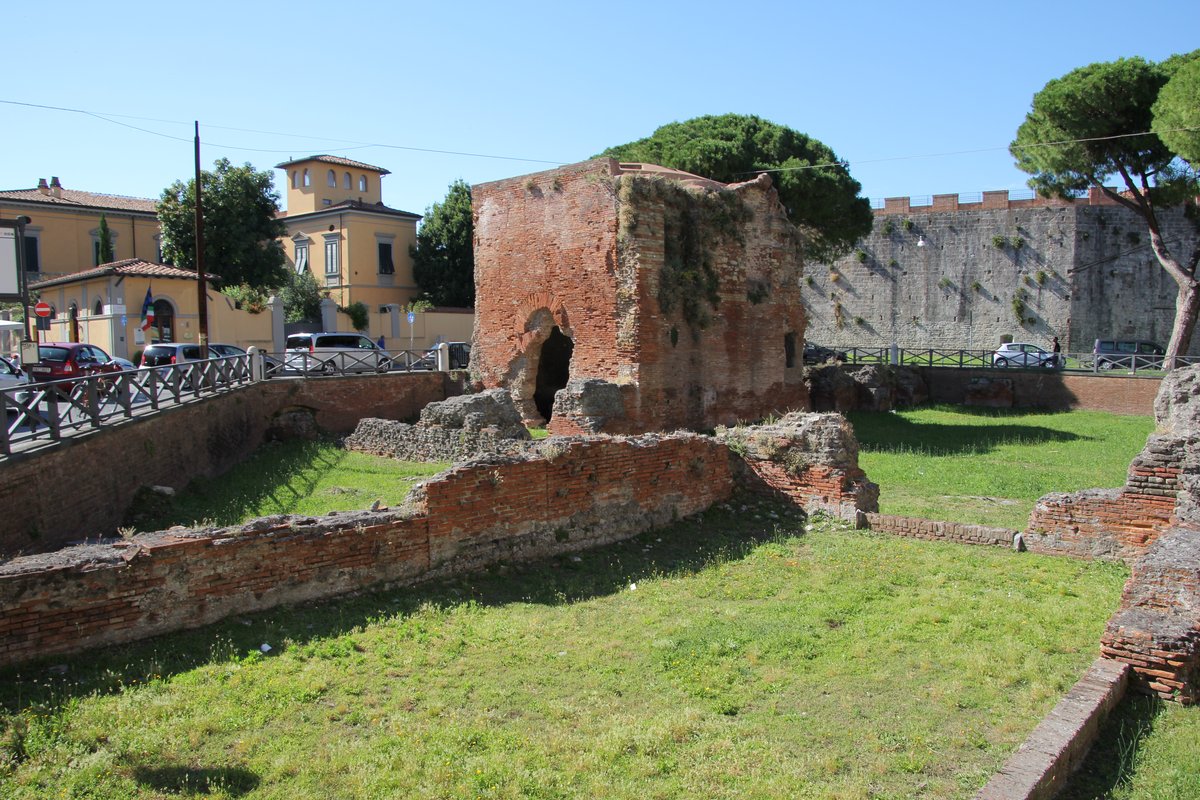 After admiring the sober solidity of Porta del Parlascio, you come across a surprise: the Baths of Nero, an archaeological site that seems almost out of place in this medieval setting. In reality, these are the remains of a Roman thermal complex from the 1st century AD, discovered by chance in the 18th century and now visible in Largo del Parlascio. I'm always struck by the contrast between the surrounding medieval walls and these ancient brick structures, with their still recognizable pools and heating systems. It's not a spectacular site like other Roman ruins, but it has a discreet charm: you walk among the ruins, observe the bricks worn by time, and imagine daily life two thousand years ago. Personally, I find it interesting how this corner tells of a Pisa that predates the towers, often forgotten. It's a quiet, little-visited place where you can linger for a few minutes without hurry. A curious detail: the name 'Nero' is probably a historical misattribution, but it has now entered local tradition.
- Largo del Parlascio, Pisa (PI)
- Open in Google Maps
- View on Google Images
You should go if...