If you have just one day to discover Pavia, this 8-stop walking itinerary takes you from Castello Visconteo to Porta Nuova, crossing the heart of the city among Romanesque churches, botanical gardens, and views of the Ticino. Perfect for art and nature lovers, the route is flat and suitable for all paces. We start from Castello Visconteo, a symbol of medieval power, then dive into squares and basilicas like San Michele Maggiore, a Romanesque masterpiece. Don’t miss the Botanical Garden, a peaceful oasis, and end along the river. With a map and practical tips, this 1-day walking itinerary gives you an authentic taste of Pavia, between ancient stones and lush nature.
🗺️ Your trip at a glance
In 8 stops, this walking itinerary lets you experience Pavia in a day: from Romanesque to Ticino, history and nature at a slow pace.
- Ideal for: those who want a full day of art and river landscapes, without rushing.
- Highlights: Castello Visconteo, Romanesque basilicas, Botanical Garden and riverfront, all in the center.
- Perfect for: curious travelers, families, and lovers of urban walking routes.
Itinerary stops
Stop no. 1
Visconti Castle: The Royal Entrance to Visconti Pavia
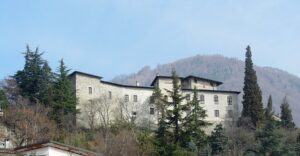
 The first stop on our itinerary is the Visconti Castle, standing majestically on Viale Argonne. Built from 1360 at the behest of Galeazzo II Visconti, it was not conceived as a defensive bastion but as a splendid court residence. Its square plan, 150 meters per side, corner towers, and deep moat, however, betray an aura of power. Today, after centuries of neglect and restoration, the castle houses the Civic Museums of Pavia, a veritable treasure chest spanning from archaeology to the Renaissance. As you step into the porticoed courtyard, you’ll be struck by the hook-shaped capitals of the Campionese school and the upper loggia with four-light windows. Here you can breathe the atmosphere of the Visconti court, which between the 14th and 15th centuries welcomed artists and intellectuals. Don’t miss the Blue Room with Sforza coats of arms and the chapel frescoed by Michelino da Besozzo. If time is short, focus on the ground-floor rooms: the entrance ticket to the castle costs only €1 (or €5 with special installations) and lets you immediately savor the Pavia genius loci.
- Go to the page: Visconti Castle of Pavia: 1360 Fortress with Civic Museums and Historic Gardens
- Viale Argonne, Pavia (PV)
- Open in Google Maps
- View on Google Images

You should go if…
Stop no. 2
Botanical Garden: A Dive into Nature in the Heart of Pavia
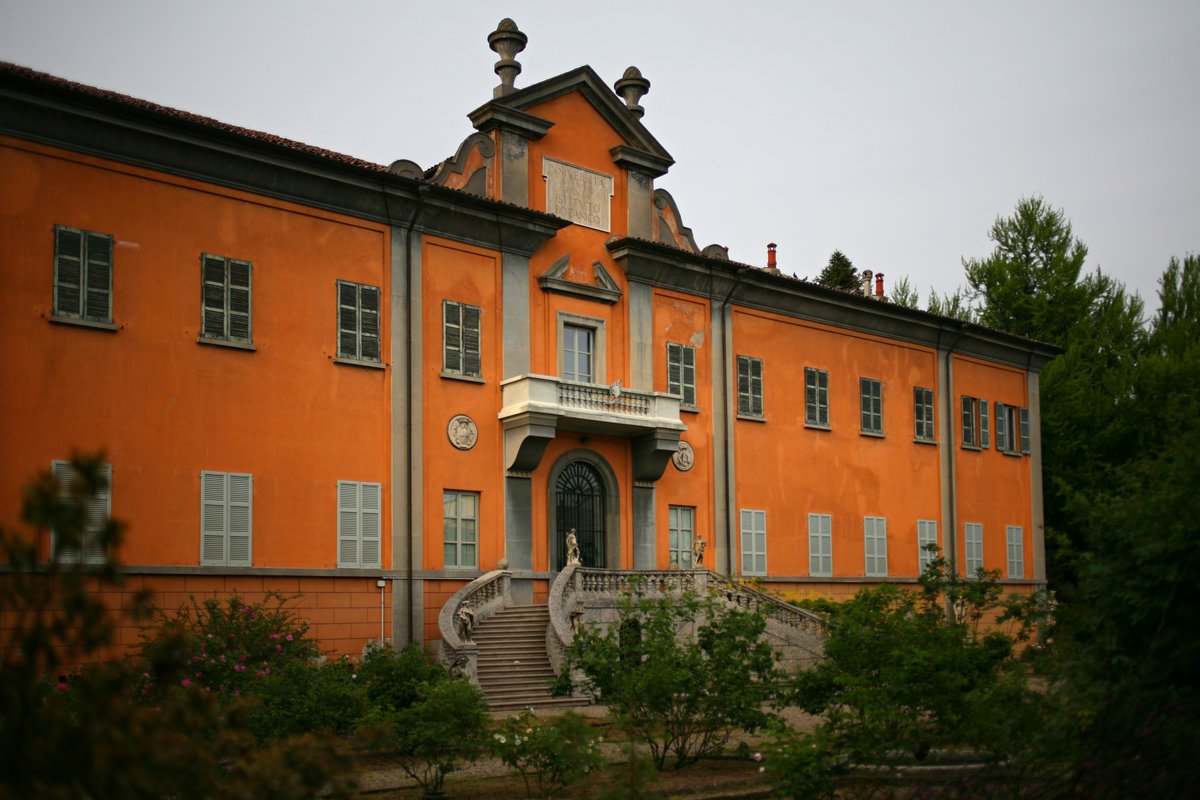 After the Visconti Castle, we completely change scenery and immerse ourselves in greenery. Pavia’s Botanical Garden, the oldest in Lombardy, is a peaceful corner founded in 1773 by order of Maria Theresa of Austria. As soon as you pass through the entrance on Via Sant’Epifanio, you are welcomed by a path of imposing trees. The absolute protagonist is the Scopoli Plane Tree, 45 meters tall and planted in 1778: a giant that has witnessed three centuries of history. Strolling among the flowerbeds, you will discover unique collections: the Rose Garden with over 200 varieties, the Scopoli Greenhouses designed by Giuseppe Piermarini (the same architect as La Scala!), and the Tomaselli Tropical Greenhouse with exotic plants and orchids. A gem? The Pavia Tea, a variety of Camellia sinensis acclimated to the cold, born from experiments in the 1920s. Not to be missed is the Forbidden Vineyard, with American vines used as rootstocks. The garden is also an active research center, with the Herbarium and the Germplasm Bank. Open Saturdays and Sundays from 10 am to 6 pm, entry costs 6 euros. Perfect for a refreshing break between history and botany.
- Pavia (PV)
- Open in Google Maps
- View on Google Images
You should go if…
Stop no. 3
San Francesco
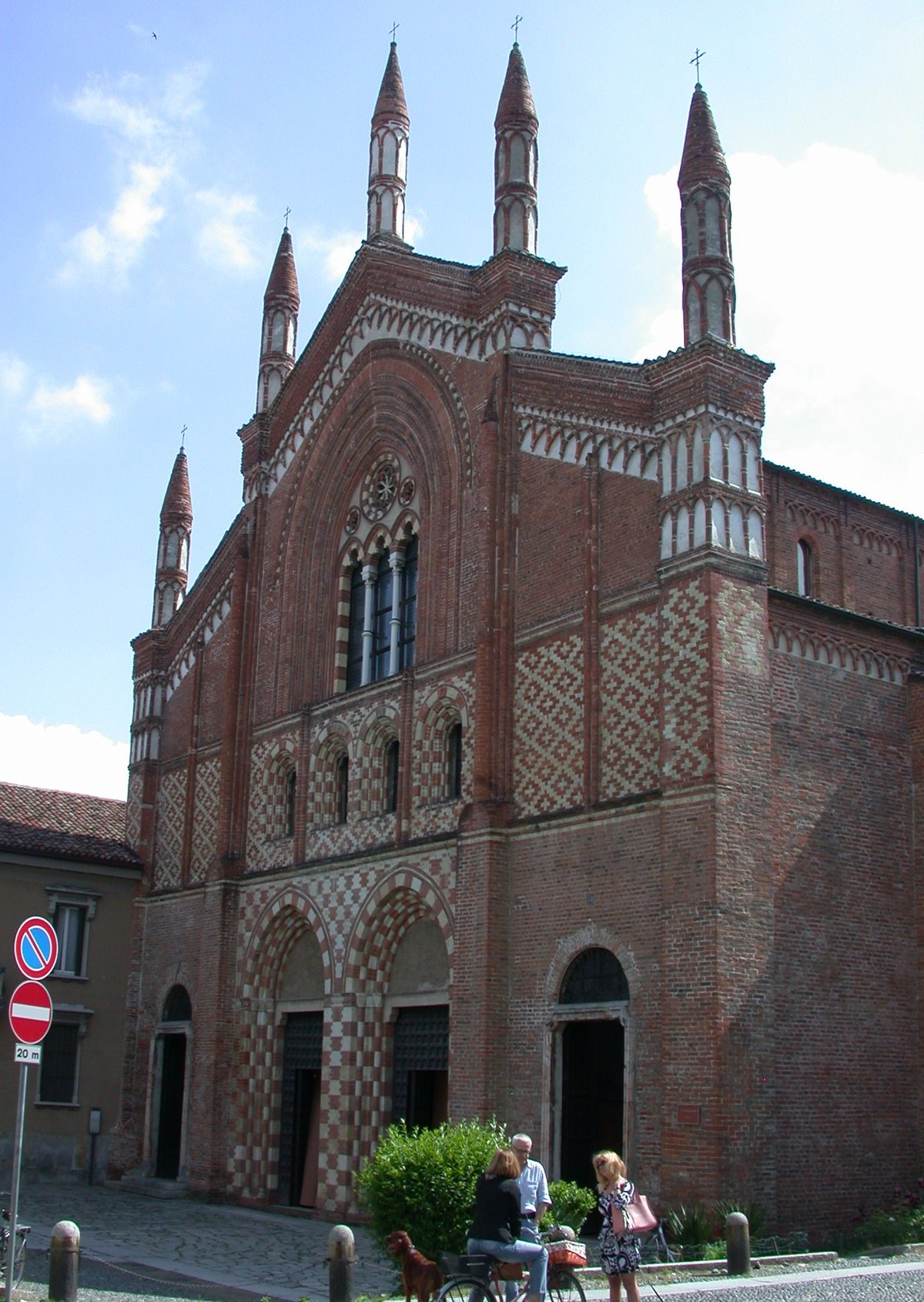 Leave behind the greenery of the Botanical Garden and get ready to encounter one of Pavia’s Gothic symbols: the Church of San Francesco. Built between 1267 and 1298, its facade strikes with the contrast between red brick and white sandstone and the rare double portal of clear French influence. The three-nave interior hides surprises: the wooden choir of 1484 by the Donati brothers, inlaid with perspectives and botanical symbols, and the Baroque Immaculate Conception Chapel (1711-1750) with marbles, bronzes, and frescoes by Magatti. Don’t miss the 15th-century wooden crucifix by Baldino de Surso and works by Vincenzo Campi and Camillo Procaccini. The church, once a burial place for figures like Facino Cane, stands behind the University, a stone’s throw from Ghislieri College. Open daily from 9:00 AM to 12:00 PM and 3:00 PM to 7:00 PM, it is a must-see for lovers of medieval and Baroque art.
- Via Carlo Goldoni, Pavia (PV)
- Open in Google Maps
- View on Google Images
You should go if…
Stop no. 4
Crypt of Saint Eusebius
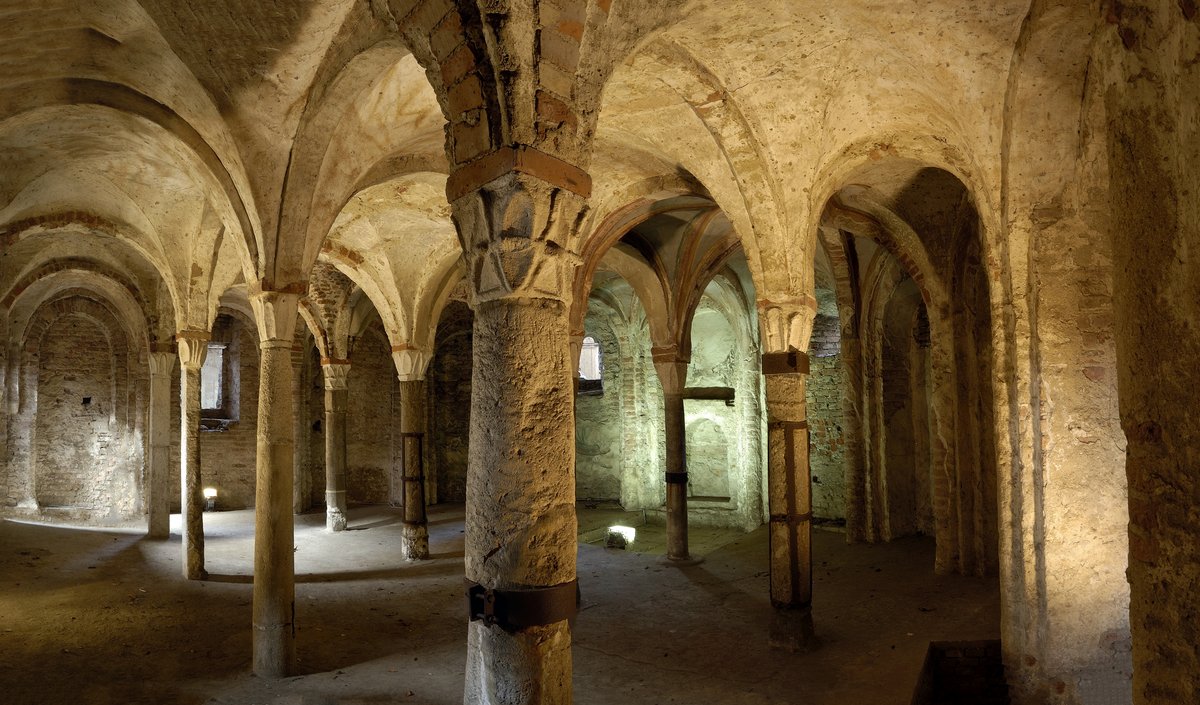 Descending into a semi-basement crypt, you discover one of the oldest testimonies of Pavia: the Crypt of Saint Eusebius. Dating back to the 7th century, it was the Arian cathedral of the Lombards, commissioned by King Rothari. Today it is the only remnant of the church demolished in 1923. Inside, the barbaric capitals with alveoli for colored glass pastes tell of an art that breaks with classical tradition, inspired by goldsmithing. The 12th-century frescoes, although faded, show Byzantine saints and a Madonna and Child. To visit it, you must book through the Civic Museums of Pavia. A surprising place, away from tourist circuits.
- Piazza Leonardo da Vinci, Pavia (PV)
- Open in Google Maps
- View on Google Images
You should go if…
Stop no. 5
Basilica of San Teodoro: A Glimpse of the Ticino Between History and Art
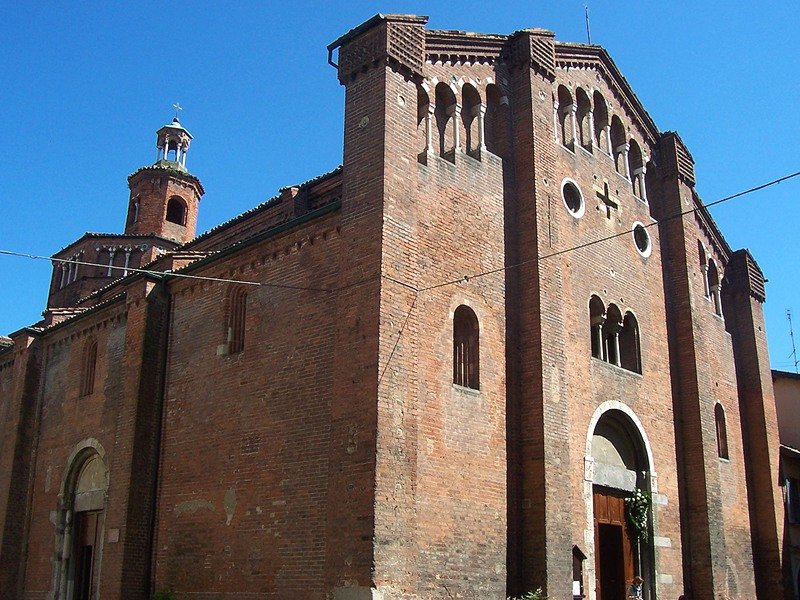 After the crypt, a Romanesque gem awaits you: the Basilica of San Teodoro. Built in the 12th century on the fishermen’s quarter, its brick facade is decorated with ceramic basins, typical of Pavia’s Romanesque style. Step inside and be amazed: the 16th-century frescoes, such as the Stories of San Teodoro and the views of Pavia attributed to Bernardino Lanzani, show the city ‘bristling with towers’ during the 1522 siege. Beneath the presbytery, the 13th-century crypt houses the saint’s granite sarcophagus and a medieval mosaic floor. Admission is free, open daily 7:00 AM–7:00 PM. A place that combines art, history, and popular devotion.
- Piazza San Teodoro, Pavia (PV)
- Open in Google Maps
- View on Google Images
You should go if…
Stop no. 6
Civic Tower: The Void That Tells a Story
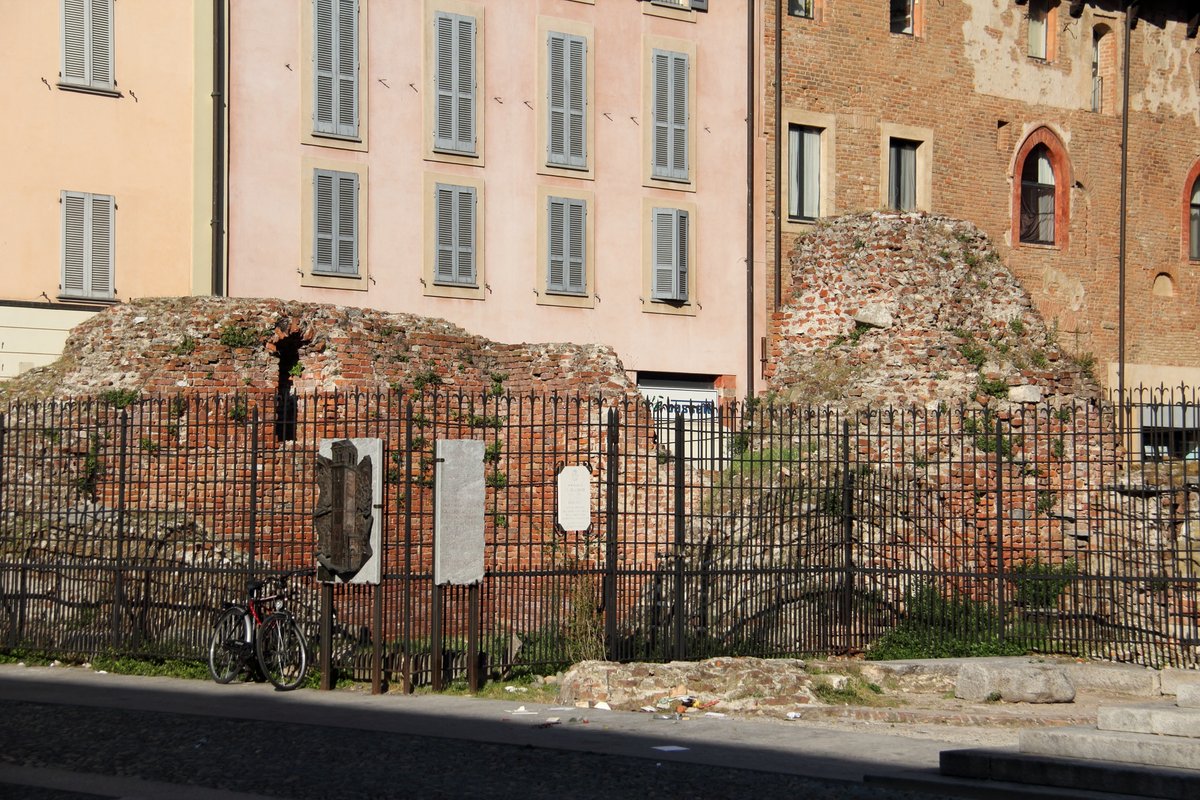 From the Basilica of San Teodoro, you move towards the heart of the city, but here you won’t find a tower: you’ll find an absence that strikes you. The Civic Tower stood 78 meters tall, a symbol of civic power since the Middle Ages, its bells marking the rhythm of public life. On March 17, 1989, at 8:55 AM, it suddenly collapsed, killing 4 people and injuring 15. Today, next to the Duomo, a pool of water and light displays remember the victims, while the stone remains lie in the castle moat. It is a place that makes you reflect: the silence of the square tells more than any intact monument. The memorial, inaugurated in 2014, is a plunge into the fragility of history.
- Via Giovanni Antonio Omodeo, Pavia (PV)
- Open in Google Maps
- View on Google Images
You should go if…
Stop no. 7
Church of Santa Maria Incoronata di Canepanova
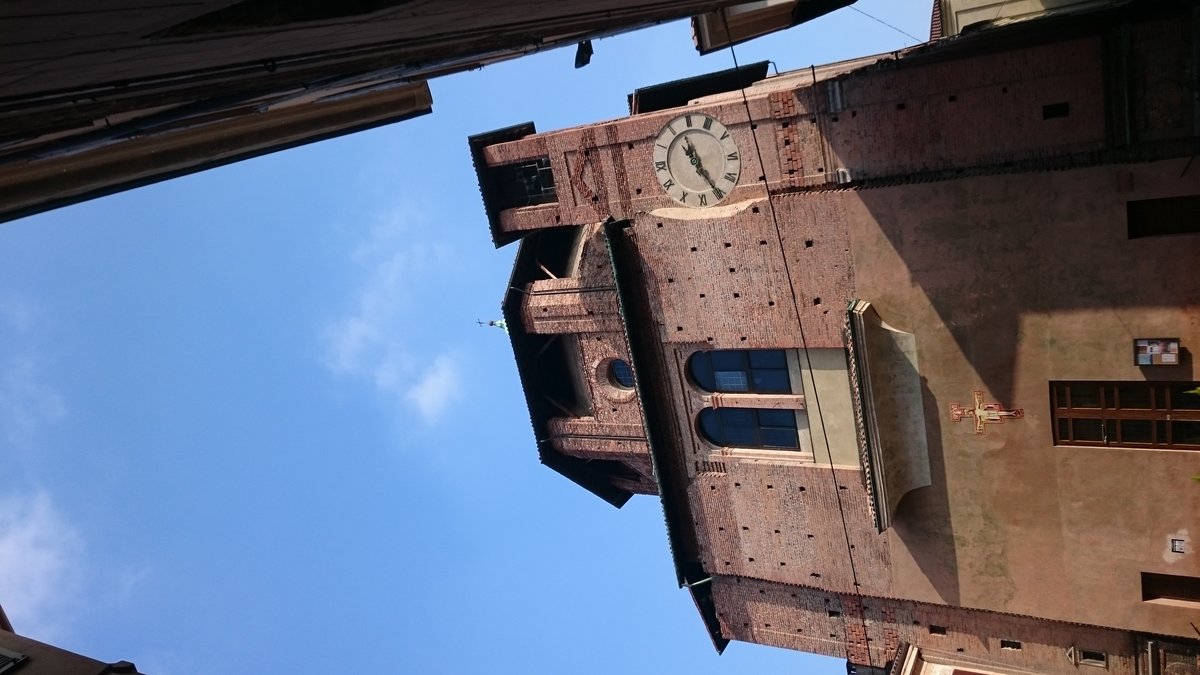 After the quiet of the Civic Tower, you step into a different atmosphere. The Church of Santa Maria Incoronata di Canepanova is a jewel of the Lombard Renaissance, built to house a fifteenth-century fresco of the Madonna del Latte (Nursing Madonna), considered miraculous. Built from 1500 onward on a design possibly by Bramante or Cristoforo Solari, its central square plan with an octagonal drum and four corner towers immediately strikes the eye. The interior, however, is a Baroque triumph: frescoes by Moncalvo, Giulio Cesare and Camillo Procaccini create a false perspective that seems to enlarge the spaces. The dome, decorated by Giovanni Battista Longone, adds a touch of illusion. Don’t miss the high altar with the Madonna del Latte enclosed in an alabaster monument by Tommaso Orsolino. The church, entrusted to the Franciscan Friars since 1915, is a true museum of seventeenth-century art. Fun fact: under the presbytery there is an octagonal crypt with sarcophagi of nobles.
- Via Ada Negri, Pavia (PV)
- Open in Google Maps
- View on Google Images
You should go if…
Stop no. 8
Porta Nuova: The Ancient Gate on the Ticino
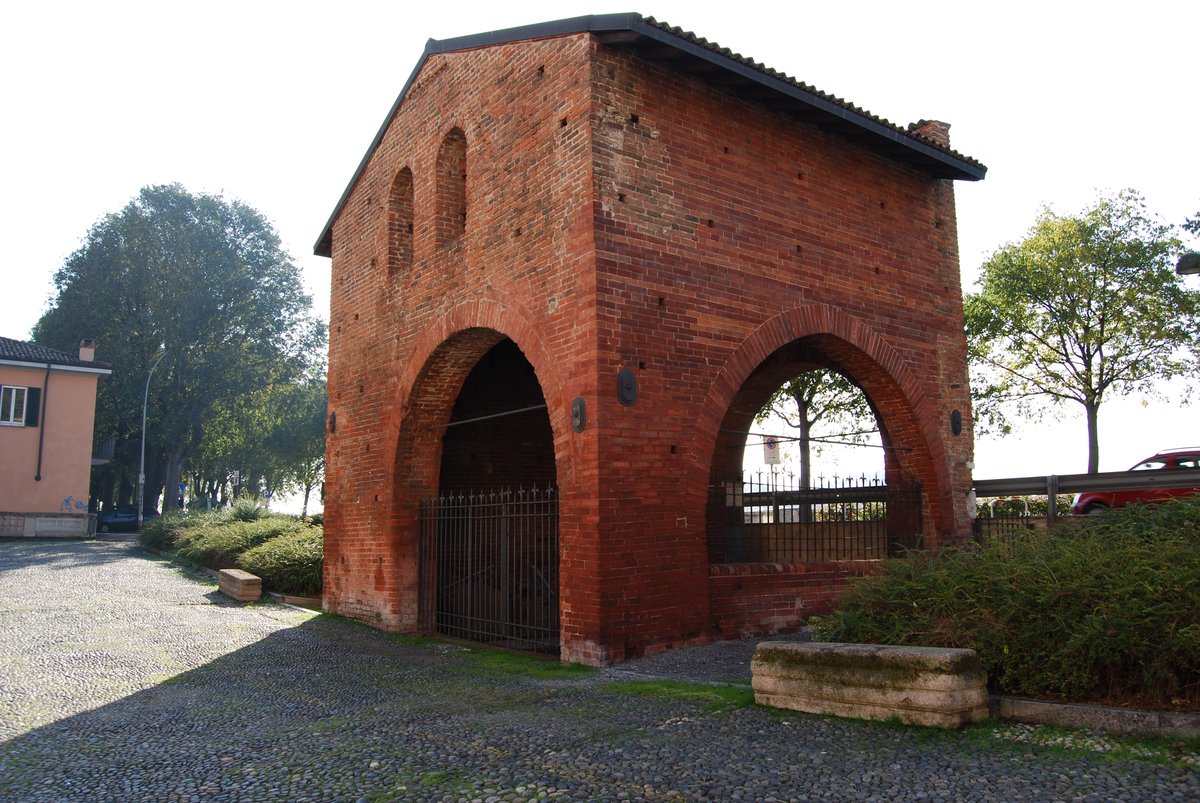 The final stop takes you along the banks of the Ticino, where Porta Nuova stands as a solitary witness to Pavia’s ancient walls. Built between the 12th and 16th centuries, this Romanesque gate with a square plan was once the passage to a boat bridge called “new,” from which it takes its name. Until 2001 it lay abandoned, propped up by wooden centering, but a restoration by the Politecnico di Milano gave it back to the city. Today you can admire it in its dual guise: the façade facing the river, rich with carved ashlars and a double radial pattern in white stone, and the one toward the city, more sober. Above the passage arch, three mullioned windows and a ceramic basin on the keystone. Inside, a wooden slab divides two floors, similar to the logic of the Broletto. Together with Porta Calcinara, it is the only surviving medieval gate. A perfect place to end the journey, breathing in history and the view of the river.
- Viale Lungoticino Sforza, Pavia (PV)
- Open in Google Maps
- View on Google Images
You should go if…