Discover Lodi in a day with this cultural itinerary through the historic center that takes you to explore its Renaissance treasures. Start from the magnificent Church of the Beata Vergine Incoronata, a 15th-century jewel with its frescoes and octagonal dome, then continue to Piazza della Vittoria, the vibrant heart of the city dominated by the Cathedral and the Broletto. Along the way, you'll admire historic palaces like Palazzo Vistarini and Palazzo Mozzanica, breathing in the authentic atmosphere of a city that has preserved its medieval charm intact. This cultural itinerary in the center of Lodi is perfect for those seeking art and history without venturing too far from Milan.
🗺️ Your trip at a glance
Discover Lodi's historic center with an 8-stop cultural itinerary, spanning from the Renaissance to 19th-century science. A perfect one-day walking tour rich in art, history, and authentic atmosphere.
- Ideal for
enthusiasts of Renaissance art, Lombard history, and travelers seeking cultural destinations off the main tourist trails.- Highlights
8 well-defined stops with interactive maps, from the spirituality of the Beata Vergine Incoronata to the science of the Gorini Collection, in a compact walking route through the historic center.- Perfect for those
seeking a complete one-day cultural itinerary, blending sacred art, historic architecture, and a unique scientific stop, easily accessible from Milan.
Itinerary stops
Stop no. 1
Civic Temple of the Blessed Crowned Virgin
 Let's begin our itinerary at this extraordinary place, which welcomes you with its Lombard brick facade and elegant marble portal. Upon entering, you'll be struck by the octagonal floor plan and the frescoed dome, a masterpiece of Lodi Renaissance art. The main chapel houses the precious fresco of the Crowned Madonna, an object of centuries-old veneration. Take time to observe the pictorial cycles by Albertino Piazza and his pupils, which narrate Marian stories with vibrant colors and harmonious compositions. The intimate and luminous atmosphere, filtered through the stained-glass windows, invites contemplation. Don't miss the small adjacent cloister, perfect for a quiet moment before continuing toward Piazza della Vittoria.
- Via Incoronata, Lodi (LO)
- Open in Google Maps
- View on Google Images

You should go if...
Stop no. 2
Victory Square
 Upon arriving at Victory Square, you are immediately greeted by the vibrant atmosphere of Lodi's historic center. This rectangular square, surrounded by seventeenth-century porticoes, is the true living room of the city where locals gather for coffee or a stroll. At its center stands the Piazza Fountain, an eighteenth-century masterpiece that dominates the space with its elegant marble structure. The porticoes host historic venues like Caffè dell'Artista, a landmark for culture enthusiasts. To the north of the square rises Vistarini Palace, with its Renaissance façade telling centuries of the city's history. The square is also the ideal starting point to explore the rest of the center, with pedestrian streets branching out towards the main monuments. Here you can sense the true character of Lodi, between the elegance of historic architecture and the liveliness of daily life.
- Piazza della Vittoria, Lodi (LO)
- Open in Google Maps
- View on Google Images
You should go if...
Stop no. 3
Diocesan Museum of Sacred Art
 Leaving behind the liveliness of Piazza della Vittoria, you'll reach Piazza Mercato where the Diocesan Museum of Sacred Art is located, housed within the Bishop's Palace. This museum safeguards an artistic heritage of extraordinary value, with works spanning from the Middle Ages to the Baroque period. Among the most significant pieces stand out the illuminated manuscripts from the ancient cathedral and the precious Renaissance altarpieces. Particularly moving is the section dedicated to sacred vestments, where you can admire liturgical garments embroidered in gold and silver. The exhibition route unfolds through halls that still preserve the original frescoes, creating an intimate and evocative atmosphere. Here you'll discover works by Lodi artists such as Callisto Piazza and Alberto da Lodi, witnesses to the rich local artistic tradition. The museum offers a unique perspective on the devotion and sacred art that have characterized Lodi's history.
- Piazza Mercato, Lodi (LO)
- Open in Google Maps
- View on Google Images
You should go if...
Stop no. 4
Vistarini Palace
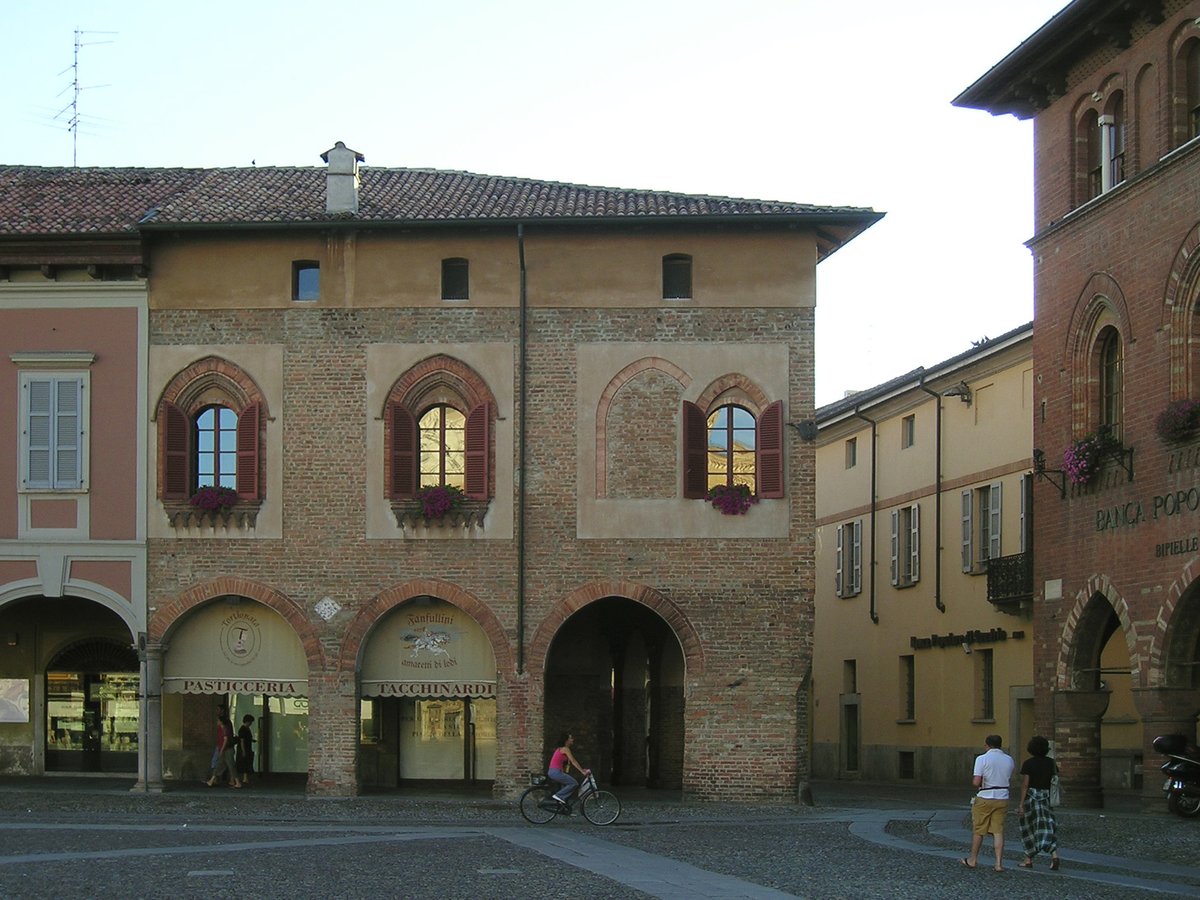 After exploring the sacred collections of the Diocesan Museum, you find yourself once again in the beating heart of Lodi, where Vistarini Palace stands imposingly over Piazza della Vittoria. This fifteenth-century building represents one of the best-preserved examples of Renaissance architecture in Lodi, with its brick facade alternating between biforate windows and terracotta decorations. Built for the powerful Vistarini family, the palace still displays signs of its noble past through the carved portals and wrought iron grilles that adorn its openings. Looking closely, you'll notice the details of the anthropomorphic corbels supporting the cornice, a typical feature of Lombard art from the fifteenth century. Although the interior is generally not accessible to the public, the exterior deserves a stop to appreciate how the building harmoniously dialogues with the other monuments in the square, creating that perfect balance between civil and religious power that characterizes Lodi's historic center.
- Piazza della Vittoria, Lodi (LO)
- Open in Google Maps
- View on Google Images
You should go if...
Stop no. 5
Church of San Filippo Neri
 Leaving behind the Renaissance grandeur of Palazzo Vistarini, you immerse yourself in the intimate atmosphere of the Church of San Filippo Neri, located along Corso Umberto Primo. Built in the 17th century by the Oratorian order, the building stands out for its sober brick facade, which conceals an interior rich in artworks. As soon as you cross the threshold, your gaze is captured by the polychrome marble high altar and the 17th-century canvases adorning the side chapels. Particularly significant is the altarpiece by Giovanni Battista Discepoli, a Lodi-born artist who left here one of his most representative works. The church also houses a historic organ in perfect working order, still used today for concerts and celebrations. Observing carefully, you will notice the details of the barrel vaults and gilded stuccoes that embellish the spaces, creating a harmonious dialogue between architecture and decoration typical of Lombard Baroque.
- Corso Umberto Primo, Lodi (LO)
- Open in Google Maps
- View on Google Images
You should go if...
Stop no. 6
Paolo Gorini Anatomical Collection
 After the baroque spirituality of San Filippo Neri, the visit to the Paolo Gorini Anatomical Collection immerses you in a world of 19th-century science and anatomy. Located at Via Agostino Bassi 1, this unique collection stems from the work of the renowned Lodi scientist Paolo Gorini, a pioneer in body preservation techniques. Here you can admire anatomical preparations created with innovative methods, including skeletons, organs, and entire bodies perfectly preserved. The display cases house specimens that illustrate the evolution of medicine, with detailed dissections and educational models used for teaching. Observing up close, you'll notice the precision of the incisions and the attention to human structure, evidence of an era when science began to unveil the secrets of the body. The collection, housed in sober and well-organized spaces, offers an authentic glimpse into 19th-century research, far from the more beaten tourist paths.
- Via Agostino Bassi 1, Lodi (LO)
- Open in Google Maps
- View on Google Images
You should go if...
Stop no. 7
Church of San Francesco
 Leaving behind the scientific uniqueness of the Gorini Collection, you find yourself immersed in the intimate atmosphere of Piazza Ospitale, where the Church of San Francesco stands. This religious building, founded in the 13th century, represents one of the most significant examples of Franciscan architecture in Lombardy. Carefully observe the Lombard brick facade, characterized by essential lines that reflect the austerity of the Franciscan order. Inside, you will be struck by the perfectly preserved 14th-century cloister, with pointed arches and marble columns that create evocative plays of light. Don't miss the side chapel dedicated to Saint Bernardino of Siena, where you can admire 15th-century frescoes depicting episodes from the saint's life. The church also houses a still-functioning ancient organ, used during liturgical celebrations. The silence that reigns in this place will allow you to fully appreciate Franciscan spirituality, away from the chaos of the city center.
- Piazza Ospitale, Lodi (LO)
- Open in Google Maps
- View on Google Images
You should go if...
Stop no. 8
Cloister of the Pharmacy
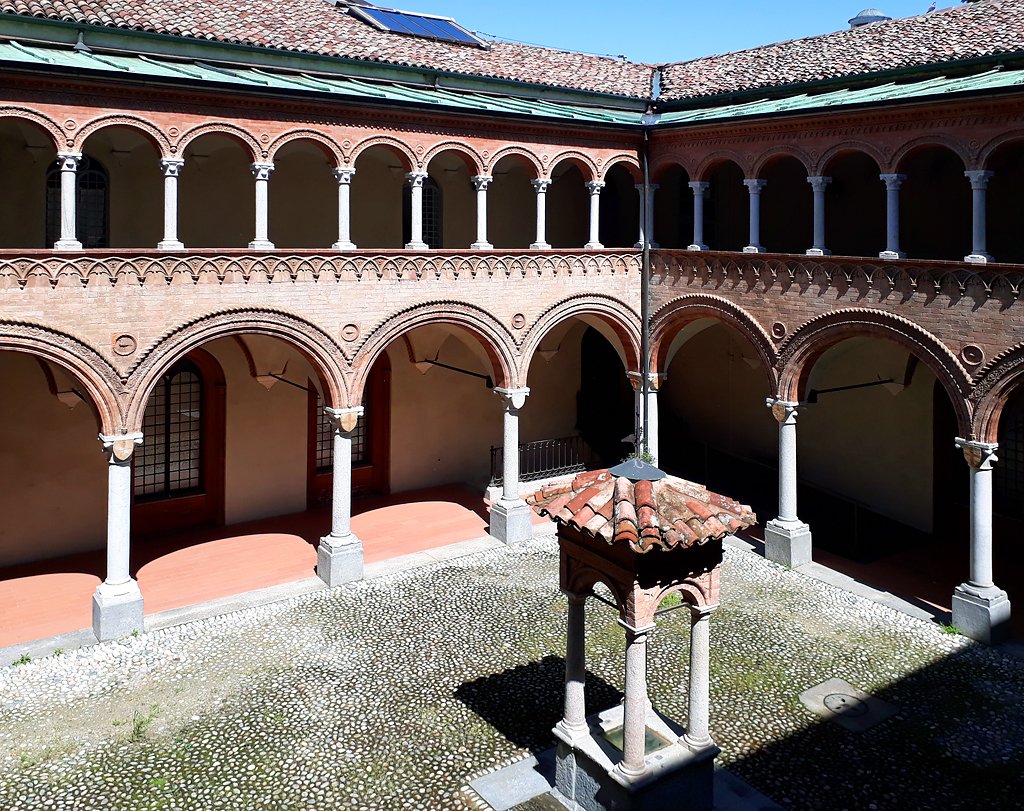 After admiring the sober elegance of the Church of San Francesco, the route leads you to the Cloister of the Pharmacy, an architectural gem that will surprise you with its intimate atmosphere. This space, part of the former Santa Maria della Misericordia hospital complex, dates back to the 15th century and represents one of the best-preserved examples of Renaissance architecture in Lodi. Look closely at the Candoglia marble columns supporting round arches, creating perfect geometric balance. The capitals decorated with vegetal motifs and the frescoed lunettes tell centuries of local history. This was once the site of the hospital's ancient pharmacy, where medicinal remedies were prepared for the community. The silence enveloping this cloister allows you to imagine the monastic life that once animated these spaces, far from the bustle of Piazza della Vittoria.
- Chiostro della Farmacia, Lodi (LO)
- Open in Google Maps
- View on Google Images
You should go if...