
San Mercuriale Abbey is the Romanesque symbol of Forlì, founded in the 9th century and rebuilt in the 12th. It dominates Piazza Saffi with its medieval bell tower and offers an atmosphere of peace in the city center.
- 75-meter Romanesque bell tower – one of the tallest in Romagna, visible from all over the city
- Original 12th-century brick structure perfectly preserved
- Renaissance cloister with stone arches and columns, a tranquil corner
- Majestic central nave with valuable original terracotta flooring
Events nearby
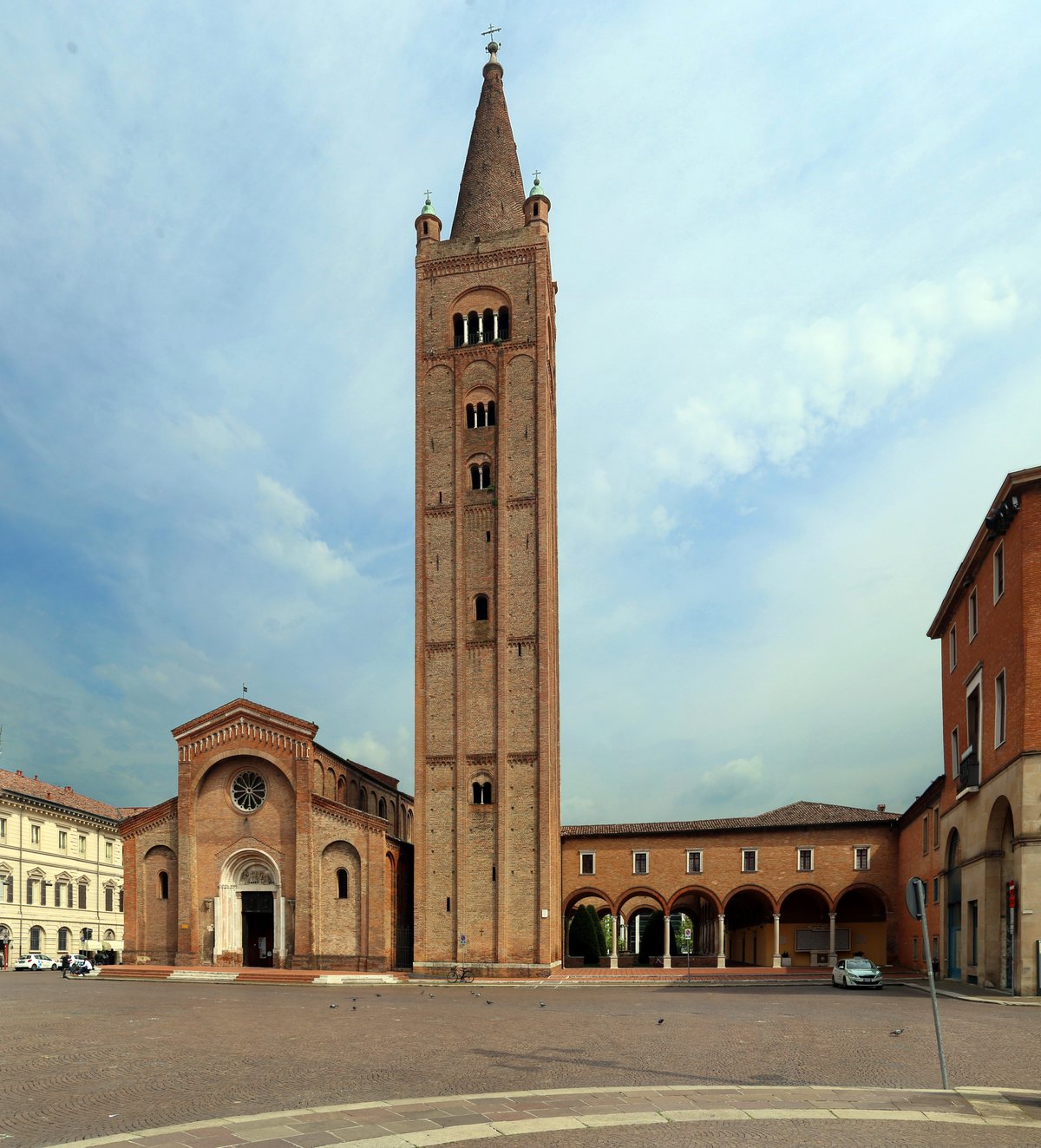
Forlì’s oldest monument with 12th-century Romanesque structure, 75-meter-high bell tower, and Renaissance cloister in the heart of Piazza Saffi. Majestic central nave and original terracotta flooring.
- Piazzetta delle Poste, Forlì (FC)
- Open in Google Maps
- View on Google Images Abbazia di San Mercuriale a Forlì
Good to know
Introduction
The Abbey of San Mercuriale welcomes you in the heart of Forlì with its Romanesque bell tower majestically rising over the square. This monastic complex, founded in the 9th century, is an architectural gem blending different styles: from the Romanesque of the bell tower to the Renaissance of the cloister. Upon entering, you breathe an atmosphere of peace, far from the city chaos. The brick facade and the slender tower create a unique visual imprint, a symbol of the city. It’s a place that speaks of history and spirituality, perfect for a restorative break during your visit to Forlì.
Historical Overview
The Abbey has ancient origins: it was founded in 884 by Benedictine monks on the site of a previous religious building. In the 12th century, it was rebuilt in Romanesque style, and the bell tower, completed in 1180, became a landmark for the city. In the 15th century, under the rule of the Ordelaffi family, the Renaissance cloister was added. The abbey has undergone centuries of transformations, evolving from monastery to parish church, while always maintaining its spiritual and community role. Today it still hosts religious services and cultural events.
- 884: Benedictine foundation
- 12th century: Romanesque reconstruction
- 1180: Bell tower completion
- 15th century: Addition of Renaissance cloister
The Symbolic Bell Tower
The San Mercuriale Bell Tower is the most iconic element of the abbey. Standing 75 meters tall, it features Lombard-Romanesque style with biforas and triforas ascending towards the top. Climbing it (when possible) offers a panoramic view over Forlì and the Apennines. The brick-built tower has withstood earthquakes and wars, becoming a symbol of resilience. Inside, historic bells still mark the city’s time. It’s a must-see for lovers of medieval architecture and urban panoramas.
Renaissance Cloister
The inner cloister is an oasis of tranquility, with arches supported by stone columns and decorations typical of the Renaissance. Here, monks would walk in prayer, and today visitors can admire the harmony of forms and the light filtering through the porticoes. The cloister connects the church to the monastic quarters and is often used for exhibitions or moments of reflection. It’s the perfect spot for a contemplative break, away from the outside noise.
Why Visit It
Visit the Abbey for three concrete reasons: first, the Romanesque bell tower is a rare example of well-preserved medieval architecture in Emilia-Romagna. Second, the Renaissance cloister offers a serene atmosphere perfect for a break. Third, its central location in Piazza Saffi allows you to combine your visit with other monuments like the Town Hall, without long journeys. It’s free and accessible, ideal for a traveler with limited time.
When to Go
The best time to visit is early in the morning, when the sunlight illuminates the brick facade and the cloister is still quiet. In spring or autumn, the colors of the Romagna sky enhance the beauty of the abbey, avoiding the summer peak hours. If you wish to attend a service, check the mass times for a more authentic experience.
In the Surroundings
Just steps away, explore the San Domenico Museums to admire art collections and temporary exhibitions. Or, savor local flavors in one of the typical trattorias in the center, where you can taste Romagna piadina and Sangiovese. Both locations enrich your visit with culture and gastronomy, without straying from the heart of Forlì.
Itineraries nearby

💡 Did You Know…?
Legend has it that the name derives from Saint Mercurialis, the first bishop of Forlì, who according to tradition defeated a dragon in the Forlì countryside. The abbey also houses the tomb of Barbara Manfredi, a noblewoman from Forlì in the fifteenth century, whose story of love and tragedy inspired artists and writers. During restoration work, traces of medieval frescoes were discovered beneath the plaster, evidence of the different decorative phases that have succeeded one another over the centuries.