
🧭 What to Expect
- Ideal for a cultural and gastronomic weekend
- Highlights: Basilica of Sant'Andrea, Borgogna Museum, rice fields and local cuisine
- Suitable for families, couples, and solo travelers
- Best time: spring and autumn for mild weather and rice field colors
Events nearby
Vercelli is much more than a provincial town: it is a crossroads of history, art, and agricultural traditions. Famous for its seemingly endless rice fields, the city boasts a first-rate monumental heritage. The Basilica of Sant'Andrea, a Romanesque-Gothic masterpiece, is the city's symbol, but don't miss the Cathedral of Sant'Eusebio, the Visconti Castle, and the extraordinary Synagogue, a testament to the historic Jewish community. Museums like the Francesco Borgogna Museum and the Leone Museum house collections ranging from ancient art to archaeology. Strolling through the center, you'll discover elegant squares like Piazza Cavour and hidden corners like the Church of San Marco. And then there's the food: rice is the star, from classic paniscia to refined risottos. Vercelli is also an ideal starting point to explore the rice fields and farmhouses of the Vercelli plain. A destination that surprises with its authenticity and richness.
Overview
- Basilica of Sant'Andrea: Jewel of Italian Gothic
- Cathedral of Saint Eusebius: Between History and Sacred Art
- Visconteo Castle: A Dive into History Amidst Towers and Courtrooms
- Vercelli Synagogue: A Monument to Emancipation
- Francesco Borgogna Museum: A Jewel Among the Rice Fields
- Civic Theatre of Vercelli
- Piazza Cavour: Vercelli's Living Room of History and Arcades
- The Ark in Vercelli: A Gothic Gem Revived Through Art and Glass
- Camillo Leone Museum: The Collector Who Gave a Museum to Vercelli
- Church of San Cristoforo: The Sistine Chapel of Vercelli
Itineraries nearby


Basilica of Sant'Andrea: Jewel of Italian Gothic
- Go to the page: Basilica of Sant'Andrea Vercelli: Medieval Cloister and 13th-Century Relics
- Piazza Guala Bicheri, Vercelli (VC)
- Open in Google Maps
- View on Google Images
 If there is one monument that sums up Vercelli in a few lines, it is the Basilica of Sant'Andrea. I found myself before this marvel almost by chance, and was utterly captivated. It is considered the first Gothic church in Piedmont, and rightly so: built between 1219 and 1227 at the behest of Cardinal Guala Bicchieri, it blends Romanesque austerity with the vertical thrust of French Gothic, thanks to the influence of the canons of Saint-Victor of Paris. The façade is a triumph of bichrome: green stone from Pralungo, light calcarenite, red brick. Two twin bell towers frame the rose window, a rarity in Italy. The lunettes of the portals are carved with scenes of the martyrdom of Saint Andrew and the offering of the church by the cardinal, works of the Antelami school. Inside, the spectacle continues: red pointed arches on white walls create a contrast that enhances the verticality. Do not miss the funerary monument of Abbot Tommaso Gallo from the 14th century, with high reliefs and frescoes, and the wooden choir of 1511 by Paolo Sacca, with inlays including a view of the basilica itself. The atmosphere is intimate, almost mystical. From the lateral cloister, with its round arches, you can enjoy an unusual view of the church's flank. The whole thing is easily visited on foot from the center. An unmissable stop for lovers of medieval art.
Cathedral of Saint Eusebius: Between History and Sacred Art
- Go to the page: Sant'Eusebio Cathedral: The Ottonian Crucifix and Treasures of the Duomo
- Piazza Papa Giovanni Ventitreesimo, Vercelli (VC)
- Open in Google Maps
- View on Google Images
 The Cathedral of Saint Eusebius is the spiritual heart of Vercelli. Dedicated to the patron saint of Piedmont, it stands on a Roman necropolis where the first martyrs were buried. The current building, begun in 1570 under the design of Pellegrino Tibaldi, blends different styles: the Baroque façade by Benedetto Alfieri, the 19th-century dome, and the 12th-century Romanesque bell tower, the only remaining part of the ancient basilica. Inside, you will be immediately struck by the Ottonian crucifix, a masterpiece in silver sheet metal over three meters tall, dating to around the year 1000. It depicts Christ triumphant, with scenes of the Ascension and the Descent into Limbo. It suffered severe vandalism in 1983, but after restoration it has returned to its former glory. Don't miss the Madonna dello Schiaffo, a 13th-century marble statue: according to tradition, a spot on her cheek is a sign of a miracle. The Chapel of Blessed Amadeus IX is a Baroque jewel with the tombs of the House of Savoy, while the bright Chapel of Saint Eusebius holds the saint's relics. The mosaic floor and the Mascioni organ from 1910 complete the beauty. Next door, the Museo del Tesoro del Duomo displays reliquaries and the Evangelary of Saint Eusebius. Open daily (hours vary). Enter, and you will feel enveloped by centuries of faith and art.
Visconteo Castle: A Dive into History Amidst Towers and Courtrooms
- Via Conte Rosso, Vercelli (VC)
- Open in Google Maps
- View on Google Images
 If you think a castle is just a medieval fortress, get ready to think again: the Visconteo Castle in Vercelli is today none other than the city's courthouse. Yet, just looking at its square bulk with corner towers tells you that history is at home here. Built around 1290 at the behest of Matteo Visconti, it probably rose on older structures, in an area that was then between the Jewish ghetto and the Duomo. For over a century it was the residence of the Visconti podestà, until in 1427 Vercelli passed to the House of Savoy and the castle became a Savoyard residence. The Blessed Amedeo died here in 1472. In 1638 it suffered heavy damage during the Spanish siege, and over time it was transformed: a barracks under Napoleon, a prison in the 19th century, and finally, since 1926, a courthouse. The original structure is still clearly recognizable: square plan, corner towers, and traces of the moat that surrounded it on three sides. Of the three entrances with drawbridges, one is still in use on the south side. Walking around, you can notice the north-east tower, which once aligned with the city walls, while the south-east one was more external. Inside, the ancient courtyard has been largely occupied by more recent constructions, but restorations have preserved the layout. Unfortunately, access is limited because it is a judicial office, but the exterior view is worth a stop. If you get the chance, try to peer through the windows: you might almost hear the echo of trials taking place within the same walls where the podestà once administered justice.
Vercelli Synagogue: A Monument to Emancipation
- Via Elia Emanuele Foa, Vercelli (VC)
- Open in Google Maps
- View on Google Images
 Strolling through the streets of Vercelli's ancient ghetto on Via Foa, you'll come across a façade that takes your breath away: white and blue bands, battlements, and onion domes. This is the Vercelli Synagogue, a 19th-century masterpiece built between 1874 and 1878 to celebrate the emancipation of the Jewish community. The initial design by Marco Treves (the same architect of the Florence synagogue) proved too costly, so construction was entrusted to Giuseppe Locarni, who oversaw the work. The interior features three naves with an abundance of geometric decorations and polychrome stained glass windows by Michele Fornari. The aron and tevah are in the apse, illuminated by five windows. Climb to the women's gallery for a panoramic view. On the counter-façade, a pipe organ from 1878, unfortunately now in a state of disrepair. After World War II, the Jewish community drastically shrank, and the synagogue fell into decay. Only since 2003, thanks to restorations, has it regained its splendor. Today it can be visited by appointment (tel. 339 2579283) and houses the Jewish Museum in the women's gallery, set up in 2017. It is no longer used for daily worship due to the lack of a minyan, but it remains a powerful symbol of a centuries-old history. Prepare to be enchanted by this Moorish jewel, a must-see for anyone wanting to understand the soul of Vercelli.
Francesco Borgogna Museum: A Jewel Among the Rice Fields
- Via Antonio Borgogna 4, Vercelli (VC)
- https://www.museoborgogna.it/
- Open in Google Maps
- View on Google Images
- info@museoborgogna.it;stampa@museoborgogna.it
- +39 0161 252776
 If you're passing through Vercelli, you can't miss the Francesco Borgogna Museum, the second most important art gallery in Piedmont after the Galleria Sabauda in Turin. Born from the collecting passion of Antonio Borgogna – a lawyer, traveler, and philanthropist – the museum opened its doors in 1908 and today occupies three floors of an elegant neoclassical building. More than 800 works tell centuries of art: from Piedmontese Renaissance polyptychs (Gaudenzio Ferrari, Defendente Ferrari) to Flemish and Dutch paintings of the 1600s, passing through Italian Baroque. One of the absolute highlights is "Per ottanta centesimi!" by Angelo Morbelli (1895-97), which depicts women bent over in the rice fields – a Divisionist masterpiece that takes on special meaning here. But the beauty of the Borgogna is also the atmosphere: many rooms retain the original home-museum arrangement, with furniture, porcelain, and the Arab Room, an exotic space that evokes the founder's travels in the Middle East. The itinerary is chronological and by school, and you can almost feel the love for art. Limited hours (Thursday and Friday afternoon, Saturday and Sunday), ticket €10. A place worth the trip, if only for that plunge into the Vercelli of yesteryear.
Civic Theatre of Vercelli
- Via Giuseppe Verdi, Vercelli (VC)
- https://www.comune.vercelli.it/cultura-turismo/teatro-civico
- Open in Google Maps
- View on Google Images
- +39 0161 255544
 If you're passing through Vercelli, the Civic Theatre is worth a stop. Located on Via Monte di Pietà, just a stone's throw from Piazza Cavour, it's the beating heart of the city's cultural life. Inaugurated in 1815 to a design by Nicola Nervi, the original building was destroyed by a fire in 1923. It was rebuilt between 1929 and 1931 by architects Giuseppe Rosso, Guido Allorio, and Paolo Verzone, and reopened with Verdi's Aida. Today, it features a classic Italian-style auditorium with a single tier of boxes and a gallery, seating 746 spectators. On the first floor, next to the foyer, you'll find the Museo del Teatro Civico, inaugurated in 2014 and dedicated to the theatre's history. Since 1950, it has been the home of the prestigious Giovan Battista Viotti International Music Competition and the Viotti Festival. Its programming ranges from drama to dance, concerts to musicals: for the 2024-2025 season, highlights include names like Luca Bizzarri, Alessandro Preziosi, Ambra Angiolini, and the Harlem Gospel Choir. The box office is open only on Wednesdays and Saturdays from 5 to 7 PM, but for up-to-date info, it's best to call 0161 255544. A tip? If you can, book a show: the acoustics are excellent and the intimate atmosphere will make you feel part of history.
Piazza Cavour: Vercelli's Living Room of History and Arcades
- Piazza Camillo Benso Conte di Cavour, Vercelli (VC)
- Open in Google Maps
- View on Google Images
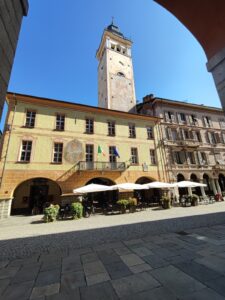
 Piazza Cavour is the heart of Vercelli, an open-air living room that has welcomed locals and visitors for over eight centuries. Originally called Piazza Maggiore, it was dedicated to Count of Cavour in 1864, a statesman who did much for rice cultivation in the area. The square is trapezoidal and surrounded by medieval arcades, each with its own name: Portici dei Brentatori with pointed arches, Portici dell'Angelo with terracotta decorations, Portici della Stella, and Portici di San Tommaso. Beneath these arcades lie historic pastry shops like Taverna & Tarnuzzer, where you can taste bicciolani. At the center, the monument to Cavour with allegorical statues. But the real symbol is the Torre dell'Angelo, octagonal and crenellated, with the legend of a man saved by an angel. Next to it, the Civic Tower, 38 meters high, an ancient clock tower. The square is pedestrian, perfect for a stroll. If you come on Tuesday or Friday morning, you'll find the city market. In short, a place that encapsulates Vercelli's history and invites you to stop for a coffee under the arcades.
The Ark in Vercelli: A Gothic Gem Revived Through Art and Glass
- Via Giuseppe Verdi, Vercelli (VC)
- Open in Google Maps
- View on Google Images
 If you think Vercelli is just rice paddies and fog, get ready to change your mind. In the heart of the historic center, on Piazza San Marco, there's a place that blends medieval and contemporary in a surprising way: the former Church of San Marco, now the Arca Exhibition Center. Its history is long and troubled: work began in 1246 and ended only in 1479, amid financial difficulties and papal indulgences. Then, in 1799, worship ceased: the French cavalry turned it into a stable, and for nearly two centuries it was a fruit and vegetable market. Only in 2007, after extensive restoration, was it reborn as an exhibition space. The visual impact is stunning: in the central nave, suspended like a spaceship, there is a glass and steel parallelepiped, the Arca, designed by Ferdinando Fagnola. It touches neither columns nor walls: its transparent vaults allow glimpses of the Gothic structures and 15th-century frescoes restored by the Centro di Venaria Reale. On the right nave, a cycle on the Life of Mary (circa 1480, Novara workshop) and the mutilated Tree of Jesse stand out; on the left, a rare Saint Anthony Abbot with an open cloak (iconography of the Madonna of Mercy, uncovered in 2017). And then there's the Pettenati Chapel, reopened in 2022, with frescoes that look freshly painted. Today, the Arca hosts top-tier temporary exhibitions—from Peggy Guggenheim to Gaudenzio Ferrari—but it's worth a visit even on its own for the unique atmosphere. The ticket office closes half an hour before closing time, so keep an eye on the clock. And yes, it's a place that stays with you.
Camillo Leone Museum: The Collector Who Gave a Museum to Vercelli
- Via Santa Caterina, Vercelli (VC)
- http://www.museoleone.it
- Open in Google Maps
- View on Google Images
- info@museoleone.it
- +39 0161 253204
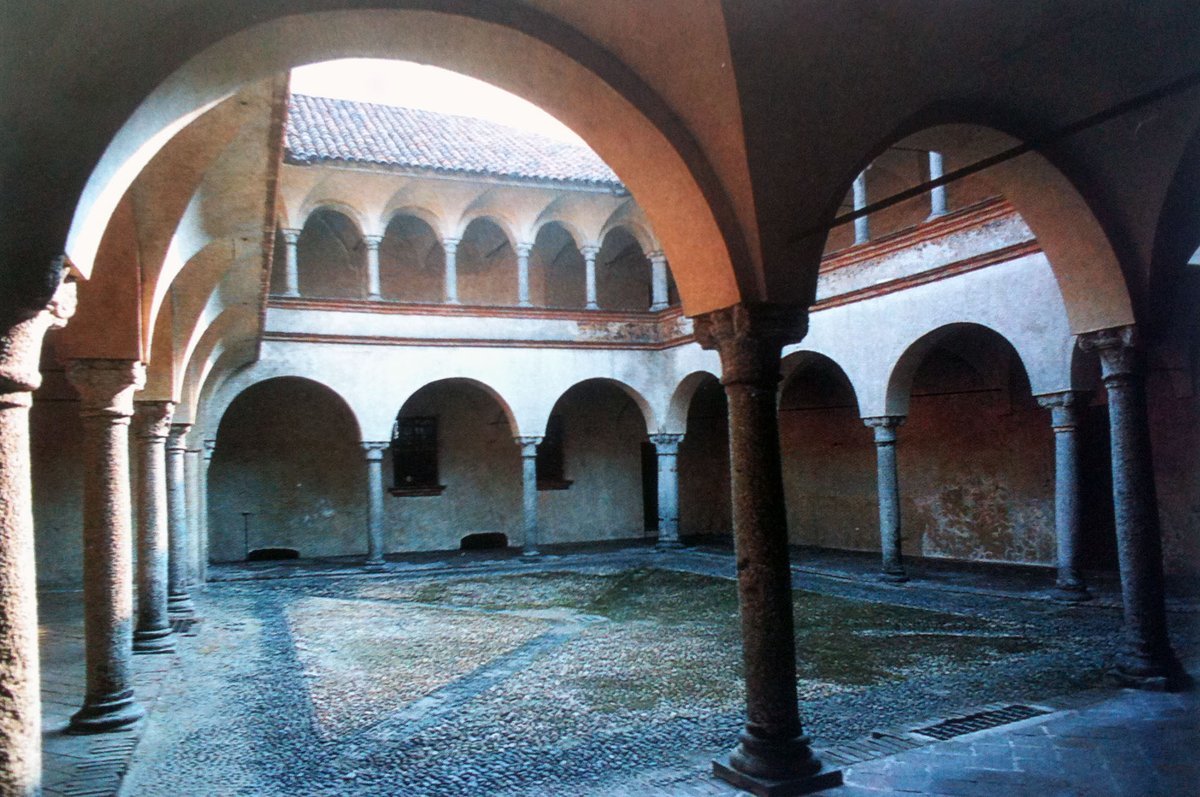 Vercelli hides a little-known gem: the Camillo Leone Museum, born from the collecting passion of notary Camillo Leone (1830–1907). After his death in 1910, his home and collections became the city's heritage. The museum occupies two connected historic buildings: the 16th-century Casa Alciati and the Baroque Palazzo Langosco, linked by a 1939 connecting wing, an example of rationalist museography. The visit is a plunge into history, from Prehistory to the 1800s. On the ground floor of Casa Alciati, thirteen rooms house archaeological finds, highlighting the extremely rare Latin-Gallic bilingual stele, a 1st-century BC stone inscription found near the Sesia River. In the basilica‑style halls, Roman artifacts such as inscriptions, sarcophagi, and glassware are displayed. Upstairs on the first floor of Palazzo Langosco, you enter the world of decorative arts: maiolica, porcelain, Venetian glass, and the precious casket of Cardinal Guala Bicchieri with 13th-century Limoges enamels. Also on display are ancient weapons and a library with over 1,200 incunabula. The museum is family‑friendly: since 2017 it has been recognized as 'Family and Kids Friendly' and organizes the activity 'Archaeologists for a Day', where children take part in a simulated excavation. Opening hours vary between winter and summer, so it's best to check the official website. If you're passing through Vercelli, stop by: here you can touch history with your own hands.
Church of San Cristoforo: The Sistine Chapel of Vercelli
- Via Luigi Quagliotti, Vercelli (VC)
- Open in Google Maps
- View on Google Images
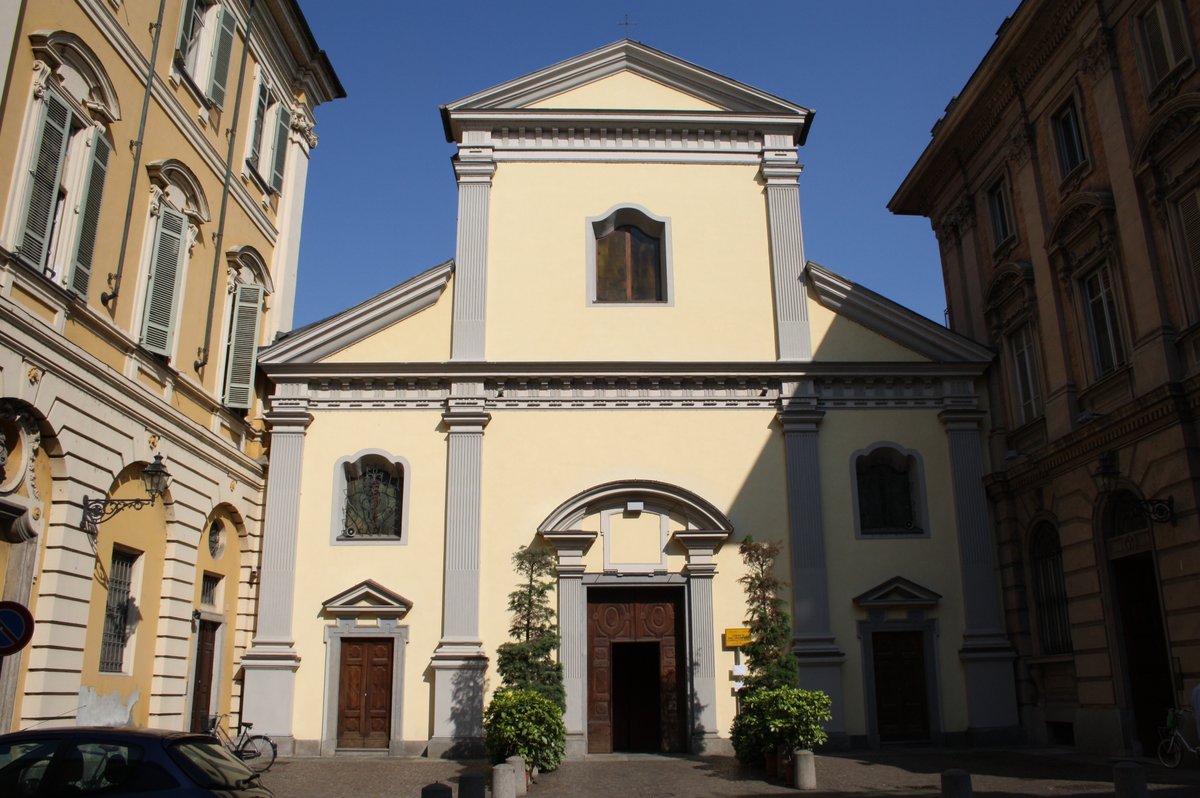 In the heart of Vercelli, the Church of San Cristoforo is much more than a place of worship: it is a true treasure chest of Renaissance art. Nicknamed the Sistine Chapel of Vercelli, it houses masterpieces by Gaudenzio Ferrari, created between 1529 and 1534. As soon as I entered, I was struck by the light filtering through the Baroque windows, but my gaze immediately went to the altarpiece of the Madonna of the Oranges (actually an apple tree, but let's call it that). The Virgin and Child are surrounded by saints and angel musicians: among these, a violin represents one of the first artistic depictions of the instrument. Moving into the transept, the Chapel of the Magdalene tells the stories of the saint with vivid frescoes, despite the signs of damage suffered during the siege of 1704. Opposite, the Chapel of the Virgin shows the Assumption and other Marian episodes. But the surprise comes when you look up: the 18th-century vault, frescoed by Bianchi and the Giovannini brothers, is a riot of illusionistic perspectives and medallions with the stories of Saint Christopher. Among the details, I noticed the saint's staff with two intertwined snakes, a symbol of protection against the plague. The polychrome marble balustrade, designed by Filippo Juvarra, elegantly separates the nave from the presbytery. In short, a stop here is mandatory: admission is free, and the church is open every day (weekdays 8:45–12:30 and 16:00–18:30, Sunday 8:45–18:00). Don't miss this hidden gem.