Introduction
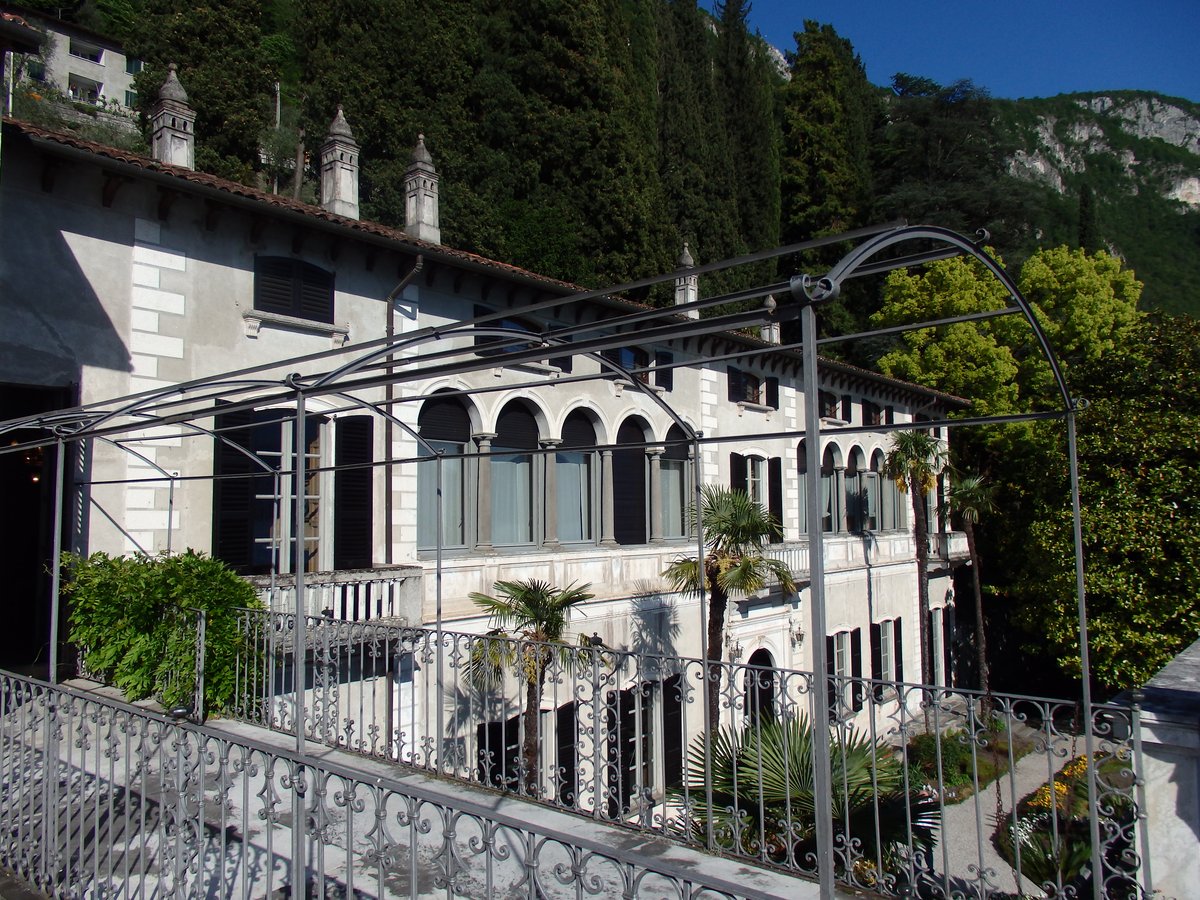
When you think of Villa Monastero, imagine a place that holds centuries of history in an embrace between lake and garden. Overlooking the eastern shore of Lake Como, between Varenna and Fiumelatte, this former monastic home turned noble residence is today a rare mix: a botanical garden nearly 2 km long along the lakeside, a house museum with 14 rooms rich in period furnishings, and an international conference center that hosted none other than Enrico Fermi. The contrast between the eclectic elegance of the villa and the lush exotic nature leaves you breathless. It’s a place to experience slowly, amid the scent of citrus and a view that stretches to the mountains.
Historical Notes
It all begins in the
13th century, when Cistercian monks founded the monastery of Santa Maria. In the 16th century, it passed to the Mornico family, who transformed it into a Renaissance villa. Engineer Pietro Genazzini in 1862 and noblewoman Carolina Maumari in 1869 added their touches. Since 1918, it has been state property, and in 1953 the Conference Center was established. The highlight? In
1954 Enrico Fermi held his last physics lectures here.
- 13th century: foundation of the Cistercian monastery
- 1869: purchase by Carolina Maumari
- 1918: transfer to the State
- 1953: establishment of the Conference Center
- 1954: Enrico Fermi gives lectures
- 2003: opening of the House Museum to the public
The Botanical Garden: A Journey Among Rare Species
The garden of Villa Monastero is an almost 2 km botanical trail that winds in terraces along the cliff. Here you will find African and American palms, agaves, yuccas, dracaenas, and rarities like the blue palm Erythea armata. Rows of cypresses and Lebanon cedars create a solemn atmosphere, while statues, small temples, and fountains dot the path. Not to be missed is the sculptural group “La Clemenza di Tito” by Comolli. The scent of citrus and oleanders mingles with the lake breeze. It’s a place that invites you to sit on a bench and lose yourself in the view of plants and water.
The House Museum: 14 Rooms of History and Charm
Overlooking the lake, the House Museum is a fully furnished museum with 18th and 19th century furniture. Each room has its own personality: the Black Room in Neo-Renaissance style, the Music Room with two period pianos, the Red Room with Neo-Rococo furnishings. The highlight is the Fermi Hall, where Enrico Fermi held his last lectures in 1954 – it is still intact, with blackboard and desk. Strolling through the 14 rooms, you can almost hear the voices of the illustrious guests who have stayed here, from scientists to writers. A dive into the past that exudes elegance and culture.
Why Visit It
Three concrete reasons. First: it’s the only place on Lake Como where you can combine a botanical walk along a flower-filled lakeside promenade with a visit to an intact historic residence. Second: the charm of having hosted a Nobel laureate – in Fermi Hall the atmosphere is almost sacred. Third: free entry for children under 12 and the possibility of arriving by boat with free docking (just book). In short, suitable for everyone: families, couples, history enthusiasts, and the simply curious. And with the cumulative ticket with Villa Cipressi, the visit becomes even richer.
When to Go
The most enchanting time? Late afternoon in spring or autumn, when the sunset light sets the lake waters and garden plants aglow. April, May, and September are ideal: mild temperatures, the garden in full bloom, and the Museum House open longer hours (until 7:30 PM). If you love warm colors, October offers spectacular foliage. Avoid January and February, as the villa is closed. In summer, days are long and you can take advantage of opening hours until 8:00 PM, but weekends can be crowded.
In the Surroundings
A stone’s throw from the villa, it’s worth seeing the source of the Fiumelatte, Italy’s shortest river (250 meters) described by Leonardo da Vinci. It flows only from March to October, a curious phenomenon. Then, a walk along the Greenway dei Patriarchi, a path that runs along the lake connecting Varenna to Fiumelatte, among olive trees and old villas. And of course the village of Varenna, with its Passeggiata degli Innamorati and the Church of San Giorgio. Everything can be easily explored on foot, maybe with an ice cream in hand.