
Santa Croce Cathedral is the religious heart of Forlì, with a unique architectural contrast between the neoclassical facade and the ancient Romanesque bell tower. Inside, light filters through the stained-glass windows, illuminating artworks like Marco Palmezzano’s polyptych. It’s an accessible spot for a moment of quiet in the historic center, just steps away from museums and local eateries.
- Neoclassical facade from 1841 and Romanesque bell tower from the 12th-13th century
- Chapel of the Madonna del Fuoco, patron saint of Forlì, with a 14th-century fresco
- Renaissance polyptych by Marco Palmezzano and an 18th-century organ
- Central location in Piazza Duomo, ideal for exploring the historic center
Events nearby
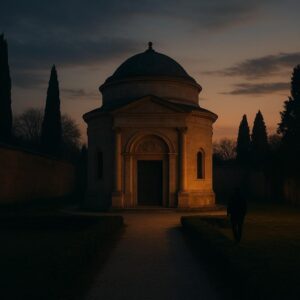
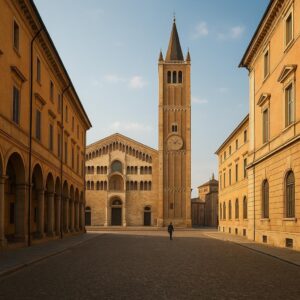
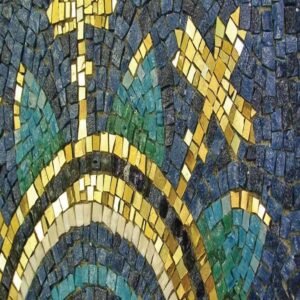

Santa Croce Cathedral in Forlì dominates Piazza Duomo with its neoclassical facade from 1841 and the Romanesque bell tower from the 12th century. Inside, majestic naves, the chapel of the Madonna del Fuoco, patron saint of the city, and an 18th-century organ.
- Via degli Orgogliosi, Cesena (FC)
- Open in Google Maps
- View on Google Images Cattedrale di Santa Croce a Cesena
Good to know
Introduction
As soon as you arrive in Piazza Duomo, the Cathedral of Santa Croce welcomes you with a unique architectural contrast: the neoclassical facade, sober and elegant, stands out against the sky, while the Romanesque bell tower, massive and ancient, tells centuries of history. This is the religious heart of Forlì, a place that is not just a sacred building but a symbol of the city, where every brick speaks of devotion and resilience. Upon entering, light filters through the stained glass windows, illuminating the naves and creating an atmosphere that invites quiet contemplation. It’s impossible not to feel part of something greater, especially when your gaze rests on the main altar or the side chapels, rich with works of art. Perfect for a spiritual or cultural break, the cathedral gives you an authentic snapshot of Forlì, away from the daily rush.
Historical Notes
The history of the Cathedral of Santa Croce dates back to the 12th century, when it was built on the site of a previous place of worship. However, it was in 1841 that the façade acquired its current neoclassical appearance, designed by architect Giulio Zambianchi. Damaged during World War II, it was faithfully reconstructed, maintaining its role as a landmark for the community. Inside, the Chapel of the Madonna del Fuoco stands out, dedicated to the patron saint of Forlì, featuring a 14th-century fresco that miraculously survived a fire. Timeline summary:
- 12th century: first records of the original church
- 1841: façade renovation in neoclassical style
- 1944-1945: war damage and subsequent reconstruction
- Today: symbol of civic resilience and faith
The Romanesque Bell Tower
The Cathedral’s bell tower is a Romanesque gem that soars with its brick structure, characteristic of medieval Forlì architecture. Tall and slender, it dates back to the 12th-13th century and features single and double lancet windows that accentuate its austere elegance. Climbing it (when possible) offers a panoramic view over Forlì, with its red-tiled roofs and the Romagna hills on the horizon. It’s one of the few original elements that have survived through the centuries, and observing it up close allows you to appreciate the details of the crafted bricks, witnesses to an era when every building told a story of craftsmanship and devotion. A must-see for architecture enthusiasts, who will find here a perfect example of Emilian-Romagnol Romanesque style.
Art and Interiors
Inside the Cathedral, art envelops you with works like the polyptych by Marco Palmezzano, a Renaissance painter from Forlì, which adorns a side chapel with sacred scenes in vivid colors. The spacious, luminous naves also host sculptures and frescoes restored after the war, including those in the Chapel of the Sacrament with its Baroque stuccoes. Don’t miss the eighteenth-century organ, still used for concerts, which adds a touch of grandeur to celebrations. It’s a journey into local sacred art, where every element—from altarpieces to confessionals—is meticulously detailed, making the visit an immersive experience for those seeking beauty and spirituality.
Why Visit
Visit the Cathedral of Santa Croce for three practical reasons: first, it’s free and accessible, perfect for a cultural break without spending money; second, the unique blend of styles—neoclassical and Romanesque—offers a miniature architectural story; third, its location in Piazza Duomo makes it an ideal starting point to explore the historic center of Forlì, with shops and cafés just steps away. Plus, if you happen to visit during a mass or concert, you can experience the vibrant atmosphere of the local community.
When to Go
The most enchanting time to visit is early afternoon, when the sunlight illuminates the neoclassical facade, highlighting its clean lines and creating beautiful shadow play on the bell tower. In autumn, with leaves falling across Piazza Duomo, the atmosphere becomes even more intimate and photogenic. Avoid weekend peak hours if you prefer tranquility.
In the Surroundings
Just a few minutes’ walk away, you’ll reach the Abbey of San Mercuriale, with its Romanesque bell tower reminiscent of the cathedral’s, offering a fascinating architectural comparison. Then, head to the San Domenico Museums to admire art collections that complete Forlì’s history, featuring archaeological finds and temporary exhibitions.
Itineraries nearby

💡 Did You Know…?
The Cathedral safeguards the relic of the Holy Cross, donated according to tradition by Saint Valerian in the 4th century. During restoration work, traces of a Paleo-Christian building were uncovered beneath the foundations. The bell tower, which survived the bombings of World War II, is one of the symbols of Forlì’s resilience.