
🧭 What to Expect
- Ideal for cultural travelers and history enthusiasts
- Highlights: Piazza del Campo, Duomo, Torre del Mangia
- UNESCO World Heritage since 1995
- Best time to visit: spring and autumn for mild weather
- Tip: buy the Siena Card for combined entry
Events nearby
Siena is a city to be experienced on foot; getting lost in the medieval alleys is the best way to discover its soul. The historic center, a UNESCO World Heritage site, is a Gothic masterpiece. The famous Piazza del Campo, shaped like a shell, is the beating heart where twice a year the Palio takes place. Right next to it, the Palazzo Pubblico and the impressive Torre del Mangia offer breathtaking views. Don't miss the Duomo, with its marble facade and the Piccolomini Library, and the Pinacoteca Nazionale which houses Sienese masterpieces. For a break, the Fortezza Medicea provides a panorama of the city. And also, the Basilica of San Domenico, linked to Saint Catherine, and the Fonte Gaia. This article guides you through the must-see stops in Siena, with practical tips for organizing your visit, avoiding tourist traps.
Overview
- Il Campo in Siena: A Shell-Shaped Piazza
- Cathedral of Santa Maria Assunta: Siena's Duomo
- Torre del Mangia: Climb to Siena's Sky
- Palazzo Pubblico: The Political Heart of Siena
- National Art Gallery: Gold-Ground Masterpieces
- Medicean Fortress: history, relaxation, and events just steps from the center
- Basilica Cateriniana of San Domenico: The Gothic Heart of Siena
- Museo dell'Opera della Metropolitana: A Treasure of Art
- Fonte Gaia: The Joyful Fountain of Piazza del Campo
- Baptistery of San Giovanni: The Jewel Beneath the Cathedral
- Basilica of Saint Francis: Between History, Art, and a Eucharistic Miracle
- Basilica of San Clemente in Santa Maria dei Servi
- Palazzo Salimbeni: the medieval heart of the world's oldest bank
- Oratory of San Bernardino and Diocesan Museum: A Hidden Gem
- Botanical Garden: A Natural Haven Within Siena's Walls
Itineraries nearby
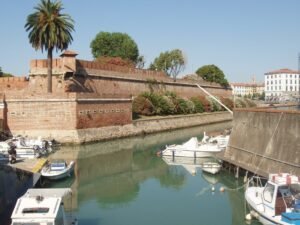

Il Campo in Siena: A Shell-Shaped Piazza
 When you arrive in Piazza del Campo, you immediately feel part of something bigger. Its unique shell shape, created by the intersection of three medieval streets, embraces you as you enter. The red brick paving in a herringbone pattern is divided by nine white travertine lines, symbolizing the nine governors of the Government of the Nine (1287-1355), a period of stability and peace for Siena. Each wedge converges toward Palazzo Pubblico, as if reminding of the city's unity.
In the center stands the Fonte Gaia, a monumental fountain sculpted by Jacopo della Quercia in 1419 (the original is at Santa Maria della Scala; here is a 19th-century copy by Tito Sarrocchi). The lowest point of the square is occupied by the “gavinone,” a water drainage system now embellished with a sculpture by Massimo Lippi. The circumference of the Campo measures 333 meters, and the outer part is in serena stone: during the Palio (July 2 and August 16) it is covered with tufa to protect horses and jockeys.
It's not just a postcard square: life happens here all year round. In winter there is the Christmas Mercato nel Campo, in summer concerts and events. But the true soul of the Campo explodes with the Palio, when the contrade compete in a breathtaking race. The bell “Sunto,” with its crack that gives it a hoarse sound, announces the start. While strolling, notice the historic buildings: the two- and three-light windows mandated by the 1297 regulations, the battlements of the Palazzo Civico. The Campo is not a museum; it's the living room of Siena. I recommend sitting on the bricks at sunset, watching the light caress the Torre del Mangia and listening to the buzz of the square: it's an experience that stays with you.
Cathedral of Santa Maria Assunta: Siena's Duomo
- Go to the page: Siena Cathedral: Unique Marble Floor and Works by Donatello
- Via dei Fusari, Siena (SI)
- https://operaduomo.siena.it/
- Open in Google Maps
- View on Google Images
 Here's the beating heart of Siena: the Duomo, dedicated to Santa Maria Assunta. It's not just a church, it's a concentration of centuries of art and faith. Construction began in the 12th century, but tradition holds that it was already consecrated in 1179 – though work continued for centuries. The façade, divided into two parts, is by Giovanni Pisano at the bottom and Camaino di Crescentino at the top: a riot of statues, pinnacles, and mosaics. Inside, the black-and-white bichromy envelops you, and your eyes immediately go to the pulpit by Nicola Pisano (1265-1268), a masterpiece of Gothic sculpture. Not to mention the floor: 56 marble inlay panels depicting biblical and allegorical stories – a unique work revealed only at certain times of the year. Among the treasures, the Piccolomini Library frescoed by Pinturicchio, the Chapel of the Vow with the 13th-century Madonna and statues by Bernini, and the Piccolomini Altar with four statues by Michelangelo. In short, every corner is a discovery. For visiting, keep an eye on the hours: from March 1 to November 1, it opens 10:30 AM–7:00 PM (holidays 1:30 PM–6:00 PM), while in winter it closes earlier. The ticket for the cathedral alone costs €4 to €7, depending on the season. And don't forget: the crypt discovered in 1999 preserves spectacular 13th-century frescoes. A tip? Take all the time you need: here, beauty is everywhere.
Torre del Mangia: Climb to Siena's Sky
- Go to the page: Torre del Mangia: 360-Degree View Over Siena and the Tuscan Hills from 88 Meters
- Via di Salicotto, Siena (SI)
- Open in Google Maps
- View on Google Images
 Climbing the Torre del Mangia is one of those experiences that stays with you. At 87 meters tall (102 with the lightning rod), it is the third tallest ancient tower in Italy – after the Asinelli in Bologna – and dominates Piazza del Campo with its slender silhouette. Built in brick between 1325 and 1348, the tower was meant to symbolize the power of the Commune of Siena, so much so that its height equals that of the Duomo's bell tower, reminding of the perfect balance between earthly and spiritual power. Its curious name comes from the first bell-ringer, Giovanni di Balduccio, nicknamed “Mangiaguadagni” (later shortened to “Mangia”) because instead of working he spent his entire salary at the tavern. A cheerful warning for those who climb its 400 steps today: better not waste your breath! The climb is challenging – no elevator, narrow and sometimes claustrophobic stairs – but once up top, the view rewards every effort. On one side, Siena's red rooftops; on the other, the Tuscan hills all the way to Monte Amiata. And then there's the bell: the Campanone, called “Sunto,” weighing 6,764 kg and still rung by hand during the Palio. That hoarse, imperfect sound is the voice of the city. Before going up, keep an eye on the hours (from 10:00 am, last entry 45 minutes before closing) and the ticket: €10 full price, or €15 combined with the Civic Museum. And for little ones? Free under 11. But attention: capacity is limited and tickets are sold only on the day. One tip: arrive early to avoid the queue and enjoy the city from above in all its medieval silence.
Palazzo Pubblico: The Political Heart of Siena
 Stepping into the Palazzo Pubblico means immersing yourself in the heart of Sienese history. Built between 1297 and 1310 for the Government of the Nine, this Gothic stone and brick building dominates Piazza del Campo with its curved facade, almost as if embracing the square. At its center stands the large disc with Christ's monogram, painted in 1425 by Battista di Niccolò. But the true treasures lie inside: the Sala della Pace (Hall of Peace) preserves the famous cycle by Ambrogio Lorenzetti, Allegory and Effects of Good and Bad Government (1338–1339), an absolute masterpiece of medieval art that conveys ideals of justice and prosperity. Right next to it, the Sala del Mappamondo houses Simone Martini's Maestà and the equestrian portrait of Guidoriccio da Fogliano. Don't miss the Cappella di Piazza, built in 1352 as a thanksgiving for the end of the plague, and the slender Torre del Mangia (88 meters), named after its first bell-ringer, Giovanni di Duccio, nicknamed "Mangiaguadagni" (Earnings-Eater). Climbing to the Loggia dei Nove, the view of Siena and the Tuscan countryside takes your breath away. Today the palace still houses the town hall, but its frescoed rooms – from the Sala del Concistoro with frescoes by Beccafumi to the Sala di Balìa by Spinello Aretino – can be visited in the Museo Civico. A tip from a curious traveler: take all the time you need to observe the details of the frescoes; every figure tells a story. And if you're passionate about art, the Sala del Risorgimento will surprise you with its 19th-century works. A place that speaks to the heart, where art, power, and daily life intertwine.
National Art Gallery: Gold-Ground Masterpieces
- Go to the page: National Gallery of Siena: Masterpieces by Duccio and the Sienese School in the Buonsignori Palaces
- Via San Pietro 29, Siena (SI)
- https://www.polomusealetoscana.beniculturali.it/index.php?it/211/siena-pinacoteca-nazionale
- Open in Google Maps
- View on Google Images
- pm-tos.pinacoteca-si@beniculturali.it
- +39 0577 281161
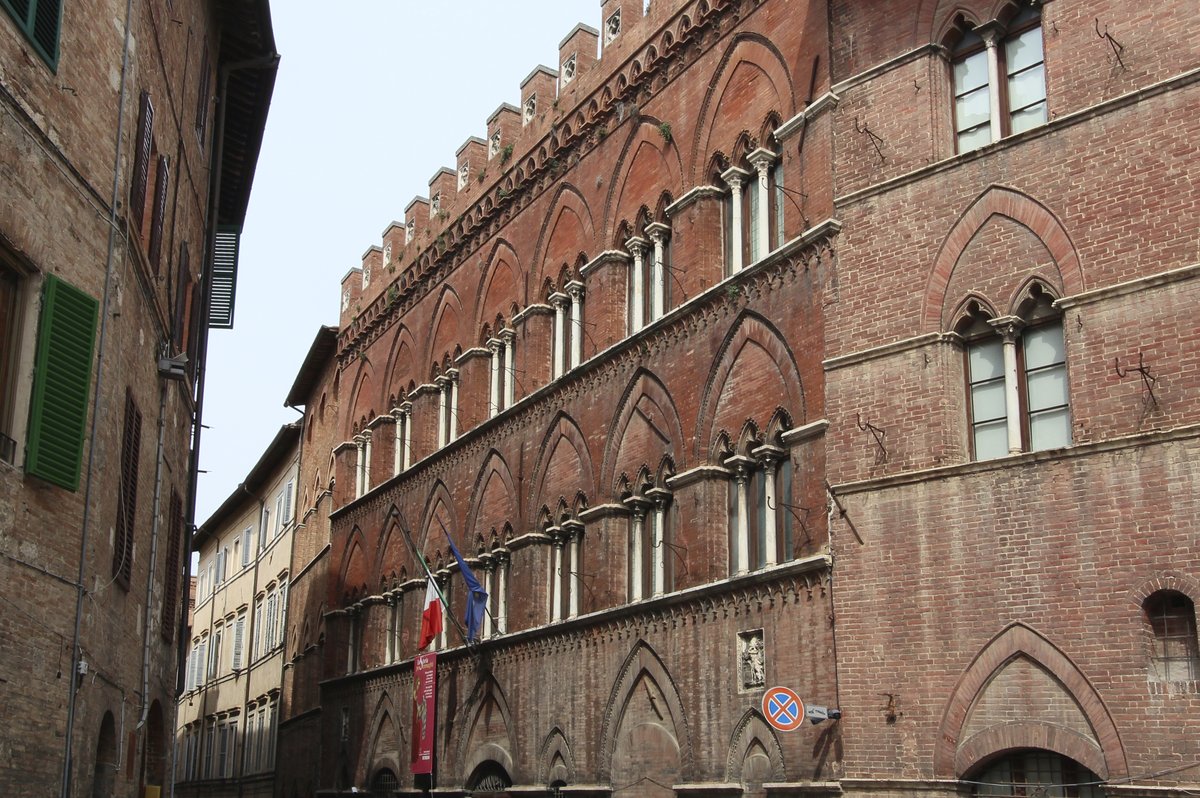 Just a few steps from the Duomo, at via San Pietro 29, stands the National Art Gallery of Siena, home to the world's richest collection of Sienese painting. Housed since 1932 in the Buonsignori and Brigidi palaces, the museum is a true journey into the gold of the 14th and 15th centuries. Here you'll find masterpieces by Duccio di Buoninsegna (the famous Madonna of the Franciscans and the Polyptych No. 28), Simone Martini (the Altarpiece of Blessed Agostino Novello), and the brothers Pietro and Ambrogio Lorenzetti (the Annunciation of 1344). Climbing to the second floor, you'll immerse yourself in the 13th-century section with the Salvator Mundi by the Master of Tressa and works by Guido da Siena. Continuing, you'll discover the 15th century with polyptychs by Sassetta, Giovanni di Paolo, and Sano di Pietro. On the first floor, meanwhile, Sienese Mannerism is represented by Beccafumi and Sodoma – don't miss Saint Catherine Receiving the Stigmata. Unfortunately, the main venue is currently closed for renovations funded by the NRRP (energy efficiency and removal of architectural barriers). But don't worry: some works are visible in other affiliated locations such as Palazzo Chigi Piccolomini alla Postierla (open Thursday-Saturday 9-19, Monday/Sunday/holidays 9-13:30) and Villa Brandi (by reservation). For updated info, call 0577 281161.
Medicean Fortress: history, relaxation, and events just steps from the center
- Go to the page: Medici Fortress in Siena: History, Events, and Wines in the Ancient Fortress
- Viale Vittorio Veneto, Siena (SI)
- Open in Google Maps
- View on Google Images
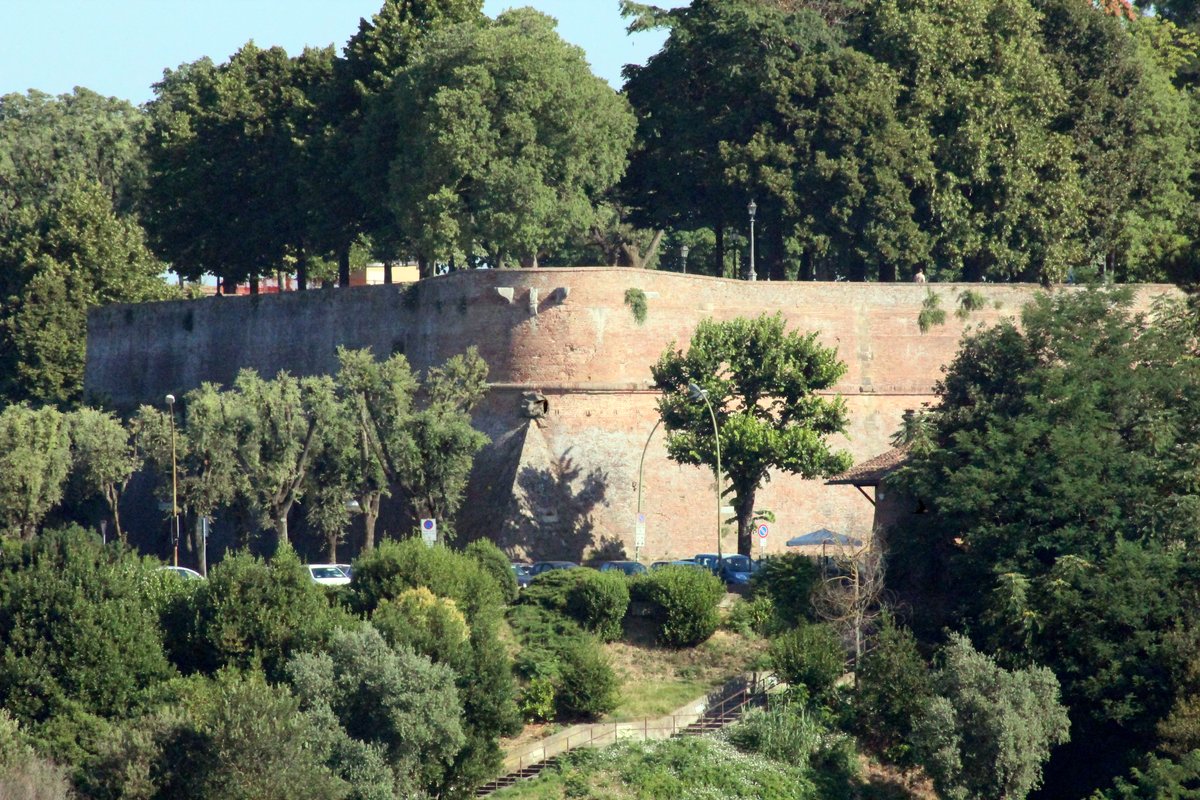 If you think Siena is just Piazza del Campo and the Duomo, you're in for a surprise. Just a few minutes' walk from the center, right next to the Stadio Franchi, you'll find the Medicean Fortress, also known as Forte di Santa Barbara. It's a place I love because it combines history, nature, and tons of events. Built between 1561 and 1563 by order of Cosimo I de' Medici (designed by Baldassarre Lanci), this fortress was meant to keep the Sienese in check after their defeat. Actually, there was already a Spanish citadel on the site, destroyed by the rebelling Sienese in 1552. Then the Medici came and rebuilt it.
Today, walking along its pentagonal bastions (San Filippo, San Francesco, San Domenico, and La Madonna), you feel a different atmosphere. The exposed brickwork, the Medici coats of arms in travertine with lion heads, and those tree-lined avenues along the walls… They immediately give you a sense of peace. And to think it was once a war machine! The dimensions are imposing: the inner quadrilateral is 180 meters by 125, and the outer perimeter reaches almost 1500 meters. The main entrance, once protected by a drawbridge, overlooks the Lizza gardens.
Since it was demilitarized (late 18th century, thanks to Grand Duke Pietro Leopoldo), it has become a much-loved public park. In the center there's an amphitheater that hosts concerts and shows in the summer – by the way, Siena Jazz is based here, organizing unmissable events. And then there's the Enoteca Italiana, inside the San Francesco bastion, for a taste of Tuscan wines. The fortress is always open, entrance is free, and I find it perfect for a relaxing stroll or to attend a concert under the stars.
Basilica Cateriniana of San Domenico: The Gothic Heart of Siena
- Go to the page: Basilica Cateriniana of San Domenico: Relics and Frescoes in Siena
- Voltoni di San Domenico, Siena (SI)
- https://www.basilicacateriniana.it/
- Open in Google Maps
- View on Google Images
- +39 0577 286848
 If there's one place in Siena that gets under your skin, it's the Basilica Cateriniana of San Domenico. It's not just an imposing Gothic church, but the place where Saint Catherine lived her faith most intensely. Climbing up to the hill of Camporegio, the brick façade greets you with its severe simplicity. You enter and find yourself in a single nave, with a commissa cross plan, exposed trusses, and an intimate atmosphere. Here, spirituality is palpable. The Chapel of Saint Catherine is the highlight: it houses the saint's head-reliquary in a neo-Gothic reliquary, and Sodoma's frescoes – The Ecstasy and The Beheading of Niccolò di Tuldo – are breathtaking. A little further on, the elevated Chapel of the Vaults was the prayer refuge of the Mantellate; Andrea Vanni's fresco is considered the most truthful portrait of Catherine. Don't miss Guido da Siena's Maestà (1221, one of the oldest in Siena) and Alessandro Casolani's Nativity of the Virgin. The best part is that entry is free, and the church is open daily from 9:00 am to 6:30 pm (but check the website to be safe). Fun fact: the bell tower was lowered after the 1798 earthquake. And from the door at the back of the main chapel, the view of the Duomo and the Torre del Mangia is pure magic. A tip: dress modestly, as befits a sacred place. And if you want to take home a souvenir, the bookshop has rosaries, medals, and books on Catherine. In short, a stop that authentically combines art, history, and faith.
Museo dell'Opera della Metropolitana: A Treasure of Art
- Go to the page: Museo dell'Opera della Metropolitana: The Maestà and the Facciatone
- Piazza Jacopo della Quercia, Siena (SI)
- Open in Google Maps
- View on Google Images
 If you think Siena's Duomo is spectacular, wait until you step inside the Museo dell'Opera della Metropolitana, one of Italy's oldest private museums (founded in 1869). It is located in the right aisle of the so-called Duomo Nuovo, an ambitious 14th-century expansion never completed due to the plague of 1348. Here, the original works removed from the cathedral to protect them from the elements are preserved. The highlight is undoubtedly Duccio di Buoninsegna's Maestà (1308-1311), a double-sided altarpiece depicting the life of Christ and the Virgin. Next to it, Duccio's spectacular Stained Glass Window of the Assumption, with its vibrant medieval glass panels. On the ground floor, admire the statues by Giovanni Pisano that once adorned the cathedral's façade: prophets, sibyls, and philosophers with intense expressions. Don't miss Donatello's tondo of the Madonna of the Pardon and Jacopo della Quercia's bas-relief. Upstairs, you'll find the Treasury Room with goldsmith works, reliquaries, and Bernini's golden rose. On the second floor, the Madonna with Big Eyes by the Master of Tressa, before which the Sienese prayed before the Battle of Montaperti. Finally, climb the Facciatone for a breathtaking view of Siena and the Duomo. Practical Info: Piazza Duomo 8. Hours vary: generally 10:30 AM-7:00 PM (summer) and 10:30 AM-5:30 PM (winter). Combined ticket with the Duomo Complex. Free audioguide available.
Fonte Gaia: The Joyful Fountain of Piazza del Campo
- Il Campo, Siena (SI)
- Open in Google Maps
- View on Google Images
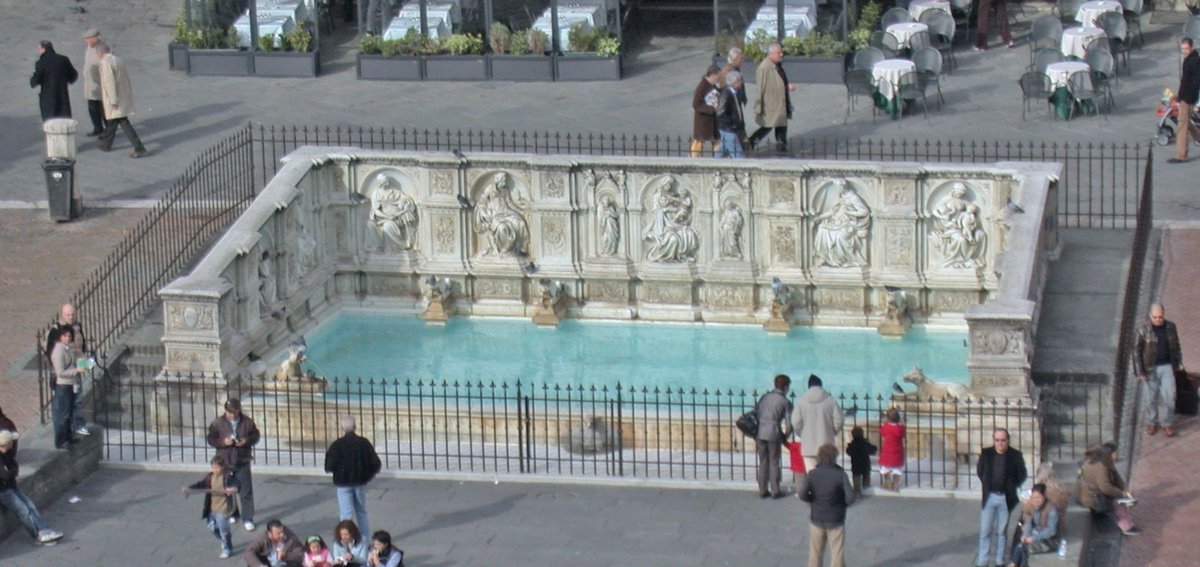 In the heart of Piazza del Campo, the Fonte Gaia is much more than a fountain: it is the symbol of collective joy at the arrival of water in 1346, after years of work in the underground Bottini. The name 'Gaia,' meaning 'joyful,' comes precisely from the popular enthusiasm. The fountain you see today, however, is not the original. That one, a masterpiece by Jacopo della Quercia created between 1409 and 1419, deteriorated over time due to the porous marble of the Montagnola Senese. A dramatic incident during the Palio of 1743 – a spectator fell after breaking a statue – sealed its fate. Thus, in 1869, the sculptor Tito Sarrocchi replicated it in Carrara marble, more durable, and moved it slightly to protect it. Today, the original reliefs are housed at the Museo di Santa Maria della Scala, where you can admire the Madonna and Child, the Virtues, and the figures of Rhea Silvia and Acca Larentia (absent from the copy in the square). The fountain is a secular altar: from its sides water gushes from wolf's heads, symbols of Siena. Visiting it is free and always possible; but if you want to see the true masterpieces of Jacopo della Quercia, you must enter the museum. A tip: in the evening, the soft light of the square makes the Fonte Gaia even more magical.
Baptistery of San Giovanni: The Jewel Beneath the Cathedral
 In the heart of Siena, hidden beneath the arches of the Cathedral, lies a place often missed by hurried tourists: the Baptistery of San Giovanni. Built between 1316 and 1325 to a design by Camaino di Crescentino, this Gothic jewel was intended to support the extension of the cathedral's choir. You enter from Piazza San Giovanni by descending a staircase that seems to transport you to another era.
The interior, with three aisles and fully frescoed cross vaults, is a riot of color. Il Vecchietta, between 1447 and 1450, painted the Twelve Articles of the Creed on the vaults, while Michele di Matteo Lambertini frescoed the apse with scenes of the Passion. Light filters through the mullioned windows of the unfinished facade, creating an intimate atmosphere.
At the center stands the hexagonal baptismal font, a masterpiece of the early Renaissance. Created between 1417 and 1431 in marble, bronze, and enamel, it involved the greatest sculptors of the time: Donatello (statues of Faith and Hope), Lorenzo Ghiberti (the Baptism of Jesus), and Jacopo della Quercia (the statue of the Baptist). The gilded bronze panels tell the story of John the Baptist: it's impossible not to stop and admire every detail.
Don't miss the other works: Andrea Vanni's polyptych, Rutilio Manetti's Visitation, and on the high altar, Alessandro Franchi's Baptism of Jesus. The combined ticket with the Cathedral allows you to visit everything at your leisure. I recommend coming in the less crowded hours to enjoy the peace of this extraordinary place.
Basilica of Saint Francis: Between History, Art, and a Eucharistic Miracle
- Go to the page: Basilica of San Francesco in Siena: Gothic and Miracle
- Siena (SI)
- Open in Google Maps
- View on Google Images
- +39 0577 49406
 While strolling through Siena, you'll come across the Basilica of Saint Francis in Piazza San Francesco. Built from the 13th century by Franciscan friars, it was expanded in Gothic style until 1475. What you see today, however, is the result of a Neo-Gothic restoration from the late 1800s: the brick facade is deliberately simple, with a 15th-century rose window by Francesco di Giorgio Martini and a marble portal depicting Saints Francis and Bernardino. Inside, you're struck by the single, wide nave with exposed beams and the bands of white and green marble on the walls, reminiscent of the Duomo. The Egyptian cross plan is typical of mendicant orders: sparse, to encourage prayer. But the true treasure is linked to an extraordinary event. On August 14, 1730, someone stole the ciborium containing 351 consecrated hosts. Three days later, they were found in the alms box of Santa Maria in Provenzano. Despite the unsanitary conditions, it was decided to preserve them. Years later, the hosts were still intact: analyses in 1914 and 2014 confirmed the absence of mold or bacteria, a scientifically inexplicable fact. Today, the Sacred Particles are kept in two chapels (summer and winter) and are exposed during special Masses on the 17th of each month. Among the artworks, don't miss the detached frescoes by Ambrogio Lorenzetti in the second chapel and the Crucifixion by Pietro Lorenzetti. If you're a history enthusiast, you'll also notice the contrade flags hanging on the walls: the basilica lies in the territory of the Contrada della Giraffa. Practical info: free entry, open daily 7:30 AM–12:00 PM and 3:30 PM–7:00 PM. A stop that blends faith, art, and a touch of mystery.
Basilica of San Clemente in Santa Maria dei Servi
- Go to the page: Basilica of San Clemente in Siena: Madonna del Bordone from 1261 and Panoramic View
- Siena (SI)
- https://www.arcidiocesi.siena.it/
- Open in Google Maps
- View on Google Images
- +39 0577 222633
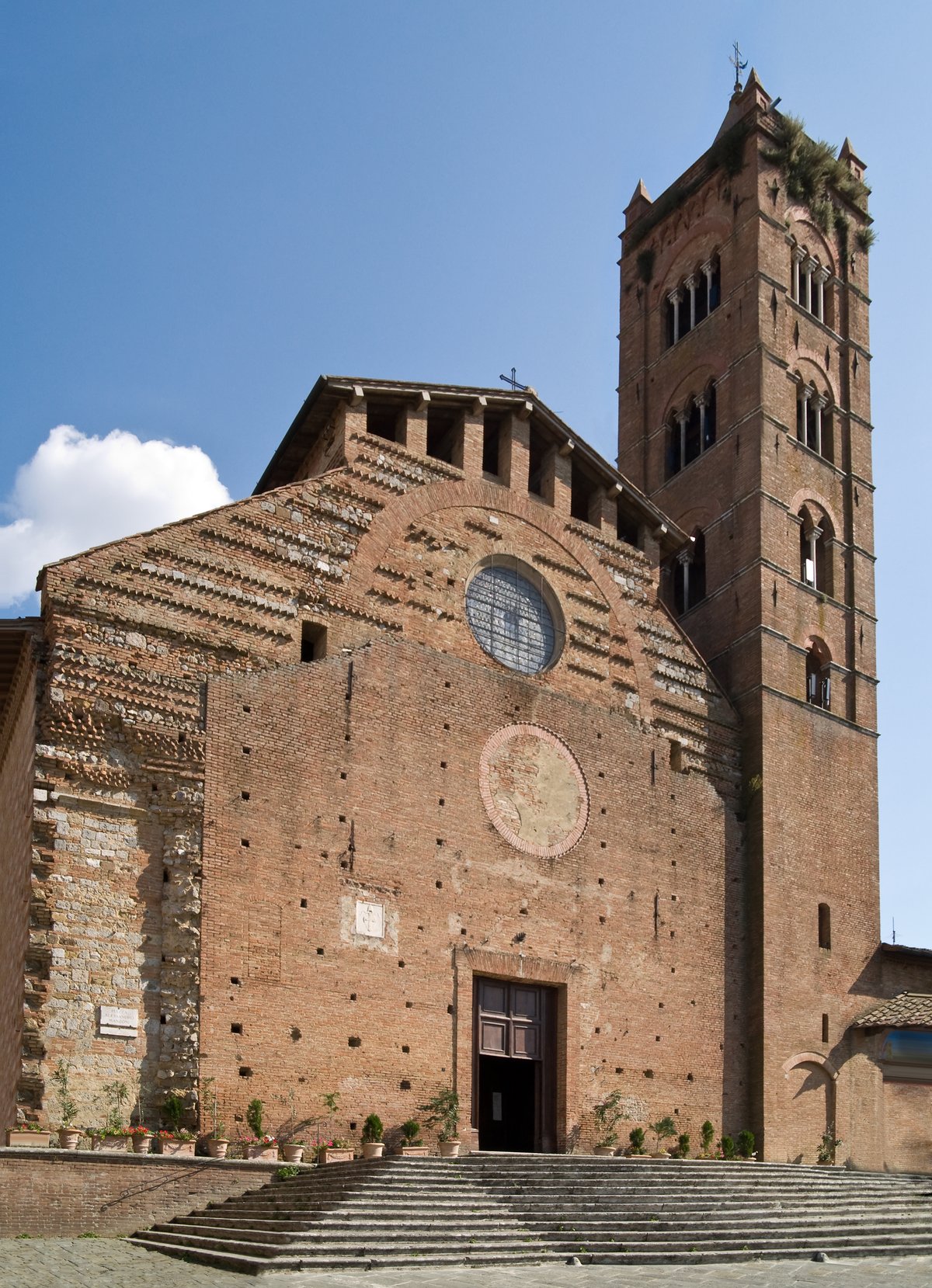 If you are in Siena and want to discover a less crowded but history-rich place, the Basilica of San Clemente in Santa Maria dei Servi is for you. Perched on the hill overlooking Valdimontone, this church will surprise you with its unique mix of styles. Work began in 1255 and continued until 1537, with a consecration in 1533. The exterior is deliberately simple, in line with the spirit of the Mendicant orders, but inside hide true masterpieces. The plan is an Egyptian cross with three naves and a transept. The longitudinal body is Renaissance, designed by Ventura Turapilli, while the transept and terminal chapels are Gothic. The bell tower, Romanesque, was restored in 1926 with the addition of spires reminiscent of those of the Duomo. Don't miss the Madonna del Bordone by Coppo di Marcovaldo, painted in 1261 while the artist was a prisoner after the battle of Montaperti. In the fifth chapel on the right, the Massacre of the Innocents by Matteo di Giovanni will leave you breathless. Also admire the Nativity of Mary by Rutilio Manetti and the fresco of the Madonna della Misericordia by Giovanni di Paolo. The basilica is open daily from 8:30 to 18:30, with free admission. Located at Piazza Manzoni 5. From the access staircase you enjoy a panoramic view of Siena, with the Torre del Mangia and the Duomo dome peeking among the rooftops. A peaceful corner away from the crowds of the center.
Palazzo Salimbeni: the medieval heart of the world's oldest bank
- Piazza Salimbeni, Siena (SI)
- Open in Google Maps
- View on Google Images
 Overlooking the elegant Piazza Salimbeni, just steps from Via Banchi di Sopra, Palazzo Salimbeni is not just one of Siena's most fascinating Gothic architectures. It is also the historic headquarters of Monte dei Paschi di Siena, the world's oldest still-operating bank, founded way back in 1472 right here. The building, built in the 14th century by expanding a pre-existing castle of the Salimbeni family (12th-13th century), still retains the atmosphere of a medieval fortress: battlements, pointed triforas, and an imposing rear brick façade, flanked by two massive towers. The late 19th-century Neo-Gothic restoration by Giuseppe Partini enhanced the 14th-century style, while in the 20th century Pierluigi Spadolini added modern touches such as the spiral staircase in reinforced concrete. The square is dominated by the statue of Sallustio Bandini (1882) by Tito Sarrocchi, and flanked by Palazzo Tantucci and Palazzo Spannocchi. Inside, hidden treasures: a picture gallery with masterpieces by Pietro Lorenzetti, Sassetta, and Beccafumi, and a historical archive preserving precious banking documents. Unfortunately, it is not always open to the public: you can only visit on special occasions, such as the morning of the Palio di Sant'Ansano (July 2), August 16, or the first Saturday of October for "Invito a Palazzo". Admission is free, but bring a valid ID. A tip? Stop to admire the façade from the square, perhaps at sunset: it's a sight you won't forget.
Oratory of San Bernardino and Diocesan Museum: A Hidden Gem
- Piazza San Francesco 9, Siena (SI)
- Open in Google Maps
- View on Google Images
 If you are in Siena and have already visited the Duomo and Piazza del Campo, don't miss the Oratory of San Bernardino and the adjacent Diocesan Museum of Sacred Art, in Piazza San Francesco. Here, away from the crowds, you'll find a treasure trove of masterpieces that tell centuries of faith and art. The complex has late medieval origins, but was renovated in the 16th century and dedicated to Saint Bernardino of Siena. The brick facade with the radiant sun JHS is the symbol of the preacher saint. The interior is a triumph of frescoes: in the upper oratory, the chapel of Santa Maria degli Angeli is completely decorated with the Stories of the Virgin by Domenico Beccafumi, Sodoma, and Girolamo del Pacchia, a unique masterpiece. The coffered ceiling with golden cherubs is worth looking up at. The lower oratory, instead, is frescoed by 17th-century artists like Ventura Salimbeni and Rutilio Manetti. The Diocesan Museum continues the journey with a collection spanning from the 13th to the 18th century. Among the must-see pieces, the Madonna del Latte by Ambrogio Lorenzetti, a 14th-century icon of tenderness, and the splendid Madonna di Tressa, one of the oldest Sienese panels (1235). There are also works by Giovanni di Paolo, Sano di Pietro, and Beccafumi's Christ Carrying the Cross. A small practical note: the museum is open only in summer, from April to October, daily from 1:30 PM to 6:30 PM (last entry half an hour before). Admission is included in the Opa Si Pass, which also grants access to the Duomo and other monuments. I recommend arriving around 2:00 PM when there are fewer crowds, and take your time to observe the details of the frescoes. A place that can move you, even if you are not an art expert.
Botanical Garden: A Natural Haven Within Siena's Walls
- Via Pier Andrea Mattioli, Siena (SI)
- Open in Google Maps
- View on Google Images
 Leave the chaos of Piazza del Campo behind and immerse yourself in the silence of the Botanical Garden, a green jewel hidden within the medieval walls. Founded as the Orto dei Semplici in 1588, today this 2.5-hectare garden is home to over 2,000 species of plants. You'll feel like you've stepped into a parallel world, far from the noise of tourists.
The path is divided into three sectors. The Scuola (School) is a series of orderly terraces with medicinal and aromatic plants – I stopped to look at the licorice, which I had never seen so close. Further down, the Parco (Park) is dominated by centuries-old trees: the Ginkgo biloba, giant sequoias, and quince trees. Here the flowerbeds are organized by Tuscan vegetation zones, from the coast to the mountains. Don't miss the medieval Fonte al Pino, still in use and nestled in the greenery – a corner of history that seems suspended in time.
Then move on to the Podere (Farmstead), where the landscape becomes rural with vineyards, olive trees, and an orchard of ancient varieties. If you love unique environments, don't miss the rock garden with its litosols and the humid fernery, a rarity. Then there are the greenhouses: the Serra calda (Hot Greenhouse) from 1875, with iron and colored glass, replicating tropical humidity with orchids and epiphytic ferns; the tepidarium with cacti and succulents – a collection that seems from a distant desert.
Admission is free (hours vary by season, closed on Sundays). It's the perfect place for a refreshing break, perhaps with a book in the shade of a century-old tree.