Introduction
As soon as you enter the Teatro Ventidio Basso, you’re left breathless. It’s not just a theatre; it’s an experience that envelops you immediately. The horseshoe-shaped hall, with its five tiers of boxes decorated in gold and red, makes you feel as if you’ve stepped back in time, yet with all the elegance of Marche neoclassicism. The light filtering through the high windows illuminates the details of the stuccoes and velvets, creating an almost magical atmosphere. For me, it’s one of those places that makes you understand why Ascoli Piceno is called the city of travertine and beauty. It’s not just architecture; it’s pure emotion, and you sense it from the very first glance. Then, when you realise that performances are still held here, you understand that it’s not a static museum but a beating heart of culture.
Historical Overview
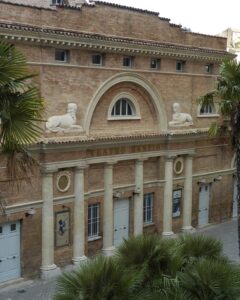
The history of Ventidio Basso is a tale of rebirth and civic passion. Inaugurated in 1846, it takes its name from the Roman general from Ascoli, but its true soul stems from the citizens’ desire for a theater worthy of the city. Designed by architect Ireneo Aleandri, who also designed Macerata’s Sferisterio, it suffered damage during World War II but was meticulously restored in the 1990s. Today, it stands as a symbol of resilience, hosting theater seasons and concerts that attract artists from across Italy. I like to think that every performance here is a tribute to those who envisioned and rebuilt it.
- 1846: Theater inauguration, designed by Ireneo Aleandri
- 1940-1945: Significant wartime damage
- 1990-1996: Complete restoration returning it to its former glory
- Today: Home to a vibrant regional cultural season
Behind the Scenes: The Stage Machinery
What few know is that the Ventidio Basso hides an original 19th-century stage mechanism that is still operational. During guided tours – which I highly recommend – you can see up close the wooden and rope mechanisms that once moved backdrops and wings. It’s a technical detail that makes you appreciate the ingenuity of the craftsmen of that era, and for me, it adds a rare level of fascination. It’s not just beautiful to look at; it’s clever in its design. Additionally, the theater has exceptional acoustics, designed to resonate every note without microphones, something I noticed during a chamber music concert. These elements make it a gem not only aesthetically but also functionally, still perfect today for operas and performances.
A Lived-In Theater: The Cultural Seasons
Visiting Ventidio Basso isn’t just about admiring its architecture; it’s about capturing its living soul through the theatrical and musical seasons. From October to May, the calendar is packed with drama, opera, and symphony concerts, often featuring high-quality local and national companies. I attended a performance here, and the atmosphere differs from larger theaters: more intimate, almost familiar, thanks to the modest size of the hall. It’s a place where culture isn’t elitist but accessible, with tickets often more affordable than in big cities. If you’re passing through Ascoli, check the schedule—there might be a show that interests you, and experiencing the theater in action is an experience that completes the visit.
Why Visit It
First, it’s a perfect example of Marche neoclassicism, with a purity of lines rarely found elsewhere, enriched by details like the composers’ medallions in the foyer. Second, it offers guided tours that reveal hidden corners, such as the historic dressing rooms or the theatre library, giving a sense of discovery. Third, its location in the heart of Ascoli Piceno makes it easy to combine with other city tours – you can see it in an hour, but if you stay for a performance, the experience transforms. For me, it’s worth it just for that moment of silence in the empty hall, where you can almost still hear the applause of the past.
When to Go
The best time? A winter afternoon, when the low sunlight filters through the windows and warms the colors of the hall, creating a cozy and evocative atmosphere. In summer, it can be hot, but if you manage to visit on a cloudy day, the effect is still magical. Personally, I avoid peak weekend hours because sometimes there are tourist groups that can disturb the peace. If you want to experience it to the fullest, try to coincide with an evening performance: leaving the theater at night, with Piazza del Popolo illuminated, is a memory you take home. There’s no wrong season, but winter gives it a more intimate character.
In the Surroundings
After the theater, take a short walk to the Pinacoteca Civica in Piazza Arringo, where you can admire works by Crivelli and other Marche masters – it’s the perfect complement to immerse yourself in local art. Then, don’t miss stopping at one of the typical frasche in the center to taste Ascoli-style olives and a glass of Piceno wine: it’s a flavorful experience that rounds out your cultural day. Ascoli is small, so everything is within walking distance, and these spots enrich your visit without requiring long trips.