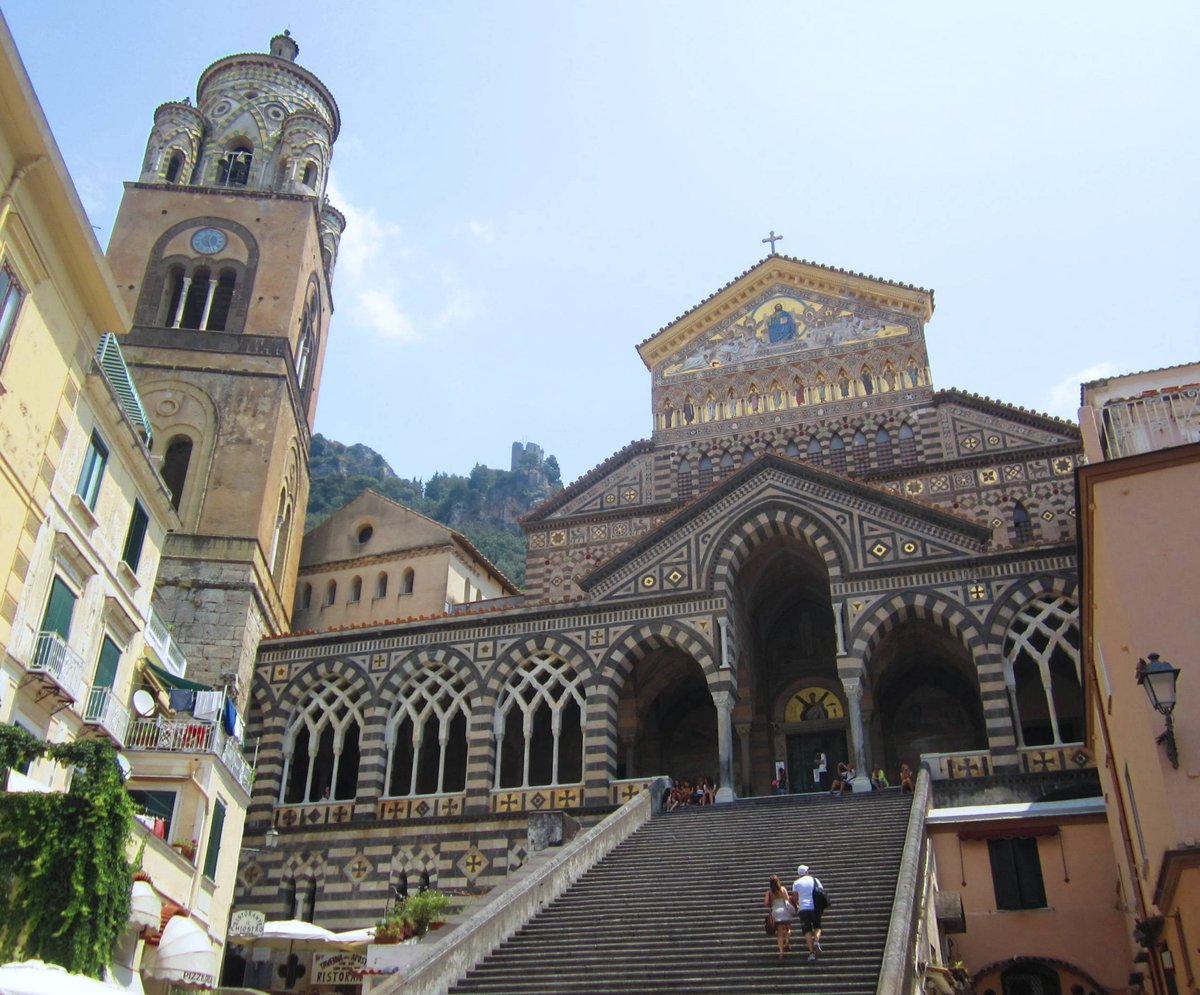
Amalfi Cathedral in Pogerola is a 12th-century Romanesque church, less known than Amalfi Cathedral but with authentic charm. Set in a panoramic position, it offers breathtaking views of the sea and villages of the Coast. The original Romanesque architecture blends with later elements, creating a unique atmosphere. The facade of local stone and the slender bell tower are distinctive features. Inside, the medieval frescoes and sculptural decorations deserve careful attention. The tranquility of the place makes it perfect for a break away from the crowds.
Introduction
If you think you’ve seen everything the Amalfi Coast has to offer, prepare for a surprise. The Duomo di Amalfi in Pogerola isn’t the famous cathedral in the town center, but a small Romanesque church hidden in a hilltop village above Amalfi. Getting there is an adventure in itself: you climb through narrow alleys and colorful houses, with the sound of the sea fading away. Then, suddenly, you find yourself in front of this 12th-century church, silent and solitary, with a breathtaking view. The natural terrace in front of the entrance is a stage overlooking the Gulf of Salerno: you see Amalfi in miniature, boats that look like toys, and mountains plunging into the blue. It’s not a crowded monument—often, you’re alone with the wind and the sound of bells. For me, it was a moment of pure magic, one of those places that make you feel like you’ve discovered a secret few share. The atmosphere is intimate, almost homely, as if the church is still part of the village’s daily life.
Historical Background
The history of the Duomo di Pogerola is closely intertwined with that of Amalfi, yet it possesses a more humble and local character. Built in the
12th century, during the height of the Romanesque period when Amalfi was a powerful maritime republic, it was not a cathedral for bishops but a parish church for the community of Pogerola—a village of farmers and fishermen living on the heights. Its simple architecture, with a façade of local stone and a bell gable, reflects this popular origin. Over time, it has undergone modifications but has retained its essence. Interestingly, some details, such as the interior capitals, show Byzantine influences, a legacy of Amalfi’s trade with the East. There are no major historical events associated with this place, and perhaps that is precisely its charm: it stands as a silent testament to the life of a community that for centuries has gazed upon the sea from above.
- 12th century: Construction of the church in Romanesque style.
- Medieval period: Served as the parish church for the village of Pogerola.
- Subsequent centuries: Modifications and restorations that have preserved its original structure.
The Architecture That Speaks
Entering the Duomo of Pogerola is like stepping back in time, but without the oppressive solemnity of some monumental churches. The interior is small, dark, and intimate, lit only by the light filtering through narrow windows. The walls are bare stone, and the air smells ancient and damp. What stands out are the Romanesque capitals, carved with geometric patterns and stylized leaves: they are rough, almost primitive, but full of character. Look at them up close: they seem to tell stories of local artisans working with what they had. The main altar is simple, without baroque excesses. Sometimes, you still find fresh flowers brought by residents. The feeling is one of total authenticity: no entrance ticket, no audio guide, just the place as it has been for centuries. Personally, I appreciated the contrast with the Duomo of Amalfi in the center: here there are no golden mosaics or tourists in line, but an atmosphere that invites you to stop and breathe. It is a hidden gem that does not seek to impress, but simply to exist.
The View Worth the Climb
While the interior of the church is evocative, it’s outside where you’ll have the most memorable experience. The natural terrace in front of the Cathedral offers a privileged vantage point over the Amalfi Coast. From here, the view spans 180 degrees: you can see Amalfi clinging to the rock, with its bell tower soaring; the sea shifting in color from turquoise to cobalt; the mountains sloping down toward Atrani and Minori. On clear days, you can even glimpse the tip of the Sorrentine Peninsula. I was there at sunset, and the sun setting behind the hills painted everything in shades of orange and pink: a spectacle that costs nothing but is worth more than a museum ticket. Bring a small bottle of water and enjoy the silence, broken only by the flight of seagulls. It’s the perfect spot for a contemplative break, away from the coastal bustle. Some people even have light picnics here, but remember to respect the place: it is, after all, a religious site and a living part of the village.
Why Visit It
Why dedicate time to this small church when the Amalfi Coast offers so much? I’ll give you three concrete reasons. First, to escape the crowds: while Amalfi’s center is overrun by tourists, Pogerola is an oasis of tranquility where you can enjoy the beauty of the coast without stress. Second, to experience authenticity: here, nothing is built for visitors; you see how the locals truly live, with their vegetable gardens and laundry hanging out to dry. Third, to capture unique views: the elevated position offers breathtaking glimpses that are hard to find elsewhere, perfect for unforgettable memories or social media. Plus, the visit is free and flexible: you can stop for ten minutes or an hour, depending on how much the atmosphere captivates you. For me, it was a way to connect with the more genuine side of the Coast, away from the glossy postcards.
When to Go
The best time? Definitely at sunset, when the sun dips behind the hills and the light turns golden, casting spectacular colors over the sea and villages. In summer, avoid the midday hours: it’s hot and the light is too harsh to appreciate the details. In spring or autumn, however, mornings are often clear and the fresh air makes the climb more pleasant. I visited in late September, and there was a soft light perfect for photos. Note: the church doesn’t have fixed opening hours; sometimes it’s closed, but even just the external terrace is worth the visit. If you want to ensure entry, check locally or look for recent updates online: sometimes residents open upon request. In winter, it can be atmospheric with low clouds, but check the weather as the view might be limited.
In the Surroundings
After visiting the Duomo, explore the hamlet of Pogerola itself: lose yourself in its narrow alleyways, where every corner reveals picturesque glimpses and colorful houses with geraniums at the windows. Then, descend towards Amalfi and stop at the Amalfi Paper Mill, a museum dedicated to the ancient production of paper, a unique legacy of the maritime republic. It’s a thematic experience that completes the visit, showcasing a lesser-known aspect of local history. If you’re in the mood for another panorama, reach the nearby hamlet of Tovere, even higher up, for an even broader view. All these places are connected by a network of trails and stairways that let you discover the Amalfi Coast on foot, as the inhabitants once did.