If you think you've already seen everything in Naples, prepare to think again. This one-day itinerary in Naples takes you away from the most beaten tourist paths, on a journey that combines contemporary art, breathtaking views, and authentic corners of the city. We'll start the day with an artistic surprise in the heart of the historic center, then climb to a panoramic neighborhood offering a unique view of the Gulf. We'll discover a hidden museum dedicated to 20th-century creativity and conclude in a place of peace suspended between sky and sea, perfect for an unforgettable sunset. It's the ideal route for those looking for a different-than-usual experience, even if they only have 24 hours available. Follow me, I'll show you an unusual Naples worth exploring.
🗺️ Your trip at a glance
This one-day Naples itinerary takes you away from the most beaten tourist paths on a journey that combines contemporary art, breathtaking views, and authentic corners of the city.
- Ideal for curious travelers looking for a different experience from the usual, even with just 24 hours available.
- Highlights: Contemporary art at Madre, history and panoramas at Castel Sant'Elmo, authentic places like the Fontanelle Cemetery and the Fontana del Leone.
- Perfect for those who want to discover a different and more intimate side of Naples, away from clichés and the most crowded routes.
Itinerary stops
Stop no. 1
Madre
 Let's begin our Unusual Naples in a Day itinerary with a stop that defies expectations: Madre, the Donnaregina Museum of Contemporary Art. Located on Via Luigi Settembrini, this exhibition space occupies a historic building in the city center, but inside you'll find a world completely different from what you might anticipate. Madre houses a permanent collection that includes works by Italian and international artists such as Jeff Koons, Rebecca Horn, and Mimmo Paladino, along with temporary exhibitions exploring the latest trends. This isn't your typical Neapolitan museum dedicated to antiquity or Baroque art; here, art speaks a modern language, with interactive installations and videos that invite reflection. Perfect for those seeking an alternative to traditional tourist routes, Madre offers a fresh and stimulating cultural experience, ideal for starting the day with a new perspective on the city.
- Via Luigi Settembrini 79, Napoli (NA)
- https://www.madrenapoli.it/
- Open in Google Maps
- View on Google Images

You should go if...
Stop no. 2
Diocesan Museum
 After exploring the first stop, the Diocesan Museum welcomes you to a quiet corner of Naples, away from the tourist bustle. Located in Vico Donnaregina, this museum is an often-overlooked gem that's worth discovering. Founded in 2007, it houses a collection of sacred art from the diocese's churches, with paintings, sculptures, and liturgical furnishings spanning from the Middle Ages to the Baroque period. Its venue is part of the Santa Maria Donnaregina Vecchia complex, a 14th-century Gothic church, offering a unique blend of art and architecture. Here, you can admire masterpieces by local artists like Luca Giordano and immerse yourself in the city's religious history. It's an ideal spot for those seeking an authentic cultural experience, without the crowds of more famous museums.
- Vico Donnaregina, Napoli (NA)
- Open in Google Maps
- View on Google Images
You should go if...
Stop no. 3
Porta San Gennaro
 Leaving the Diocesan Museum behind, you come across Porta San Gennaro, one of the few medieval gates still visible in Naples. Located on Via Porta San Gennaro, this 13th-century structure was once the main northern entrance to the city, connecting Naples to the hill districts and the Catacombs of San Gennaro. The gate is named after the patron saint, as pilgrims would depart from here to visit his tomb. Today, it appears as a piperno arch with traces of devotional frescoes, surrounded by historic buildings that enhance its authentic character. It's an ideal vantage point to observe the urban layering, where ancient and modern blend seamlessly. Here, you can imagine the hustle and bustle of merchants and faithful who passed through this gateway over the centuries, adding a piece of history to your off-the-beaten-path itinerary.
- Via Porta San Gennaro, Napoli (NA)
- Open in Google Maps
- View on Google Images
You should go if...
Stop no. 4
Fontanelle Cemetery
 After admiring Porta San Gennaro, your unusual itinerary leads you to discover an extraordinary place: the Fontanelle Cemetery, located at Via Fontanelle, 80, in the Sanità district. This hypogeum ossuary, carved into tuff, preserves thousands of human remains accumulated over the centuries, particularly following epidemics such as the plague of 1656 and cholera of 1836. The atmosphere is evocative, with skulls and bones arranged orderly along the walls, creating a visual effect that blends the sacred and the macabre. Here, Neapolitan popular tradition gave rise to the cult of the "pezzentelle souls," where devotees would adopt a skull to pray and ask for favors. Today, it's a site that attracts those seeking an authentic experience, away from the more crowded tourist circuits, offering a glimpse into the city's spirituality and social history. Admission is free, but it's advisable to respect the silence and sacred nature of the place.
- Via Fontanelle 80, Napoli (NA)
- Open in Google Maps
- View on Google Images
You should go if...
Stop no. 5
Castel Sant'Elmo
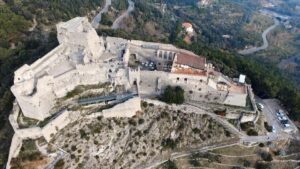
 After immersing yourself in the mystery of the Fontanelle Cemetery, your off-the-beaten-path itinerary takes you up high to Castel Sant'Elmo, located at Via Tito Angelini, 22, on the Vomero hill. This imposing star-shaped fortress, built in the 14th century and renovated in the 16th century, offers breathtaking 360-degree views of Naples, from Mount Vesuvius to the Gulf. Today, in addition to its well-preserved military structure, it houses the Museo del Novecento, with works by 20th-century Campanian artists, and spaces for temporary exhibitions. Climbing up here means discovering a lesser-known side of the city, away from the crowds, where history and art blend in a unique setting. The visit includes exploring the walls and courtyards, providing unmissable photo opportunities.
You should go if...
Stop no. 6
Villa Floridiana
 Leaving behind the walls of Castel Sant'Elmo, descend towards Villa Floridiana on Via Aniello Falcone, a peaceful corner in the Vomero district. This neoclassical villa, built in the early 19th century for the Duchess of Floridia, wife of Ferdinand I of Bourbon, is surrounded by an 8-hectare public park, one of the largest in Naples. Today it houses the National Museum of Ceramics Duca di Martina, with a collection of over six thousand pieces including porcelain, majolica, and ivories from the Middle Ages to the 19th century. Strolling along tree-lined avenues, past fountains and small temples offers a refreshing break from the city's hustle and bustle, with panoramic glimpses of Vesuvius and the sea. The visit includes free entry to the park and museum, ideal for a moment of cultural relaxation.
- Via Aniello Falcone, Napoli (NA)
- Open in Google Maps
- View on Google Images
You should go if...
Stop no. 7
Duke of Martina National Museum of Ceramics
 After exploring Villa Floridiana Park, the journey continues inside the villa itself, which houses the Duke of Martina National Museum of Ceramics. This museum, located at Via Domenico Cimarosa, 77, is a little-known gem even among Neapolitans, with an extraordinary collection donated by the Duke of Martina in 1911. Here you'll find over six thousand pieces ranging from the Middle Ages to the 19th century, including Chinese porcelain, Italian majolica, and refined ivory objects. The rooms, furnished with period furniture, offer a journey into decorative art, with pieces from prestigious manufacturers like Capodimonte and Sèvres. The visit, free of charge, perfectly complements the walk in the park, offering a moment of culture and beauty in an intimate atmosphere.
- Via Domenico Cimarosa 77, Napoli (NA)
- http://www.polomusealecampania.beniculturali.it/index.php/il-museo
- Open in Google Maps
- View on Google Images
You should go if...
Stop no. 8
Lion Fountain
 Leaving behind the ceramics of the Duca di Martina museum, head towards Mergellina to discover the Lion Fountain, a tranquil corner in Piazzetta Leone. Built in 1670 based on a design by Cosimo Fanzago, this Baroque fountain is often overlooked by tourists, but it's worth a stop for its understated elegance. The stone lion, a symbol of strength, dominates the basin as it spouts water from its mouth, creating a relaxing atmosphere. The location, near the waterfront of Via Caracciolo, offers glimpses of the Gulf of Naples, perfect for a photo break. It's an ideal spot to breathe in the sea air and immerse yourself in a piece of Neapolitan history without the crowds of more popular sites.
- Piazzetta Leone a Mergellina, Napoli (NA)
- Open in Google Maps
- View on Google Images
You should go if...