
The Bicknell Museum Library is a hidden treasure in the heart of Bordighera. Founded by English naturalist Clarence Bicknell, the museum houses archaeological collections, botanical specimens, and a prestigious library. Here’s what you’ll find:
– Archaeological collections from Liguria and the Roia Valley
– Herbarium and botanical specimens collected by Bicknell himself
– Historical library with over 20,000 volumes
– Temporary exhibitions on local culture and history
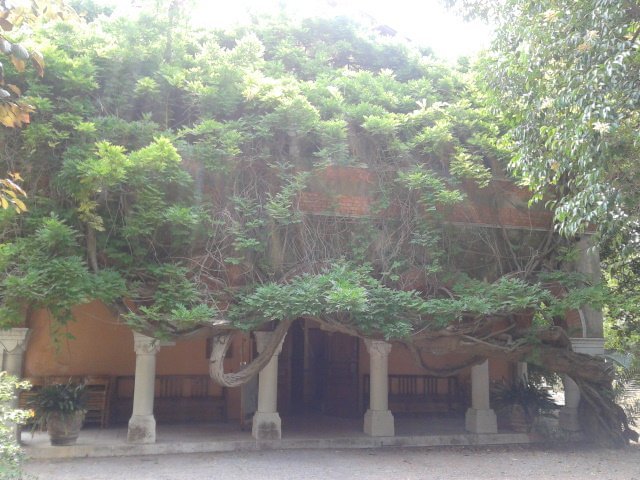
The Bicknell Museum Library in Bordighera, founded by Clarence Bicknell, offers archaeological collections, herbaria, and a rich library. A must-visit for fans of Ligurian history.
- http://www.museobicknell.com/
- Via Regina Margherita, Imperia (IM)
- +39 0184 263694
- Open in Google Maps
- View on Google Images Museo Biblioteca Bicknell a Imperia
Good to know
Evocative Introduction
Entering the Museo Biblioteca Bicknell is like stepping back in time, but without the dust. The light filters through the glass windows, the wooden shelves smell of old paper, and you immediately understand that every object here has a story. Clarence Bicknell, an English botanist and archaeologist, created this space with passion, collecting prehistoric artifacts, herbariums, and rare volumes. It’s not just a museum: it’s the synthesis of a life dedicated to knowledge. Walking through the rooms, you feel a bit like an explorer, a bit like a scholar, and you can’t wait to discover what each drawer hides.
Historical Notes
Clarence Bicknell arrived in Bordighera in 1878 and fell in love with the Riviera. In 1888 he founded the museum in his villa, with the aim of enhancing local history and botany. He was among the first to study the rock engravings of Val Bormida and to create an herbarium of Ligurian flora. Today the museum is part of the city’s museum system and hosts temporary exhibitions. Here are the key moments:
- 1878 – Bicknell’s arrival in Bordighera
- 1888 – Foundation of the museum
- 1918 – Bicknell’s death; he leaves everything to the city
- 1920s – Library expansion
- 2000 – Restoration and opening to the public
Bicknell’s Herbarium: A Botanical Treasure
If you love nature, don’t miss the herbarium: over 2,500 specimens of Ligurian plants, gathered with painstaking care. Bicknell cataloged flowers, algae, and mosses, many of which are now rare. The plates are still legible, written in elegant handwriting. I was struck by the precision: each leaf is fixed with paper strips, with Latin names and notes on habitat. A window into the biodiversity of the late 19th century. For enthusiasts, there is also a section dedicated to wild orchids of the region.
The Library: Books and Old-Time Atmosphere
The library is the heart of the museum. It houses over 20,000 volumes, including 18th-century editions and manuscripts. The polished wooden tables and green lamps create a novel-like atmosphere. You can consult texts on archaeology, local history, and natural sciences, as well as period novels. The scent of aged paper envelops you as you flip through yellowed pages. A quiet corner for reading or simply enjoying the silence.
Why Visit
Three reasons not to skip it: 1) Unique character: Bicknell was not just a collector, but a pioneer. His personal story is fascinating. 2) Original materials: these are not copies, but real objects – from Bronze Age artifacts to travel sketches. 3) Evocative setting: Bordighera is a seaside resort, but this museum offers an authentic cultural break, away from the tourist bustle. It is a small place that speaks to the heart.
When to Go
The best time? Spring or autumn, when Bordighera is less crowded and the soft light comes through the windows. But a winter morning also has its charm: silence broken only by the patter of rain. Avoid mid-August and July, when the heat clouds your concentration. If you can, choose a Tuesday or Wednesday to have the museum almost all to yourself.
Nearby
Just a stone’s throw away, don’t miss the Pallanca Exotic Garden (via Madonna della Ruota): a collection of succulents with a sea view. Or, for a dive into history, visit the Old Town of Bordighera with its medieval architecture and the Church of Santa Maria Maddalena. Two destinations that perfectly complement a visit to the museum, rounding out an experience between nature and culture.
Itineraries nearby

💡 Did You Know…?
Clarence Bicknell, passionate botanist, spent much of his life in Bordighera. It is said that he loved to walk among the gardens of his villa, now the museum’s home, and that he often stopped to watch butterflies. His butterfly collection is still proudly displayed today.