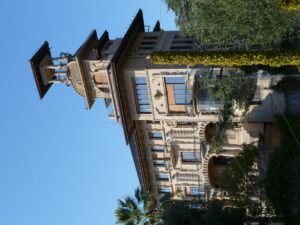
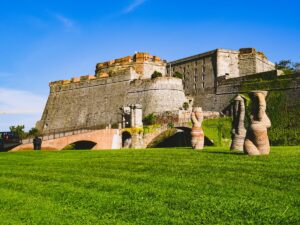
If you only have one day in La Spezia, don’t worry—you can enjoy a walking itinerary that unveils its rich heritage. Start at the Naval Technical Museum, a must for maritime history enthusiasts, with ship models and memorabilia. Then head up to San Giorgio Castle for panoramic views of the city and the gulf. Next, dive into contemporary art at CAMeC, the modern and contemporary art center, and don’t miss the Seal Museum, a hidden gem. Stroll through historic squares like Piazza Europa and Piazza Verdi to soak up the local atmosphere. This 6-stop route combines history, art, and culture, perfect for a cultural weekend. La Spezia will surprise you: it’s not just the gateway to the Cinque Terre, but a city with a museum heart waiting to be discovered.
🗺️ Your trip at a glance
A 1-day walking itinerary blending naval tradition, medieval history, and contemporary art in La Spezia’s city center. Ideal for those who enjoy unhurried cultural discoveries.
- Ideal for curious travelers looking for a mix of naval museums, a castle, and modern art in just a few hours.
- Highlights: compact and well-connected route, all 6 stops on foot, available combo tickets.
- For whom: history buffs, families with curious kids, and contemporary art lovers.
Itinerary stops
Stop no. 1
Naval Technical Museum
 The first stop on our La Spezia itinerary is a true gem for sea and history enthusiasts: the Naval Technical Museum. Located right next to the Arsenal, this museum is the most important in Italy for maritime history. As soon as you enter, you are greeted by an extraordinary collection of ship models that trace the history of the Italian fleet, from galleys to modern destroyers. Don’t miss the Figurehead Room, with wooden sculptures that still seem to watch over ships, and the Assault Craft Room, where the famous ‘Maiale’ and the prototype by Tesei and Toschi are on display. Not to be forgotten is the section dedicated to Guglielmo Marconi, with original equipment used for experiments in La Spezia. The museum is open daily from 8:30 am to 7:30 pm, and admission costs €5 (reduced €3). A visit that captures the imagination and offers a unique perspective on the power of the sea.
- Go to the page: La Spezia Naval Technical Museum: Toti Submarine and Ship Models in the Arsenal
- Viale Giovanni Amendola, La Spezia (SP)
- https://www.marina.difesa.it/EN/history/museums/Pagine/museotecniconavale.aspx#
- Open in Google Maps
- View on Google Images

You should go if…
Stop no. 2
CAMeC: Modern and Contemporary Art Between Warhol and Fontana
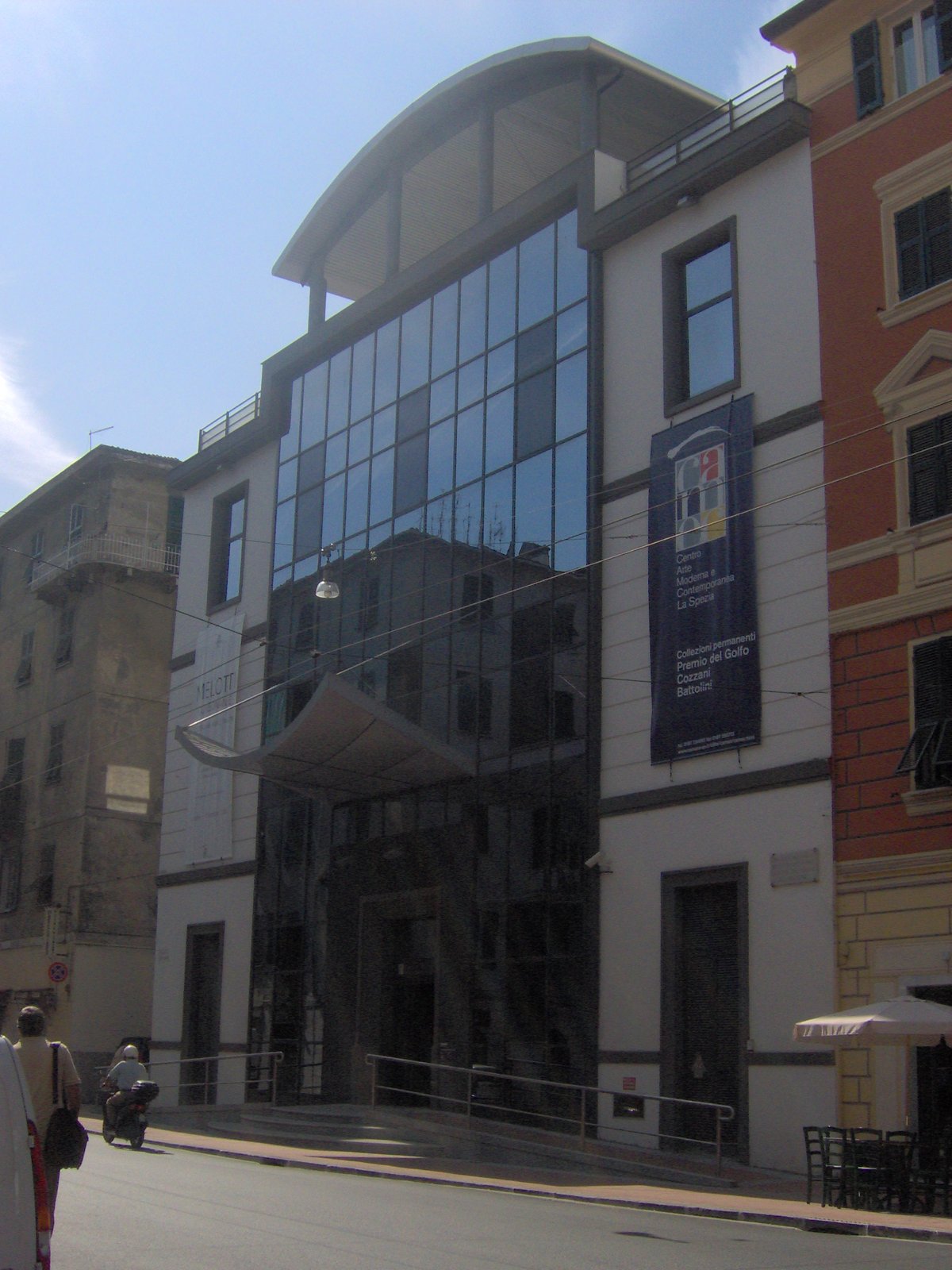 Just steps from the central squares, CAMeC occupies a building that has shaped the city’s history: first a school, then a courthouse, today a temple of contemporary art. As you step inside, the atmosphere is that of a place breathing art and innovation. The permanent collection is a treasure: over 200 works ranging from Lucio Fontana to Andy Warhol, passing through Marina Abramović and Gordon Matta-Clark. The new layout, curated by Gerhard Wolf, breaks the mold, mixing movements and decades. Don’t miss the Cozzani Collection (over 1,200 pieces) and the masterpieces of the Golfo Prize, born in 1933 from an idea by Marinetti and Fillia. The temporary exhibitions are always spot-on: in 2025, there’s a dialogue between Morandi and Fontana, not to be missed. The museum is perfect for those who love art without barriers: there’s a multisensory Accessibility Room that makes the visit inclusive. And the natural light filtering through the windows reopened during the 2024 renovation gives a unique sense of openness.
- Via Antonio Gramsci, La Spezia (SP)
- https://camec.museilaspezia.it/
- Open in Google Maps
- View on Google Images
You should go if…
Stop no. 3
The Seal Museum: A Journey Through Impressions and History
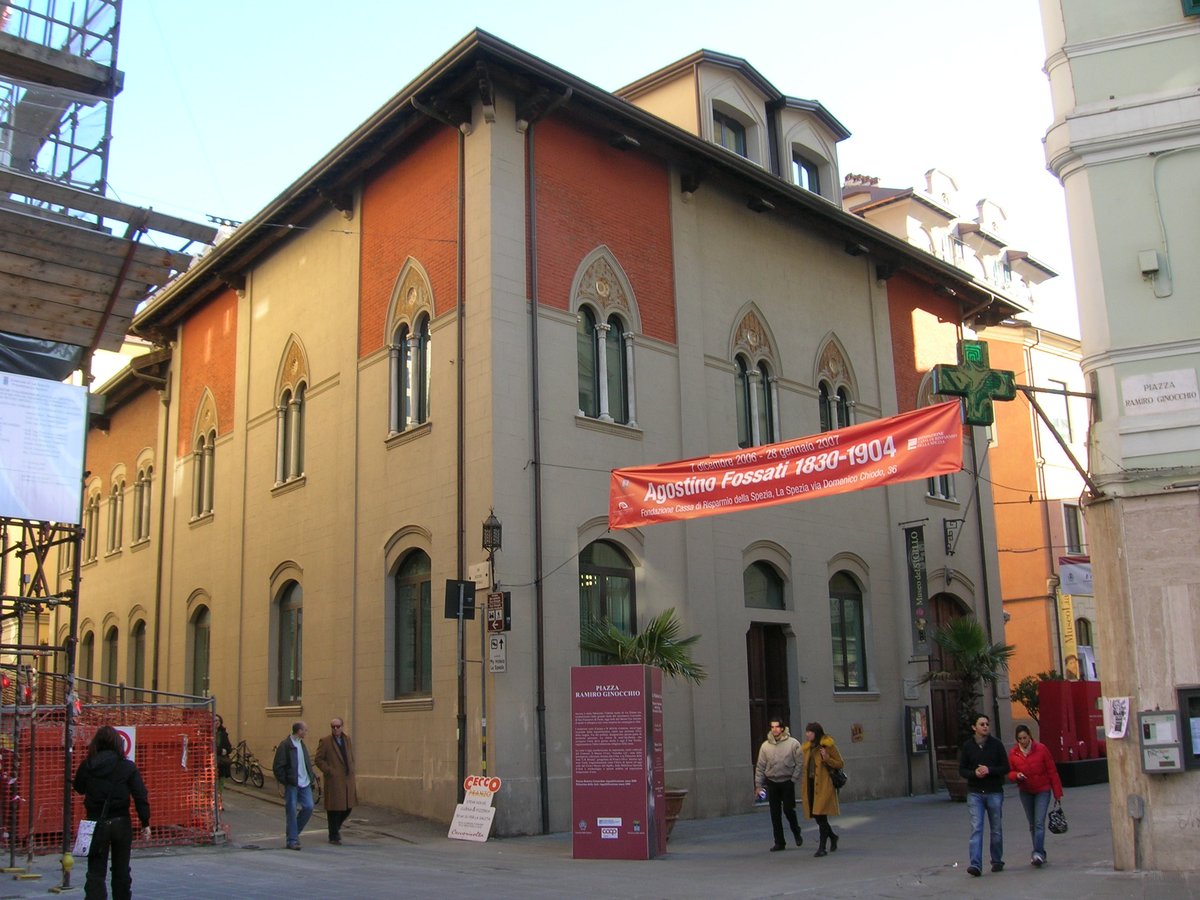 Leave the contemporary behind and dive into a world of miniature works of art: the Seal Museum awaits you in the charming Palazzina delle Arti. Here, on the first floor of this neo-medieval building from 1924, lies the most comprehensive collection of seals ever assembled by private individuals: over 1,500 pieces donated by the Capellini couple. The journey is a voyage through time and space, from the 4th millennium BC to the present day, passing through Mesopotamia, Egypt, China, and Japan. Don’t miss the crystal seals by René Lalique and the gold ones by Fabergé, true jewels. And if you are a China enthusiast, you will admire an imperial jade seal from the Forbidden City. The museum is also accessible: since 2018, a tactile path for the blind has been active. An experience that amazes for its variety and care in the exhibition, perfect for those who love curious and unusual collections. A tip: check the opening hours, closed on Mondays.
- Via del Prione 234, La Spezia (SP)
- http://sigillo.museilaspezia.it/
- Open in Google Maps
- View on Google Images
You should go if…
Stop no. 4
Monument to Garibaldi: The Hero of Two Worlds on Horseback
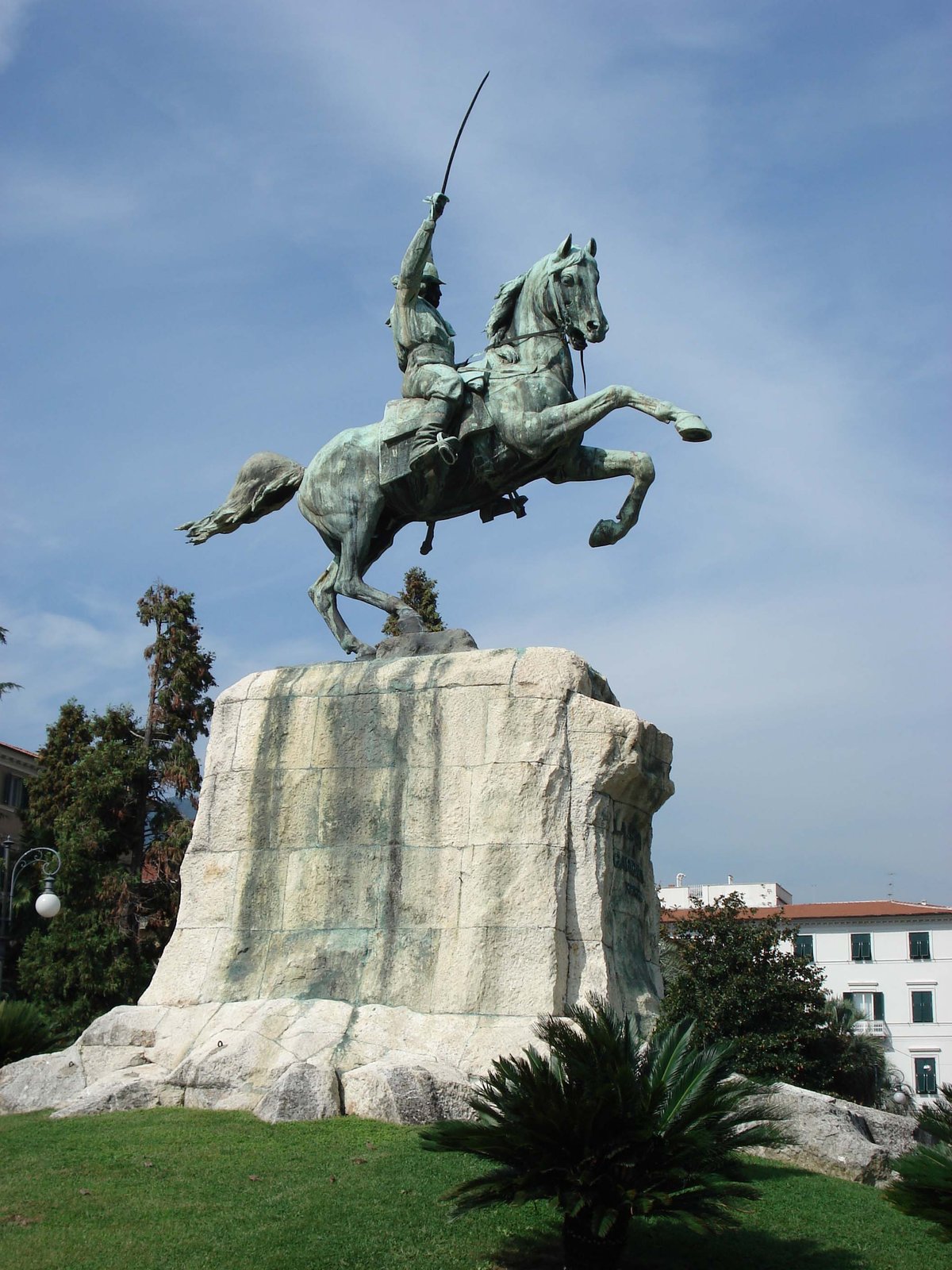 Change of scene: from seals to the equestrian monument of Giuseppe Garibaldi, which dominates the Public Gardens. The air here is different, more solemn. The bronze statue, weighing 6 tons, depicts Garibaldi on a rearing horse balancing only on its hind legs – a rarity. Sculptor Antonio Garella designed it to be viewed from below, and the effect is dramatic. Inaugurated on June 1, 1913, it has become a symbol of the city. Garibaldi stayed in La Spezia several times: in 1862, after Aspromonte, he was imprisoned at the Varignano; in 1867, after Mentana, he lodged at the Croce di Malta. Strolling through the gardens, it’s easy to imagine the hero pondering new endeavors. A tip: arrive in the late afternoon, when the low light makes the bronze even more vibrant. And don’t forget to look at the plaque: it tells a piece of Italian history.
- Via Aulo Flacco Persio, La Spezia (SP)
- Open in Google Maps
- View on Google Images
You should go if…
Stop no. 5
Fountain of Dialogue: The Contemporary Heart of Piazza Garibaldi
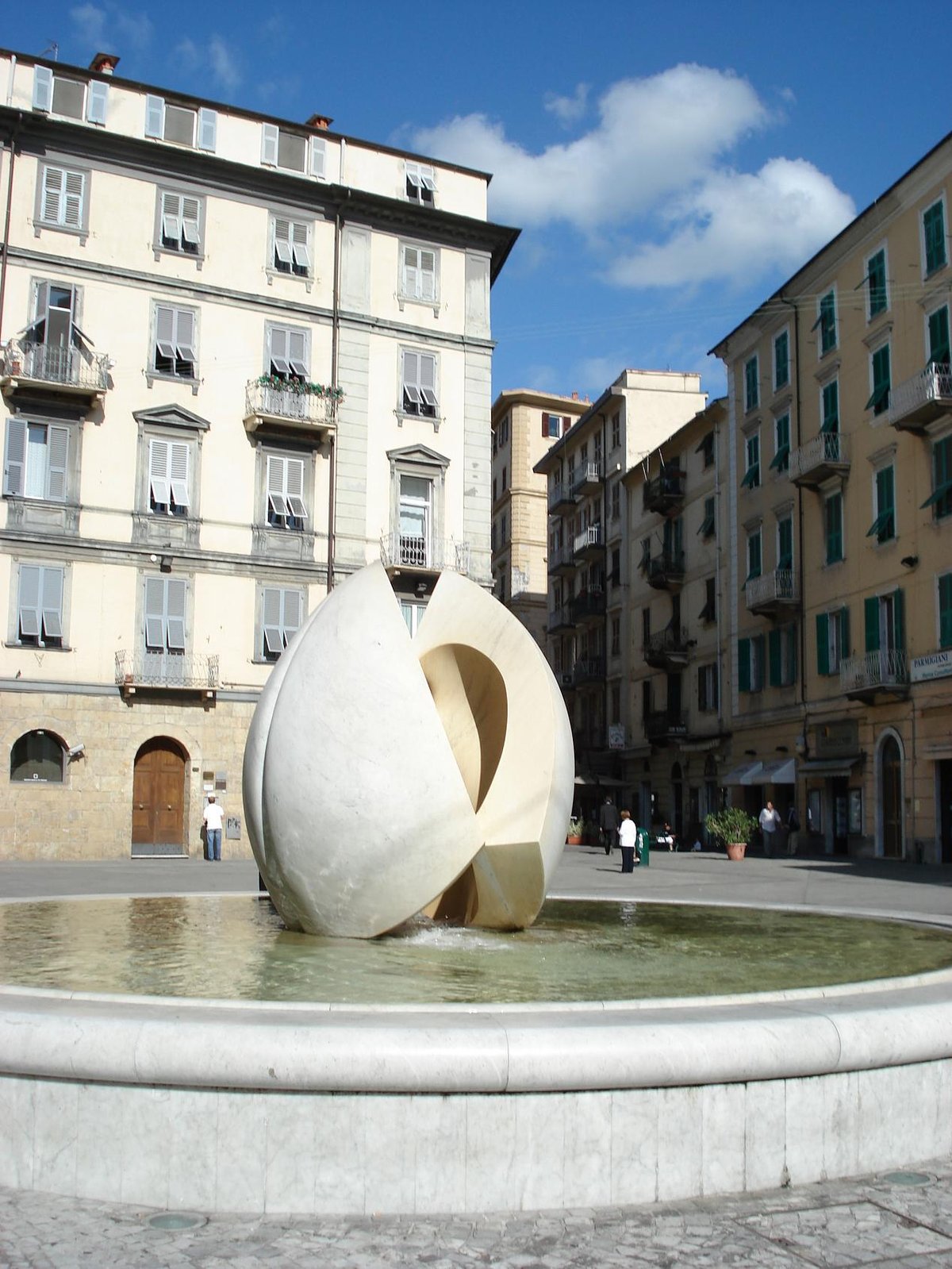 After the bronze hero, here’s a contemporary work that invites you to pause: the Fountain of Dialogue, inaugurated in 2002 in Piazza Garibaldi. Sculptor Viliano Tarabella shaped two large abstract sails in Carrara marble that interpenetrate, emerging from the water as a symbol of regeneration and dialogue. The circular basin, with its smooth edge serving as a seat, invites you to stop and observe the play of light and reflections. At night, spotlights illuminate the sails, creating a calm and silent atmosphere. Water flows uninterrupted, representing the flow of life and communication. It is a perfect place for a reflective pause, away from the hustle and bustle: sit down, listen to the gurgle, and let contemporary art speak to you.
- Piazza Giuseppe Garibaldi, La Spezia (SP)
- Open in Google Maps
- View on Google Images
You should go if…
Stop no. 6
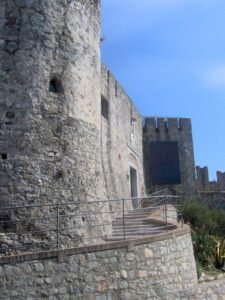
Castello San Giorgio
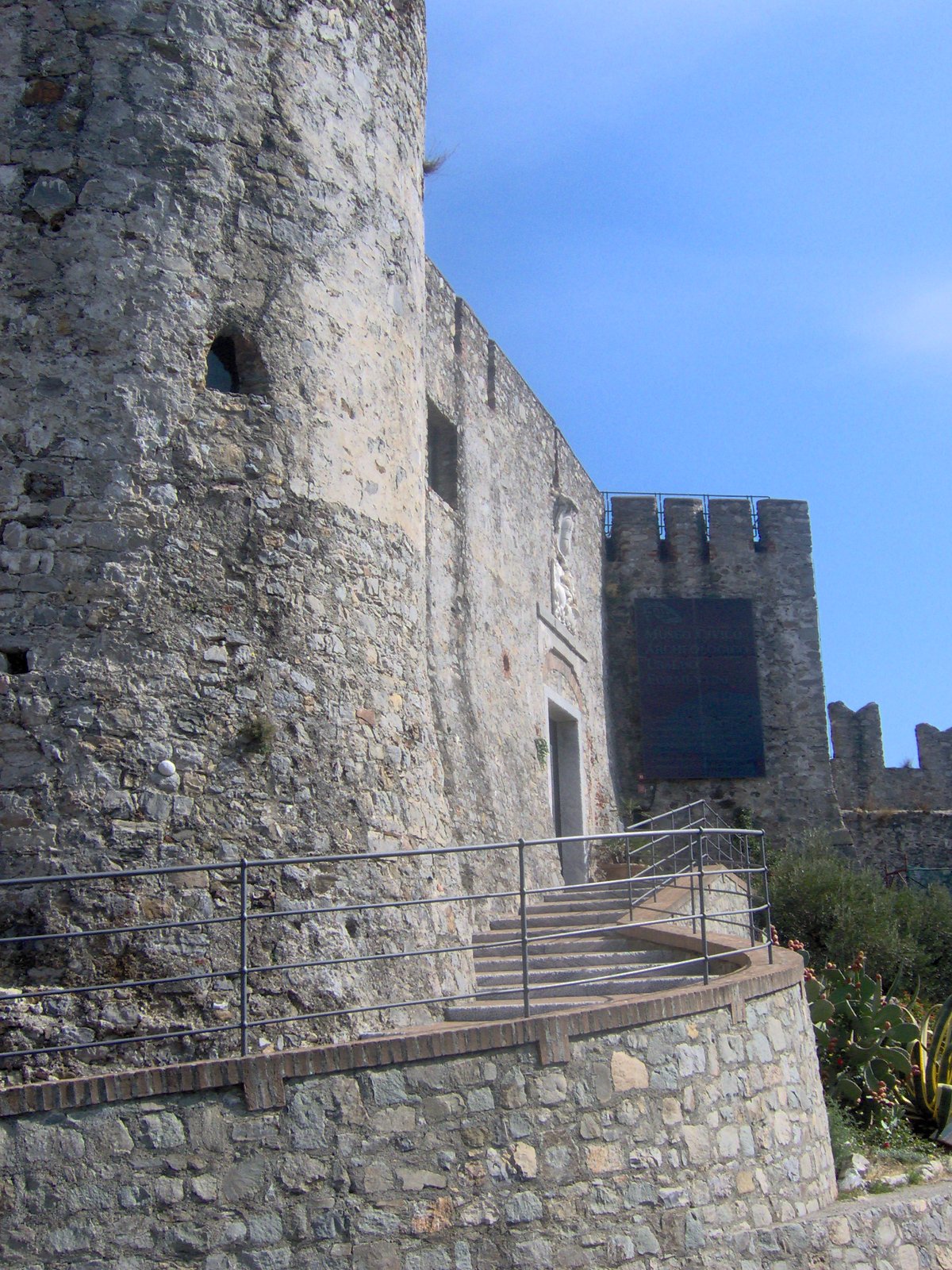 Last stop, but certainly not least: the Castello San Giorgio dominates La Spezia from the Poggio hill. Commissioned by Nicolò Fieschi in 1262, destroyed and rebuilt several times, today it preserves two contiguous quadrangular structures and a medieval tower 5.50 meters on each side. Climbing along Via XXVII Marzo, you encounter the ancient 14th-century walls with arrow slits and, higher up, imposing 17th-century battered bastions. Inside, the Ubaldo Formentini Archaeological Museum displays artifacts from Prehistory to the Middle Ages: not to be missed are the Lunigiana statue stelae, dating back 5,000 years, and the Roman mosaics from Luni. From the terraces, the view stretches over the gulf and the city – a panorama that rewards the climb. Open Wed-Sun 9:30-12:30 and 14:00-17:00 (winter hours), full ticket €6. If you are short on time, access to the terraces only costs €4.
- Via Ventisette Marzo, La Spezia (SP)
- Open in Google Maps
- View on Google Images
You should go if…