
Discover Polesine in 3 days: a complete itinerary through the Po Delta, Rovigo, and the Venetian villas. Start from Rovigo, an art city with its Cathedral and historic palaces. Continue into the Po Delta Park, among the Vangadizza Abbey, ethnographic museums, and unspoiled nature. Conclude with the Venetian villas of Polesella and Fratta Polesine, examples of noble architecture. A perfect weekend for those who love culture, nature, and good food. Follow our detailed route to not miss the unmissable stops of this surprising land.
🗺️ Your trip at a glance
A weekend of discovery among culture, nature, and architecture. Ideal for curious travelers who want to immerse themselves in the lesser-known Veneto.
- Ideal for those seeking a weekend of culture, nature, and history.
- Highlights: Medieval Rovigo, Po Delta naturalistic, Renaissance Venetian villas.
Itinerary stops
Day 1 – Stop no. 1
Rovigo Cathedral: A Dive into History
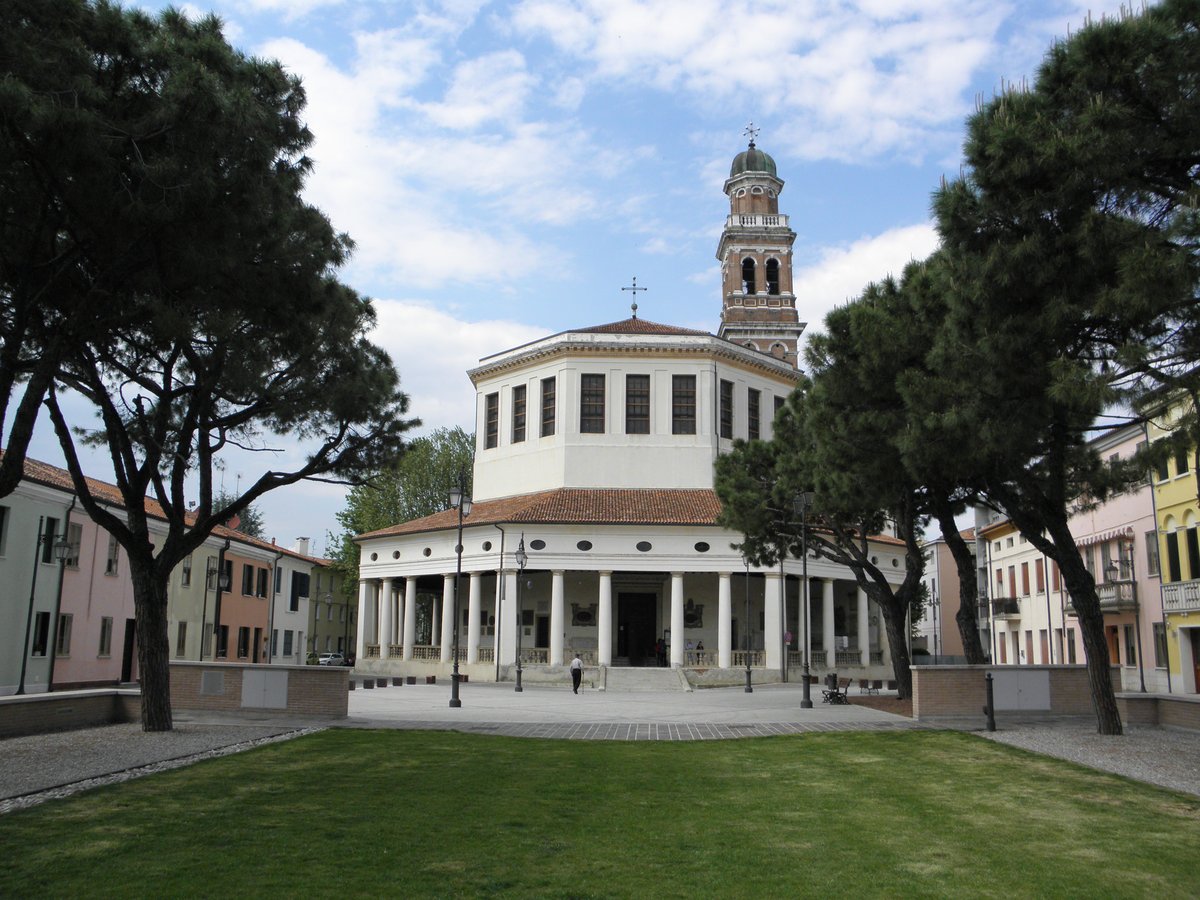 First stop on our tour of the Polesine region: Rovigo Cathedral, dedicated to Saint Stephen the Pope. As early as 964, a parish church was mentioned here, but the current building is the result of a long history of reconstructions and projects that were never fully realized. The brick façade, left unfinished, is almost disarming in its simplicity, but as soon as you step inside, you understand why it’s worth it. The Baroque interior is a treasure chest: works by Palma il Giovane, the 16th-century candelabrum by Desiderio da Florence, and the 15th-century fresco of the Madonna delle Grazie. Walking through the aisles, the atmosphere is intimate, almost suspended in time. A tip: look up at the octagonal dome, rebuilt after a collapse in the 18th century, which casts a unique light. And don’t miss the tabernacle by Corradini (1718), a small gem. In short, the Cathedral is the ideal starting point to breathe in the soul of Rovigo.
- Piazza Duomo, Rovigo (RO)
- Open in Google Maps
- View on Google Images

You should go if…
Day 1 – Stop no. 2
Accademia dei Concordi: A Dive into Rovigo’s Culture
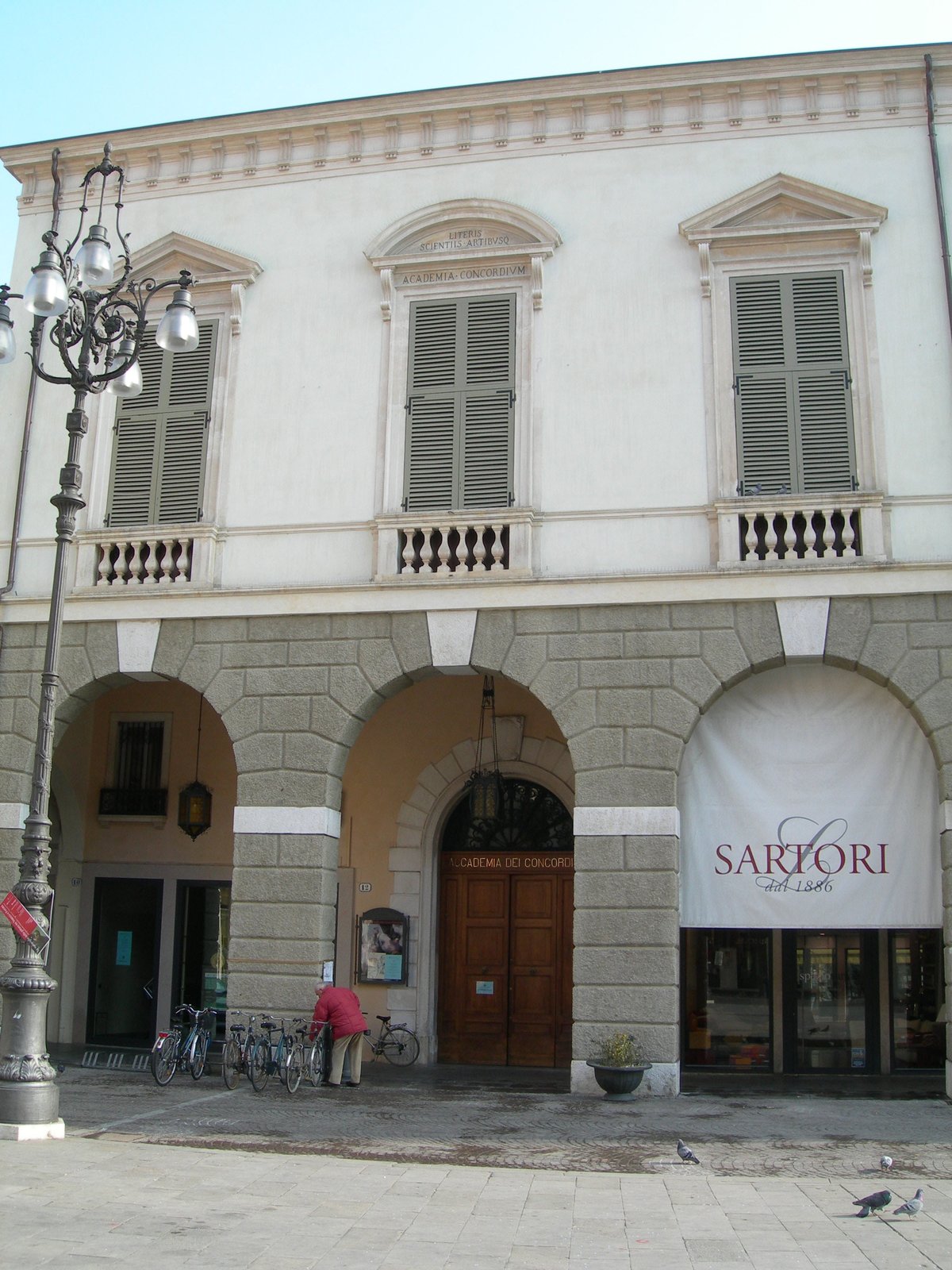 After the Cathedral, the second stop is the Accademia dei Concordi, a cultural institution that smells of history. Founded in 1580 by Count Gaspare Campo to bring together scholars and intellectuals, it is now the city’s main cultural hub. The neoclassical building, designed by Sante Baseggio and opened in 1814, houses the civic library with over 300,000 volumes, including the precious 14th-century “Bibbia Istoriata Padovana”. The reading room is a captivating space, where the scent of old books mingles with light streaming through the large windows. If you love art, the historic art gallery has been moved to Palazzo Roverella, but the Accademia still retains its vibrant soul: exhibitions, concerts, and conferences are held here. Don’t miss the Sala degli Arazzi, often used for events. A tip: ask the knowledgeable and friendly staff to show you some rare manuscripts. Admission is free, but it’s best to book for consulting the ancient collections.
- Go to the page: Accademia dei Concordi Rovigo: 400 Works from the 15th to the 19th Century and a Historic Library
- Piazza Vittorio Emanuele II 14, Rovigo (RO)
- https://www.concordi.it/
- Open in Google Maps
- View on Google Images
You should go if…
Day 1 – Stop no. 3
Palazzo Roverella
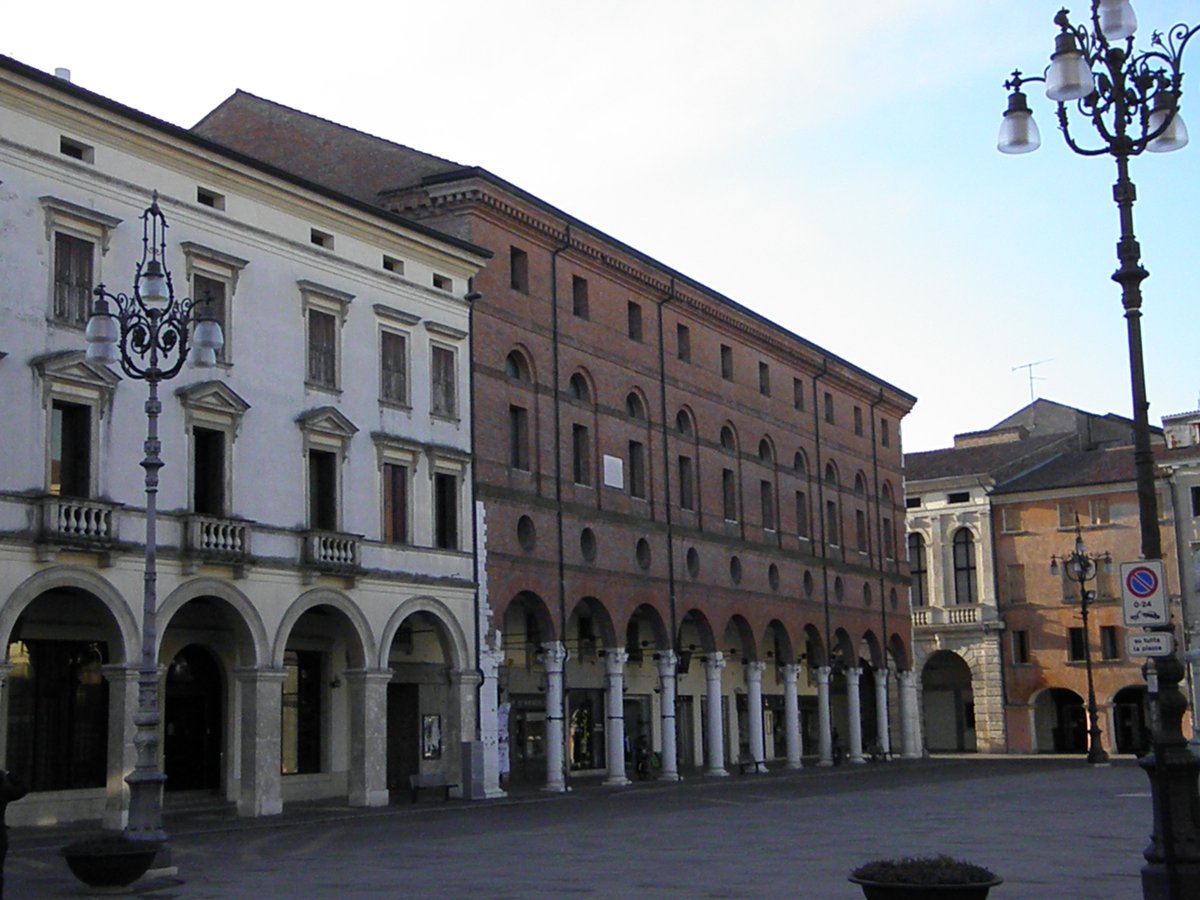 From the Renaissance to the 20th century, passing through ancient Egypt: Palazzo Roverella is a treasure trove of wonders. Built from 1474 at the behest of Cardinal Bartolomeo Roverella, the palace is a terracotta masterpiece with elegant marble columns, attributed to the circle of Biagio Rossetti. After a long restoration that restored it to its former glory, it now houses the Pinacoteca dell’Accademia dei Concordi and the Seminario: here you can admire masterpieces such as Giovanni Bellini’s Madonna and Child and Tiepolo’s Portrait of Antonio Riccobono. Don’t miss the Egyptian section with the mummies of Meryt and Baby, an unexpected touch. Moreover, the temporary exhibitions of the highest caliber (from Toulouse-Lautrec to Cartier-Bresson) make every visit unique. Admission is reduced with the Rovigocard. My advice: if you are an art enthusiast, dedicate at least an hour to the art gallery; the temporary exhibitions deserve another hour. The palace is located on Galleria Bernardino da Feltre, a stone’s throw from the main square.
- Go to the page: Palazzo Roverella in Rovigo: Art Exhibitions of Chagall and De Chirico in a Renaissance Palace
- Galleria Bernardino da Feltre, Rovigo (RO)
- Open in Google Maps
- View on Google Images
You should go if…
Day 1 – Stop no. 4
Torre Donà: the medieval giant of Rovigo
 Very tall and slightly leaning, Torre Donà towers over Piazza Matteotti like a brick giant. At about 60 meters, it is one of the tallest medieval towers in Italy, standing where the castle of Rovigo once stood, built in the 10th century to defend against barbarian incursions. Today, together with the nearby Torre Grimani, it is all that remains of that fortress. The tower can only be visited with a guide and mandatory reservation: during the climb, you breathe a medieval atmosphere, with the terracotta walls and Ghibelline battlements. Once at the top, the panorama of the city and the Polesine countryside is spectacular. An unmissable experience for those who want to touch history. The ticket costs €5 (€3 reduced), or it is better to get the Rovigocard at €12, which also includes other museums. Attention: visits are only on certain days and times, so check the website or call the IAT.
- Piazza Giacomo Matteotti, Rovigo (RO)
- Open in Google Maps
- View on Google Images
You should go if…
Day 2 – Stop no. 1
Vangadizza Abbey
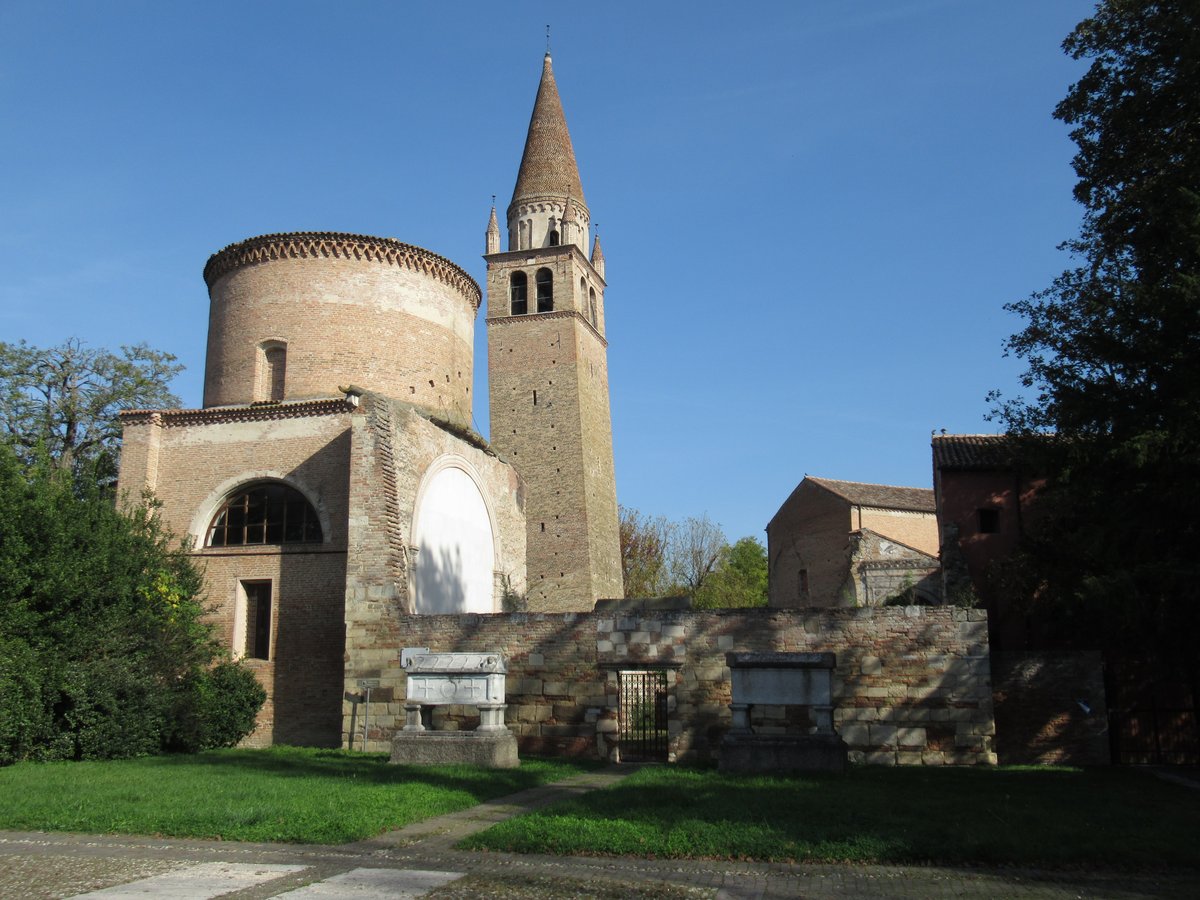 You wouldn’t expect to find such an ancient abbey in the heart of Polesine, yet here in Badia Polesine stands one of the most fascinating monastic complexes in the region. Vangadizza Abbey, founded in the 10th century by the Benedictines, was later entrusted to the Camaldolese and became an important diocese. Today, after the Napoleonic suppression of 1810, what remains are the 13th-century cloister, the leaning bell tower, and the remnants of the apses. In the square in front, two sarcophagi hold the remains of Albert Azzo II of Este and Cunegonda of Altdorf: from them descend the Este family and even the current British monarchs. A plunge into the past amid faith and power, enriched by the Municipal Library set up in the former abbot’s quarters. The cloister is the silent heart of the complex, with its brick pillars and white marble wellhead. Lose yourself in the Abbot’s Garden and let this hidden gem amaze you.
- Go to the page: Vangadizza Abbey: Renaissance Cloister and 10th-Century Medieval Ruins
- Piazza Vangadizza, Badia Polesine (RO)
- Open in Google Maps
- View on Google Images
You should go if…
Day 2 – Stop no. 2
National Archaeological Museum of Adria
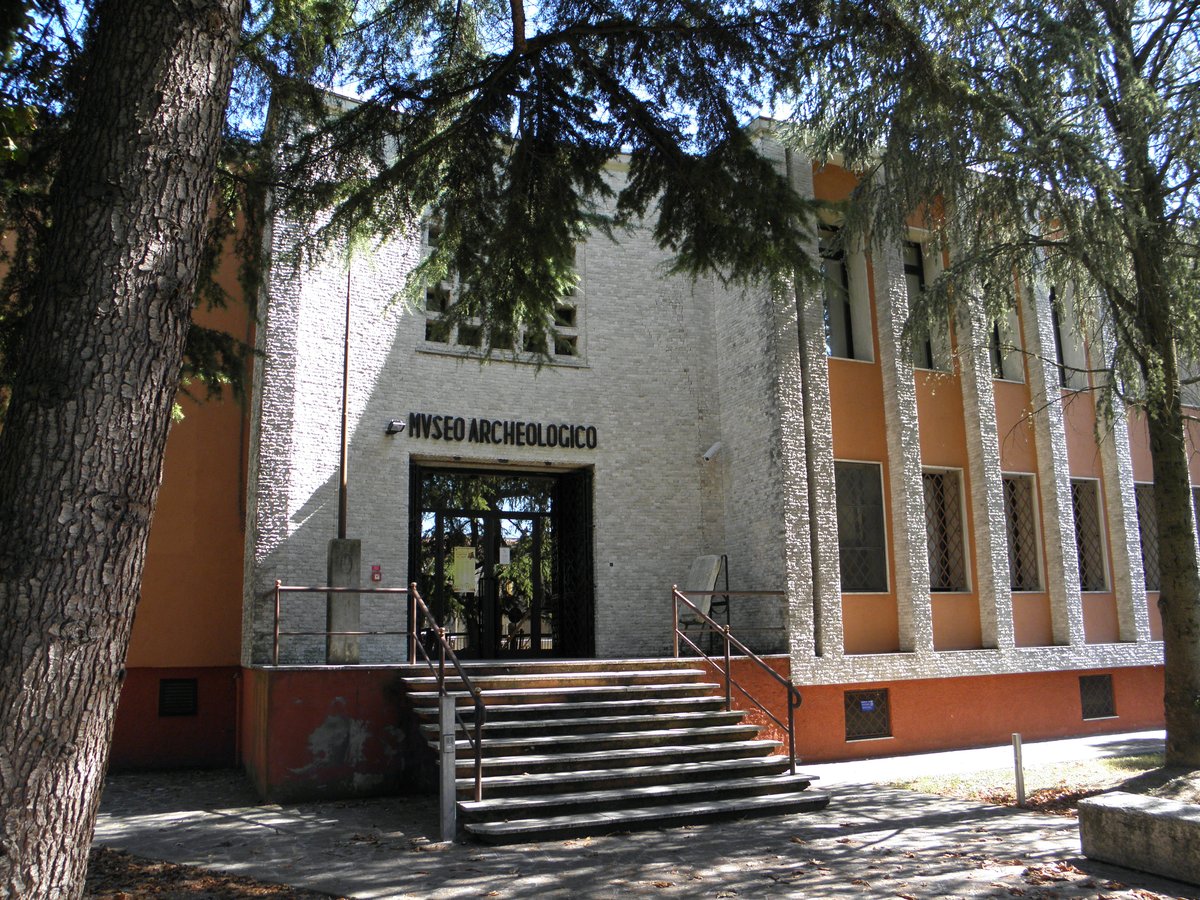 Just a stone’s throw from the center of Adria, this museum is a small treasure chest of history. Housed in a modern building surrounded by greenery, it opened in 1961 and today narrates the story of this port city, which in ancient times was a crossroads between Greeks, Etruscans, and Romans. The Bocchi collection, the heart of the museum, displays superb Attic black- and red-figure pottery and precious Etruscan bronzes. But the highlight is undoubtedly the Tomb of the Chariot: a 3rd-century BC burial with the skeletons of three horses and the remains of a war chariot, a sign of an aristocratic figure of Celtic culture integrated into Etruscan society. Upstairs, a showcase dedicated to Roman glass (1st century BC–1st century AD) shows jars, balsamaria, and cups of surprising transparency, testaments to the luxury and trade of the time. Also unmissable is the lapidary in the cloister, with stelae and inscriptions that reveal daily life in the Roman municipality of Atria.
You should go if…
Day 2 – Stop no. 3
Villa Grassi: A Corner of History with Barchesse and Oratory
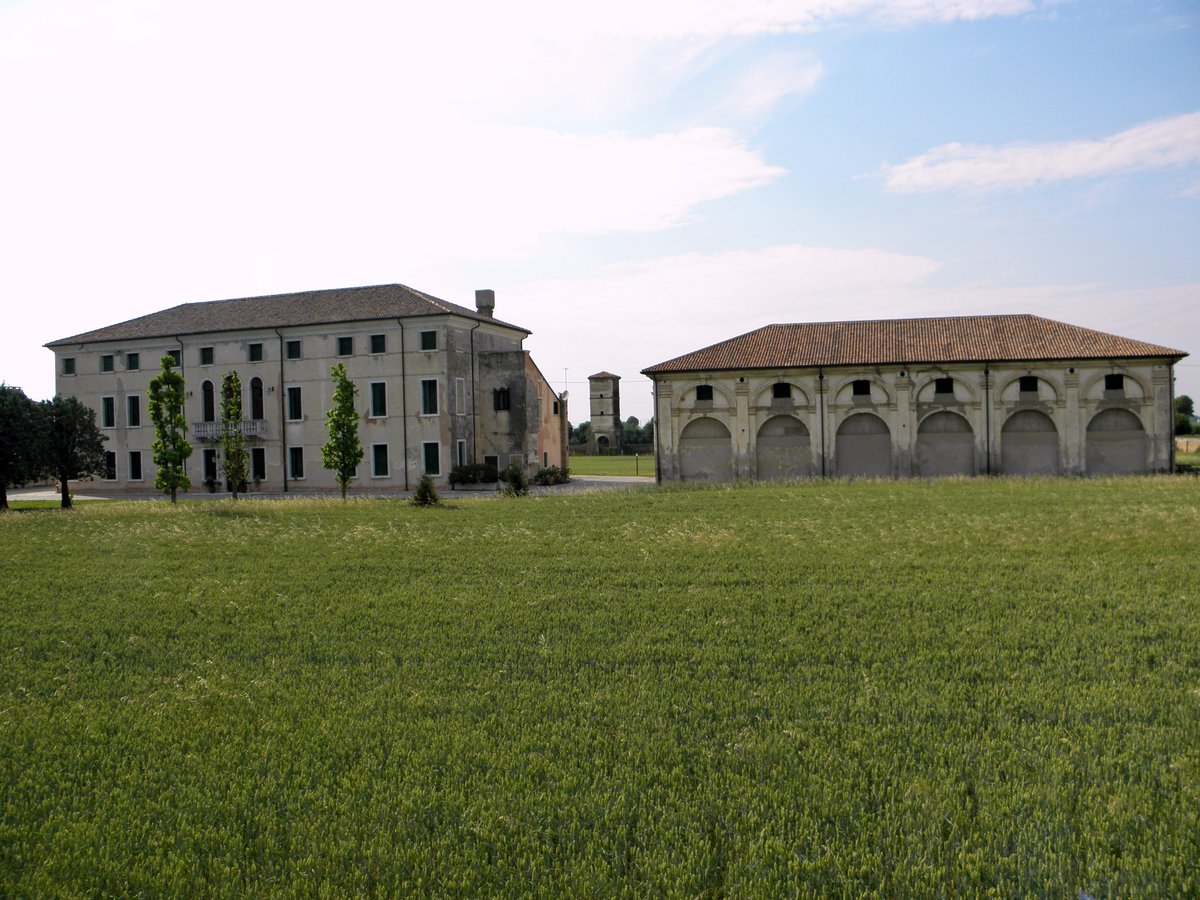 After leaving the museum, continue towards the Adria countryside, where Villa Grassi rises among the reclaimed fields of the Delta. Built in the early 1600s by the Grassi family, members of the Venetian patriciate, it is a quintessential example of a Venetian villa: the manor house flanked by two symmetrical barchesse, a dovecote tower, and a Baroque oratory. The chapel, dedicated to the Nativity of the Virgin Mary, was commissioned by Paolo Grassi in 1708 for the reclamation workers. Inside, a restrained Baroque style with Istrian marble and a relic of the blood of Saint Clement. The villa is still privately owned, but on special occasions—such as “Adria in fiore” (Adria in Bloom)—it opens to the public, offering a trip back into 18th-century rural life.
- Strada Provinciale 4 Rovigo-Adria, Adria (RO)
- Open in Google Maps
- View on Google Images
You should go if…
Day 3 – Stop no. 1
Ca’ Majer: a Timeless Venetian Villa
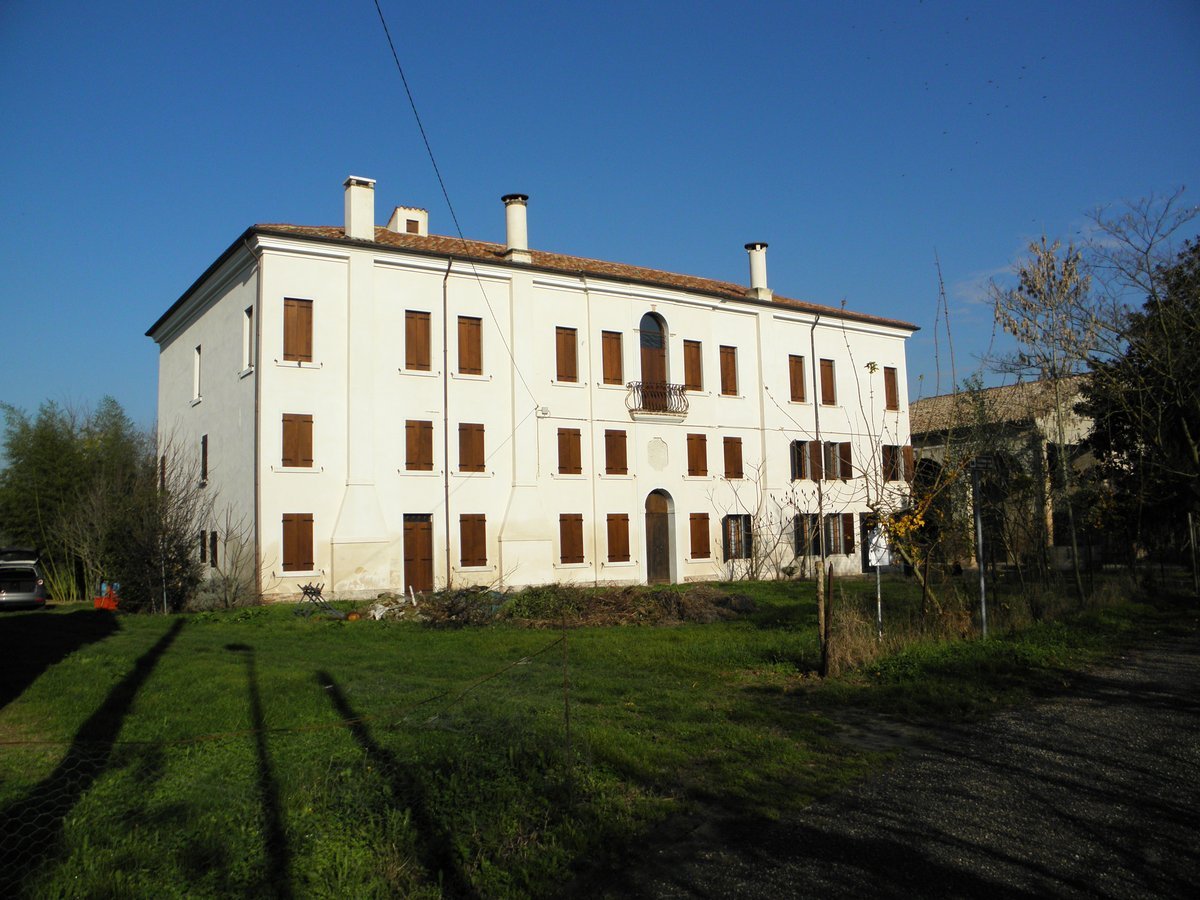 The third day of the itinerary begins at Ca’ Majer, one of the oldest houses in Polesella. Here, along the road of Magarino, you can still breathe the atmosphere of a 17th-century Venetian country villa. The structure has three floors: the top floor, the most ornate, contrasts with the mezzanine, once used as storage for agricultural products. In the center rises the noble floor, while the two side wings housed the harvests and the families of the sharecroppers. A striking detail: in the 1960s, the author of a story lived precisely in the left part under a sharecropping contract, giving this villa a living history made of work and daily life. Walking through the spaces, one perceives the stratification of time: nobility at the center, work on the sides. An authentic place, far from tourist circuits, worth a stop for those who love lived-in historic homes.
- Strada Provinciale 4 Polesella-Ro, Polesella (RO)
- Open in Google Maps
- View on Google Images
You should go if…
Day 3 – Stop no. 2
Parish Church of the Blessed Virgin Mary of the Rosary
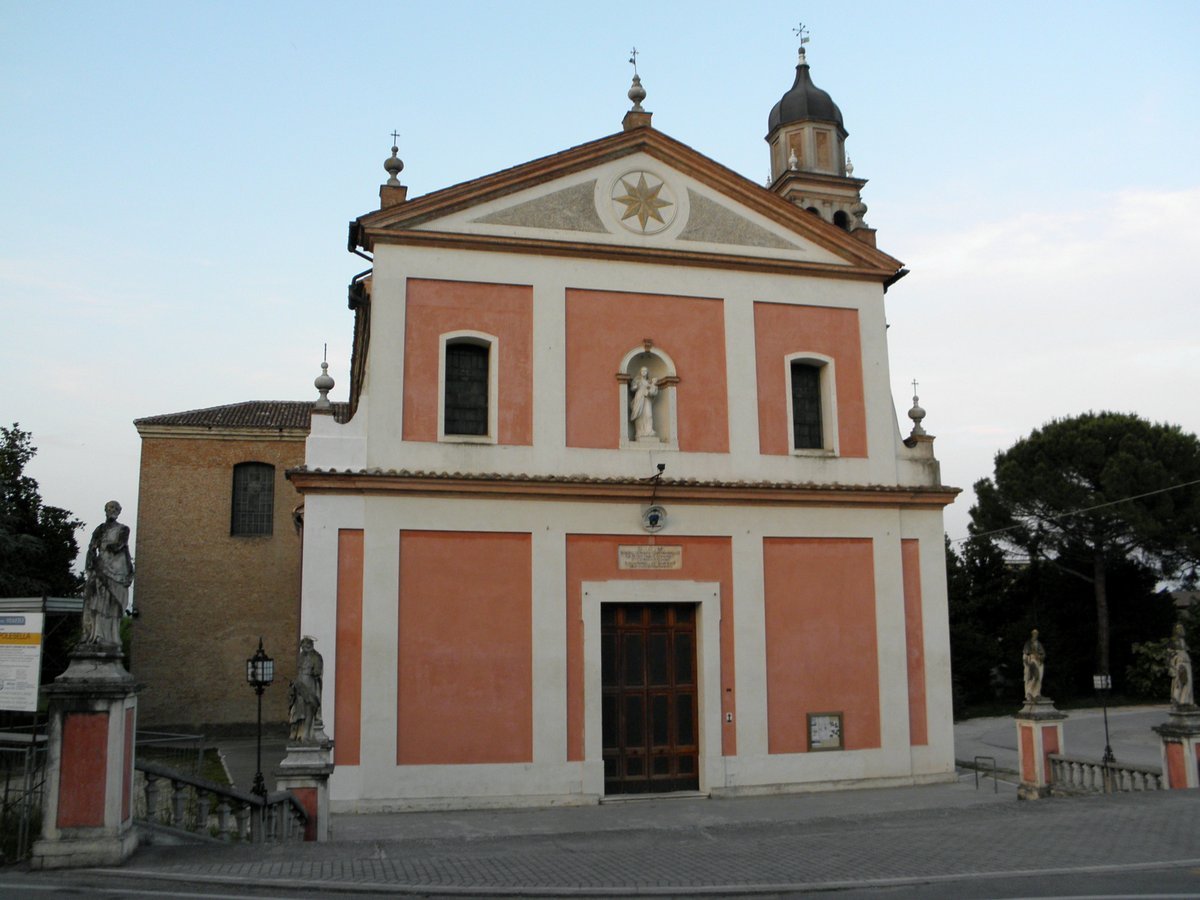 At Polesella, a few steps from the banks of the Po River, stands a church that seems from another era. The Parish Church of the Blessed Virgin Mary of the Rosary was built in 1737 and today is elevated to the rank of a minor basilica. The façade is adorned with a staircase featuring religious statues – and it is actually below street level, a detail that makes it unique. Inside, besides altarpieces from the Venetian school, it houses a gem: the double-manual organ by Gaetano Callido from 1797, still perfectly functioning and used for concerts. The bell tower, slightly leaning, houses six bells; two are original from 1863, the others were recast after the war. If you pass by, stop to listen to the acoustics: it is a small treasure chest of history and music.
- Via Don Minzoni, Polesella (RO)
- Open in Google Maps
- View on Google Images
You should go if…
Day 3 – Stop no. 3
National Archaeological Museum of Fratta Polesine
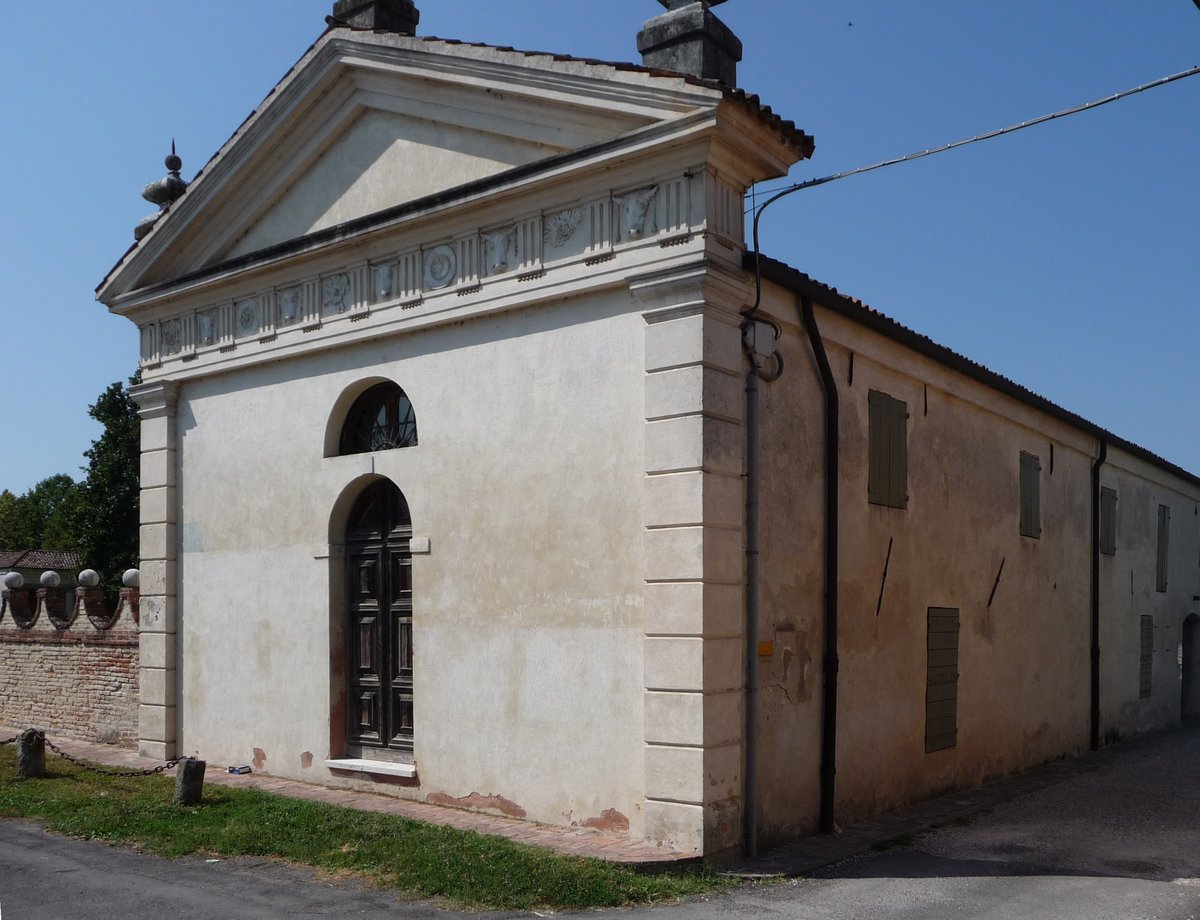 After the church of Polesella, we move to Fratta Polesine for a dive into prehistory. The National Archaeological Museum is housed in the north barchessa of Villa Badoer, the only villa in Polesine designed by Palladio and a UNESCO World Heritage site. Inaugurated in 2009, it collects the results of over 40 years of excavations at the site of Frattesina, a late Bronze Age village (12th-10th centuries BC) that was a true commercial crossroads. On the ground floor you’ll find the famous Tesoretto: ivory combs, glass and amber beads, bronze ornaments that tell of trade with the Baltic and the Mediterranean. Going upstairs, the necropolises of Narde and Fondo Zanotto reveal funerary rites and social hierarchies. Opening hours are convenient: every day from 8:30 am to 7:30 pm. Full ticket €3, with the Fratta Card (€5) you also enter Villa Badoer and Casa Matteotti. Unmissable for those who love archaeology and Palladian architecture.
- Via Giovanni Tasso 1, Fratta Polesine (RO)
- http://musei.beniculturali.it/musei?mid=4313&nome=museo-archeologico-nazionale-barchessa-di-villa-badoer
- Open in Google Maps
- View on Google Images
You should go if…


