Florence’s Piazza del Duomo: A Guide to the Cathedral and the Dome

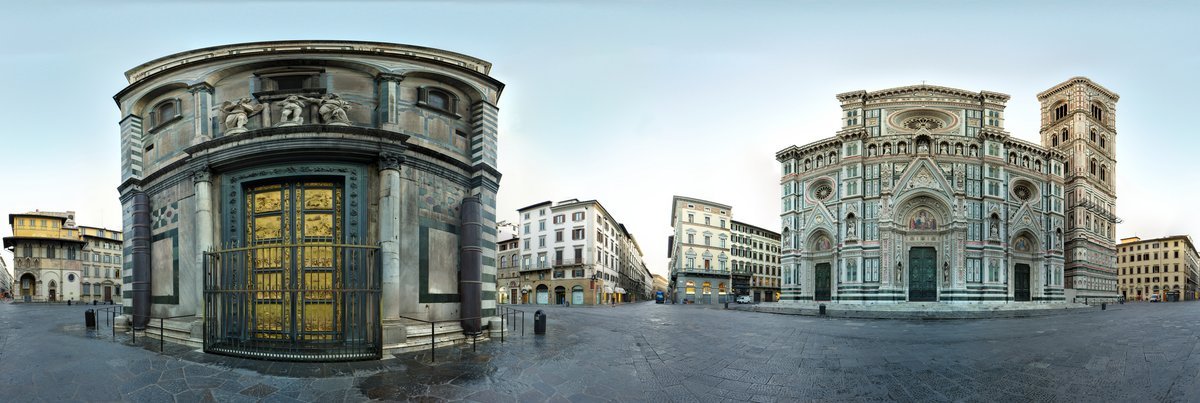
Piazza del Duomo is Florence’s monumental heart, an open-air museum declared a UNESCO World Heritage Site. Here you’ll find the city’s iconic landmarks: the Cathedral of Santa Maria del Fiore, Brunelleschi’s Dome, Giotto’s Bell Tower, and the Baptistery. This guide provides essential information for planning your visit, including opening hours, tickets, and interesting facts.

Cathedral of Santa Maria del Fiore: free entry, third largest church in Europe.
Brunelleschi’s Dome: climb 463 steps for a breathtaking view over Florence.
Giotto’s Bell Tower: 414 steps for a unique panorama.
Museo dell’Opera del Duomo: houses masterpieces by Michelangelo and Donatello.


Events nearby


Copertina itinerario Florence's Piazza del Duomo: A Guide to the Cathedral and the Dome
The religious heart of Florence: Cathedral of Santa Maria del Fiore, Brunelleschi’s Dome, Giotto’s Bell Tower, and Baptistery, blending art, history, and practical visitor tips.

Good to know


Piazza del Duomo: the monumental heart of Florence

Piazza del Duomo is the monumental heart of Florence, and that’s not just a saying: here, in a single space, you’ll find the Cathedral of Santa Maria del Fiore, Brunelleschi’s Dome, Giotto’s Campanile, and the Baptistery. As you stroll, you can’t help but look up: the white, green, and red marble surrounds you on every side. The historic center has been a UNESCO World Heritage Site since 1982, and this square is arguably its essence. What strikes me every time is the contrast between the bustling crowds and the harmony of these buildings, which have stood here for centuries. If you’re visiting Florence for the first time, this is the place to start. If you’re coming back, it’s like meeting an old friend. Since 2009, the square has been pedestrianized, and you can finally walk at your own pace, without cars—just you and history. Trust me, it deserves much more than a passing photo.

From Santa Reparata to the Dome: Over Seven Centuries

The square was born outside the Roman quadrilateral, but soon became the religious center of Florence. Before Santa Maria del Fiore there was Santa Reparata, and next to it already stood an early Christian baptistery. In 1296 Arnolfo di Cambio began the new cathedral; at the end of the 13th century, houses were demolished to make room. In the 14th century Giotto designed the bell tower, completed by Andrea Pisano and Francesco Talenti. In 1420 Brunelleschi began his challenge: a self-supporting dome, the largest ever built in masonry, inaugurated in 1436. The current neo-Gothic facade only arrived between 1871 and 1887. In 1982 the historic center was declared a UNESCO World Heritage Site, and since October 25, 2009 the square has been pedestrianized. Here are the key moments:

  • Early Christian era: the Baptistery is born.
  • 1296: Arnolfo di Cambio begins the Duomo.
  • 1334: Giotto designs the Campanile.
  • 1420-1436: Brunelleschi builds the Dome.
  • 1871-1887: neo-Gothic facade of the Duomo.
  • 1982: Florence’s historic center UNESCO.
  • 2009: Piazza del Duomo pedestrianized.

Brunelleschi’s Dome: A Feat in Masonry

You can’t visit the square without diving into the heart of this masterpiece. Brunelleschi’s Dome is not just the symbol of Florence: it is the largest masonry dome in the world, with an internal diameter of 45.5 meters and a height of 116 meters. Built in sixteen years, it has a double shell and is self-supporting: a feat that still leaves you speechless. Inside, the frescoes of the Last Judgment by Vasari and Zuccari surround you. The climb is part of the experience: 463 steps with no elevator, through narrow passages and curves. Once you reach the top, the view of the city and the square makes it all worth it. Let me warn you: it’s not a walk in the park, but the effort is part of the charm. Better book in advance because spots are limited. And remember: no large backpacks, here you only rush for the view.

Baptistery and Opera Museum: Art Up Close

The Baptistery of San Giovanni is the oldest building on the square, with its octagonal plan and white and green marble cladding. Its bronze doors are a lesson in sculpture: think of Lorenzo Ghiberti’s Gates of Paradise, which still inspire dreams today. Inside, the 13th- and 14th-century mosaic ceiling is another level. Next door, the Museo dell’Opera del Duomo is a stop that not everyone makes, but which in my view is essential. Here you’ll find the world’s largest collection of Florentine medieval and Renaissance sculpture: Donatello’s Magdalene, Michelangelo’s Pietà, the campanile panels. There’s also a reconstruction of Arnolfo’s facade. In short, to truly understand the square, you have to go through the museum. With a single pass you can access many monuments of the complex.

Why Visit It

The Cathedral is free, which is already a reason to step inside. But the real journey is climbing up: the Dome and the Bell Tower offer viewpoints you won’t find anywhere else, and every step is a piece of history. Second: the Museo dell’Opera del Duomo is often underestimated, yet it houses masterpieces by Michelangelo and Donatello that explain the rest of the complex. Third: the square is alive. Between one monument and another, the Loggia del Bigallo, the headquarters of the Misericordia, historic palaces, and cafés with a view make you feel part of a still-pulsating organism. With a single pass you can visit the whole complex without the hassle of queues and ticket offices. In short, this is not just a stop: it’s a full immersion in Florentine art and history.

When to Go

I won’t give you an exact time, but if you can choose, go early in the morning. The square wakes up slowly, the sun lights up the marble, and for a moment you’re almost alone. It’s a magical hour, before the crowds arrive. Sunset has its own appeal: the cathedral’s facade glows with warm light, and the city lights begin to sparkle. And when the sky is clear, the reflections on the marble are even more vivid. I think low light is this place’s best friend. Oh, and a tip: the climb to the Dome is more spectacular under a clear sky, so keep an eye on the forecast. But whichever moment you choose, the square has a different story to tell.

In the Surroundings

After the square, you can continue to immerse yourself in art. The Medici Chapels are a perfect stop to understand the power and taste of the Medici family: Michelangelo’s New Sacristy is truly moving. Alternatively, if you want a change of scenery, head straight to Piazza della Signoria, the city’s civil heart, with its magnificent palace and open-air statues. Both are in the historic center, so the route suits a leisurely stroll. Whichever direction you take, Florence always has another wonder to show you.

Itineraries nearby


💡 Did You Know…?

Every Easter, the square comes alive with the Scoppio del Carro (Explosion of the Cart): a cart laden with fireworks is lit in front of the Cathedral, a centuries-old tradition. The Baptistery’s Gates of Paradise you admire are a copy: the original, with Ghiberti’s gilded panels, is in the Museo dell’Opera del Duomo. And if you go beneath the Cathedral, you can visit the remains of the ancient Santa Reparata, the church that stood before the Duomo. For Florentines, this square is the city’s elegant living room.