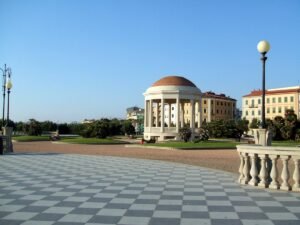
Pistoia is a city often overlooked by passing tourists, but those who stop discover a historic center full of treasures. This one-day itinerary takes you to its iconic monuments: the Cathedral of San Zeno, a Romanesque masterpiece; the Baptistery with its frescoed dome; the Church of Sant’Andrea, which houses the famous pulpit by Giovanni Pisano; and the Ospedale del Ceppo, with its extraordinary glazed terracotta frieze by the Della Robbia. A flat walking route that lets you admire arcaded squares and historic buildings. Ideal for a day trip or weekend, this itinerary offers a dive into Tuscan art and history. Here are the steps to follow so you don’t miss anything.
🗺️ Your trip at a glance
A compact yet complete itinerary to discover the best of Pistoia in a few hours. Perfect for those short on time but wanting an authentic cultural experience.
Ideal for art and history enthusiasts who want a self-guided tour. Highlights: four must-see monuments, pedestrian and free route, Romanesque and Renaissance masterpieces. Who it’s for: suitable for couples, families, and solo travelers.
Itinerary stops
Stop no. 1
San Zeno Cathedral
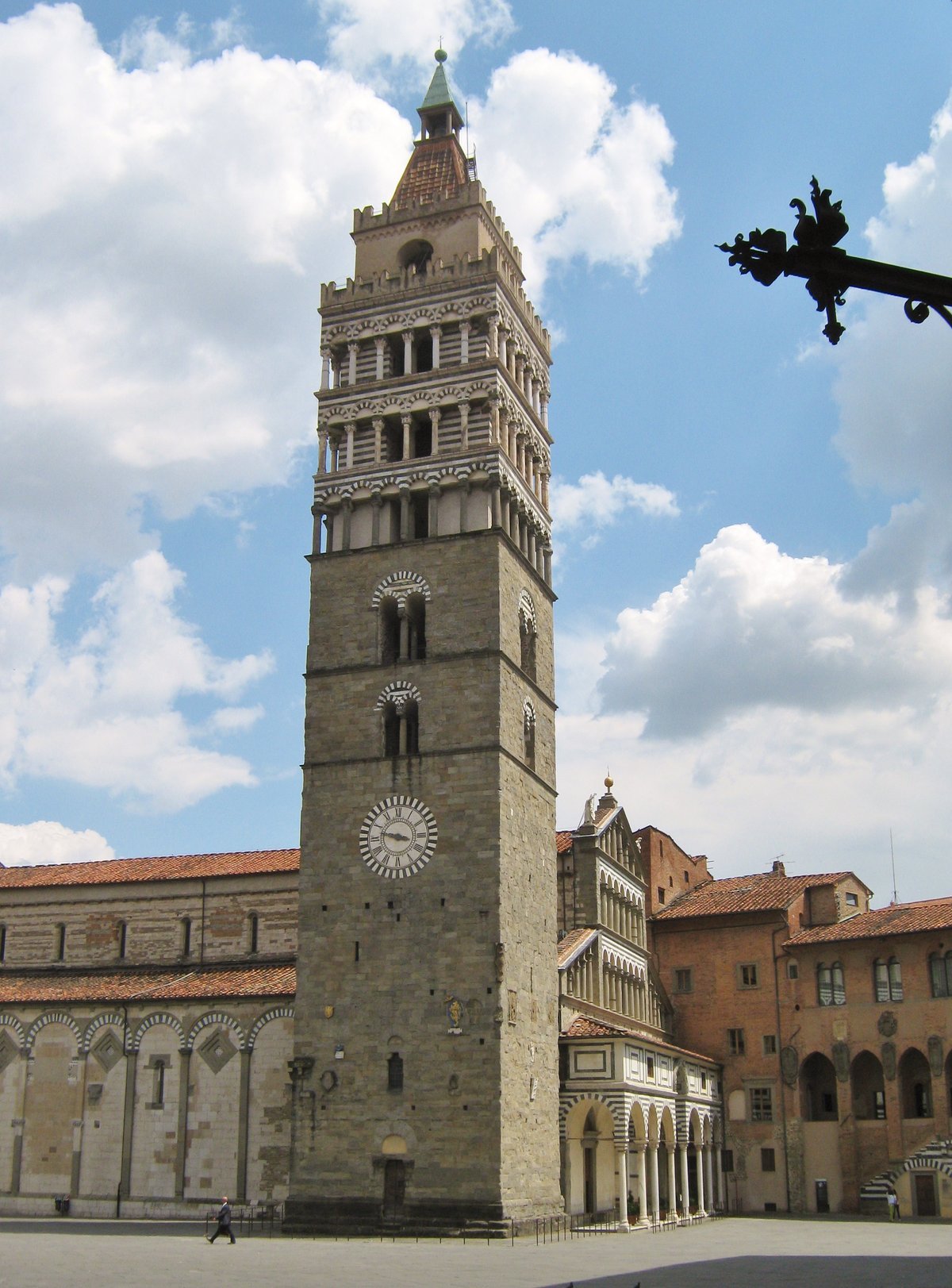 Your journey to Pistoia begins here, in the main square, where the Duomo of San Zeno dominates the scene with its Romanesque facade of white and black stripes and the beautiful 14th-century portico. Step inside and let yourself be amazed: the interior with three naves, with light filtering through the medieval mullioned windows, holds unique treasures. The most famous is the Silver Altar of Saint James, a masterpiece of Gothic goldsmithing to which a young Filippo Brunelleschi also contributed. In the right nave, don’t miss the Wooden Crucifix by Coppo di Marcovaldo (1274), and in the left nave, the monument to Cardinal Forteguerri begun by Verrocchio. The 67-meter-high bell tower stands next to the cathedral. Admission is free, and the cathedral is open daily (Mon-Sat 8:30 AM–12:30 PM and 3:30 PM–7:00 PM, Sun 9:00 AM–12:30 PM and 3:30 PM–7:00 PM). Take your time to admire every detail: here, every corner tells centuries of faith and art.
- Go to the page: San Zeno Cathedral in Pistoia: Masterpieces of Art and History
- Piazza del Duomo, Pistoia (PT)
- https://www.diocesipistoia.it/cattedrale-san-zeno
- Open in Google Maps
- View on Google Images

You should go if…
Stop no. 2
Battistero di San Giovanni in Corte
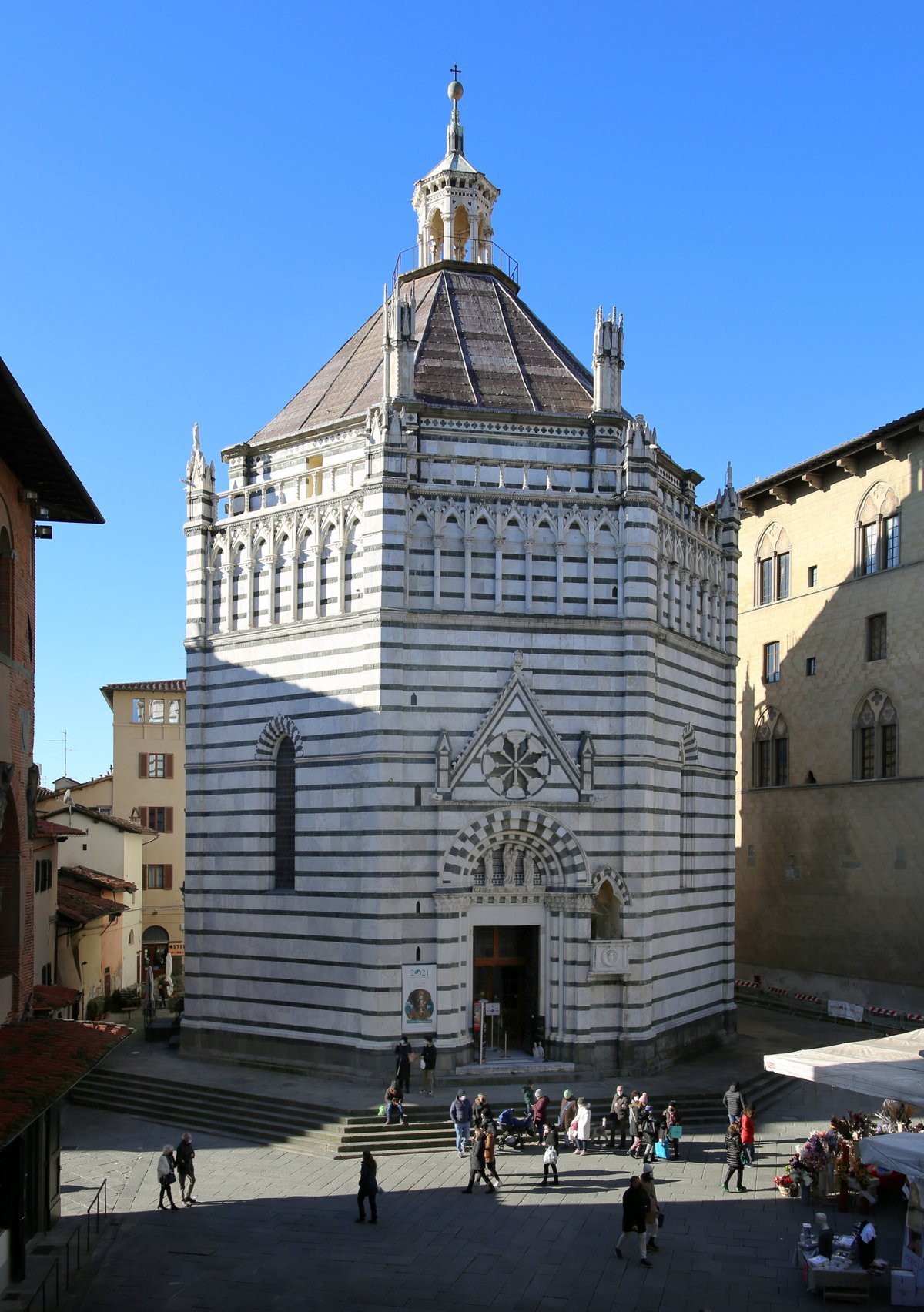 After leaving the Cathedral, you find yourself in front of the Baptistery of San Giovanni in Corte, a jewel of Tuscan Gothic. Its construction began in 1301 on the remains of an ancient Lombard church. The exterior, clad in white and green marble from Siena, Prato, and Carrara, strikes you with the elegance of its bichrome design. The building has an octagonal plan, about 40 meters high, with a lantern and a balustrade decorated with statues and spires. Inside, simple and austere, the highlight is the baptismal font from 1226, signed by Lanfranco da Como: a central basin for immersion baptism and smaller wells. Fun fact: Dante mentions it in the 19th canto of the Inferno. Today the baptistery is no longer used for baptisms but hosts cultural events. Admission is free and open Friday, Saturday, and Sunday from 10:30 AM to 5:45 PM. A place that combines art, history, and spirituality in just a few square meters.
- Piazza del Duomo, Pistoia (PT)
- Open in Google Maps
- View on Google Images
You should go if…
Stop no. 3
Ospedale del Ceppo
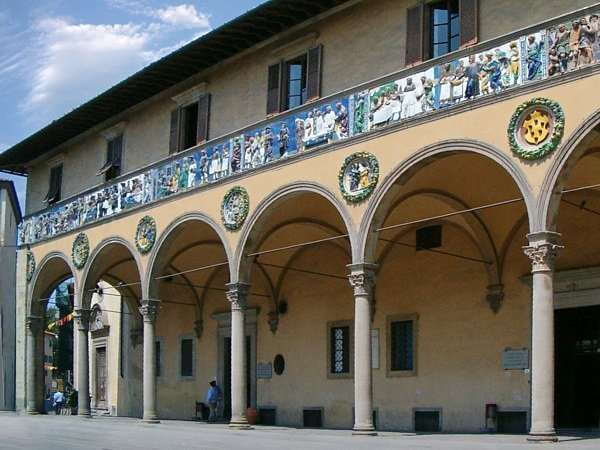 Continuing toward Piazza Giovanni XXIII, you come across one of Pistoia’s most fascinating buildings: the Ospedale del Ceppo. Founded in 1277, according to legend on a stump that bloomed in winter, it was a landmark of care until 2013. The Renaissance portico is adorned with the famous glazed terracotta frieze by the Della Robbia workshop and Santi Buglioni, depicting the Seven Works of Mercy. Inside, the tiny anatomical theater from 1785 and the collection of surgical instruments tell the story of medical innovation: the scalpel is said to have been invented here. Don’t miss the Pistoia Sotterranea tour, which descends for 650 meters along the ancient bed of the Brana stream, revealing Roman and medieval remains. A place where the history of humanity and medicine blend uniquely.
- Go to the page: Ospedale del Ceppo: Seven Works of Mercy in Terracotta
- Vicolo del Frantoio, Pistoia (PT)
- Open in Google Maps
- View on Google Images
You should go if…
Stop no. 4
Pieve di Sant’Andrea
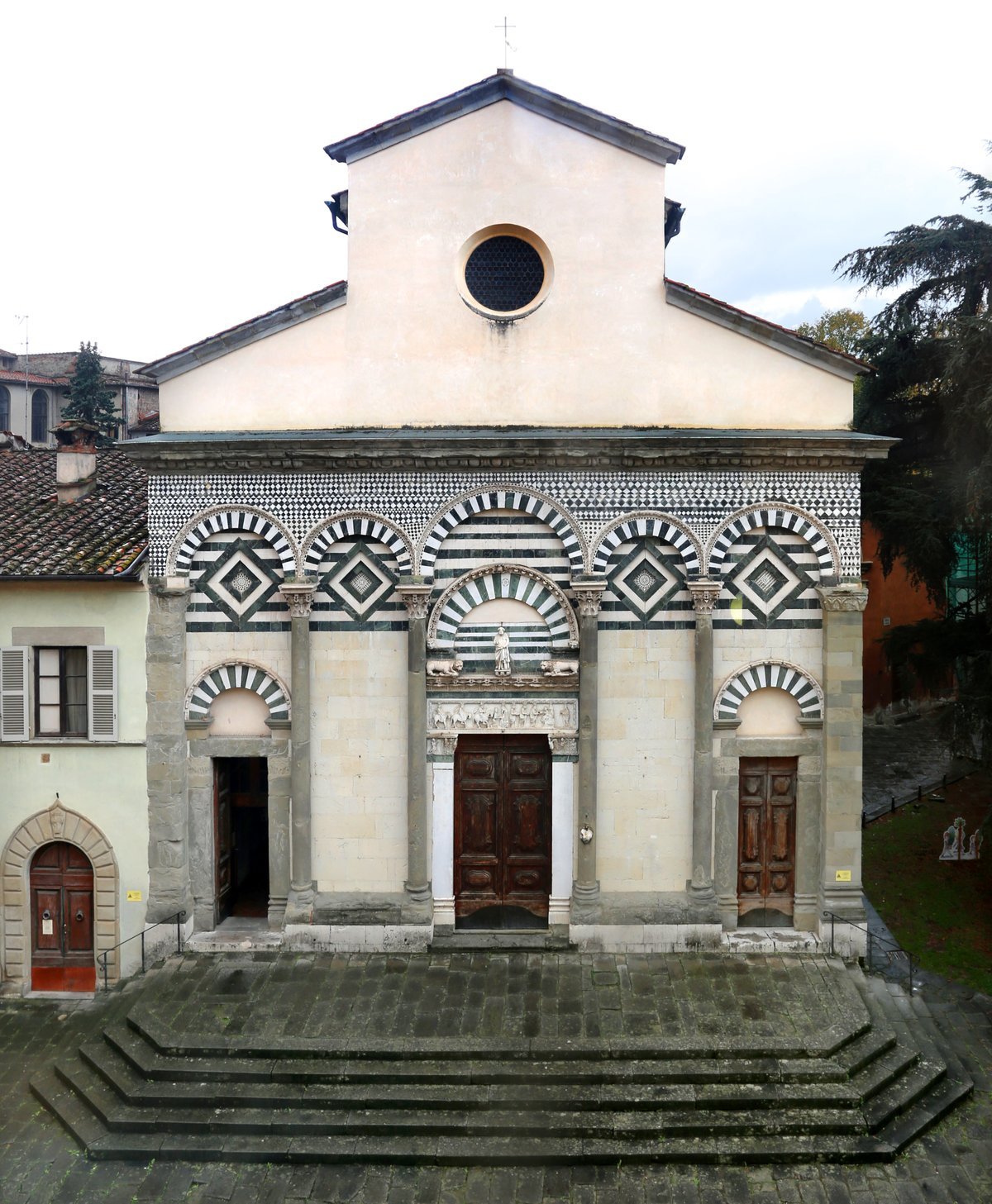 Stepping into the Pieve di Sant’Andrea is like jumping back to the Middle Ages. This church, founded in the 7th-8th century, was second in importance only to the Cathedral, and its Romanesque façade in white marble and green serpentine immediately catches your eye. The lintel of the portal, carved in 1166 by Gruamonte and Adeodato, depicts the Journey of the Magi, a rare iconography linked to the pieve’s location on the Via Francigena. But the true treasure is inside: the pulpit by Giovanni Pisano, signed and dated 1301, a hexagonal masterpiece with Christological scenes in high relief that seem to come alive. Nearby, two wooden crucifixes attributed to the same master, the 16th-century fresco by Bernardino del Signoraccio in the apse basin, and paintings by Volponi and Allori. Admission costs €2.50, but the visit is worth every cent. Don’t miss the detail of the lectern with the Tetramorph and the intensity of the Last Judgment.
- Go to the page: Pieve di Sant’Andrea: Giovanni Pisano’s Pulpit in Pistoia
- Vicolo di Sant’Andrea, Pistoia (PT)
- Open in Google Maps
- View on Google Images
You should go if…
Stop no. 5
Basilica of the Madonna of Humility
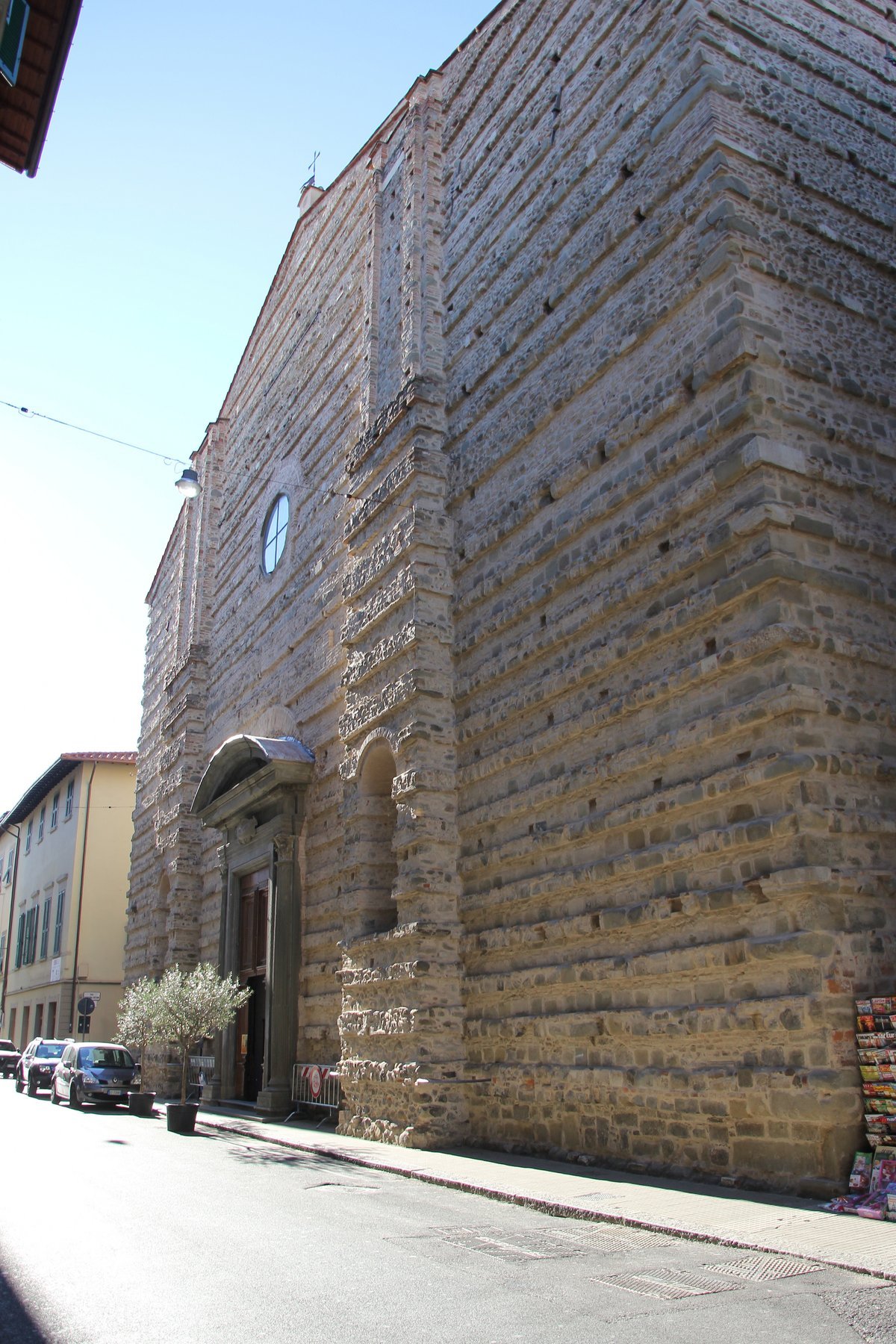 A few steps from the Pieve di Sant’Andrea, the skyline of Pistoia changes thanks to the imposing dome by Giorgio Vasari, 59 meters high and visible from afar. The Basilica of the Madonna of Humility originated from the miracle of 1490, when a fresco of the Virgin nursing the Child exuded a transparent liquid. To preserve it, construction began in 1495 on a design by Giuliano da Sangallo, continued by Ventura Vitoni, and completed by Vasari with the dome. The octagonal interior, with six chapels rich in 17th-century paintings, culminates in the main altar by Pietro Tacca framing the miraculous fresco. Don’t miss the Treasure of the Madonna with sacred furnishings and ex-votos. Entry is free and the basilica is open daily (Mon-Fri 8:30 AM-5 PM, Sat 7:30 AM-6 PM, Sun 8:30 AM-7:30 PM). A sanctuary of devotion and art, less crowded than the major circuits, offering an intimate and authentic experience.
- Go to the page: Basilica of Our Lady of Humility: Vasari’s Dome and the Miracle
- Via della Madonna, Pistoia (PT)
- Open in Google Maps
- View on Google Images
You should go if…