
🧭 What to Expect
- Ideal for Byzantine art enthusiasts and cultural weekends.
- Highlights: 8 UNESCO sites with 5th-6th century mosaics, Dante's Tomb, compact historic center.
- Includes interactive maps for each monument and an overall overview.
- Also offers contemporary art museums and archaeological sites like the Domus of the Stone Carpets.
Events nearby
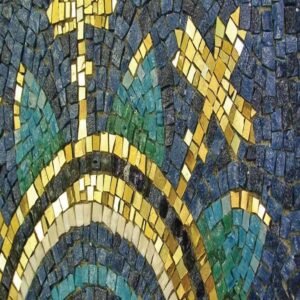
Ravenna is not just an art city: it's a journey through time with eight monuments declared UNESCO World Heritage, concentrated in a compact historic center that can be explored on foot. Here, among its basilicas and baptisteries, the richest collection of Byzantine mosaics from the 5th and 6th centuries is preserved, still astonishing today for their colors and craftsmanship. The city is also closely linked to Dante Alighieri, who spent his final years here and whose tomb is a destination for cultural pilgrimage. Beyond history, Ravenna surprises with a vibrant urban life, local markets, and a Romagna culinary tradition to try, such as piadina and cappelletti. Visiting means immersing yourself in a unique place where ancient art dialogues with the everyday life of a human-scale city, perfect for an intense and discovery-rich weekend.
Overview
- Basilica of San Vitale: The Masterpiece of Byzantine Mosaics
- Mausoleum of Galla Placidia
- Basilica of Sant'Apollinare Nuovo: Where Mosaics Tell the Story
- Basilica of Sant'Apollinare in Classe
- Dante's Tomb
- Neonian Baptistery: Ravenna's Oldest Baptistery
- Mausoleum of Theodoric
- Arian Baptistery
- MAR Ravenna City Art Museum
- Rocca Brancaleone: The Venetian Fortress in the Heart of Ravenna
- Basilica of San Francesco
- National Museum of Ravenna
- Domus of the Stone Carpets
- Archbishop's Museum
- Ravenna Cathedral: The Religious Heart Amidst Mosaics and History
Itineraries nearby

Basilica of San Vitale: The Masterpiece of Byzantine Mosaics
- Go to the page: Basilica of San Vitale: 6th-century Byzantine mosaics and octagonal architecture
- Piazzetta Luigi Legnani, Ravenna (RA)
- Open in Google Maps
- View on Google Images
 Entering the Basilica of San Vitale is like crossing the threshold into another era, and I assure you, the 'wow' effect is guaranteed. Built in the 6th century, this church does not have the traditional appearance of Ravenna's basilicas—it has an octagonal floor plan, a detail that already makes it unique. But it's when you look up that your heart leaps: the mosaics in the presbytery are among the best-preserved examples of Byzantine art in the world. The umbrella vault with the Lamb of God, the panels with Emperor Justinian and Empress Theodora surrounded by their courtiers... they seem painted with light, not with tesserae. The colors—that gold, that emerald green, that deep blue—shine as if they were laid yesterday. Personally, I always lose myself in the details: the embroidery on the garments, the expressions on the faces, the 'flat' perspective that instead creates incredible depth. The light filtering from the high windows constantly changes the atmosphere, and if a direct ray of sun happens to strike, the mosaics truly light up. A tip? Take the time to sit on a bench and observe slowly: every corner reveals a detail, like the symbols of the evangelists in the pendentives or the vegetal mosaics framing the scenes. It's a place of silence and contemplation, even if often crowded—but it's absolutely worth it. Remember that it's part of the UNESCO site 'Early Christian Monuments of Ravenna', and you'll immediately understand why.
Mausoleum of Galla Placidia
- Go to the page: Mausoleum of Galla Placidia: Original 5th-Century Byzantine Mosaics
- Via Galla Placidia, Ravenna (RA)
- Open in Google Maps
- View on Google Images
 Entering the Mausoleum of Galla Placidia is a breathtaking experience. From the outside, it appears as a small brick structure, simple and unassuming, but as soon as you cross the threshold, you find yourself immersed in an almost magical atmosphere. The first thing that strikes you is the dome ceiling, completely covered in deep blue mosaics dotted with hundreds of golden stars. It truly feels like gazing at the night sky, but here it remains that way, day and night. The mosaics are incredibly detailed and luminous, despite the building dating back to the 5th century. The light filtering through the small alabaster windows creates a soft glow that makes every tesserae shine, giving the impression that the figures are moving. Upon closer inspection, you can distinguish Christian symbols such as the Good Shepherd with sheep, the four evangelists represented as animals, and biblical scenes that tell stories of faith and redemption. There is an almost surreal calm in this space, inviting you to pause and contemplate. Personally, I lost myself admiring the details of the peacocks and vine tendrils decorating the side walls—they seem so alive that you almost expect to hear a rustle. Galla Placidia's tomb was never used for its original purpose, but this does not diminish its sacredness. It is a place that speaks of power, art, and spirituality, all contained within a few square meters. I recommend visiting early in the morning or near closing time, when there are fewer crowds, allowing you to fully enjoy its intimate atmosphere. Remember that access is included in the combined ticket for Ravenna's UNESCO monuments, and there is often a bit of a line—but it is absolutely worth it.
Basilica of Sant'Apollinare Nuovo: Where Mosaics Tell the Story
- Go to the page: Basilica of Sant'Apollinare Nuovo: 6th-Century Byzantine Mosaics and Martyrs' Processions
- Via San Giovanni Bosco, Ravenna (RA)
- Open in Google Maps
- View on Google Images
 Entering the Basilica of Sant'Apollinare Nuovo is like opening an illustrated history book made of glass and gold tesserae. The first thing that strikes you is the long procession of saints and martyrs that unfolds along the side walls of the central nave, a solemn cortege that seems to move towards the apse. On the left, female saints in regal attire holding crowns; on the right, male martyrs with palms of martyrdom. They are hieratic figures, but if you look closely, you notice surprising details: the folds of their cloaks, the expressions on their faces, even the color shades in their garments. The upper part of the walls is dedicated to scenes from the New Testament, with episodes from the life of Christ alternating with windows that filter the light. Personally, I always lose myself looking at the miracle of the loaves and fishes: the composition is so lively that you almost hear the murmur of the crowd. The apse, unfortunately, has undergone renovations over time, and the original mosaics have been lost, replaced by Baroque frescoes. A pity, but it's part of the history of this place that has seen changes in worship and architectural styles. Don't forget to look up at the coffered ceiling, a Renaissance addition that contrasts pleasantly with the Paleochristian austerity of the mosaics. The basilica was built by the Gothic king Theodoric as an Arian church, later reconverted to Catholicism. Can you tell? In some places yes, because some figures were erased and replaced during the iconographic 'cleansing'. The hands of those who are no longer there remain, a detail that makes you reflect. The atmosphere is intimate, despite the tourists. I recommend sitting for a moment on the side benches to absorb the light playing with the gold of the mosaics. The combined ticket for Ravenna's UNESCO monuments is very convenient and includes this basilica. Always check opening hours as they may vary seasonally.
Basilica of Sant'Apollinare in Classe
- Go to the page: Basilica of Sant'Apollinare in Classe: 6th-century Byzantine UNESCO mosaics
- Via Romea Sud 224, Ravenna (RA)
- https://www.polomusealeemiliaromagna.beniculturali.it/musei/sant-apollinare-in-classe
- Open in Google Maps
- View on Google Images
- pm-ero.musnaz-ra@beniculturali.it
- +39 0544 527308
 If you think Ravenna's mosaics are only in the historic center, prepare for a surprise. The Basilica of Sant'Apollinare in Classe is located just a few kilometers from the city, in what was once the ancient Roman port area of Classe. Getting there is an experience in itself: the road runs through cultivated fields, and then, suddenly, this imposing and solitary building appears, with its cylindrical bell tower soaring against the sky. Entering is like stepping back into the 6th century. The first thing that strikes you is the sense of space and light: the interior is spacious, austere, with Greek marble columns guiding the eye toward the apse. And there, in the apse vault, lies the true treasure: a breathtaking mosaic. Don't expect crowded scenes like in other Ravenna basilicas. Here, a pastoral tranquility dominates: at the center, Saint Apollinaris, the first bishop of Ravenna, is depicted in a praying posture, surrounded by a flowering meadow, little sheep, and stylized trees. Above him, a large gemmed cross shines in a starry sky. The colors—especially that emerald green of the meadow and the gold of the background—are incredibly vivid, despite the centuries. Walking along the nave, you'll also notice the marble sarcophagi of the ancient archbishops, lined up like silent sentinels. The atmosphere is one of deep peace, far from the city noise. A personal tip? Come in the early afternoon, when sunlight filters through the windows and illuminates the mosaics, making that gold even warmer. It's a place that invites contemplation, perfect for a refreshing break during a tour of the UNESCO sites.
Dante's Tomb
- Go to the page: Dante's Tomb in Ravenna: The Neoclassical Temple of 1780 and Florence's Votive Lamp
- Via Guido Da Polenta, Ravenna (RA)
- Open in Google Maps
- View on Google Images
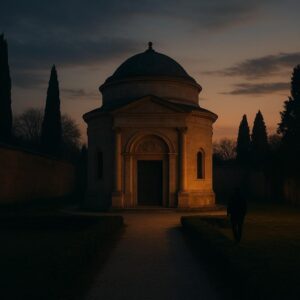
 While Ravenna enchants you with its Byzantine mosaics, there is one place that speaks more of literature than art: Dante's Tomb. Don't expect an opulent mausoleum; quite the opposite. The structure is a simple, almost modest neoclassical temple, built between 1780 and 1781 based on a design by Camillo Morigia. It is located right next to the Basilica of San Francesco, where Dante used to visit the Franciscan friars during his exile. What struck me? The votive lamp that burns perpetually with oil donated every year by the city of Florence, almost a posthumous gesture of reconciliation between the two cities that contend for the poet's remains. Inside, the atmosphere is intimate, almost hushed. The actual tomb is a Roman-era sarcophagus, topped by a bas-relief by Pietro Lombardo depicting Dante in thought. On the wall, a Latin epitaph composed by Bernardo Canaccio in 1327 remembers the poet as 'patria extorris' - deprived of a homeland. Personally, I find that this place tells more than many biographies: it speaks of exile, of belated recognition, of how a city that was not his birthplace chose to honor him forever. Admission is free, and it usually doesn't take more than twenty minutes, but it's worth pausing to reflect. Just a few steps away, in the Quadrarco di Braccioforte, there is also the so-called 'Garden of Silence' with the monument to Dante, a quiet corner where the people of Ravenna still pay homage to their illustrious 'guest'.
Neonian Baptistery: Ravenna's Oldest Baptistery
- Go to the page: Neonian Baptistery: The Oldest Byzantine Mosaics in Italy at Ravenna
- Via Gioacchino Rasponi, Ravenna (RA)
- Open in Google Maps
- View on Google Images
 Entering the Neonian Baptistery, also known as the Orthodox Baptistery, is like stepping back into the 5th century. It is the oldest of Ravenna's baptisteries, built on the remains of an earlier Roman thermal building, and is located right next to the Cathedral. The first thing that strikes you is its octagonal shape, symbolizing resurrection, and the dome entirely covered in mosaics. At the center dominates the scene of Christ's baptism in the Jordan, with Jesus immersed up to his waist and John the Baptist pouring water. Around it, in concentric circles, are arranged the apostles and empty thrones awaiting the Last Judgment. The colors are incredibly vivid, especially the deep blue of the background and the gold of the details. The light filtering from the high windows creates evocative plays on the mosaics, but to see them well it's best to get closer and perhaps use a flashlight (or your phone's light). The atmosphere is intimate and almost mystical, far from the crowds of other UNESCO monuments in the city. One detail that struck me: looking up, you'll notice that the dome seems lower than it actually is, an optical effect intended to bring heaven closer to earth. Admission is included in the combined ticket for Ravenna's UNESCO monuments, so it's absolutely worth dedicating half an hour to it. I recommend visiting in the morning, when the light is best for admiring the mosaics.
Mausoleum of Theodoric
- Go to the page: The Mausoleum of Theodoric: The Gothic Tomb with a 300-Ton Monolithic Dome
- Via Teodorico, Ravenna (RA)
- https://www.polomusealeemiliaromagna.beniculturali.it/musei/mausoleo-di-teodorico
- Open in Google Maps
- View on Google Images
- pm-ero.musnaz-ra@beniculturali.it
- +39 0544 456701
 If you think of Ravenna's mosaics, the Mausoleum of Theodoric might seem like an exception. And indeed it is: here you won't find colorful tiles, but an imposing structure made of Istrian stone that dominates the landscape with its monolithic dome. Built in the 6th century at the behest of the Gothic king Theodoric, this monument is the only example of barbarian funerary architecture in Italy and is part of the city's UNESCO heritage. What's most striking? The dome is carved from a single block of marble weighing about 300 tons—an extraordinary engineering feat for its time that still leaves visitors in awe today. Inside, the atmosphere is sober and intimate, with a porphyry basin that likely contained the king's sarcophagus. Personally, I was surprised to discover that the mausoleum is located in a somewhat peripheral area, near the railway station, but this makes it even more evocative: it almost seems like a silent giant watching time pass by. The visit is quick—just 20-30 minutes—but it's absolutely worth it to admire that dome up close, which, upon closer inspection, has a shape strangely similar to a helmet. A tip: if you visit the site, don't miss the external bas-reliefs with geometric patterns and Greek crosses, details that tell the story of the fusion between Roman culture and Gothic tradition.
Arian Baptistery
- Go to the page: Arian Baptistery in Ravenna: Byzantine Mosaics and Arian History
- Via degli Ariani, Ravenna (RA)
- https://www.polomusealeemiliaromagna.beniculturali.it/musei/battistero-degli-ariani
- Open in Google Maps
- View on Google Images
- pm-ero.musnaz-ra@beniculturali.it
- +39 0544 543710
 If you think you've seen everything in Ravenna, think again. The Arian Baptistery is one of those places that escapes the most beaten paths, but is absolutely worth seeking out. It's located right behind the Basilica of Sant'Apollinare Nuovo, in a quiet little square that seems suspended in time. It's the smallest of Ravenna's baptisteries, and perhaps that's precisely why it has a more intimate and secluded charm. Upon entering, the first thing that strikes you is the dome: a 6th-century mosaic depicting the baptism of Christ in the Jordan, surrounded by the twelve apostles. The scene is simple, but the colors – especially that intense blue – are incredibly vivid. I stopped to look at the details: the figures almost seem to move in the dim light, and the light filtering through the windows creates surprising plays on the tesserae. It's strange to think that this place was built during the reign of Theodoric, when Arianism was the court doctrine. Today it's a UNESCO site, but it doesn't have the crowds of the other monuments. Perhaps because it's a bit hidden, or perhaps because its history is more complex. I recommend visiting it calmly: admission is free, and you can often enjoy a rare silence. Bring a torch (or use your phone's flashlight) to illuminate the mosaics from above – it's worth it. Personally, I found that this baptistery tells a different story compared to the more famous Neonian Baptistery: here there's a more contemplative, almost secret atmosphere. A tip? Go around lunchtime, when the groups are elsewhere, and you'll have all the space to imagine the voices of the past.
MAR Ravenna City Art Museum
- Via di Roma, Ravenna (RA)
- Open in Google Maps
- View on Google Images
 If you think Ravenna is only about ancient mosaics, the MAR will change your mind. This contemporary art museum, housed in the former 16th-century monastery of Santa Maria delle Croci, is a pleasant surprise in the heart of the city. The permanent collection spans from the 20th century to the present day, with works by artists such as Alberto Burri, Giuseppe Capogrossi, and emerging young talents. What stands out is the dialogue between ancient and modern: the restored halls preserve traces of the original frescoes, creating a fascinating contrast with contemporary installations. Personally, I loved the section dedicated to contemporary mosaic art – here, the ancient Ravenna technique is renewed in unexpected forms, with artists experimenting with new materials and languages. The temporary exhibitions are always carefully curated, often connected to the local area but with an international perspective. A practical detail: the museum is accessible and well-organized, with an interesting bookshop where you can find catalogs and design objects. If you visit Ravenna, don't limit yourself to the usual routes: the MAR offers a different perspective on the city, showing that art here is not just a legacy of the past, but a living and evolving language. It might not be the first place that comes to mind for Ravenna, but in my opinion, it's worth dedicating a couple of hours to it, especially if you love discovering the lesser-known nuances of a destination.
Rocca Brancaleone: The Venetian Fortress in the Heart of Ravenna
- Via Gastone De Foix, Ravenna (RA)
- Open in Google Maps
- View on Google Images
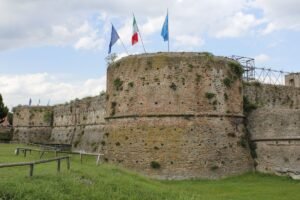
 When you think of Ravenna, Byzantine mosaics probably come to mind, right? Well, Rocca Brancaleone is another side of the city, less known but equally fascinating. Built by the Venetians in the 15th century, this fortress is a true colossus of red bricks that dominates the historic center. Its main function was defensive, to protect Ravenna from enemy incursions, and walking along its walls, you realize how strategic it was. Today, however, it has become a green lung: the internal park is perfect for a relaxing break, away from the crowds of UNESCO sites. There are benches under the trees, and locals often bring their dogs or chat there. What struck me the most are the two cylindrical towers, massive and well-preserved, making you feel like you're in a historical film. Inside, concerts or summer events are sometimes organized, and the acoustics under the vaults are surprising. Don't expect lavish decorations like in the basilicas: here, everything is essential, austere, but it has its own character. If you climb the walls, you get a decent view of the city, though not as panoramic as from a bell tower. Personally, I found it a bit neglected in some corners, but this gives it an authentic, not-too-touristy atmosphere. Admission is free, making it an ideal low-cost stop if you're exploring Ravenna. I recommend visiting if you want to breathe in some military history without stress, perhaps after seeing the mosaics, for a change of pace. Note: there aren't many explanations or information panels, so if you want to delve deeper, it's better to look online beforehand. But for a quick visit, it's worth it.
Basilica of San Francesco
- Piazza San Francesco, Ravenna (RA)
- Open in Google Maps
- View on Google Images
 The Basilica of San Francesco, in the heart of Ravenna, is a place that surprises you with its external simplicity and internal richness. Built in the 5th century and later modified, its brick facade gives no hint of what lies inside. Upon entering, the atmosphere is intimate and subdued, and you immediately notice the original mosaic floor, somewhat worn by time but still evocative. The most striking feature is the flooded crypt, accessible by descending a few steps: here, water reflects the ancient columns, creating a magical, almost surreal effect. It's not a pool but a natural phenomenon due to the water table, and in my opinion, it makes the place unique. The early Christian mosaics are less showy than those in San Vitale, but if you observe them closely, you discover fascinating details, such as geometric patterns and religious symbols. The basilica also houses the tomb of Dante Alighieri, located in a separate area, but the connection with the poet adds a touch of literary history. Personally, I like to sit for a moment on the side benches, away from the tourist traffic, to absorb the quiet. Note: sometimes the water in the crypt can be high, so check the conditions before descending. Admission is free, making it an accessible stop for everyone, and there are often few people, allowing for a peaceful visit. If you're in Ravenna, don't skip it just because it's less famous: it's a discreet gem that tells centuries of history without fanfare.
National Museum of Ravenna
- Via San Vitale 17, Ravenna (RA)
- https://www.polomusealeemiliaromagna.beniculturali.it/musei/museo-nazionale-di-ravenna
- Open in Google Maps
- View on Google Images
- pm-ero.musnaz-ra@beniculturali.it
- +39 0544 543724
 If you think Ravenna's mosaics end with the UNESCO monuments, the National Museum will change your mind. Located in the complex of the former Benedictine monastery of San Vitale, this museum is a true treasure trove that often escapes the more beaten paths. Its collection spans from the Roman era to the Renaissance, offering historical context that perfectly complements visits to the more famous sites. Walking through the halls, you'll encounter archaeological finds like tombstones, ceramics, and coins that tell the story of daily life in ancient Ravenna. But the highlight, in my opinion, are the floor mosaics and architectural fragments from buildings that no longer exist. Some of these mosaics are truly surprising for their vibrancy and detail, giving you a sense of how widespread this art form was in the city. Then there are sections dedicated to medieval and Renaissance art, with sculptures, paintings, and liturgical objects. One room that struck me is the one with the artifacts from the Domus of the Stone Carpets, which gives you an idea of how wealthy Roman residences must have looked. The museum isn't huge, but it's well-organized, and the tranquil atmosphere of the cloister invites you to take your time. It might not be the first place that comes to mind in Ravenna, but if you want to delve deeper into the city's history beyond the iconic sites, it's a stop I recommend. Admission is paid, but there are often deals with combined tickets for the UNESCO monuments.
Domus of the Stone Carpets
- Via Gianbattista Barbiani, Ravenna (RA)
- Open in Google Maps
- View on Google Images
 If you think you've seen everything about Ravenna's mosaics, prepare for a surprise. The Domus of the Stone Carpets is an archaeological site discovered only in 1993 during excavation work for an underground parking lot. It's not a basilica or a mausoleum, but a Roman-Byzantine domus from the 5th-6th century AD, with remarkably preserved mosaic floors. What strikes you is the intimacy of the place: here there are no majestic domes, but private rooms with decorations that tell of daily life. The mosaics are a mix of geometric, floral, and figurative motifs, among which stands out the famous Dance of the Geniuses of the Seasons, a colorful panel that seems almost modern. The visit takes place in an underground environment, accessible from a modern structure on Via Barbiani, and the atmosphere is intimate, almost suspended in time. Personally, I find the contrast between the mundane need for a parking lot and the treasure that emerged from it fascinating. Note: the site is small and often less crowded compared to the more famous UNESCO monuments, which makes it a quiet break. The lighting is designed to enhance the mosaics, but some details require a careful look. I recommend booking the guided tour because the explanations contextualize the findings well. A curious detail: some mosaics show Christian symbols alongside pagan motifs, a sign of a transitional era. Don't expect grandeur, but rather a close-up experience with mosaic art applied to domestic life.
Archbishop's Museum
- Piazza Arcivescovado, Ravenna (RA)
- Open in Google Maps
- View on Google Images
 If you think you've seen everything in Ravenna, the Archbishop's Museum will make you think again. It's located right next to the Cathedral, in a palace that once served as the bishops' residence, and it feels almost like a well-kept secret among the tourists crowding the more famous UNESCO sites. Admission is included in the combined ticket for the Paleochristian monuments, but many skip it, which I think is a shame. Inside, the atmosphere is intimate, quiet, far from the crowds. The Chapel of Sant'Andrea is the heart of the museum: a small rectangular room with 6th-century mosaics that completely surround you. The colors are incredible, especially the emerald green and gold, depicting Christ as a warrior and symbols of the evangelists. I stopped to look at the details for minutes, struck by how those tiny pieces of glass still shine after centuries. Then there's the Cathedra of Maximian, a 6th-century bishop's throne inlaid with ivory, one of the few examples of such well-preserved ivory art in the world. The biblical scenes on the panels are meticulous, almost hypnotic. In the rest of the museum, you'll find archaeological artifacts, sacred vestments, and some paintings, but it's the two stars that steal the show. A tip: visit the chapel calmly, perhaps at lunchtime when there are fewer people, and enjoy the light filtering through the high windows. It's a compact experience, perfect for those who want to delve deeper without rushing. It may not be as spectacular as the Mausoleum of Galla Placidia, but it has a discreet charm that stays with you.
Ravenna Cathedral: The Religious Heart Amidst Mosaics and History
- Go to the page: Ravenna Cathedral: Paleochristian Mosaics and 5th-Century Crypt
- Via Don Angelo Lolli, Ravenna (RA)
- Open in Google Maps
- View on Google Images
 Ravenna Cathedral, dedicated to the Resurrection of Our Lord Jesus Christ, is an unmissable stop, even though it's often overshadowed by the city's more famous UNESCO monuments. The current cathedral dates back to the 18th century, rebuilt after the bell tower collapsed, but it preserves much older elements that tell centuries of history. Upon entering, you're struck by the solemnity of the Baroque interiors, but it's descending into the crypt that you truly plunge into the past: here, you can admire the remains of the first cathedral, the 5th-century Ursiana Basilica, with fragments of original floor mosaics. A detail that fascinated me? The column capitals, some reused from earlier buildings, show a visible layering that few other places offer so clearly. Next to the Cathedral stands the Neonian Baptistery, part of the same complex, with its mosaic-covered dome that is an absolute masterpiece. But returning to the cathedral, don't miss the 10th-century cylindrical bell tower: it's one of the few in Italy with this shape, and climbing it (when possible) offers an unusual view of the city. Inside, look for the Chapel of the Madonna del Sudore and the 6th-century marble pulpit: they're small gems that often escape hurried visitors. The Archiepiscopal Museum, accessible from the Cathedral, then houses the famous Cathedra of Maximian and other treasures. In short, this is not just a place of worship, but a true archive of stone and mosaic, where every era has left its mark. I recommend visiting in the morning, when light filters through the windows and the atmosphere is more intimate.