Termoli Cathedral: 12th-century crypt and Adriatic Sea view

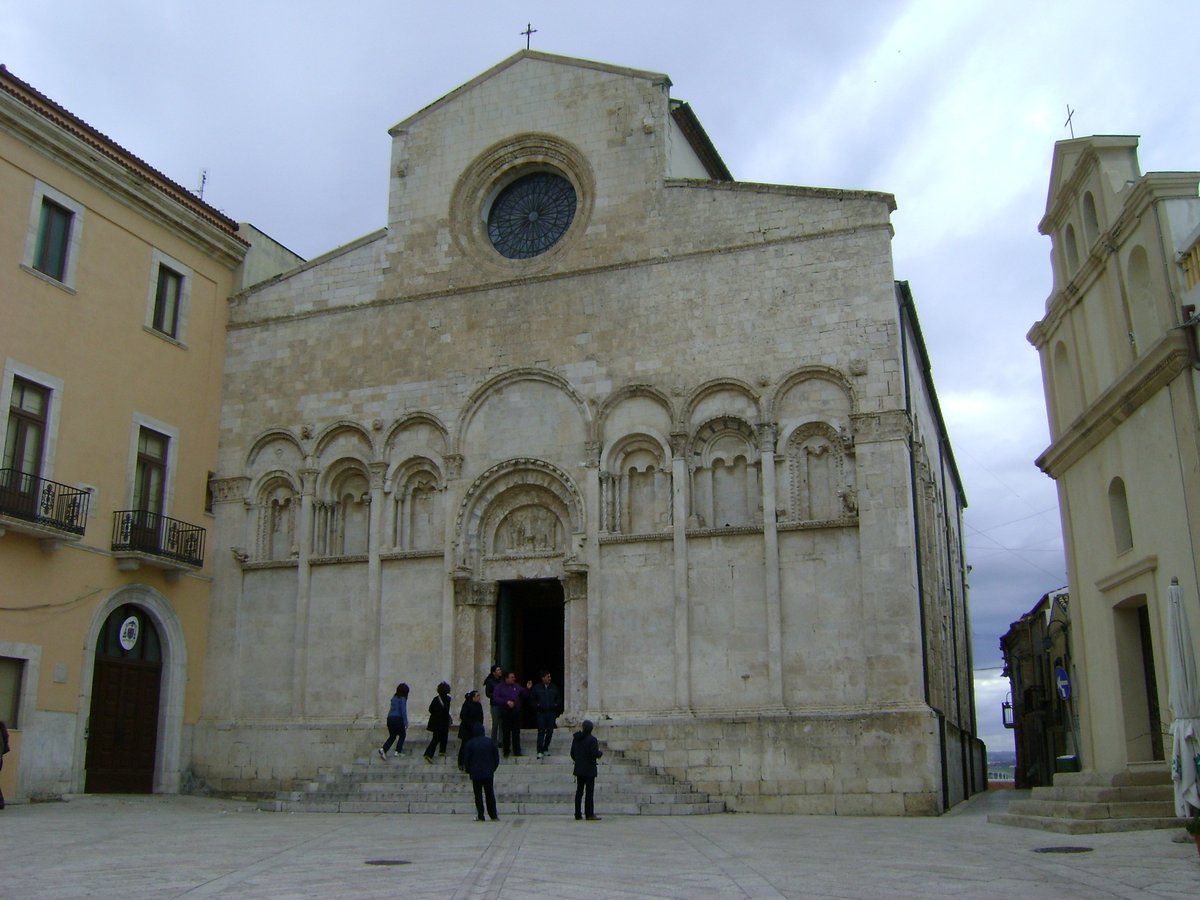
The Cathedral of Santa Maria della Purificazione dominates the ancient village of Termoli from the top of the promontory overlooking the Adriatic Sea. Built between the 12th and 13th centuries in Apulian Romanesque style, it is the spiritual and historical heart of the city. The facade of local limestone features a red carved portal with animal figures and symbols, topped by a radiant rose window.

  • 12th-century crypt with twenty Roman columns and relics of Saint Basso
  • Panoramic position with breathtaking views of the sea and the trabocco
  • Apulian Romanesque architecture unique in Molise with red splayed portal
  • Medieval frescoes depicting sacred stories inside
Copertina itinerario Termoli Cathedral: 12th-century crypt and Adriatic Sea view
The Cathedral of Santa Maria della Purificazione in Termoli, with its medieval crypt, red carved portal, and panoramic position overlooking the ancient village and the sea.

Good to know


Introduction

The Cathedral of Santa Maria della Purificazione rises majestically on the promontory of Termoli, directly overlooking the Adriatic Sea. This Romanesque jewel is not just a place of worship, but a visual landmark for anyone arriving in the old town. Its strategic position, with the façade facing the harbor and the sea, creates an iconic image that leaves a lasting impression. The cathedral dominates the panorama of the historic center, nestled among colorful houses and narrow alleys. As you approach, you immediately sense its austere and solid character, typical of Apulian-Molise Romanesque architecture. The light-colored stone glows in the sunlight, while the bell tower soars like a beacon for sailors. Entering here means immersing yourself in an atmosphere of peace, far from modern chaos, where time seems to have stood still. It is a place that speaks of history, faith, and identity, capable of moving even those who are not particularly religious.

Historical Overview

Termoli Cathedral has a history that dates back to the 12th century, when it was built on the foundations of an earlier Paleo-Christian church. The current structure dates back to around 1170, a period of peak splendor for Romanesque architecture in Southern Italy. It was commissioned by Bishop Stefano, a key figure in the spread of Christianity along the Molise coastline. Over the centuries, the cathedral has undergone several transformations but has retained its original structure. Particularly significant was the 1456 earthquake, which severely damaged the building and required major restoration work. In the 16th century, Renaissance elements were added, while in the 18th century, the interiors were enhanced with Baroque decorations. During World War II, the cathedral was hit by bombings but miraculously preserved in its load-bearing structure. Today, it stands as a perfect example of historical layering, where each era has left its mark.

  • 12th century: Construction of the Romanesque cathedral
  • 1456: Damage from the earthquake and subsequent restorations
  • 16th century: Addition of Renaissance elements
  • 18th century: Baroque interior decorations
  • 20th century: Post-war restorations

The 12th-Century Crypt

Descending into the crypt of Termoli Cathedral is like taking a journey through time. This hypogeum environment, dating back to the 12th century, preserves the mystical atmosphere of its origins intact. The crypt extends beneath the presbytery and is accessible via a side staircase. Here you’ll find twenty repurposed columns from the Roman era, likely originating from buildings of ancient Termoli. The columns support cross-vaulted ceilings that create an effect of great fascination. The space is illuminated by small splayed windows that filter soft light, creating plays of shadow on the stone walls. At the center of the crypt is preserved the urn containing the relics of Saint Bassus, the city’s patron saint martyred in the 3rd century. The presence of these relics made the crypt an important medieval pilgrimage site. Even today, during patronal feast days, the faithful descend here to venerate the saint. The air is cool and humid, scented with incense and history.

Architecture and Details

The cathedral’s architecture represents a rare example of Apulian Romanesque in Molise, with influences coming from nearby Apulia. The main facade, facing east, features a red splayed portal topped by an archivolte decorated with vegetal and geometric motifs. Above the portal opens a twelve-ray rose window, symbolizing the apostles, which during the day illuminates the interior with plays of light. The bell tower, built separately, has a square base and develops over four levels, with alternating bifora and monofora windows. Inside, the layout is three naves divided by cruciform pillars. The central nave is higher and brighter, while the side naves create a sense of depth. Particularly interesting is the 13th-century stone pulpit, carved with figures of animals and saints. The original terracotta floor has been partially replaced by stone slabs but still preserves some ancient sections. Every detail tells a story, from the stonework to the traces of faded frescoes on the walls.

Why Visit It

Visiting Termoli Cathedral offers at least three concrete reasons that make it unique. First: the 12th-century crypt is one of the few perfectly preserved medieval spaces in Molise, with its repurposed Roman columns and intact atmosphere. Second: the panoramic location allows you to admire the entire ancient village, the port, and the Adriatic Sea from above, with views that change throughout the day. Third: the Apulian Romanesque architecture here blends with local elements, creating a unique style you won’t find elsewhere in the region. Additionally, the cathedral is always open and accessible free of charge, allowing for a spontaneous visit without planning. For photography enthusiasts, the glimpses created between the naves and through the windows offer highly evocative compositions. It’s a place that tells centuries of history without needing complex explanations.

When to Go

The most enchanting time to visit the cathedral is early afternoon, when the setting sun illuminates the main facade, creating golden reflections on the stone. During this time slot, light enters through the rose window and projects onto the high altar, bathing the interior in a warm amber hue. Throughout the year, the shoulder seasons are ideal as they avoid both the summer heat and the crowds of the busiest months. Weekdays offer greater tranquility, while Sunday mornings allow you to attend religious services and experience the cathedral in its community role. Avoid the midday hours in summer, when the heat can make the interior stay less pleasant. Also, after a rainstorm, when the air is clean and humidity enhances the stone’s colors, the visit offers special emotions.

In the Surroundings

Complete your visit to the cathedral by exploring the ancient village of Termoli, a labyrinth of cobblestone alleys winding around the church. Here you’ll find colourful houses, medieval arches and flower-filled courtyards that look like they’ve stepped out of a postcard. A short distance away, the Swabian Castle dominates the promontory with its massive towers, offering another glimpse into the city’s Norman-Swabian history. For a themed experience, join the Procession of San Basso held every year in August, when the statue of the patron saint is carried in procession through the streets of the historic centre. If you love the sea, Rio Vivo beach is just a few minutes’ walk away, perfect for a refreshing swim after your cultural visit. The fishing harbour, with its characteristic moored gozzi boats, completes the picture of an authentic and maritime Termoli.

Itineraries nearby


💡 Did You Know…?

The cathedral’s crypt safeguards the relics of Saint Basso, patron saint of Termoli, which were stolen from Constantinople in the 9th century and brought here by Termoli sailors. According to legend, during the translation, the sacred remains were hidden in a barrel to escape inspections, and to this day, the faithful attribute miracles to the saint. The patronal feast on August 3-4 draws thousands of people for the sea procession with decorated boats.