
The Malatestiana Library in Cesena is the only humanistic library in the world that has remained intact with its original building, furnishings, and books since 1454. A UNESCO World Heritage Site, it offers an authentic Renaissance experience with perfectly preserved illuminated codices and original architecture.
- 348 original illuminated codices from 1454, including Cornelius Celsus’s ‘De Medicina’
- 58 original solid walnut desks with chains that secured the volumes
- Intact architecture with terracotta flooring, Gothic windows, and a coffered ceiling
- Original 1454 lock requiring three different keys, linked to the legend of Malatesta Novello
Events nearby

The Malatestiana Library in Cesena, a UNESCO World Heritage Site since 2005, preserves 348 intact illuminated codices from 1454 in a hall with 58 original walnut desks. Admire unique manuscripts such as Celsus’s ‘De Medicina’ and the original 1454 lock.
- Piazza Maurizio Bufalini 1, Cesena (FC)
- Open in Google Maps
- View on Google Images Biblioteca Malatestiana a Cesena
Good to know
Introduction
Stepping into the Malatestiana Library in Cesena is like taking a leap back into the Renaissance. It’s not just a library, but a living treasure that has preserved its illuminated manuscripts intact since 1454. The atmosphere is unique: the silence, the scent of ancient paper, and the light filtering through the Gothic windows transport you to another era. It’s the only humanistic library in the world to have maintained its original structure, furnishings, and book collection in their entirety. A UNESCO World Heritage site since 2005, every detail tells a story of passion for knowledge.
Historical Overview
The library was established by Malatesta Novello, Lord of Cesena, who in the 15th century wished to create a place of culture accessible to all. It was designed by architect Matteo Nuti and completed in 1454. The main hall, with its 58 original wooden reading desks, houses 343 perfectly preserved illuminated manuscripts. In the 18th century, it passed to the Franciscans, who ensured its survival. Today, it is managed by the Municipality of Cesena and represents an exceptional example of a humanistic monastic library.
- 1452: Construction begins at the behest of Malatesta Novello
- 1454: Completion and opening to the public
- 1797: Transfer to the Franciscans during the Napoleonic occupation
- 2005: Inclusion in the UNESCO World Heritage List
The Architecture That Speaks
The Nutian Hall is a masterpiece of balance: 38 meters in length divided into three naves by Istrian stone columns. The 58 original walnut plutei (reading desks) still preserve the bolts and chains that secured the volumes. Each desk has two levels: the upper one for consultation, the lower one for storage. The Gothic windows ensure diffused light that doesn’t damage the manuscripts. The terracotta floor and coffered ceiling complete an environment that has undergone no substantial modifications in five centuries.
Hidden Treasures
Beyond the famous illuminated manuscripts, the library safeguards unique manuscripts such as Cornelius Celsus’ ‘De Medicina’, fundamental to the history of Renaissance medicine. Particularly precious is the ‘Breviarium’ of Saint Clare, richly illuminated. In the climate-controlled vault, incunabula and sixteenth-century books of inestimable value are preserved. The modern section, often less known, houses over 250,000 volumes that testify to the evolution of knowledge up to the present day, keeping alive the original mission of cultural dissemination.
Why Visit It
Three concrete reasons not to miss it: first, it’s the only humanistic library in the world that has remained intact in both appearance and content. Second, you can admire up close illuminated manuscripts that are over 500 years old, with colors still vibrant. Third, the guided tours tell fascinating stories, like that of the stolen codex miraculously recovered. An experience that combines history, art, and that thrill of being in front of something truly unique.
When to Go
The best time is in the early morning hours, when natural light streams through the Gothic windows and illuminates the manuscripts, creating magical atmospheres. Avoid crowded weekends if you prefer a more intimate visit. In autumn and winter, with fewer tourists, you can fully enjoy the silence and concentration this place demands. Rainy days are perfect for immersing yourself in the cozy atmosphere of the ancient hall.
In the Surroundings
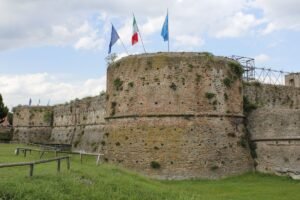
Complete your experience with a visit to the Rocca Malatestiana, the fortress that dominates Cesena, with its patrol walkways and historical museum. Not far away, the Bonci Theatre offers performances in a charming nineteenth-century setting. For a moment of relaxation, the Public Gardens in the city centre are ideal for a break in the shade of ancient trees.
Itineraries nearby

💡 Did You Know…?
Legend has it that Matteo Malatesta, to protect the precious manuscripts, had a secret door built that led directly to his private rooms. Even today, you can admire the original 1454 lock, a masterpiece of medieval engineering that requires three different keys to be opened. The illuminated manuscripts show traces of centuries of use: wax stains, marginal annotations, and even fingerprints of the monks who studied them.