Biblioteca Nazionale Marciana: Ancient Manuscripts and Renaissance Frescoes in St. Mark’s Square

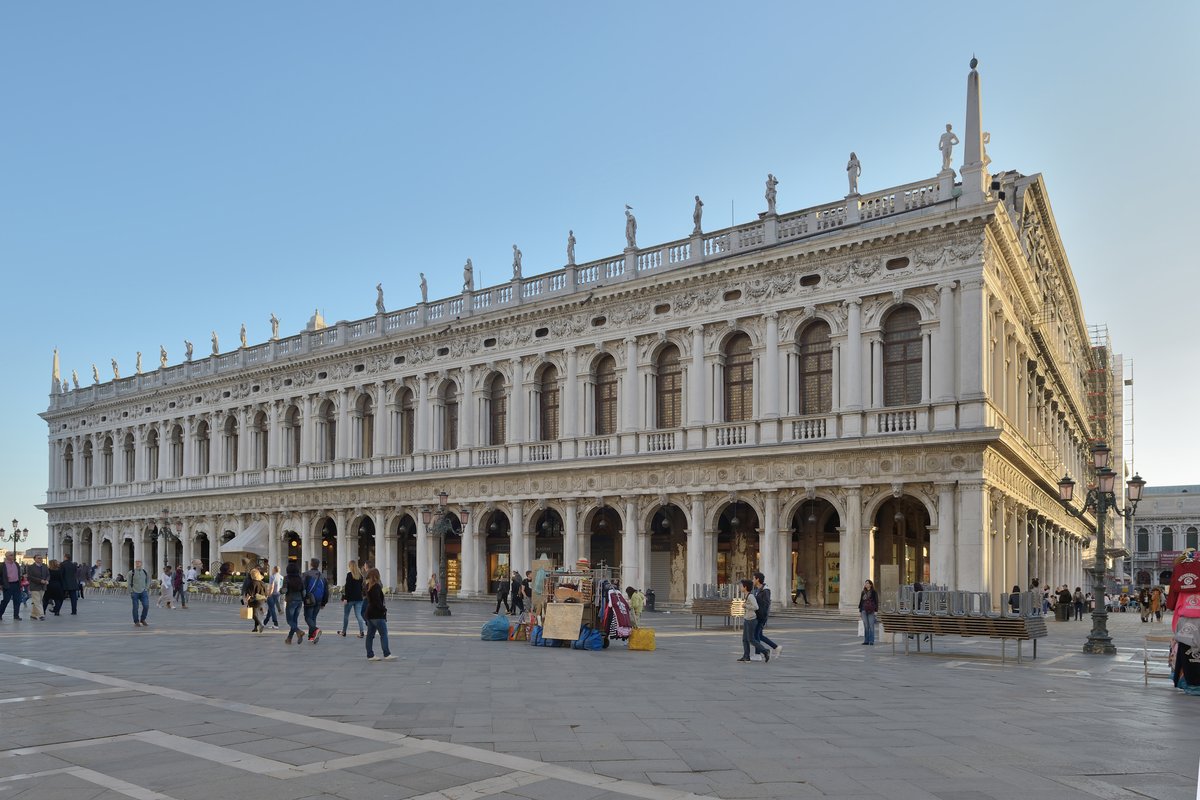
Founded in 1468, the Biblioteca Nazionale Marciana safeguards a unique collection of ancient manuscripts, incunabula, and historical maps within the Sansovinian Library and Zecca buildings. The Monumental Hall features Renaissance frescoes by masters such as Titian, while the Reading Room preserves its original scholarly atmosphere.

  • Over one million volumes, including invaluable Greek and Latin codices
  • Fra Mauro’s World Map (1450) and atlases by Vincenzo Coronelli
  • Frescoes by Titian, Veronese, and Tintoretto in the Monumental Hall
  • One of the few ancient libraries worldwide still accessible to the public in its original context


Events nearby


Copertina itinerario Biblioteca Nazionale Marciana: Ancient Manuscripts and Renaissance Frescoes in St. Mark's Square
The Biblioteca Nazionale Marciana in Venice houses over one million volumes, including Greek codices, Fra Mauro’s World Map, and frescoes by Titian in the Monumental Hall. One of the few ancient libraries worldwide accessible to the public.

Good to know


Introduction

As soon as you step into the Biblioteca Nazionale Marciana in Venice, you immediately understand you’re in a special place. It’s not just a library, but a true treasure chest that makes you feel small in the face of history. Its location is incredible: it overlooks Piazza San Marco directly, between the Doge’s Palace and the Procuratie, as if it were the silent guardian of the Serenissima’s secrets. The visual impact is strong: the exterior, designed by Jacopo Sansovino, is a Renaissance masterpiece that prepares you for the wonder you’ll find inside. Here you don’t just breathe the scent of ancient books, but the very essence of Venice, a city of merchants, explorers, and intellectuals who made history. It’s an experience that goes beyond a simple visit: it’s a plunge into a glorious past, perfect for those seeking authenticity and not settling for the usual tourist attractions.

Historical Overview

The history of the Marciana is closely tied to that of Venice. It was founded in 1468 when Cardinal Bessarione donated his collection of Greek and Latin manuscripts to the Republic, with the aim of creating a public library to rival those in Florence and Rome. However, construction of the current building began only in 1537, designed by Jacopo Sansovino, and was completed after his death by Vincenzo Scamozzi. In 1603, the library was finally opened to the public, one of the first in Europe to do so. Over the centuries, the collections grew through bequests, purchases, and, after the fall of the Republic in 1797, with the transfer of books from suppressed monasteries. Today it houses over a million volumes, including illuminated manuscripts, ancient atlases, and the first edition of Andrea Vesalius’s ‘De Humani Corporis Fabrica’.

  • 1468: Donation by Cardinal Bessarione.
  • 1537: Construction of the building begins, designed by Sansovino.
  • 1603: Official opening to the public.
  • 1797: Enrichment of the collections after the fall of the Serenissima.

Hidden Treasures Among the Shelves

Beyond the famous manuscripts, the Marciana holds objects that tell incredible stories. One of the most fascinating pieces is the ‘Fra Mauro Mappamundi’, a 1450 geographical map depicting the known world at the time, filled with details and annotations showing how Venice was at the center of trade routes. Then there are the atlases by Vincenzo Coronelli, the Republic’s official cartographer, with maps so precise they seem modern. But it’s not just paper: the collection also includes ancient celestial and terrestrial globes, scientific instruments, and even a collection of ‘mariegole’, the statutes of ancient Venetian schools, offering a unique glimpse into the city’s social life. These treasures are not permanently displayed but are often shown in temporary exhibitions: always check the website before visiting so you don’t miss special opportunities.

The Visiting Experience: More Than Just a Library

Visiting the Marciana isn’t just about walking between bookshelves. The Monumental Hall, accessible with your ticket, is an explosion of art: the ceiling is decorated with frescoes by great masters like Titian, Veronese, and Tintoretto, celebrating the wisdom and virtues of the Republic. Here, you’ll feel like you’re in a palace salon rather than a library. Then there’s the Reading Room, still used by scholars today, where you can admire the ancient wooden desks and the quiet, focused atmosphere. If you’re lucky, you might attend a book presentation or a lecture, events that are often organized and bring the space to life. Remember: it’s a place of study and preservation, so respect for silence and the rules is essential. But even just being there, surrounded by so much history, is an experience that stays with you.

Why Visit It

Three concrete reasons not to skip the Marciana: first, it’s one of the few ancient libraries in the world still accessible to the public in its original setting, allowing you to experience the atmosphere of a Renaissance study space. Second, its collection of ancient maps and atlases is among the most important in Europe, offering a unique perspective on how Venice viewed and dominated the world. Third, the building itself is an architectural masterpiece by Sansovino, often overlooked compared to the nearby Doge’s Palace and St. Mark’s Basilica, but equally rich in detail and history. Additionally, the combined ticket with the St. Mark’s Square Museums makes the visit convenient and comprehensive.

When to Go

The best time to visit the Marciana National Library is in the early morning, right after opening, or in the late afternoon, near closing. During these hours, visitor traffic is lighter, allowing you to enjoy the Monumental Hall more peacefully, without the crowds of tourist groups that often fill St. Mark’s Square. Avoid summer weekends and peak seasons like Carnival or the Christmas holidays, when the square is packed. If possible, choose a weekday, perhaps in spring or autumn, when the light streaming through the windows creates captivating plays on the frescoes and ancient volumes. In winter, the atmosphere is particularly cozy and intimate.

In the Surroundings

After visiting the Marciana, continue your immersion in Venice’s cultural offerings with two nearby experiences. Just steps away, in the Doge’s Palace, you’ll find the Museo dell’Opera, which houses sculptures and architectural fragments from St. Mark’s Basilica, perfect for delving deeper into the city’s artistic history. Alternatively, for a modern contrast, head to the Gallerie dell’Accademia, reachable with a short walk across the Accademia Bridge: here you’ll discover the largest collection of Venetian art from the 14th to the 19th centuries, with masterpieces by Bellini, Titian, and Tintoretto that complete the historical picture begun at the library. Both venues are easily accessible on foot and enrich your day with different perspectives on the same extraordinary city.

Itineraries nearby


💡 Did You Know…?

Did you know that the Marciana Library holds the Marcianus Codex, one of the oldest manuscripts of Homer’s works? Or that here you can find the Atlas of Battista Agnese, a 16th-century map showing the world as Venetian navigators knew it? A fascinating detail: the main reading room, designed by Jacopo Sansovino, has a marble floor that slightly resonates under footsteps, creating an almost sacred atmosphere. Librarians recount that some volumes still have the original chains from the 1500s, used to prevent theft. These small anecdotes make the visit a living experience, where every book has a story to unveil.