
Ready to discover the medieval fortresses of Romagna? This fortresses castles forlì cesena itinerary takes you on a 2-day journey through the imposing defensive structures that have shaped the history of this land. Starting from the majestic Malatesta Fortress in Cesena, symbol of Malatesta power, you'll travel through charming villages like Longiano and Monteleone, where well-preserved castles tell tales of battles and dominations. A perfect route for history lovers who don't want to miss out on the pleasures of Romagna's excellent cuisine, with stops at characteristic taverns and breathtaking views over the hills. Discover how to best organize this weekend among the most fascinating fortresses in the province!
🗺️ Your trip at a glance
A weekend among the medieval fortresses of the Forlì-Cesena province, a 2-day journey discovering perfectly preserved Malatesta rocche and castles. Each stop offers a dive into the past, with museums, breathtaking views, and charming villages, ideal for those combining culture with the pleasures of Romagna cuisine.
- Ideal for: enthusiasts of medieval history, military architecture, and families seeking an accessible cultural weekend.
- Key features:
6 distinct stops among rocche and castles,
interactive maps for each location,
a structured 2-day itinerary with clear daily stops.- What makes it different: It's not just a simple list, but a
practical, geolocated itinerary guiding you from the Rocca Malatestiana in Cesena to the Castello di Sorrivoli,
highlighting the unique aspects of each fortress (museums, views, stories linked to Caterina Sforza).
Itinerary stops
Day 1 - Stop no. 1
Malatesta Fortress
 The Malatesta Fortress in Cesena, located on Via Malatesta Novello, represents the ideal starting point for the "Romagna Fortresses and Castles" itinerary. Built at the behest of Malatesta Novello in the 15th century, this fortress overlooks the city from the summit of Garampo Hill, offering a panoramic view that stretches from the Romagna hills to the Adriatic Sea. The perfectly preserved structure features two main towers connected by a patrol walkway and inner courtyards that host cultural events. Inside, you'll find the Museum of Agricultural History, which documents the rural traditions of the Forlì-Cesena province with period tools and reconstructions of peasant environments. The fortress is open year-round and stands as a tangible example of Renaissance military architecture in Emilia-Romagna, with defensive elements such as gun slits and a still-functioning drawbridge.
- Go to the page: Malatesta Fortress of Cesena: Towers, Walkways and Panoramic View over Romagna
- Via Malatesta Novello, Cesena (FC)
- Open in Google Maps
- View on Google Images

You should go if...
Day 1 - Stop no. 2
Rocca di Forlimpopoli
 The Rocca di Forlimpopoli rises majestically along Via del Castello, representing one of the best-preserved examples of Malatesta military architecture in Romagna. Built in the 14th century at the behest of Sinibaldo Ordelaffi and later enhanced by the Malatesta family, the fortress features a quadrangular layout with corner towers and an imposing central keep. Today it houses the Civic Archaeological Museum "Tobia Aldini", where artifacts tell the story of the territory from Roman times to the Middle Ages. Climbing the perimeter walls offers a panoramic view over the historic center of Forlimpopoli and the surrounding countryside, allowing visitors to appreciate the structure's original defensive function. Access to the inner courtyard is free and allows close observation of 14th-century military architecture, with its underground passages and still-visible arrow slits.
- Go to the page: Forlimpopoli Fortress: Archaeological Museum, Casa Artusi and Panoramic View
- Via del Castello, Forlimpopoli (FC)
- Open in Google Maps
- View on Google Images
You should go if...
Day 1 - Stop no. 3
Rocca Caterina Sforza
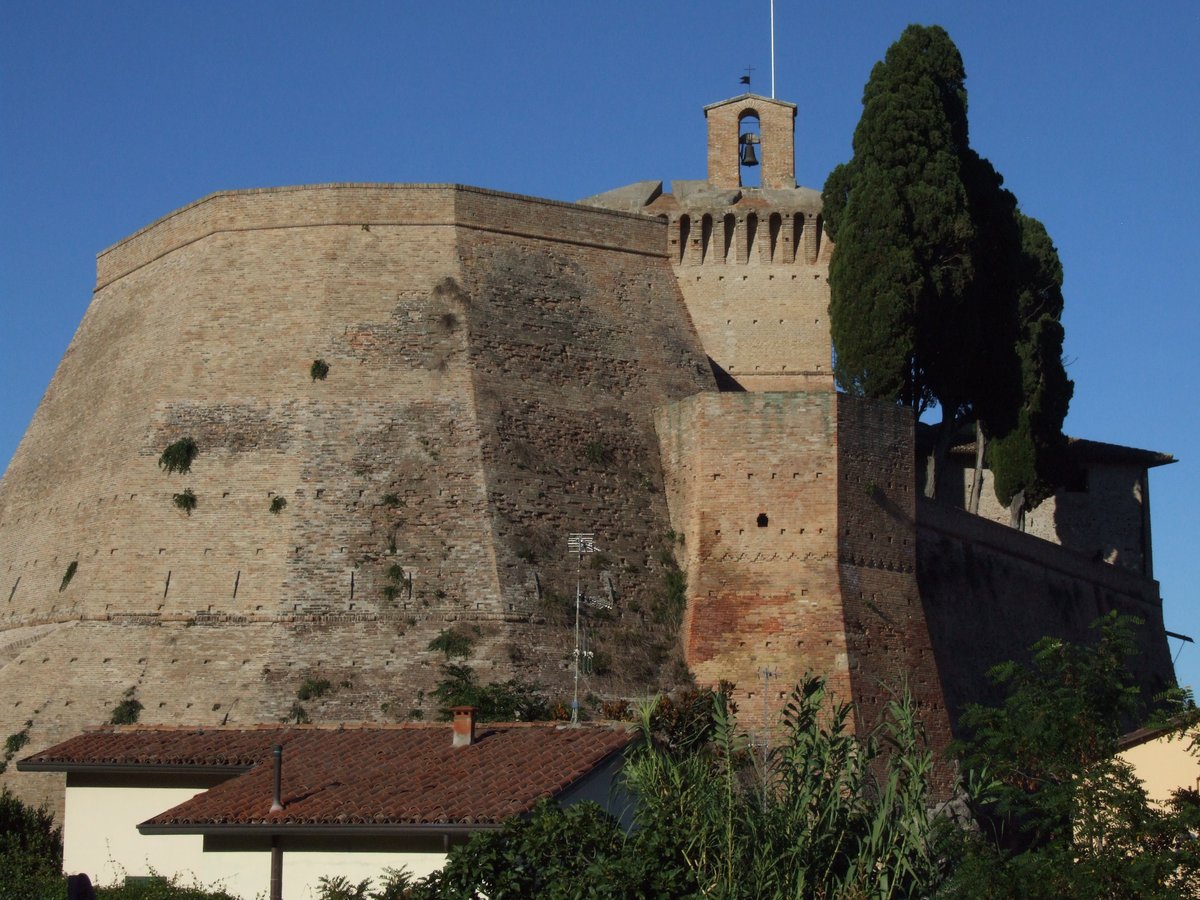 Arriving in Meldola along Via Camillo Brunori, the Rocca Caterina Sforza emerges as a layered architectural complex that encapsulates centuries of Romagna's history. Unlike the previous Rocca di Forlimpopoli, this fortress is inextricably linked to the figure of Caterina Sforza, the countess who withstood sieges here, demonstrating legendary resilience. The structure, of medieval origin but remodeled during the Renaissance, preserves cylindrical towers and bastions that testify to the evolution of defensive techniques. Today, besides hosting cultural events, it offers breathtaking views over the Ronco River valley, allowing visitors to envision the military strategies once deployed from these heights. Access to the inner courtyard and restored rooms reveals details such as biforate windows and patrol walkways, elements that make this stop a true journey back in time.
- Via Camillo Brunori, Meldola (FC)
- Open in Google Maps
- View on Google Images
You should go if...
Day 2 - Stop no. 1
Castle of Longiano
 Ascending towards Piazza Malatestiana, the Castle of Longiano emerges as a well-preserved fortress dating back to the 13th century, distinguished from previous Malatesta fortresses by its residential as well as defensive function. Unlike the Rocca Caterina Sforza in Meldola, associated with combative historical figures, this castle is known today for housing the Museum of Sacred Art and the Cast Iron Museum, collections that illustrate local religious and industrial life. The structure, with its square towers and crenellated walls, offers a panoramic view over the Rubicon Valley, allowing visitors to appreciate the strategic importance of this site for controlling medieval trade routes. Inside, the restored halls preserve frescoes and period furnishings, while the inner courtyard hosts cultural events, making the visit an experience that seamlessly blends history and art in an accessible way.
- Piazza Malatestiana, Longiano (FC)
- Open in Google Maps
- View on Google Images
You should go if...
Day 2 - Stop no. 2
Malatesta Castle of Gatteo
 The Malatesta Castle of Gatteo stands imposingly in Piazza Castello, the final stop on our itinerary among the fortresses of Romagna. Built in the 14th century by the powerful Malatesta family, this fortress features a quadrangular structure with corner towers that showcase the military architecture of the era. The castle's uniqueness lies in its perfect state of preservation, the result of recent restorations that have enhanced its original elements. Inside, visitors can admire the frescoed halls and the porticoed courtyard, while from the top of the towers, they can enjoy a unique panorama of the surrounding countryside and the historic center of Gatteo. The castle regularly hosts cultural events and temporary exhibitions, keeping its connection with the local community alive. The visit allows for an understanding of the evolution of Malatesta defensive techniques, ideally completing the journey that began with the Rocca of Cesena.
- Piazza Castello, Gatteo (FC)
- Open in Google Maps
- View on Google Images
You should go if...
Day 2 - Stop no. 3
Sorrivoli Castle
 Leaving the Malatesta Castle of Gatteo behind, the route continues towards Sorrivoli, where Sorrivoli Castle stands proudly on a hill surrounded by vineyards. Built in the 13th century, this fortress features a compact structure with corner towers and crenellated walls that overlook the Romagna countryside. The unique aspect of this site is its transformation into a Renaissance noble residence, visible in the interiors with coffered ceilings and decorated fireplaces. Today the castle houses a museum of rural civilization with period agricultural tools and a collection of historic carriages. From the inner courtyard, you can access the private chapel with 15th-century frescoes, while the cellars still preserve the ancient barrels for aging Sangiovese wine. The manor is surrounded by a centuries-old park with hundred-year-old oaks that provide natural shade during summer visits.
- Via del Castello, Sorrivoli (FC)
- Open in Google Maps
- View on Google Images
You should go if...