
If you love medieval castles and authentic villages, this 3-day itinerary in the province of Terni is perfect for you. Starting from Orvieto, with its imposing Cathedral and labyrinth of Etruscan streets, passing through Narni and its Rocca, ending in Terni with the spectacular Marmore Falls and the Roman remains of Carsulae. A perfect mix of history, nature and gastronomy. Get ready to drive along scenic roads, taste local products and immerse yourself in a lesser-known Umbria full of surprises. Each day offers a different stop, with practical tips on what to see and where to eat. Not just mass tourism, but an authentic journey in the green heart of Italy.
🗺️ Your trip at a glance
A 3-day itinerary among history, nature and villages. Ideal for those seeking medieval castles and authentic villages in the province of Terni.
- Ideal for: history enthusiasts and nature lovers
- Highlights: Orvieto, Narni, Terni with the Marmore Falls and Carsulae
- For whom: curious travelers who want to discover the less touristy Umbria
Itinerary stops
Day 1 – Stop no. 1
Orvieto Cathedral: A Gothic Masterpiece Where Faith Meets Art
 If you arrive in Orvieto, the first thing to do is let yourself be guided towards Piazza Duomo. The Cathedral of Santa Maria Assunta is a masterpiece of Italian Gothic, begun in 1290 by order of Pope Nicholas IV. What immediately strikes you is the facade: a riot of golden mosaics, sculptures, and bas-reliefs by Lorenzo Maitani telling stories from Creation to Judgment. Inside, the alternation of travertine and basalt creates a solemn atmosphere. Don’t miss the Chapel of the Corporal, which houses the reliquary of the Miracle of Bolsena, and the Chapel of San Brizio, with frescoes by Luca Signorelli that inspired Michelangelo for the Sistine Chapel. The visit lasts about an hour; the ticket also includes the Museo dell’Opera del Duomo. I recommend arriving early to enjoy the light coming through the rose window by Orcagna.
- Go to the page: Orvieto Cathedral: History, Art, and the Miracle of Bolsena
- Piazza Duomo, Orvieto (TR)
- https://www.opsm.it/
- Open in Google Maps
- View on Google Images

You should go if…
Day 1 – Stop no. 1
Orvieto Cathedral: A Gothic Masterpiece Where Faith Meets Art
If you arrive in Orvieto, the first thing to do is let yourself be guided towards Piazza Duomo. The Cathedral of Santa Maria Assunta is a masterpiece of Italian Gothic, begun in 1290 by order of Pope Nicholas IV. What immediately strikes you is the facade: a riot of golden mosaics, sculptures, and bas-reliefs by Lorenzo Maitani telling stories from Creation to Judgment. Inside, the alternation of travertine and basalt creates a solemn atmosphere. Don’t miss the Chapel of the Corporal, which houses the reliquary of the Miracle of Bolsena, and the Chapel of San Brizio, with frescoes by Luca Signorelli that inspired Michelangelo for the Sistine Chapel. The visit lasts about an hour; the ticket also includes the Museo dell’Opera del Duomo. I recommend arriving early to enjoy the light coming through the rose window by Orcagna.- Go to the page: Orvieto Cathedral: Golden Facade with Mosaics and Signorelli’s Frescoes
- Piazza Duomo, Orvieto (TR)
- https://www.opsm.it/
- Open in Google Maps
- View on Google Images
You should go if…
Day 1 – Stop no. 2
St. Patrick’s Well: Renaissance Engineering
 Just a few steps from the Duomo, St. Patrick’s Well is one of those works that will leave you speechless. Commissioned by Pope Clement VII after the 1527 Sack of Rome, it was designed to guarantee water to the city in case of siege. Designed by Antonio da Sangallo the Younger, carved into tuff to a depth of 53 meters, it has a diameter of 13 meters and two independent helical staircases that spiral without ever meeting. 248 steps per ramp, made to comfortably accommodate even water-laden mules. Light streams in through 72 large windows, making the descent a near-mystical experience. The name? It comes from an Irish legend: the well was associated with St. Patrick’s Purgatory, and even today, tossing a coin into the depths is said to bring good luck and ensure your return to Orvieto. The visit requires a bit of stamina, but it’s absolutely unmissable. I recommend going early in the morning to enjoy it at a leisurely pace and take spectacular photos with the natural light filtering from above.
- Strada della Stazione, Orvieto (TR)
- Open in Google Maps
- View on Google Images
You should go if…
Day 1 – Stop no. 3
Underground Orvieto
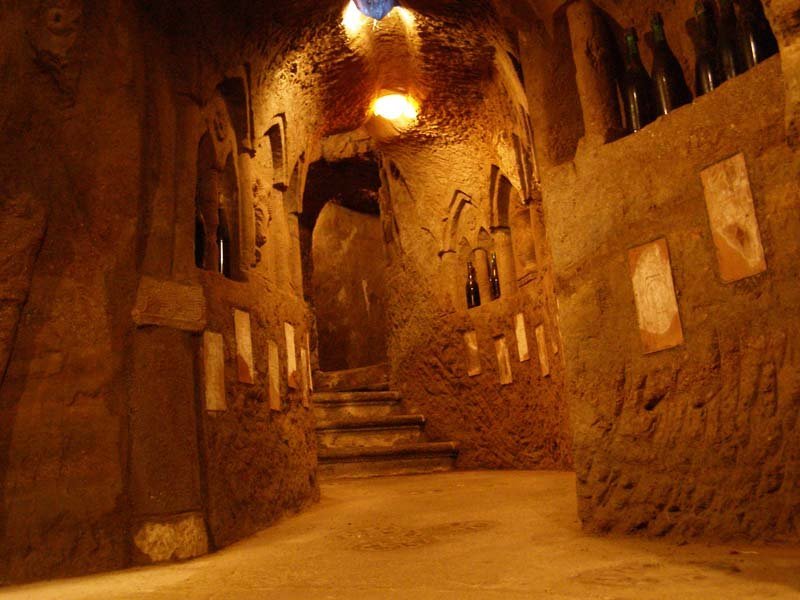 Descending beneath Orvieto feels like entering another dimension. Just steps from the Duomo, the entrance to Underground Orvieto introduces you to a world of tunnels, cisterns, and caves that stretch across over 1,200 cavities carved into the tufa rock. Here, the Etruscans as early as the 6th century BC built remarkable wells and water channels, evidenced by the Etruscan well 82 meters deep. In the Middle Ages, the spaces were expanded: notable is an olive press with original millstones and press, active until the 1600s, and a dovecote with hundreds of niches for pigeon breeding. Further below, a pozzolana quarry shows marks of hammers. During World War II, these spaces served as an air-raid shelter, today open for visits. The temperature is a constant 14°C: bring a jacket. The guided tour lasts about an hour and is suitable for all, including children. A dive into true, millennial history beneath your feet.
- Via del Duomo, Orvieto (TR)
- Open in Google Maps
- View on Google Images
You should go if…
Day 1 – Stop no. 4
Crocifisso del Tufo Necropolis
 Resurfacing from the underground, the next stop is a dive into ancient Etruria. At the foot of the Orvieto cliff lies the Crocifisso del Tufo Necropolis, an imposing Etruscan city of the dead used from the 8th to the 3rd century BC. Here, about seventy tombs are laid out like a real neighborhood, with orthogonal streets and regular blocks: a breathtaking urban plan. Each cube-shaped tomb, made of tufa blocks, belonged to a family, and on the lintel stand out Etruscan inscriptions – often the formula “I am of…”, testifying to a cosmopolitan community. Inside, benches for the deceased and rich grave goods: Greek pottery, bronzes, jewelry, now mostly displayed at the Museo Faina and the Museo Archeologico Nazionale in Orvieto. Don’t miss the Antiquarium tattile, where wearing gloves you can touch original artifacts – a rare experience. The name of the site? It comes from a 16th-century crucifix carved in tufa. Practical info: the necropolis is open from Thursday to Sunday, 10am-7pm (closed Monday, Tuesday, and Wednesday). Ticket: €3 full, €2 reduced. Reach it on foot from the center following signs for via Pecorelli, or by car with nearby parking.
- Strada della Stazione, Orvieto (TR)
- Open in Google Maps
- View on Google Images
You should go if…
Day 2 – Stop no. 1
Augustus Bridge: The Ancient Roman Giant
 Leave the Etruscan necropolis and prepare for a plunge into Roman engineering. The Augustus Bridge greets you with its imposing bulk: a single surviving arch, 30 meters high, dominating the Nera gorge. Built around 27 BC for the Via Flaminia, it was nearly 130 meters long with four arches. Today, after collapses caused by earthquakes and floods (the last major one in 1885), only the first pier and the arch on the left bank remain, but the majesty is intact. The rusticated travertine blocks, the colossal dimensions, the projecting cornice: everything speaks of Rome’s might. In the 18th and 19th centuries, artists such as Corot and Turner depicted it during the Grand Tour. Today, the bridge marks the entrance to the cycle-pedestrian path of the Nera Gorges, a 6 km trail along the old railway. Park at Via Tre Ponti and go down to admire it from below: the roar of the river and the shade of the trees frame a timeless atmosphere.
- Strada dei Tre Ponti, Narni (TR)
- Open in Google Maps
- View on Google Images
You should go if…
Day 2 – Stop no. 2
Palazzo Eroli and the City Museum
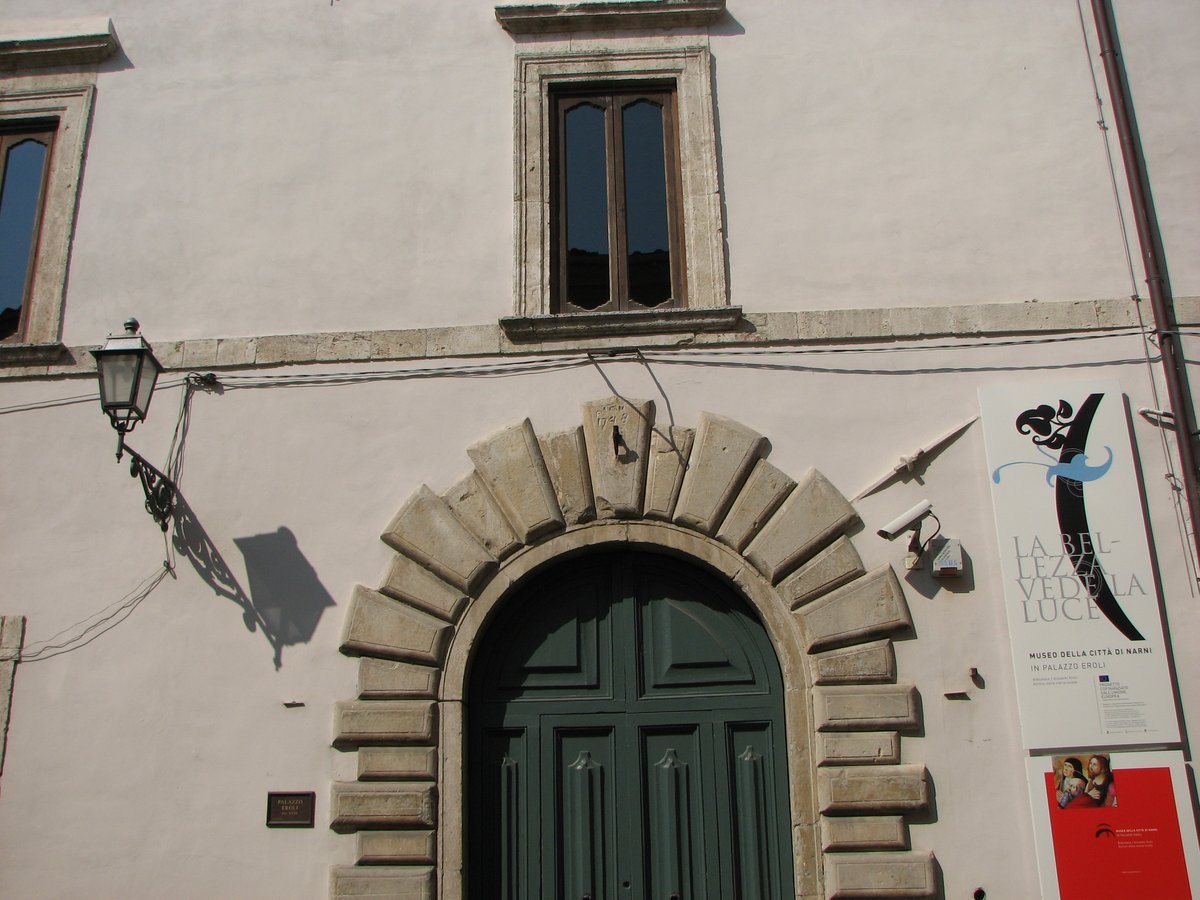 After exploring the city center, it’s time to step inside Palazzo Eroli, an elegant 18th-century building that has housed the City and Territory Museum since 2007. Over 2,700 square meters, it takes you on a journey from prehistory – with the tusks of an Elephas antiquus – to the Renaissance. On the first floor, the art gallery holds two gems: the Coronation of the Virgin by Domenico Ghirlandaio and the Annunciation by Benozzo Gozzoli, both commissioned by Cardinal Berardo Eroli. A bit further, a room dedicated to the Martinori donation displays an Egyptian mummy (a young pregnant Nubian woman) and a wooden sarcophagus from the 4th century BC – stuff that leaves you speechless. The museum is interactive, with large screens and music, and there’s also a panoramic terrace overlooking the Nera Gorges. The only downside: opening hours change with the season, so check before you go.
- Vicolo del Comune, Narni (TR)
- Open in Google Maps
- View on Google Images
You should go if…

