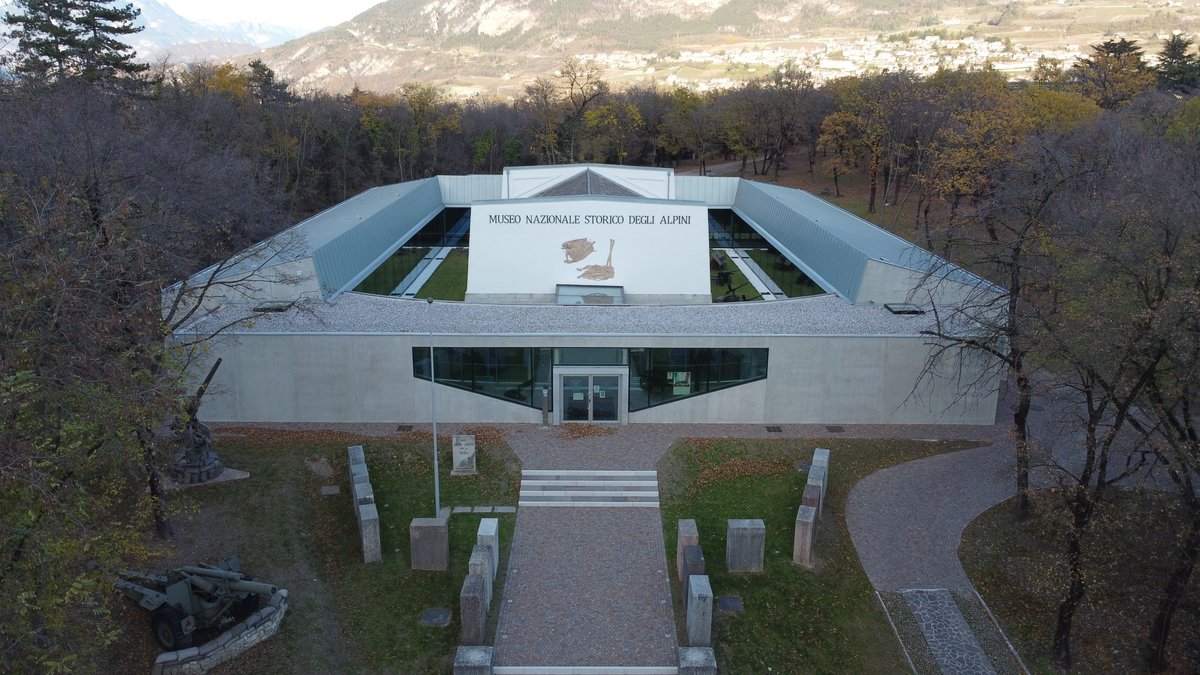
The National Historical Museum of the Alpini in Trento offers a journey through time into the history of this military corps, with engaging exhibits suitable for all ages. Housed in a historic building in the heart of the city, the museum presents memorabilia that narrates the Alpini’s story from its origins to recent missions.
- Perfectly preserved period uniforms showcasing the evolution of the uniform from its beginnings to the present day
- Complete reconstruction of an Alpine barracks with a stove, bunk beds, and soldiers’ personal items
- Great War memorabilia including everyday objects, letters from the front, and musical instruments
- Interactive exhibits for families with the opportunity to try on some helmets under supervision
Introduction
This is not your typical dusty military museum. The National Historical Museum of the Alpini in Trento welcomes you with an atmosphere that feels of mountains and lived history, not just recounted tales. As soon as you enter, you’re struck by the scent of wood and wool, almost as if you were in an old Alpine barracks. The uniforms, perfectly preserved, seem as if they’re still being worn, and the memorabilia—from the black feathers to war diaries—speak of men, not just battles. The space is intimate and cozy, and even if you’re not a military history enthusiast, you immediately understand that this is an important piece of Trentino’s identity. The feeling is that of stepping into a place of memory, not just an exhibition.
Historical Overview
The museum was established in 1959 by the National Alpini Association, but its collection tells a story that begins much earlier.
The heart of the collection consists of artifacts from the Great War, fought right here in these mountains. You won’t find just weapons, but everyday objects that make it all more human: food tins, letters written from the front, musical instruments. It’s interesting to note how the museum has evolved, adding sections on the more recent history of the corps, up to peacekeeping missions. A timeline helps put things in order:
- 1872: The Alpini Corps is founded.
- 1915-1918: The Great War in the Dolomites.
- 1959: The museum opens in Trento.
- 2000s: Renovation with a focus on multimedia.
The Rooms That Speak
One of the things that struck me most is the reconstruction of an Alpine barracks. It’s not just a display case, but a complete environment where it feels like the soldiers have just stepped out. The stove, the bunk beds, the backpacks hanging up: it transports you directly up there, into the cold. Then there’s the room dedicated to uniforms, which is a treasure trove of details. You see the evolution of the uniform, from the grey-green jacket of the First World War to modern camouflage suits. Every button, every insignia, tells a piece of history. Perhaps the most touching part is that of the diaries and personal photographs, displayed with discretion. They make you think of the individual stories, the distant families, the life beyond the uniform.
For families (yes, really)
It might seem like a museum for adults, but you’d be wrong. Children are fascinated by the ‘hands-on’ objects like backpacks, helmets (some can be tried on, with supervision), and models of cable cars and cannons. It’s not a playground, of course, but the approach is engaging. I saw a kid completely absorbed in observing the details of a vintage ski, wondering how it could have been used in war. The museum is small, so it doesn’t tire you out, and the route is linear and clear. A tip? Let the little ones linger on what intrigues them, without rushing. Sometimes they’re the ones who ask the most interesting questions.
Why Visit It
Three concrete reasons. First: it’s a dive into the identity of the Trentino mountains, going beyond landscapes. You understand the visceral bond between this territory and the Alpine troops. Second: the attention to detail. These aren’t just piled-up memorabilia, but stories told with respect. Third: the location. After your visit, you step out into the heart of Trento, ready for a coffee in Piazza Duomo or a walk towards the Castello del Buonconsiglio. It’s the perfect cultural break, not taking up a full day but enriching your view of the city.
When to Visit
The museum is open year-round, but the atmosphere changes. I personally prefer winter mornings, when it’s cold outside and the crisp air evokes the alpine altitudes. Stepping into the warmth of the galleries, with light filtering through the windows, feels special. In summer, it’s a great option for a break from the heat, perhaps after exploring the city center under the sun. I’d avoid peak afternoon hours if you’re with young children, to enjoy it more peacefully. A tip? Check the weather: a rainy or foggy day makes the visit even more atmospheric and intimate.
In the Surroundings
After leaving the museum, history continues just steps away. Take a quick trip to Castello del Buonconsiglio, the symbol of Trento, for a contrast between episcopal power and military history. Then, if you want to stay on theme, look for traces of Habsburg-era Trento in the city center, such as the porticoes on Via Belenzani. For a completely different but still local experience, visit MUSE, the Museum of Science designed by Renzo Piano. It’s ultra-modern and interactive, a nice counterpoint to the tradition of the Museo degli Alpini. Or, simply, spend an hour browsing the market stalls in Piazza Cesare Battisti to taste a bit of everyday Trentino.