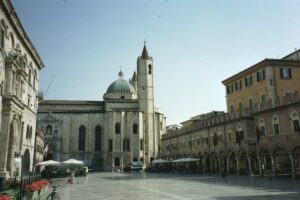
Walking Ancona in a day is an unmissable experience for those wanting to immerse themselves in the history and views of this Marche city. This 10-stop itinerary takes you from Porta Pia, an ancient gateway, to the Citadel, a panoramic fortress, passing through the Mole Vanvitelliana, an imposing pentagonal building, and the Roman Amphitheater, a testament to the past. You’ll walk among Roman arches, Baroque churches, and lively squares, with constant harbor views. A route suitable for everyone, rich in cultural and photographic highlights. In just 8 hours you can discover the best of Ancona, blending history, art, and the sea.
🗺️ Your trip at a glance
A walking itinerary that reveals Ancona in just a few hours, blending history and views. Perfect for a day trip.
- Ideal for city-breakers and history enthusiasts.
- Highlights: 10 stops, panoramic views, unique monuments.
- Why choose it: a compact route full of surprises.
Itinerary stops
Stop no. 1
Porta Pia
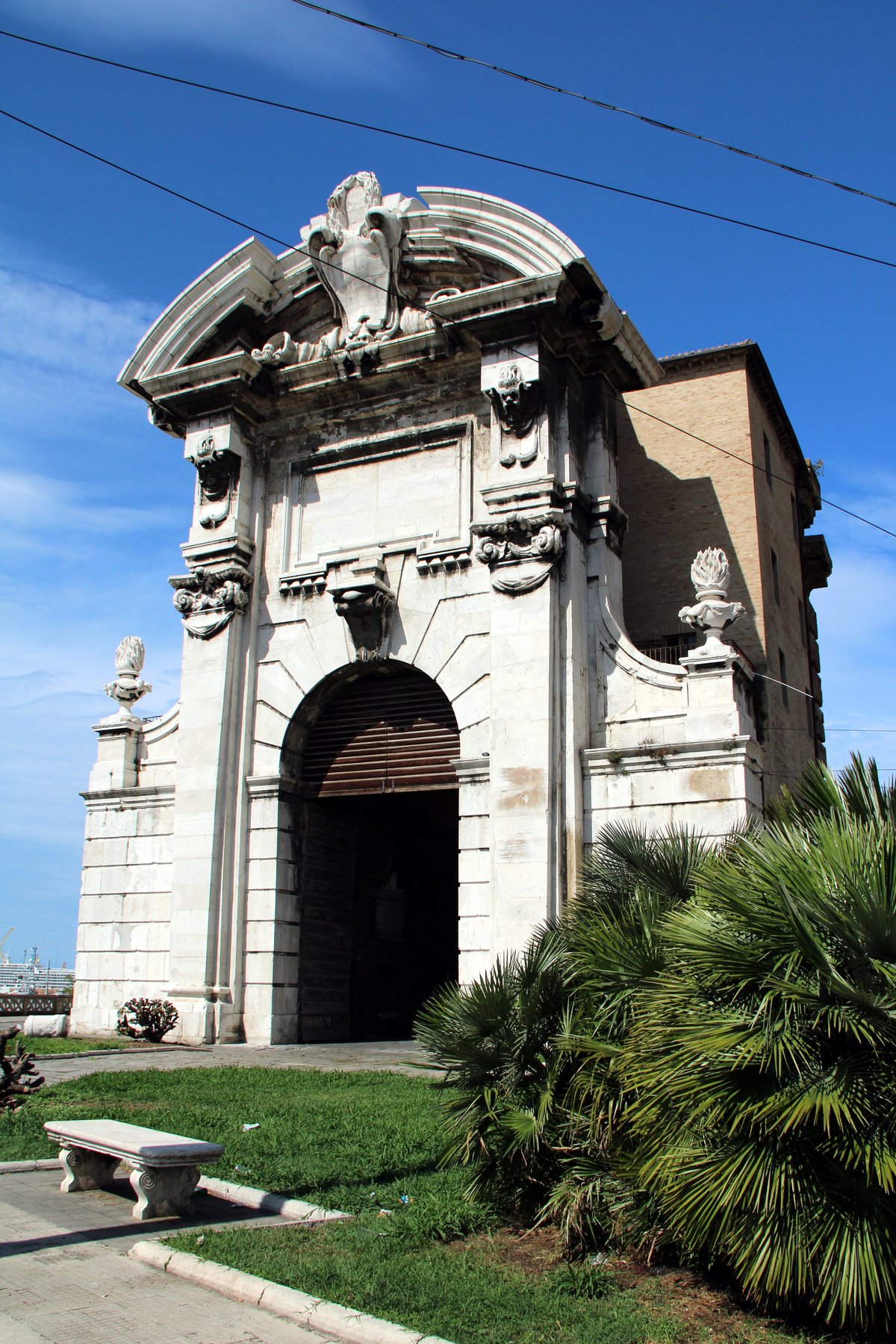 We start our day right where one once entered the city: Porta Pia. Built between 1787 and 1789 by order of Pope Pius VI and designed by Ancona native Filippo Marchionni, this triumphal arch in Baroque style now stands isolated, but was once connected to the walls climbing toward the Citadel. The external facade, in Istrian stone, is rich in Mannerist friezes and details, such as masks and shells that echo the city’s maritime vocation; the internal one, simpler, is in sandstone. During the French occupation, the papal coat of arms was chiseled away, and the marks of cannon fire from 1860 are still visible. Nearby, a monumental anchor commemorates those lost at sea. From here, one can already enjoy a first view of the port and the Mole Vanvitelliana. It is the perfect spot to breathe in history and start exploring Ancona.
- Largo Caduti sul Mare, Ancona (AN)
- Open in Google Maps
- View on Google Images

You should go if…
Stop no. 2
Mole Vanvitelliana: the Pentagon on the Water
 The Mole Vanvitelliana is perhaps the most surprising symbol of Ancona. Picture a vast artificial island shaped like a pentagon floating in the harbor, connected to the mainland by three small bridges. Designed by Luigi Vanvitelli between 1733 and 1743, it was originally built as a lazzaretto to quarantine goods and travelers, with capacity for up to 2,000 people. Today, after restorations begun in the 1990s, it is a multifunctional cultural hub: home to the Omero Tactile Museum, temporary photography and contemporary art exhibitions, concerts, open-air cinema in summer, and a literary café. At the center of the courtyard, the small church of San Rocco was designed to allow the sick to attend mass without contact. Fun fact: during the 2016 earthquake, damaged artworks were brought here for restoration. Admission is free, and don’t miss a walk along the ramparts with views of the harbor. A place that tells centuries of history, from the 1700s to today.
- Corte, Ancona (AN)
- Open in Google Maps
- View on Google Images
You should go if…
Stop no. 3
Loggia dei Mercanti
 After the Mole, we slip into one of the most evocative streets of the historic center and arrive at the Loggia dei Mercanti, a fifteenth-century gem that tells the commercial power of Ancona. Built starting from 1442 on a design by Giovanni Pace known as il Sodo, it was the place where merchants gathered to conduct business, away from the hustle and bustle of the square. The facade is a masterpiece by Giorgio da Sebenico (1451-1459), in Venetian Gothic style, with Dalmatian marble from the island of Brazza. Four columns support statues of the cardinal virtues: Hope, Fortitude, Justice, and Charity, while in the center stands out the knight with sword, symbol of the city. Originally open on both sides (street and sea), after the fire of 1556 Pellegrino Tibaldi closed it with windows and frescoed the vault. Today it is the representative seat of the Chamber of Commerce and hosts events. Don’t miss the carved details and the view of the harbor from the terrace at the back, a dive into the mercantile history of Ancona.
- Via Sottomare, Ancona (AN)
- Open in Google Maps
- View on Google Images
You should go if…
Stop no. 4
Palace of the Elders
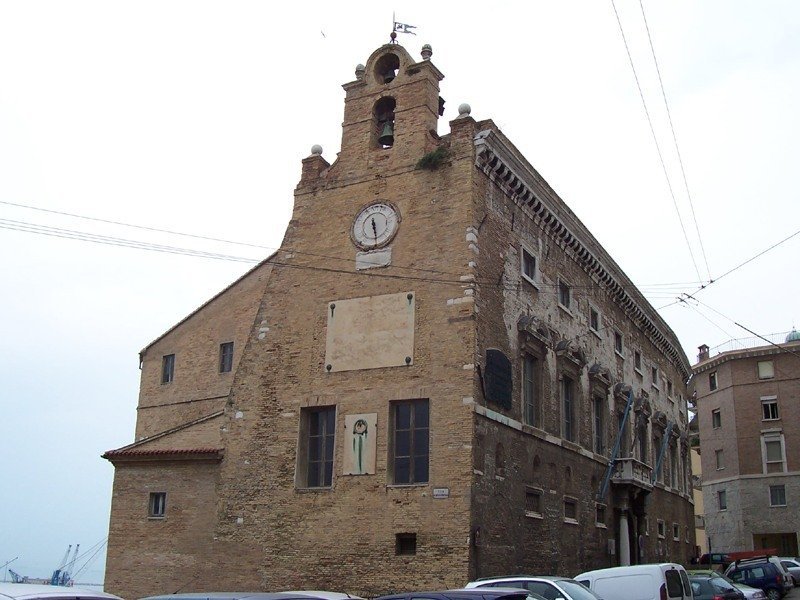 Leaving the Loggia dei Mercanti, we climb towards Piazza Benvenuto Stracca, where the Palazzo degli Anziani towers, for centuries the symbol of civic power. Built in 1270 from a design by Margaritone d’Arezzo, the palace is a clever play of levels: from the harbor side it rises majestically with seven stories in Gothic style, with pointed arches in white stone from Conero; from the square side, it appears more sober, remodeled by Pellegrino Tibaldi in the 16th century with broken pediment windows. Here the Council of Elders of the Republic of Ancona used to meet, and here the Ancona Declaration for the Adriatic-Ionian Initiative was signed in 2000. After the bombings of 1943, the palace lost some of its decorations, but it still preserves precious medieval bas-reliefs and a six-hour clock. Since 2011, the City Council has returned to meet in the historic hall. Don’t miss the free public elevator connecting the square to the port: a practical way to move from one era to another.
- Piazza Benvenuto Stracca, Ancona (AN)
- Open in Google Maps
- View on Google Images
You should go if…
Stop no. 5
Piazza Cavour: Ancona’s Green Living Room
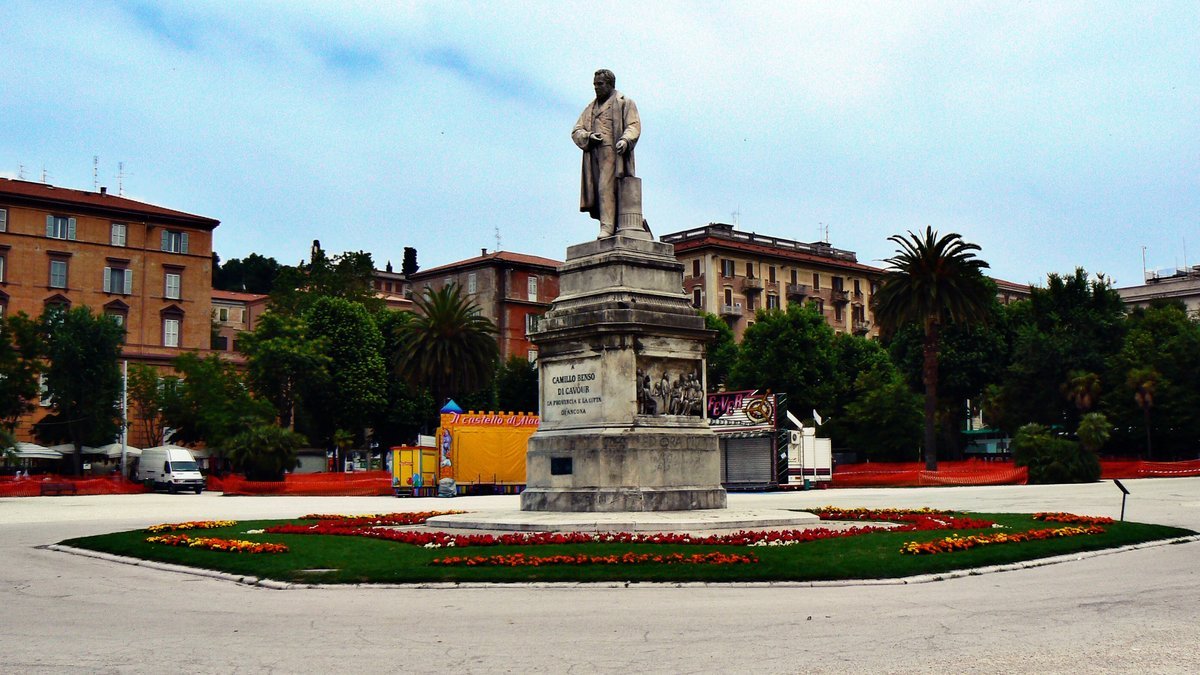 Imposing and airy, Piazza Cavour welcomes visitors with a perfect balance between past and present. Designed in 1862 after the unification of Italy and inaugurated in 1868, it spans three hectares at the border between the 19th-century districts and the modern ones. At the center stands the statue of Camillo Benso, a work by Aristodemo Costoli, with bas-reliefs celebrating the Congress of Paris and the Proclamation of the Kingdom. Originally surrounded by a double row of trees and stone benches, the square has undergone several transformations over time: the geometric flowerbeds with palms and wrought-iron benches from the 1920s, until the 2016 restoration that restored the central octagonal flowerbed and introduced new lampposts. Under the greenery of plane trees and Lebanon cedars, the square is now an open-air living room, with cafés and benches where you can stop and watch life go by. Since 2011, the Palazzo delle Marche (seat of the Regional Council) overlooks the southwest side, while on the northeast side, the three Barducci buildings stand out with their large arches. The atmosphere is relaxed but lively: perfect for a break before continuing on to the Cittadella.
- Ancona (AN)
- Open in Google Maps
- View on Google Images
You should go if…
Stop no. 6
Mercato delle Erbe: A Liberty Jewel Between History and Flavors
 From Piazza Cavour, turning onto Corso Mazzini, you come across a structure that seems from another era: the Mercato delle Erbe, built in 1926 with iron and cast iron salvaged from Austrian ships decommissioned after World War I. Designed by Federico Federiconi, it is an example of industrial Liberty style that for nearly a century has hosted the beating heart of Ancona’s commerce. The rectangular plan (40×35 meters) unfolds over two levels: on the ground floor, among fruit, vegetable, and fish stalls, the atmosphere is that of a lively and authentic covered square. The ongoing restoration (funded with €5.8 million from the PNRR) aims to modernize the spaces without altering the identity of the place: by June 2026, the market will be even more functional, with new glass cases for fishmongers and spaces for cultural events. Despite the work, activities continue daily (except Sunday) from 7:00 AM to 1:00 PM. Don’t miss the Roman mosaics from the 1st century BC – 1st century AD discovered beneath the area, which will soon be enhanced. A tip: arrive early to enjoy the buzz and sample typical Marche products.
- Piazza delle Erbe, Ancona (AN)
- Open in Google Maps
- View on Google Images
You should go if…
Stop no. 7
Former Church of Sant’Agostino
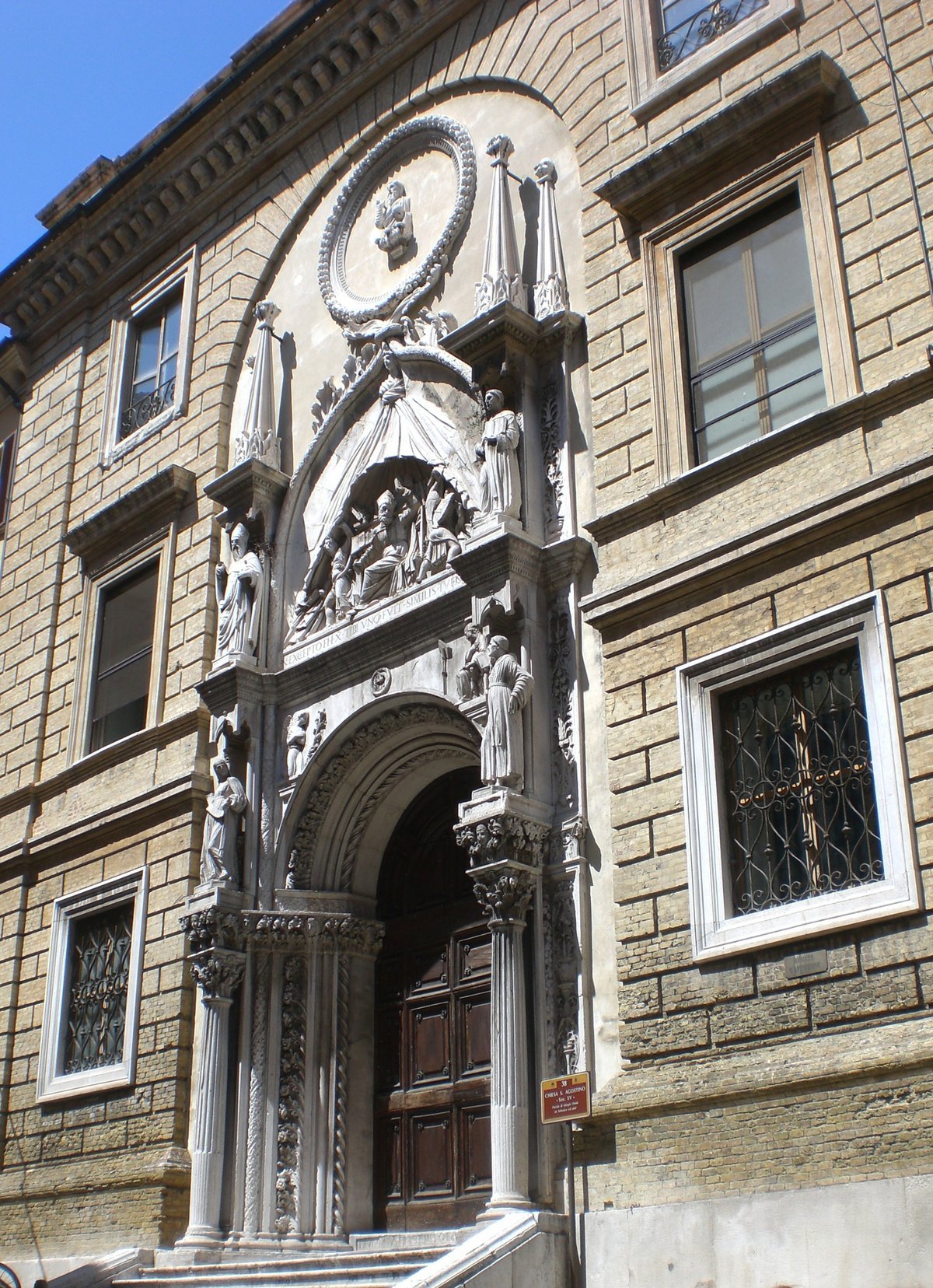 After the Mercato delle Erbe, another surprise awaits: the former Church of Sant’Agostino, which today is anything but a church. Of its long history – beginning in 1341 as Santa Maria del Popolo – only the magnificent portal by Giorgio da Sebenico remains, a Gothic-Renaissance gem with statues of saints and a high relief. The rest has been erased: first turned into barracks after Italian unification, then almost razed to the ground by the bombings of ’43. Today the building houses the Marconi Museum Hall, dedicated to the history of telecommunications, because here Marconi conducted experiments in 1904. It’s a fascinating contrast: you walk in and find yourself facing a submarine simulator and vintage radios. The atmosphere is almost surreal, but it’s a dive into contemporary history. If you’re curious, visits are by reservation (phone 071 5931619). A place that speaks of layers and transformations, just like Ancona.
- Via Enrico Cialdini, Ancona (AN)
- Open in Google Maps
- View on Google Images
You should go if…
Stop no. 8
Roman Amphitheatre: History and Spectacles
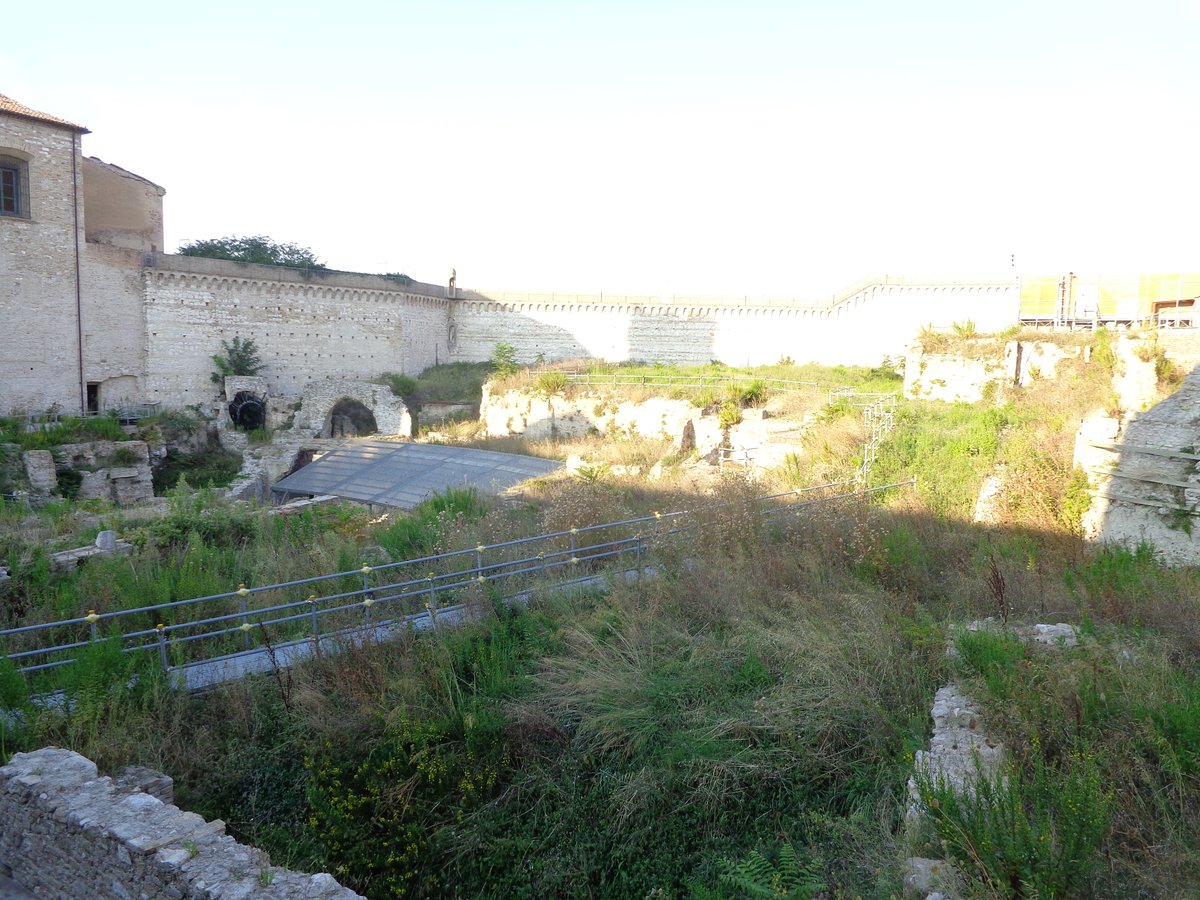 Leave behind the former Sant’Agostino and immerse yourself in the most ancient past: the Roman amphitheatre, nestled between Hill Guasco and Cappuccini Hill, welcomes you with its imposing ellipse. Built in the Augustan age (end of the 1st century BC) and expanded under Trajan, it could host up to 10,000 spectators. Today, after excavations begun in 1930 and continued after the 1972 earthquake, you can admire the porta pompae (the main entrance, called Arco Bonarelli) and the porta libitinensis, through which dead gladiators were removed. The arena measured 52×35 meters, and from the highest tiers one enjoyed a unique view of the sea from two sides. Abandoned in the 6th century, it was rediscovered only in 1810 by abbot Leoni. Today, in summer, it comes back to life with performances of the Teatro Antico Unico and the Echi festival. A place where Roman history blends with the landscape, offering authentic emotions.
You should go if…
Stop no. 9
Pincio Park: The City’s Panoramic Living Room
 From the Roman amphitheater, climbing toward the hill, you reach Pincio Park, Ancona’s oldest public park, opened after 1870. Spread over Colle Santo Stefano, it offers a belvedere 100 meters above the sea with a spectacular view: from the ancient port to the Cathedral of San Ciriaco, from the old lighthouse to the Cassero Bastion. Inside, the Monument to the Resistance by Pericle Fazzini (1965) commemorates the fallen partisans, accompanied by 16 iron plaques with texts by Franco Antonicelli. The entrance is marked by the gate ‘Vele al Vento’ by Giò Fiorenzi. The park, managed by the municipality, is open every day and is wheelchair accessible. A peaceful place to pause and breathe in history and the panorama.
- Ancona (AN)
- Open in Google Maps
- View on Google Images
You should go if…
Stop no. 10
Cittadella
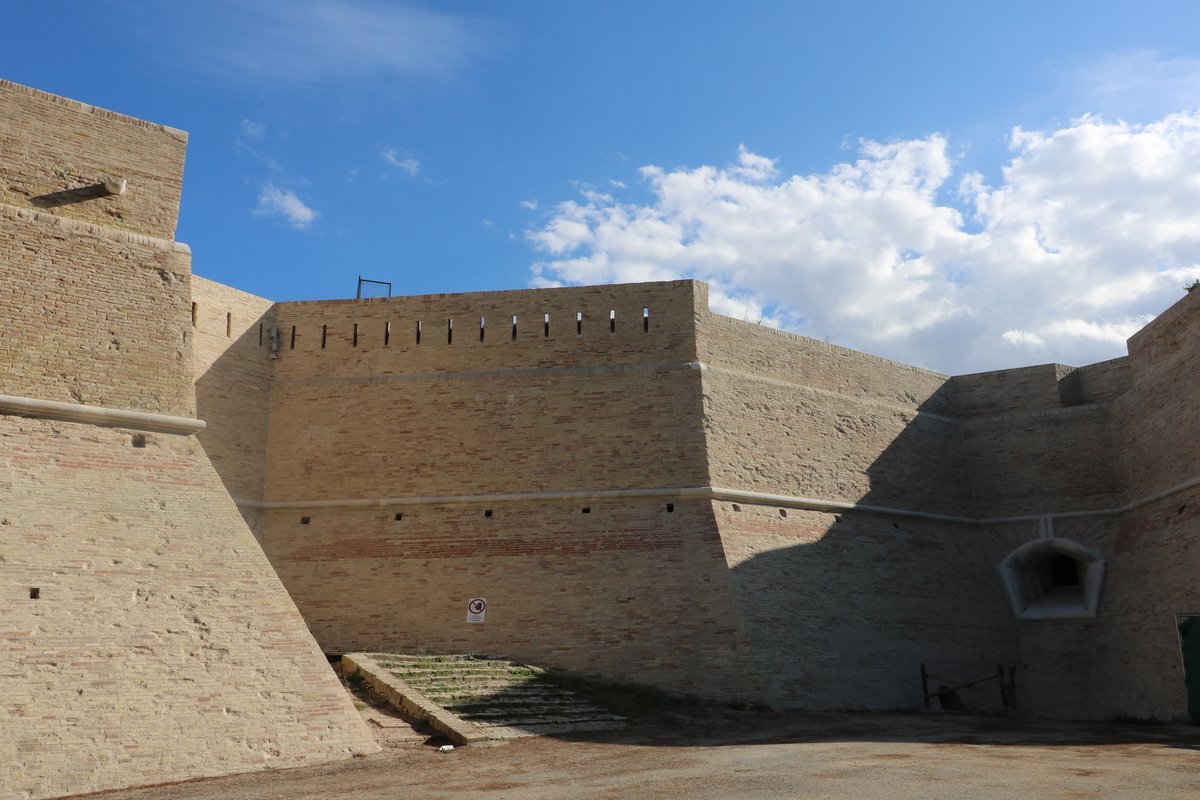 Climbing even higher, after the panorama from the Pincio, you reach the Cittadella, the majestic Renaissance fortress that dominates Ancona from Colle Astagno. Designed by Antonio da Sangallo the Younger starting in 1532, it is a masterpiece of military architecture: pentagonal star-shaped, with five imposing bastions and a network of underground tunnels. The highest point is the Torraccia, from which you enjoy a 360-degree view of the port, the cathedral, and the sea. The fortress has experienced sieges and revolutions – in 1799, 1849, 1860 – and after the unification of Italy it housed a huge armory for 25,000 rifles (the original racks are still there). Abandoned after the 1972 earthquake, it has been partially restored: the Bastione della Guardia now houses the Secretariat of the Adriatic Ionian Initiative, while the rest is still under restoration (2025). The contrast is striking: on one side, the ancient walls covered in Mediterranean scrub and wild capers, on the other, the view stretching over the Adriatic. Not everything is accessible, but it’s worth climbing up here to breathe in history and imagine the battles that have marked the city.
- Via Circonvallazione, Ancona (AN)
- Open in Google Maps
- View on Google Images
You should go if…