
The Ascoli Piceno Civic Art Gallery, located in Palazzo dell’Arengo since 1861, offers a chronological journey through Marche art with works from the Middle Ages to the 18th century. The collection includes paintings, sculptures, ceramics, and applied art objects, with rooms dedicated to local masters and a clear layout that allows for a complete visit in a few hours.
- Palazzo dell’Arengo: a medieval travertine building with frescoed halls and stained-glass windows on the noble floor that create unique atmospheres
- Sant’Emidio Polyptych by Carlo Crivelli, a 15th-century masterpiece with meticulous details and gilding
- Madonna del Latte by Pietro Alemanno, a 15th-century terracotta sculpture of rare sweetness
- Works by Cola dell’Amatrice depicting Marche landscapes with recognizable scenery still visible today
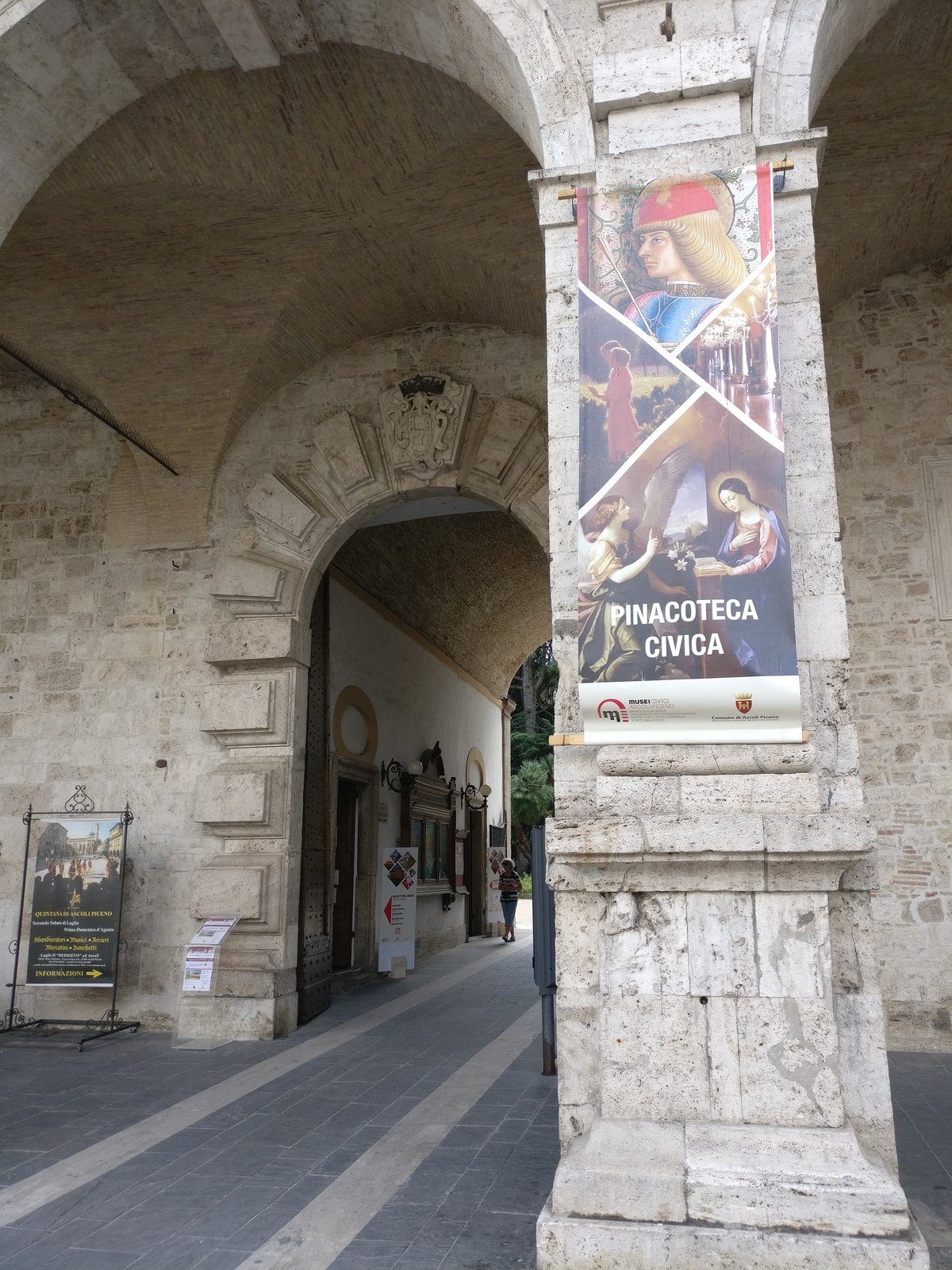
The Ascoli Piceno Civic Art Gallery houses masterpieces from the Middle Ages to the 18th century in Palazzo dell’Arengo, with works by Carlo Crivelli, Cola dell’Amatrice, and sculptures by Pietro Alemanno. Discover the Sant’Emidio Polyptych and the Madonna del Latte.
- Piazza Arringo, Ascoli Piceno (AP)
- Open in Google Maps
- View on Google Images Pinacoteca Civica a Ascoli Piceno
Good to know
A Palace That Tells a Story
Historical Overview
- 1861: Official foundation of the Civic Art Gallery
- Late 19th century: First installations in the Palazzo dell’Arengo
- First half of the 20th century: Expansion with works by local artists like De Carolis
- Recent years: Restoration and reorganization of rooms to enhance the chronological journey
Must-See Masterpieces
The Art That Speaks of the Territory
Why Visit It
When to Go
In the Surroundings
💡 Did You Know…?
Among the most curious works is Pietro Alemanno’s ‘Saint George and the Dragon’, a 15th-century painting showing a dragon with an almost ‘domestic’ appearance, far from the monstrous representations typical of the period. Local legend says the artist, inspired by the statue of the saint on the Duomo’s facade, wanted to make the monster less frightening so as not to scare children visiting the church. Another detail few notice: some panel paintings still preserve on their backs the ancient wax seals of the noble Ascolan families who commissioned them, a tangible trace of their history.