
🧭 What to Expect
- Ideal for a weekend of cultural tourism, between history and wine
- Highlights: Castel del Monte, archaeological sites of Canne della Battaglia and Canosa, wine cellars of Trani
- Why visit: unique mix of UNESCO heritage and food and wine tradition
- Tip: pair the visit with a tasting of local wines
Events nearby
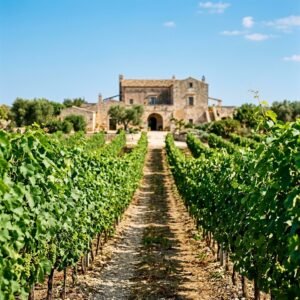
The province of Barletta-Andria-Trani (BAT) is a concentration of millenary history and food and wine traditions often overlooked by tourists. From the iconic Castel del Monte, a UNESCO World Heritage site commissioned by Frederick II, to the archaeological sites of Canne della Battaglia and Canosa di Puglia, passing through the elegant Romanesque cathedrals of Trani and Bisceglie. But that's not all: BAT is also a land of fine wines such as Moscato di Trani and Nero di Troia, with historic wineries open for visits. In this article, I will guide you through an itinerary that combines art, archaeology, and flavors, perfect for a weekend off the beaten path. Together we will discover the must-see places, from the Hohenstaufen castles to the prehistoric dolmens, not forgetting the delights of the Adriatic Sea along the coast.
Overview
- Castel del Monte: Frederick II's Octagonal Enigma
- Cannae della Battaglia: Ancient History Just a Few Kilometers from Barletta
- The Swabian Castle of Trani: History and Charm
- De Nittis Picture Gallery: Masterpieces of Impressionism in Barletta
- Sant'Anna Synagogue Museum: Jewish History in the Heart of Trani
- Dolmen della Chianca: Between History and Mystery in Bisceglie
- The Arch of Trajan: The Ancient Gateway of Canosa
- National Archaeological Museum of Canosa di Puglia: Between Ancient Artifacts and Multimedia
- Bisceglie Castle
- Baptistery of San Giovanni: Early Christian Gem in Canosa
- Basilica of San Leucio: An Early Christian Jewel of Mosaics and History
- Rocca del Garagnone, the Invisible Castle of Spinazzola
- Temple of Jupiter Torus in Canosa di Puglia
- Barletta Castle: Fortress, Museum, and Treasure Trove of History
- Santa Croce Caves: A Prehistoric Journey in Bisceglie
Itineraries nearby
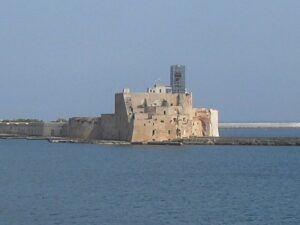


Castel del Monte: Frederick II's Octagonal Enigma
- Go to the page: Castel del Monte: Perfect Octagonal Architecture and Frederician Mysteries
- Strada Provinciale 8 di Castel del Monte, Andria (BT)
- https://aditusculture.com/esperienze/andria/musei-parchi-archeologici/castel-del-monte-andria
- Open in Google Maps
- View on Google Images
- +39 327 980 5551
 If there’s one place that embodies the genius of Frederick II of Swabia, it’s Castel del Monte. Perched atop a hill at 540 meters above sea level in the heart of the Murge, this 13th-century octagonal fortress will leave you breathless. A UNESCO World Heritage site since 1996, it’s a must-see in the province of Barletta-Andria-Trani.
What immediately strikes you is its shape: a perfect octagon with eight towers, also octagonal, like a stone crown. Walking through the inner courtyard, also octagonal, you notice the contrast between the local limestone and the pink veins of coral breccia. Inside, the sixteen trapezoidal halls (eight per floor) are bare, but the cross vaults and decorated keystones take you back to an era of lost splendor. The spiral staircases with 44 counterclockwise steps connect the floors – a detail seemingly designed so that anyone leaving always has their back to the building.
But what was it for? No moat or drawbridge, so no military function. The most accepted theories suggest a hunting lodge or temple of knowledge, but the mystery remains. What’s certain is that the emperor loved mathematics and astronomy: the octagon symbolizes the union of earth and sky. And look at the shadows during the solstices…
How to visit? Full ticket costs €10 (reduced €2 for ages 18-25, free on the first Sunday of the month). Hours: April to September 10:00-18:45, October to March 9:00-17:45. Get there by car from Andria (18 km) or by bus number 6 in season. Bring comfortable shoes and a camera: the landscape is wonderful.
Cannae della Battaglia: Ancient History Just a Few Kilometers from Barletta
- Go to the page: Cannae della Battaglia: The Archaeological Park Where Hannibal Defeated Rome
- Decumanus Maximus, Barletta (BT)
- Open in Google Maps
- View on Google Images
 If there's a place in Puglia where history still lingers among the wheat fields and the wind blowing over the Ofanto valley, it's the Cannae della Battaglia Archaeological Park. Here, on August 2, 216 BC, Hannibal Barca inflicted one of the worst defeats on the Roman army, despite being outnumbered. A pincer movement that scholars still study today. But the park is not just about the battle: it's an archaeological site that tells 7,000 years of history, from the Neolithic to the Middle Ages. Climbing up to the citadel, you pass the Antiquarium, a small museum renovated in 2017 with artifacts from prehistory to the late Middle Ages. I was impressed by the multimedia room with its 3D video of the battle: it gives you a better understanding of Hannibal's tactics than any book. Then you continue on foot to the medieval acropolis, dominated by the remains of the Norman castle and the three-aisled basilica. There, among cyclopean blocks and Aragonese walls, you feel small. If you have time, don't miss the Apulian village and the burial ground, though some itineraries are closed for work (better to check beforehand). The park is open Wednesday to Saturday: in winter from 9:00 to 5:30 PM, in summer from 10:00 to 6:30 PM. The ticket costs 6 euros (reduced 2), and for 8 euros you can get a combined ticket with the National Archaeological Museum of Canosa. A tip: bring water and comfortable shoes, as the hill is exposed and you'll do a lot of walking. But it's worth it: time seems to have stood still here.
The Swabian Castle of Trani: History and Charm
- Go to the page: Swabian Castle of Trani: Imperial Fortress Overlooking the Sea
- Via Lionelli 16, Trani (BT)
- https://www.beniculturali.it/mibac/opencms/MiBAC/sito-MiBAC/Luogo/MibacUnif/Luoghi-della-Cultura/visualizza_asset.html?id=150134&pagename=157031
- Open in Google Maps
- View on Google Images
- pm-pug.castelloditrani@beniculturali.it
- +39 0883 506603
 If there is a castle that embodies the power of Frederick II, it is the Swabian Castle of Trani. Built between 1233 and 1249, it stands on a rocky outcrop overlooking the sea, unique among the Hohenstaufen castles. Square plan with four corner towers, an 18-20 meter wide moat connected to the sea, and an outer wall with three external courtyards. Stroll along the wall walkways (open since 2021): spectacular views of the cathedral and port. Inside, the central courtyard retains the pillars of the medieval loggias. On the ground floor of the northeast bastion, the Castle Museum displays stone and ceramic artifacts. Since 2022, in the casemates, Queen Margherita's collection: works from the 19th and 20th centuries donated by Victor Emmanuel III. Intriguing history: here Frederick II had Pietro Tiepolo hanged (1237) and Manfred married Helen Comnenus (1259). Helen was later imprisoned here. For centuries a prison, until 1974. Today a national monument. Info: Mon-Sat 8:30-18:30, Sun 8:30-12:30. Ticket €8 (reduced €2). Free for under 18. Come at sunset: the walls turn gold and the sea seems to embrace them.
De Nittis Picture Gallery: Masterpieces of Impressionism in Barletta
- Go to the page: De Nittis Gallery: Over 200 Works in the Painter's House-Museum in Barletta
- Via della Marra, Barletta (BT)
- Open in Google Maps
- View on Google Images
 In the heart of Barletta, within the splendid Palazzo della Marra, lies the Giuseppe De Nittis Picture Gallery, a museum dedicated to the great Impressionist painter from Barletta. The collection, donated to the city by his wife Léontine Gruvelle in 1913, includes 146 paintings and 65 drawings, as well as books and letters. After a long journey – first in the former Dominican convent, then in the Castle – in 2007 it found its permanent home here, in a building that is a unique example of Lecce Baroque outside of Salento. The façade, with its balcony supported by carved corbels (monsters, griffins, dogs) and the allegories of Old Age and Youth, already promises wonders. The exhibition itinerary unfolds over two floors and follows the artist's life stages: starting with Neapolitan landscapes from his realist period, moving on to vibrant Parisian and London views – crowded boulevards, horse races – leading to intimate portraits of his wife Léontine. Unmissable works include: Breakfast in the Garden, The Salon of Princess Mathilde, and The Races at Auteuil. One section compares De Nittis with masters like Manet and Degas, while temporary exhibitions always enrich the offering. Opening hours: Tuesday-Sunday 9:00 AM-7:00 PM (closed Monday). Full ticket €4, reduced €2. In short, a must-see for lovers of 19th-century art.
Sant'Anna Synagogue Museum: Jewish History in the Heart of Trani
 In the heart of Trani's Jewish quarter, among narrow alleys and ancient doorways, stands the Sant'Anna Synagogue Museum, one of the city's most fascinating and little-known sites. Built in 1246–1247 as the Great Synagogue, it was converted into a Catholic church under the Angevins and dedicated first to Saints Quiricus and Julitta, then to Saint Anne. Today, after a lengthy restoration completed in 2009, it houses the Jewish section of the Diocesan Museum of Trani-Barletta-Bisceglie.
Upon entering, the harmony of the space strikes you: the square layout, the dome set within an octagonal drum, and the small pointed pinnacle on the side façade—likely the original crown of the Aron HaKodesh. The stone perimeter walls tell centuries of stratification, while inside the foundation inscription stands out, bearing the year 5007 from the creation of the world. In the 18th-century crypt, tombstone stelae from Trani's two Jewish cemeteries are displayed, and on the upper floor, educational panels and precious artifacts: a 12th-13th century Mezuzah and parchment fragments of a 14th-century Hebrew Bible. It is the only museum of Jewish history in all of Southern Italy.
The visit is a dive into a past few know: Trani's Jewish community numbered about 200 families in 1160, and that atmosphere still lingers. I recommend pausing for a few moments in silence, watching the light filter through the windows, and imagining the voices of those who prayed in this synagogue. The museum is open Tuesday to Sunday (9:30 AM–1:30 PM and 4:00 PM–7:00 PM), admission is €4, and it is accessible for people with mobility impairments. An experience blending art, faith, and history, perfect for those seeking something different from the usual Puglia tour.
Dolmen della Chianca: Between History and Mystery in Bisceglie
- Go to the page: Dolmen della Chianca: Prehistoric Tomb Among Olive Trees and Mystery
- Autostrada Adriatica, Bisceglie (BT)
- Open in Google Maps
- View on Google Images
 If you're passing through Bisceglie, don't miss the Dolmen della Chianca, a megalithic monument that takes you straight back to the Bronze Age. Discovered on August 6, 1909 by the abbot Francesco Samarelli, it is considered one of the most beautiful and best-preserved in Europe. The structure is a gallery grave with a corridor (dromos) 7.50 meters long and a chamber 1.80 meters high, covered by an imposing slab measuring nearly 4 by 2.40 meters. Originally, it was hidden under a tumulus of stones about 30 meters in circumference, now almost disappeared.
Upon entering, you can't help but notice its eastward orientation, like all constructions of this type: a clear connection to sun worship. Inside, eleven skeletons in fetal position were found, accompanied by a rich funerary assemblage – vases, a bronze phalera, amber beads – now displayed at the Archaeological Museum of Bari. Curious? The two small holes on the side slab have spawned local legends: perhaps they were used for letting sacrificial blood flow or for allowing the souls of the dead to fly away.
In 2011, UNESCO recognized it as a “Messenger and Witness of a Culture of Peace for Humanity”. The Archeoclub d'Italia has been organizing guided tours for over 25 years. To get there, from Bari take the SS16 bis, exit at Bisceglie centro, then follow signs for Via Sant'Andrea. The dolmen is nestled among ancient olive trees: a place that exudes a unique atmosphere, blending history, nature, and mystery.
The Arch of Trajan: The Ancient Gateway of Canosa
- Go to the page: Trajan's Arch Canosa: 2nd Century White Marble Along the Ancient Via Traiana
- Via Cerignola, Canosa di Puglia (BT)
- Open in Google Maps
- View on Google Images
 If you're passing through Canosa di Puglia, don't miss the Arch of Trajan. A kilometer from the center, along the ancient Via Traiana, this monument stands 13 meters tall, built between 108 and 110 AD to celebrate Emperor Trajan. It is a single-arch gateway, now in brick, but once entirely covered in marble. Fragments of bas-reliefs depicting Dacians and triumphal processions – now in Trani and Castel del Monte – tell the story of the emperor's victories. The arch had a symbolic role: it marked the entrance to the city, almost a boundary between the living and the dead. In recent years it has been restored (thanks to the PNRR and the Superintendence) and in 2023 it was freed from an illegal occupation that obstructed the view. Today it can be visited for free, with variable hours: Monday to Friday mornings only 9-12, Saturday and Sunday also afternoons 4-7 PM. The address? Via Cerignola, 24. Don't expect a monument as imposing as the Arch of Constantine in Rome, but it is fascinating precisely for its sobriety. I recommend combining the visit with the nearby mausoleums (Torre Casieri and Barbarossa) for a dive into Roman Canosa.
National Archaeological Museum of Canosa di Puglia: Between Ancient Artifacts and Multimedia
- Go to the page: Canosa Archaeological Museum: Golden Funerary Treasures and Daunian Princely Tombs
- Via John Fitzgerald Kennedy 18, Canosa di Puglia (BT)
- https://musei.puglia.beniculturali.it/musei/palazzo-sinesi-canosa-di-puglia/
- Open in Google Maps
- View on Google Images
- pm-pug.museocanosa@beniculturali.it
- +39 0883 664716
 The National Archaeological Museum of Canosa di Puglia is a veritable treasure chest of ancient artifacts, housed in the 19th-century Palazzo Sinesi. Don’t be fooled by the building’s elegant yet understated exterior: inside lies a collection that will leave you speechless. The centerpiece of the collection is the funerary equipment of the Varrese Hypogeum, a chamber tomb from the 4th-3rd century BC belonging to a wealthy family. Here you’ll find monumental Apulian red-figure vases, a bronze anatomical cuirass, and, most notably, the famous polychrome Canosian vases: unique pieces with tempera colors (predominantly pink) and applied plastic decorations. But the museum is more than just archaeology: it has recently been transformed by a multimedia setup funded by the PNRR. With “Touch History” you can interact with a panel that brings the decorations of the artifacts to life, while “The Colors of Canosa” lets you touch ceramic reproductions and listen to audio guides. The most evocative installation is “The Dream,” which immerses visitors in the dreamlike world of the Dinos through video projections and fabric screens. An innovative way to make archaeology accessible to all. The exhibition path (with captions in Italian and English) spans from archaic Daunia to the Hellenistic period, with artifacts from tombs and hypogea that testify to the high level of local craftsmanship. Hours: Wednesday to Sunday, 9:00 AM–6:00 PM (last entry 45 minutes before closing). Full ticket €5, reduced €2. Optional booking at tinyurl.com/ticket-museo-canosa. A tip: don’t miss the Room of the Ram with its subgeometric vases and the Room of the Crateres. And if you want to delve deeper, the museum is also a springboard for visiting the archaeological area of Canosa.
Bisceglie Castle
- Largo Castello, Bisceglie (BT)
- Open in Google Maps
- View on Google Images
 Bisceglie Castle stands on a rocky outcrop that once bordered the port. Its history begins in the 11th century at the behest of the Norman count Peter I: the main tower, about 24 meters high, is the oldest core. But the castle is not only Norman: in subsequent centuries it passed to the Swabians, who gave it a more complete form, then to the Angevins, as evidenced by the coat of arms of Charles I of Anjou on the west gate, and finally to the Aragonese, who further fortified it. The layout is quadrangular, with four towers at the corners and a fifth, called the tower of the gabelle, on the west side. Around it, a moat and a drawbridge ensured defense. At the center, the two-story palatium with a mullioned window was the castellan's residence. In the northeast corner, the small church of San Giovanni, with its gabled façade and bell gable, is a Romanesque gem. After centuries of abandonment and civil uses (mill, workshops, dwellings), the castle was brought back to life by restorations begun in 1982. Today it can be visited for free, with afternoon hours (Tuesday to Sunday 5-8 PM, Wednesday also 9:30 AM-9 PM). Strolling along the walkways and towers, you enjoy a unique view of the historic center and the sea. A place that tells layers of history, to be discovered at leisure.
Baptistery of San Giovanni: Early Christian Gem in Canosa
- Via Fabio Talamo, Canosa di Puglia (BT)
- Open in Google Maps
- View on Google Images
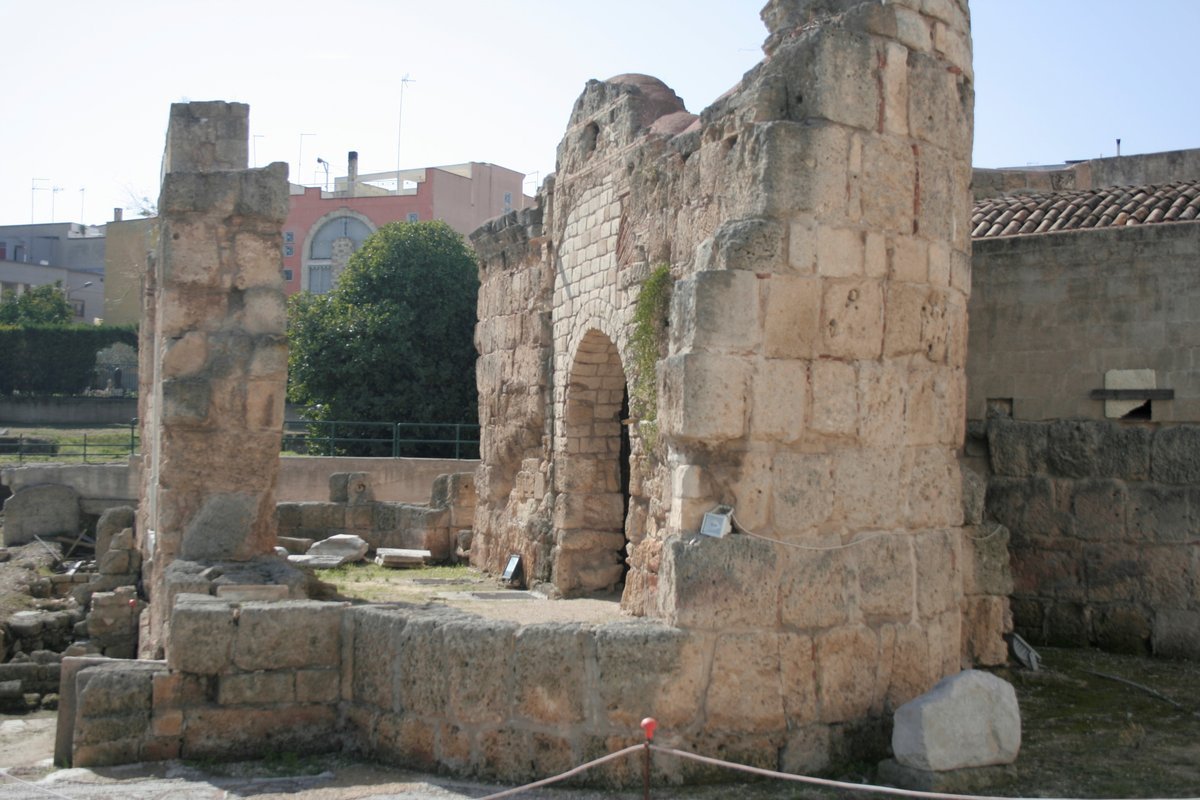 If you're passing through Canosa di Puglia, don't miss the Baptistery of San Giovanni, a true gem of Early Christian architecture. Commissioned by Bishop Sabino around the 6th century, this dodecagonal building is one of the few Early Christian baptisteries in Italy to have preserved its original structure, despite transformations over time. Upon entering, you'll be struck by the twelve-sided layout, evoking the number of apostles, and the heptagonal baptismal font at the center, with its three brick steps where the first Christians were baptized by immersion. Around it, an annular ambulatory allowed the faithful to circle during ceremonies. Few but precious mosaic floor fragments survive: four-pointed stars and lozenges, and glass tesserae with gold leaf that once covered the walls. The building is part of an episcopal complex commissioned by Sabino, which also included the basilicas of Santa Maria and the Salvatore. Unfortunately, in the 19th century, the baptistery was converted into an olive oil press, with the addition of four central pillars and sail vaults that altered its appearance. But even today, you can still feel the atmosphere of those distant times. Practical info: visits are by reservation only (tel. 333 8856300), admission is free, and hours are from 9:00 am to 7:00 pm. It is located on Via Piano San Giovanni, in the Piano San Giovanni district, easily reachable. A tip? Pair it with the nearby Basilica of San Leucio for a dive into Canosa's history.
Basilica of San Leucio: An Early Christian Jewel of Mosaics and History
- Strada Vicinale Santa Lucia, Canosa di Puglia (BT)
- Open in Google Maps
- View on Google Images
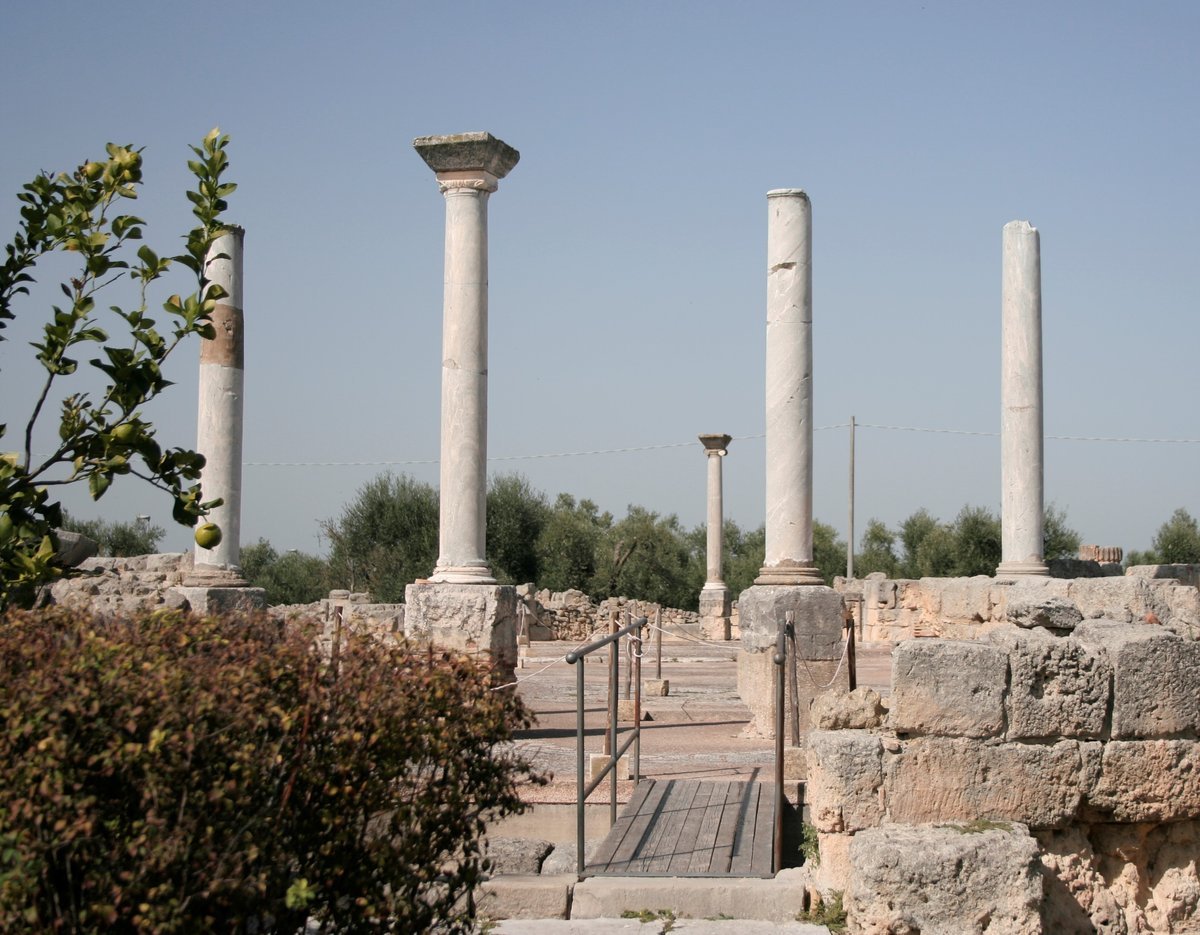 The Basilica of San Leucio, in Canosa di Puglia, is one of the most fascinating Early Christian monuments in the region. Built in the 6th century at the behest of Bishop Sabino, it stands on the remains of a Hellenistic temple dedicated to Minerva (late 4th-3rd century BC), whose materials and foundations were reused. Its layout is a rare double tetraconch: an outer square with four semicircular apses enclosing an inner square of pillars, creating a four-armed ambulatory. An earthquake led to structural modifications, with the addition of four central pillars to support a dome. The floor mosaics are the true treasure: in the western apse stands out the famous peacock mosaic, a symbol of rebirth, with two peacocks facing each other on either side of a cantharos. Geometric patterns, scrolls, and four-petal flowers decorate the other rooms, while in the north arm, the pebble floor of the earlier temple is preserved. Next to the basilica, the Antiquarium (open since 2008) displays finds from the excavation, including Corinthian capitals, feet of a telamon, and bricks with Sabino's monogram. Admission is free and open, with hours (Monday-Friday 9-12; Saturday and Sunday also 4-7 PM). A place blending archaeology and spirituality, perfect for lovers of ancient history and artistic details. Info: Via Santa Lucia, tel. +39 333 88 56 300.
Rocca del Garagnone, the Invisible Castle of Spinazzola
- Strada vicinale del Garagnone, Spinazzola (BT)
- Open in Google Maps
- View on Google Images
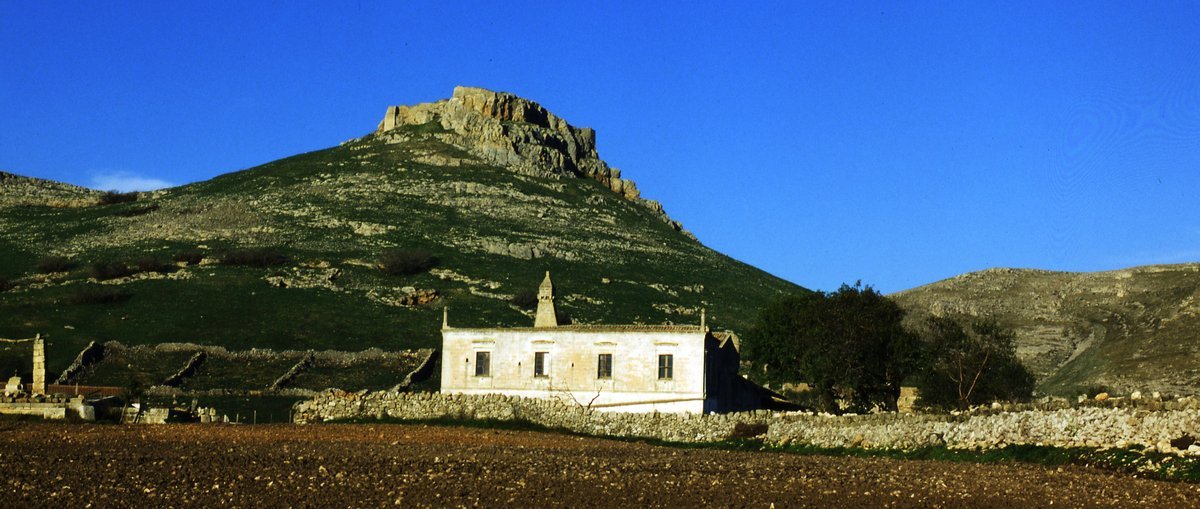 If you pass through Spinazzola, don't miss the Rocca del Garagnone, also known as the invisible castle. Perched on a rocky spur at 590 meters high, this Norman fortress blends so well with the landscape that it seems part of the rock itself. Built with the same stones as the hill, it was almost impossible for enemies to spot. A clever trick. Today only underground rooms and part of the defensive walls remain, but the charm is intact. Founded in 1048 by the Norman knight Robertus Guaragna, it later passed to the Altavilla family and was adapted by Frederick II of Swabia to control the Appian Way. It was part of a defensive network that included Castel del Monte and Monteserico. After the Battle of Tagliacozzo (1268), Charles I of Anjou punished it severely. Then the 1731 earthquake reduced it to ruins. The view over the Fossa Bradanica is spectacular: you can see other castles and, on clear days, the Gargano. The area is a geosite of national importance, with orchids and birds of prey. You can reach it via a secondary road off SP39, near Masseria Melodia. There is an equipped area for cyclists with information panels. In 2022, Prince Albert of Monaco visited the site, recalling that the Grimaldi were once its feudal lords. For history and nature lovers, it is an unmissable stop.
Temple of Jupiter Torus in Canosa di Puglia
- Via Caduti del Lavoro, Canosa di Puglia (BT)
- Open in Google Maps
- View on Google Images
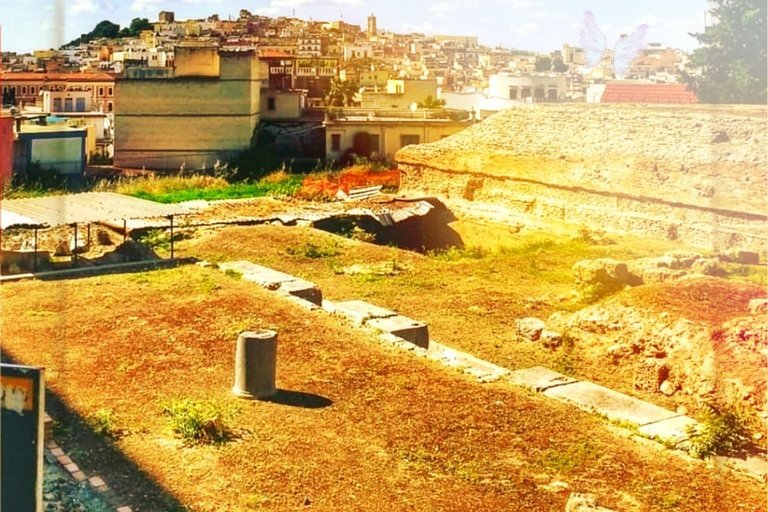 If you're passing through Canosa di Puglia, don't miss the Temple of Jupiter Torus, a gem of Roman architecture dating back to the 2nd century AD, when the city became a colony under Antoninus Pius. The remains, excavated from 1978 onward, reveal a peripteral temple: six columns on the front and ten on the long sides, on a podium of brick and tufa, preceded by a wide staircase. The name? It comes from a statue of Jupiter found here and the medieval toponym 'Toro' (from Latin torus, meaning mound), referring to its elevated position. The temple was part of a portico with an exedra, later transformed in late antiquity into a burial area and in the early Middle Ages into stables and livestock enclosures. A true historical palimpsest! It has been open to visitors since 2020 thanks to the Fondazione Archeologica Canosina. Guided tours, led by authorized staff, are part of the city's Roman itinerary. For info, check out www.canusium.it. The atmosphere is evocative: walking among the surviving columns, imagining the temple in its original splendor, with the portico housing honorary statues, is an experience I recommend to all history enthusiasts. A practical tip? Bring a camera—the sunset light offers incredible views.
Barletta Castle: Fortress, Museum, and Treasure Trove of History
- Viale Manuti Giorgio, Barletta (BT)
- Open in Google Maps
- View on Google Images
 Make yourself comfortable: the Barletta Castle is not your average castle. Here, history is tangible – every stone tells of different dominations. Normans, Swabians, Angevins, Aragonese, and Spaniards left their mark from the 11th to the 18th century. The result? An imposing fortress that now houses the Civic Museum and the Municipal Library.
Entering, the square courtyard welcomes you with two well-cisterns and a medieval atmosphere. Then you climb the pentagonal bastions commissioned by Charles V and gaze out over the Adriatic Sea: it's incredible to think that the moat, now dry and up to 35 meters wide, was once connected to the sea. The walls are extremely thick – up to 12 meters – and the four lance-shaped bastions are a masterpiece of military engineering.
Inside, the true gem is the Sarcofago degli Apostoli, a high relief from the 3rd-4th century, the oldest Christian artifact in Barletta. And then there's the famous bust of Frederick II of Swabia, carved in limestone in the 13th century. The civic museum also preserves Risorgimento relics and a Garibaldian flag.
The full visit takes about an hour and a half. The full ticket costs €6 (reduced €3, schools €1), but if you also want to see the Art Gallery and the Cantina della Sfida, there's a combined ticket for €8. Open Tuesday to Sunday, 9am-7pm. Closed on Mondays. Tip: wear comfortable shoes and bring your camera – the view from the ramparts is spectacular.
Santa Croce Caves: A Prehistoric Journey in Bisceglie
- Go to the page: Santa Croce Caves: A Dive into Prehistory in Bisceglie
- Strada Provinciale 34 da Bisceglie alla Ruvo - Corato, Bisceglie (BT)
- http://www.grottesantacroce.it/
- Open in Google Maps
- View on Google Images
- scout.bisceglie@tin.it
- +39 330 553 303
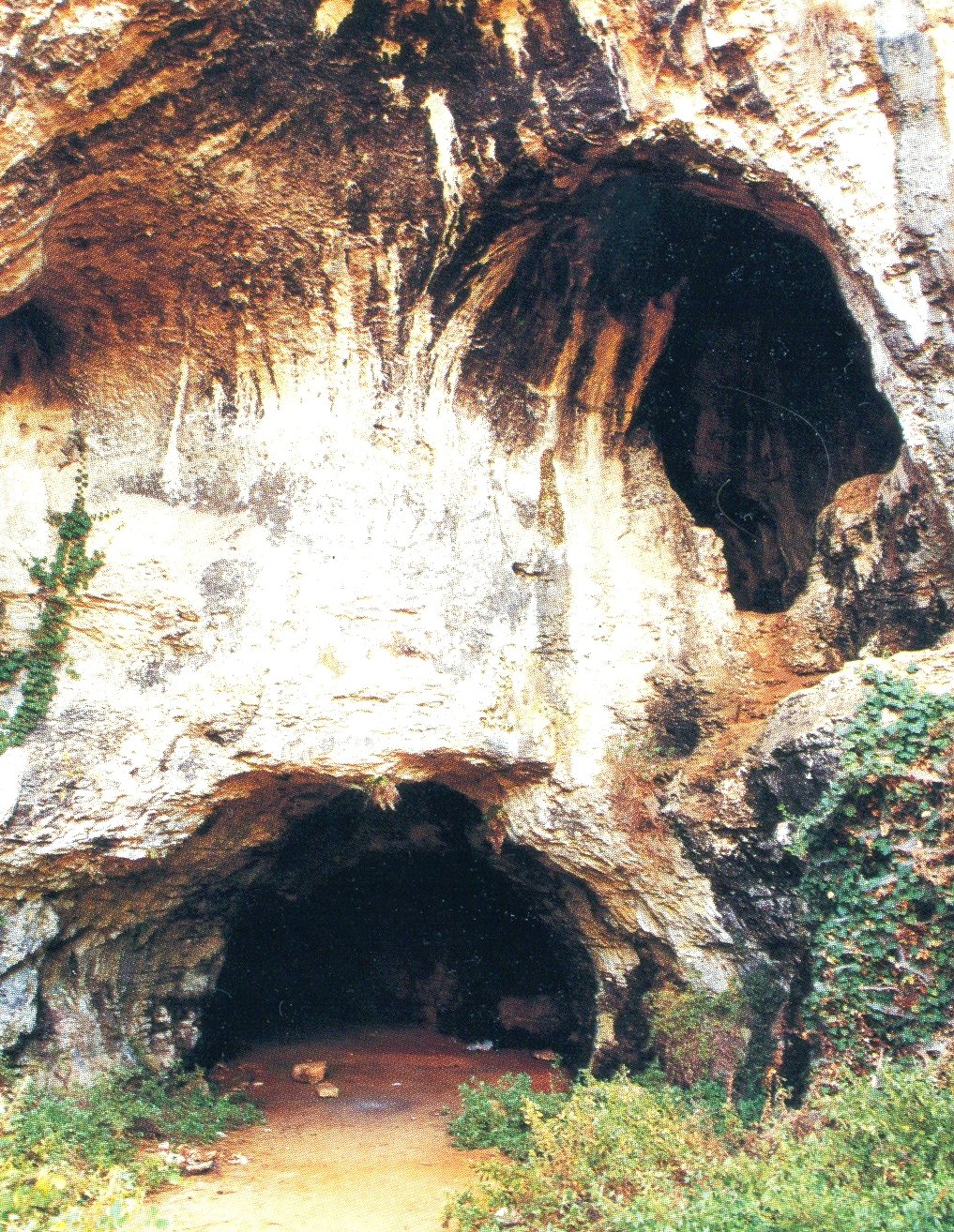 The Santa Croce Caves are one of those discoveries that make you feel like an explorer for a day. We are in Bisceglie, along the road leading to Corato, where in a karst ravine carved by an ancient underground river, an internationally renowned archaeological site hides. Discovered in 1934 by Francesco Saverio Majellaro, the caves have yielded artifacts ranging from the Middle Paleolithic to the Bronze Age. The highlights? A Neanderthal femur from about 50,000 years ago and a Neolithic plant fiber mat, preserved at the Maiellaro Civic Museum in the town center. After ten years of closure for safety work, the caves reopened in April 2022 thanks to the efforts of the Bisceglie Scout Group, which manages them with passion. Today they can be visited with expert guides: you walk among stalactites and remains of ancient hearths, breathing a truly unique atmosphere. The surrounding woods are a natural gem, with protected species. Book your visit because spaces are limited. And if you're in the area, don't miss the Maiellaro Museum to see the mat up close. A place that speaks of us, from very far away.