Bolzano Cathedral: Gothic, Bell Tower, and Cathedral Treasury

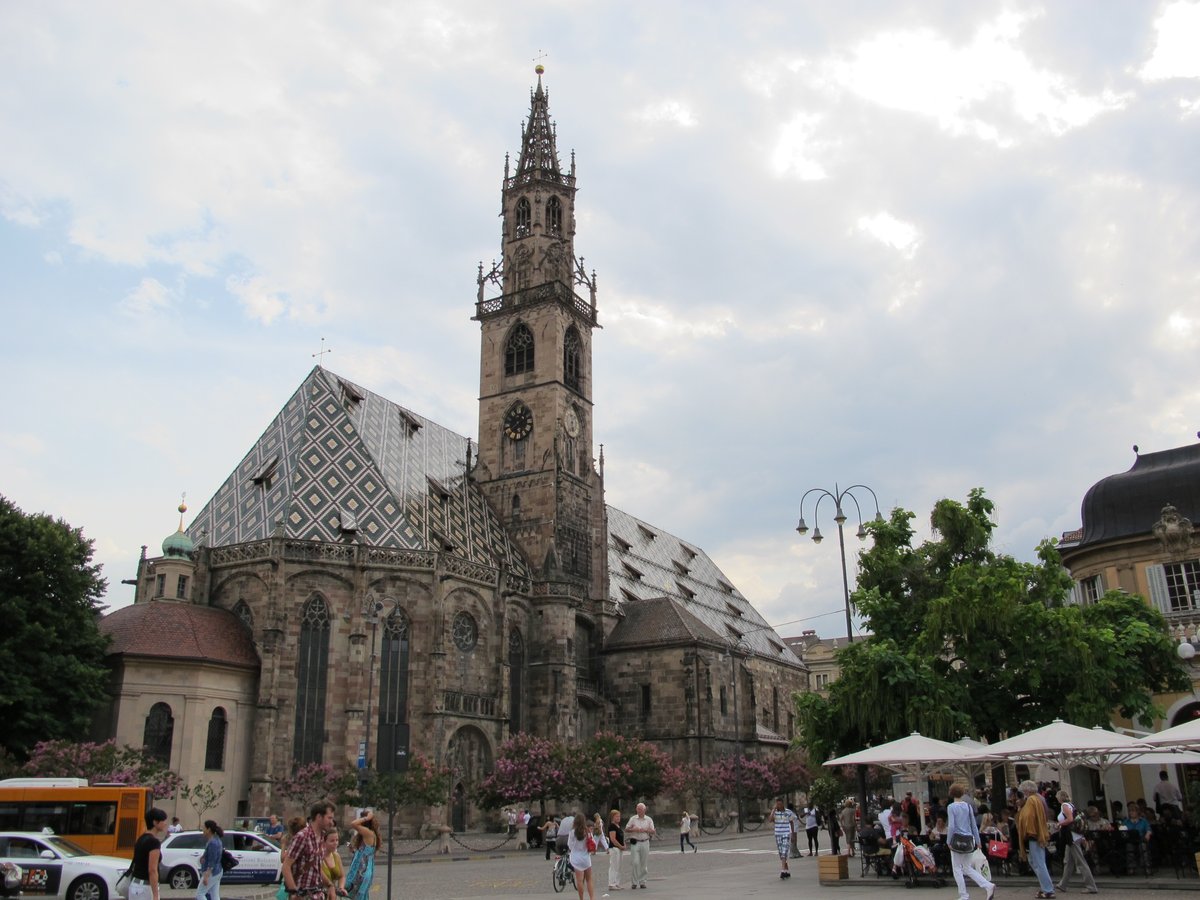
In the heart of Bolzano, behind Walther Square, stands the Cathedral of Santa Maria Assunta: a co-cathedral harboring **sixteen centuries of history**, from the 4th century to the post-war restorations. The Gothic hall interior, the **65-meter bell tower**, and the **Cathedral Treasury Museum** make it an unmissable stop for lovers of art and spirituality. Admission is free, with continuous hours almost every day.

– **Layered history**: beneath the floor, remains of early Christian, Carolingian, and Romanesque basilicas.
– **Unique architecture**: multicolored marble roof, Wine Door, and reconstructed Gothic pulpit.
– **Bell tower and carillon**: 65 meters of flaming spire, bell concerts, and melodies at 11 a.m. and 4 p.m.
– **Cathedral Museum**: in the ancient provostry, over 1000 Baroque sacred objects and the golden monstrance.


Events nearby

Copertina itinerario Bolzano Cathedral: Gothic, Bell Tower, and Cathedral Treasury
**Bolzano Cathedral** (Bozner Dom): co-cathedral on Walther Square with a 65-meter bell tower, Romanesque portal, Wine Door, and Cathedral Treasury. Free admission in the heart of South Tyrol.

Good to know


Introduction: The Gothic Heart of Bolzano

Bolzano Cathedral (Bozner Dom) is much more than a church: it is the historic heart of the city, overlooking Walther Square. As soon as you see it, you are struck by the 65-meter Gothic bell tower and the green and gold tiled roof that glistens in the sun. Inside, the atmosphere becomes intimate: the cross vaults, the sandstone pulpit, and the evocative Chapel of Grace tell centuries of faith. It is a place that unites the sacred and the everyday, with tourists and worshippers crossing paths. The co-cathedral of the Diocese of Bolzano-Bressanone is accessible to all, with free entry. It is not just a monument to photograph: it is the city’s living parish, a landmark worth stopping at, even for five minutes of silence.

Historical notes: beneath the church, three past lives

Under the Duomo lies a whole past: excavations have brought to light the foundations of three earlier churches. The oldest is a Paleochristian basilica from the 4th century (38×14 m), with a burial ground beside it and the tombstone of Secundus Regontius, the first Bolzanian whose name survives. After a Carolingian phase in the 8th century, between the 11th and 12th centuries a Romanesque church arose with two asymmetrical naves and a tower possibly defensive against the floods of the Isarco. The current Gothic building was completed in 1519, with its 65-meter bell tower. The bombings of 1944 caused collapses, but the restorations of 1948 brought the ancient traces back to light. Since 1964 it has been a co-cathedral.

  • 4th century: Paleochristian basilica
  • 8th century: Carolingian church
  • 11th-12th century: Romanesque church
  • 1519: Gothic completion and bell tower
  • 1944: bombings and damage
  • 1964: becomes co-cathedral

Architecture: details not to be missed

The facade mixes Romanesque and Gothic: the main portal is Romanesque, supported by two stylophore lions, while the Gothic rose window stands out above. The roof of green and golden tiles creates a unique mosaic, especially with the right light. Don’t miss the Wine Door, a Gothic portal with scenes of winegrowers, considered one of the most beautiful in Tyrol. On the tower, a fresco attributed to Giotto’s pupils shows a pilgrim lying under a bell. Inside, the Gothic hall church has three naves with square pillars, cross vaults, and a choir with ambulatory. The sandstone pulpit, work by Hans Lutz, was rebuilt after the war and depicts the Church Fathers with the symbols of the Evangelists. It is all made of red and yellow marble from the nearby valleys.

Bell Tower, Bells, and the Cathedral Treasure

The 65-metre bell tower is the true symbol. Besides the five bells tuned to the Salve Regina, there is a carillon with 25 bells that plays every day at 11 a.m. and 4 p.m. Pause to listen at those moments: it’s a little show. Next to the cathedral, since 2007, the Museo del Tesoro is housed in the old clergy house to the south. The collection boasts over 1000 objects of Baroque sacred art: gold ostensories, vestments, an ancient nativity scene. A didactic route tells the story of the church and its transformation into the seat of the bishop. Among the internal works, the Madonna della Palude, a 12th-century statue, and the fresco of the Crucifixion with Mary and Saint John stand out.

Why Visit It: Three Practical Reasons

Even if you’re not an art lover, you’ll find good reasons here. First, the Wine Door is a one-of-a-kind piece, with winemakers carved in stone—not something you see every day. Second, if you happen to be in the square at 11:00 AM or 4:00 PM, the carillon will make you stop in your tracks, I promise. Third, the Cathedral Treasure is a real museum, with a Baroque collection that would make larger cities jealous, and it’s just steps away. Plus, church admission is free and you’re in the very center of Bolzano: in short, you have no excuse not to step inside.

When to go

The early morning light makes the roof tiles glow, and the square is still quiet. But if you want a special moment, come back around 11:00 or 16:00, when the carillon plays: it’s the perfect soundtrack for a stroll. In autumn or winter, with the Christmas Market in Walther Square, the cathedral becomes the backdrop to Advent lights and scents. Even a summer evening, with the sunset behind the bell tower, has its charm. In short, the best time depends on the atmosphere you’re after: quiet and contemplative in the morning, festive and colorful during Advent.

Nearby

After the visit, take a stroll around Piazza Walther, perhaps sitting at a café and admiring the statue of the poet Walther von der Vogelweide. If you’re here during Advent, the Christmas Market is right on your doorstep. A short walk takes you to the Portici (Lauben), the shopping street with historic shops and boutiques, perfect for sheltering while you shop. For a taste of everyday Bolzano, the nearby Piazza delle Erbe with its fruit and vegetable market is a delicious stop. Everything is concentrated around here, so you can continue exploring the center on foot.

Itineraries nearby


💡 Did You Know…?

Before you leave, look for the **tombstone of Secundus Regontius**: he is the first recorded Bolzano inhabitant, who lived in the 3rd century. Then observe the **Madonna of the Marsh**, the 12th-century statue that gazes at the faithful from the apse. If time is short, take a peek at the Wine Door: the vintners’ reliefs tell of the age-old bond between the cathedral and the surrounding hills. And at 11 a.m. or 4 p.m., stop beneath the bell tower: the carillon fills the square with magical melodies.