
The Campi Flegrei is an active volcanic area west of Naples, where geology and Roman history merge in a unique landscape. The Solfatara offers a crater with fumaroles and boiling mud pools, while the Flavian Amphitheater and Temple of Serapis testify to the Roman past.
- Solfatara Crater: Sulfurous fumaroles and hot ground in an accessible lunar landscape
- Flavian Amphitheater of Pozzuoli: Third largest in Italy, with imposing Roman remains
- Temple of Serapis: Columns marked by bivalves showing the phenomenon of bradyseism
- Archaeological Park of the Baths of Baia: Roman ruins partially submerged by the sea
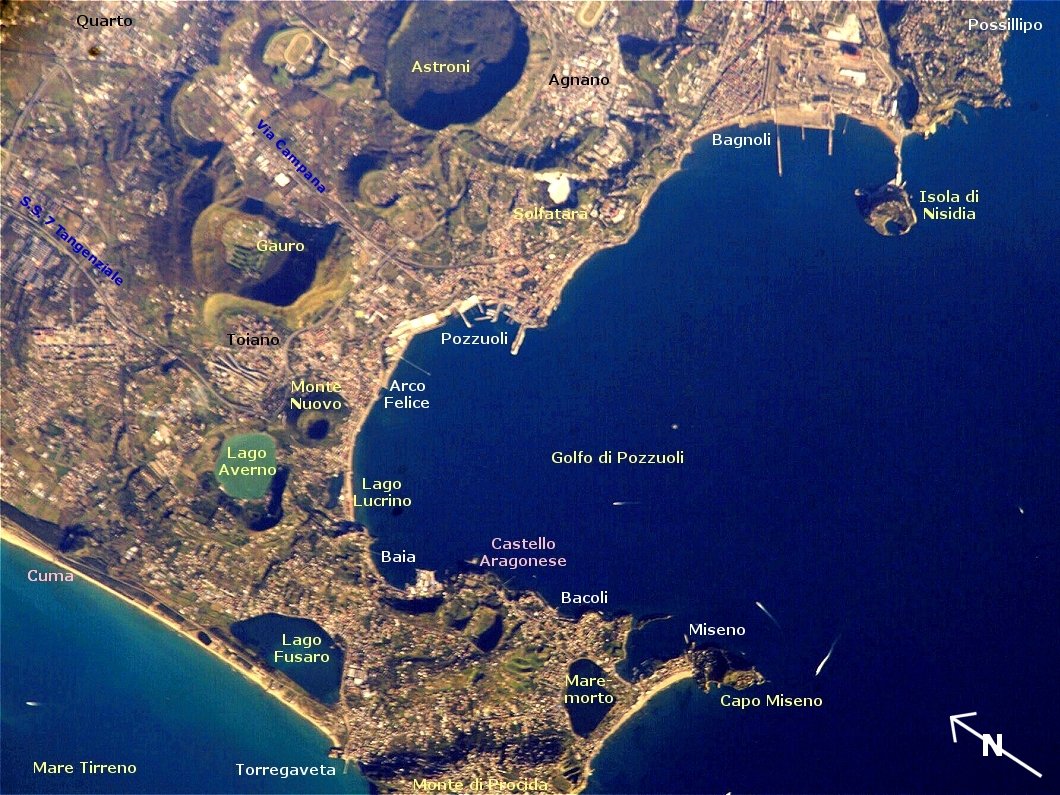
Active volcanic area in Pozzuoli with lunar landscape, sulfurous fumaroles, and archaeological sites like the Flavian Amphitheater and Temple of Serapis. Discover the Solfatara crater and Roman ruins among the volcanoes.
Good to know
Introduction
Historical Overview
- 8th century BC: Greek settlements and myths linked to Hades
- 1st century AD: Roman development with amphitheaters and baths
- 1538: Eruption of Monte Nuovo
- 2003: Establishment of the Phlegraean Fields Regional Park
- Today: UNESCO candidate site and volcanic research area
The Solfatara Crater
Archaeology Among the Volcanoes
Why Visit It
When to Go
In the Surroundings
💡 Did You Know…?
According to Greek and Roman mythology, the Campi Flegrei were the gateway to the Underworld. Lake Avernus was considered the entrance to Hades, and Virgil placed Aeneas’s descent here. Even today, walking among the fumaroles of Solfatara or along the lake’s shores, you can breathe an atmosphere charged with mystery. An ultra-realistic detail: at Rione Terra, the ancient heart of Pozzuoli, you can visit a layered archaeological site showcasing Greek, Roman, and medieval remains—a tangible testament to the long and complex history of this ever-shifting territory.