
Grumentum Archaeological Park is a remarkably intact Roman city founded in the 3rd century BC, perfectly preserved and rarely crowded. The well-marked path guides you along the ancient Roman roads, the cardo and decumanus, leading to the National Museum of Alta Val d’Agri, which houses artifacts discovered on-site.
- Perfectly preserved Roman amphitheater with a capacity of 6,000 spectators
- Baths with hypocaust heating systems still visible
- Forum with temple remains and the Domus dei Mosaici with decorated floors
- National Museum of Alta Val d’Agri featuring statues, coins, and artifacts from the site
Events nearby
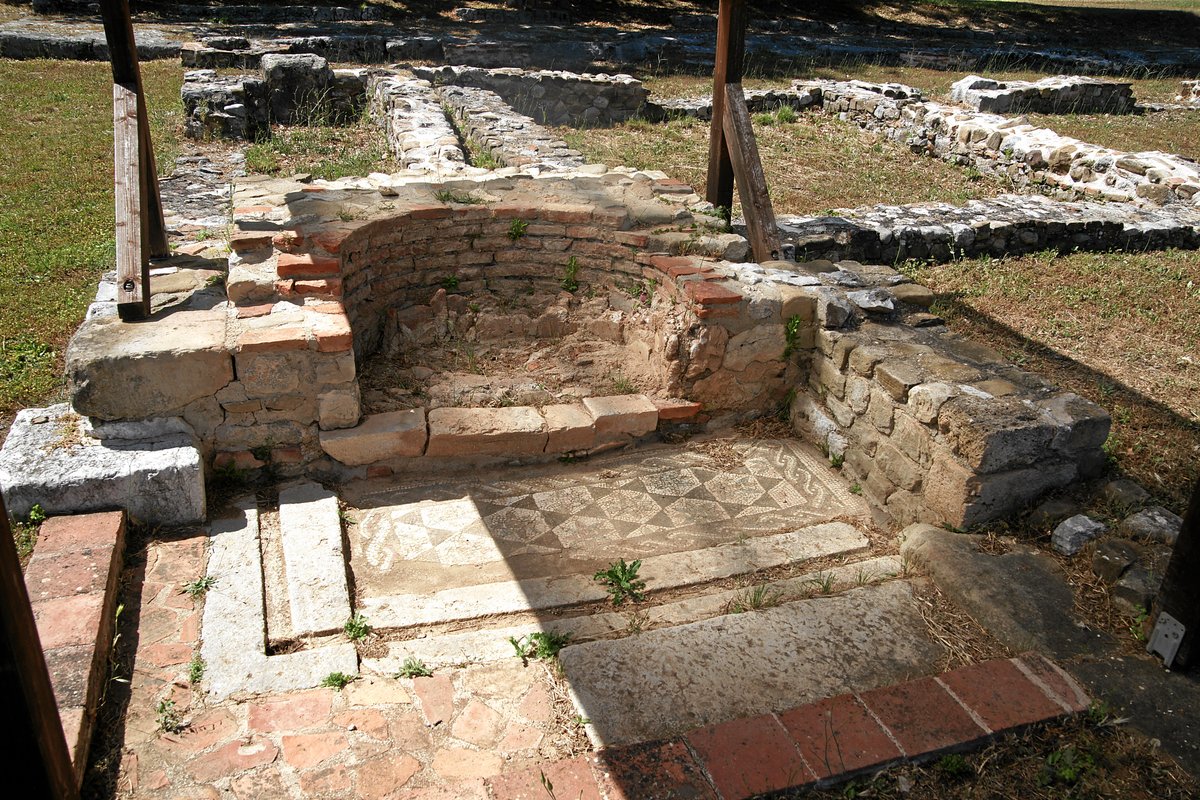
Grumentum Archaeological Park: A 3rd-century BC Roman city with a perfectly preserved amphitheater, baths with visible heating systems, and a forum. A less-visited site with well-marked paths along the cardo and decumanus.
Good to know
Introduction
As soon as you arrive at Grumentum, you immediately understand you’re in a special place. It’s not just an archaeological site, but a true plunge into the past that leaves you breathless. Walking among the remains of the ancient Roman city, with the Lucanian mountains as a backdrop, you can almost hear the footsteps of the legionaries and the buzz of the forum. The amphitheater, still well-preserved, makes you imagine gladiator fights, while the baths tell the story of daily life two thousand years ago. It’s an experience that takes you straight to the heart of ancient Rome, without needing a time machine. If you love history and places that know how to move you, Grumentum is a must-see stop in Basilicata.
Historical Overview
Grumentum was founded as a Roman colony in the 3rd century BC, during the wars against Pyrrhus, to control the communication routes between the Ionian coast and the Lucanian hinterland. The city reached its peak during the Imperial era, becoming an important administrative and commercial center. It was destroyed by the Saracens in the 10th century, but its remains were brought to light through systematic excavations that began in the twentieth century. Today, the archaeological park preserves structures such as the amphitheater, the baths, the forum, and sections of the aqueduct, offering an authentic glimpse into Roman life in Basilicata.
- 3rd century BC: Foundation as a Roman colony
- Imperial era: Period of maximum development
- 10th century: Destruction by the Saracens
- Twentieth century: Beginning of archaeological excavations
The Amphitheatre and the Baths
The Grumentum amphitheatre is one of the best-preserved in southern Italy, with an estimated capacity of around 6,000 spectators. Imagine the gladiators fighting here, with the stands full of screaming crowds. Nearby, the Roman baths still show the hypocaust heating systems and the pools for hot and cold baths. Walking through these spaces helps you understand just how advanced Roman engineering was. Don’t miss the floor mosaics, which tell stories of deities and daily life. It’s a journey back in time that makes you appreciate the greatness of a distant civilization still alive in these places.
The Forum and the Domus
The Forum of Grumentum was the beating heart of the city, where political, commercial, and social life unfolded. Here stood temples, basilicas, and shops, and today you can still see the foundations of the buildings and the paved streets. The excavated domus reveal luxury and comfort, with atriums, peristyles, and decorated rooms. One in particular, the Domus of the Mosaics, preserves floors with geometric and figurative patterns that testify to the wealth of its inhabitants. Walking among these ruins gives you the impression of being a Roman citizen, engaged in daily activities.
Why Visit
Visit Grumentum because it’s one of the few complete Roman sites in Southern Italy, with an amphitheater, baths, and forum all in one location. Moreover, its isolated setting, nestled among hills and nature, offers an intimate and evocative atmosphere, far from the crowds of more famous destinations. Finally, the National Museum of Alta Val d’Agri, just steps away, completes the experience with unique artifacts like statues, coins, and ceramics that tell the story of the region.
When to Go
The best time to visit Grumentum is in spring, when the surrounding fields are green and blooming, and the mild weather is perfect for strolling among the ruins. If you prefer autumn, the warm hues of the leaves create a magical atmosphere. Avoid the hottest hours of summer: early morning or late afternoon are better, when the slanting light enhances the shapes of the ancient buildings.
In the Surroundings
After Grumentum, explore the medieval village of Grumento Nova, perched on the hill with narrow alleys and a breathtaking view over the valley. For a nature experience, head to Lake Pertusillo, perfect for peaceful walks and picnics immersed in the Lucanian landscape.
Itineraries nearby


💡 Did You Know…?
Grumentum was the site of the battle between Hannibal and the Roman army in 207 BC, a crucial event of the Second Punic War. Coins discovered here testify that the local mint issued currency until the 1st century AD. The theater, built during the Augustan age, still features the orchestra and part of the cavea, where spectators would sit to watch performances that lasted entire days.