Introduction
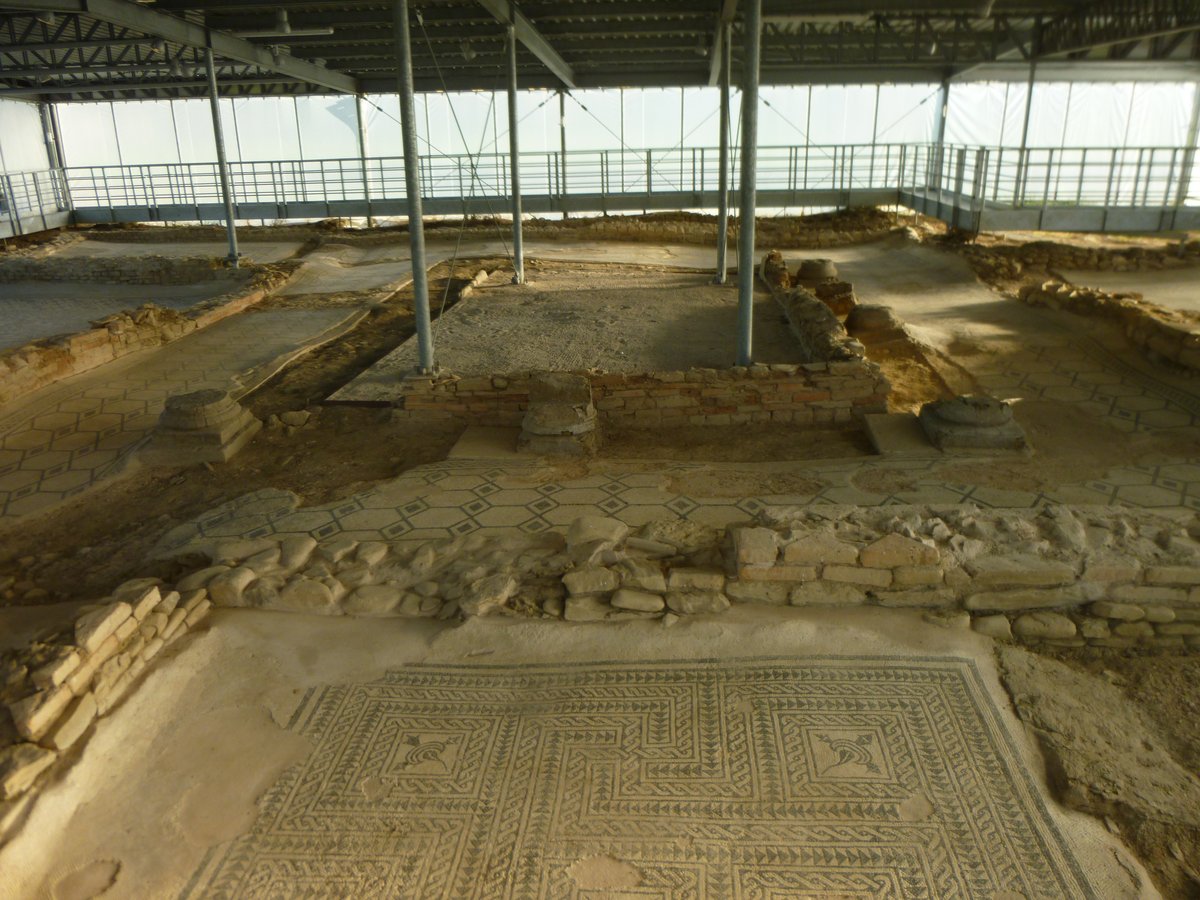
Imagine descending a few steps and suddenly finding yourself in the 1st century AD, with the floor gleaming with colorful tesserae beneath your feet. The Domus del Mito in Sant’Angelo in Vado is not just an archaeological excavation: it’s a plunge into the luxury of a Roman villa, perfectly preserved and almost intact. What strikes you immediately are the mosaics, incredibly vivid after two thousand years. They are not simple geometric decorations, but complex mythological scenes that tell stories. You feel a bit like an archaeologist making a discovery, even though everything has already been carefully unearthed. The atmosphere is intimate, quiet, and the contrast between the modernity of the suspended walkway and the antiquity beneath you is truly evocative. A place that surprises with how well-preserved it is and the immediacy with which it lets you touch history.
Historical Overview
This villa was not the residence of a farmer, but of a wealthy family, possibly connected to the nearby Roman city of Tifernum Mataurense (present-day Sant’Angelo in Vado). Excavations, which began in the 1990s, have uncovered an imperial-era residential complex, dating between the 1st century BC and the 1st century AD. The villa underwent expansion and remained in use for centuries, until its probable abandonment. The name ‘Domus del Mito’ derives precisely from its figurative mosaics, which depict Greco-Roman mythological scenes. It is an exceptional find for the Marche hinterland, demonstrating how rich and culturally vibrant this area was even in Roman times.
- 1st century BC – 1st century AD: Period of construction and peak splendor of the villa.
- 1990: Start of archaeological excavations that brought the domus to light.
- 2000s: Construction of the protective covering and museum setup, making the site visitable.
The Mosaics That Speak
Here, the floors tell stories. Don’t expect simple checkerboard patterns. The mosaics of the Domus are figurative and polychrome, with tesserae of marble, limestone, and glass paste creating surprising shades. One of the most famous likely depicts a mythological scene, perhaps related to the cycle of Orpheus or other deities. The colors—red, blue, ochre yellow—are still vibrant in some areas. Walking on the walkway, you can observe them from above, capturing every detail: the expressions of the characters, the movements of the figures, the decorative borders. It’s an incredible work of precision. I always wonder who the artisans were who created them and what they thought while laying those tiny tesserae, one by one, to create something destined to last millennia.
Architecture Revealed
It’s not just the floors that speak. The villa’s structure is clearly legible: you can distinguish the atrium, the peristyle (the colonnaded courtyard), and various residential rooms (cubicula). You’ll also see the remains of the hypocaust heating system, which circulated hot air beneath the floors. It’s fascinating to observe how spaces were organized for comfort and social life. The villa likely overlooked an agricultural landscape, taking advantage of its position along the Metauro Valley. Today, the site is covered by a modern transparent structure that protects it from the elements, allowing visits in any weather. This intervention, though not ‘ancient,’ is essential for preservation and lets you focus on the essence of the place without distractions.
Why Visit It
For three concrete reasons. First: it is one of the best-preserved and well-presented Roman archaeological sites in the Marche region, not a ruin scattered in a field. Second: the experience is immersive and immediate; within minutes, you are transported back in time, thanks to the quality of the artifacts. Third: it is a perfect place for a cultural break during an itinerary among villages or a day trip, without the crowds of more famous sites. It offers an authentic and intimate glimpse into life in a Roman countryside villa, away from the clamor of ancient big cities.
When to Visit
The site is covered, so technically it can be visited at any time. However, for a more evocative atmosphere, I recommend the late afternoon hours, when the slanting light filters through the covering and illuminates the mosaics with a warm golden hue, enhancing the colors and reliefs. If possible, avoid the midday hours on a very humid summer day, as the air under the covering can become stagnant. In autumn or on a clear spring day, the light is perfect and the visit is even more enjoyable.
In the Surroundings
Sant’Angelo in Vado is a delightful medieval village to explore, with its historic center and truffle tradition. To continue the journey through time, just a few minutes’ drive away is Urbania, with the Ducal Palace and the curious Mummy Cemetery. Alternatively, for a contrast with Roman antiquity, you can head to Urbino, the Renaissance city of Duke Federico, with its Ducal Palace that is an absolute masterpiece. Two different eras, two faces of the same province rich in history.