
🧭 What to Expect
- Ideal for a cultural and food-and-wine weekend in authentic Emilia.
- UNESCO World Heritage historic center with Cathedral, Ghirlandina, and Piazza Grande.
- City of motors with the Enzo Ferrari Museum and the founder's birthplace.
- Food and wine tradition at the Albinelli Covered Market with DOP balsamic vinegar and Parmigiano Reggiano.
- Cultural life between Ducal Palace, historic theaters, and museums like the Figurine Museum.
- Walking route with interactive map connecting 15 main locations.
Events nearby
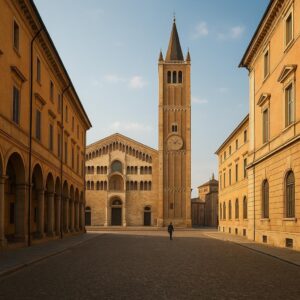
The City of Modena is a jewel of Emilia-Romagna, packing a wealth of history, art, and fine dining into just a few square kilometers. The UNESCO-listed historic center revolves around Piazza Grande, dominated by the imposing Ghirlandina, the city's iconic bell tower offering breathtaking views over the plains. Just steps away stands the Romanesque Cathedral, a masterpiece of medieval architecture. Modena is also the city of motors, with the Enzo Ferrari Museum telling the legend of the Prancing Horse through historic cars and multimedia installations. Cultural landmarks abound, including the Ducal Palace, the former residence of the Este family, and the charming Albinelli Covered Market, a temple of local flavors where you can sample traditional balsamic vinegar and Parmigiano Reggiano. The city is easily explored on foot, revealing hidden corners like the Botanical Garden and elegant Renaissance squares.
Overview
- The Ghirlandina
- Piazza Grande
- Ducal Palace
- Enzo Ferrari Museum
- Albinelli Covered Market
- Pavarotti-Freni Municipal Theatre
- Modena Botanical Garden
- Museum of the Figurine
- Estense Lapidary Museum
- Storchi Theatre
- Monumental Temple of Saint Joseph to the War Fallen
- Novi Ark Archaeological Park
- Piazza Roma
- Nymph Fountain
- Roman Lapidary of the Civic Museums
Itineraries nearby

The Ghirlandina
- Go to the page: Ghirlandina of Modena: 89-Meter UNESCO Tower with Apennine Views
- Via Lanfranco, Modena (MO)
- Open in Google Maps
- View on Google Images
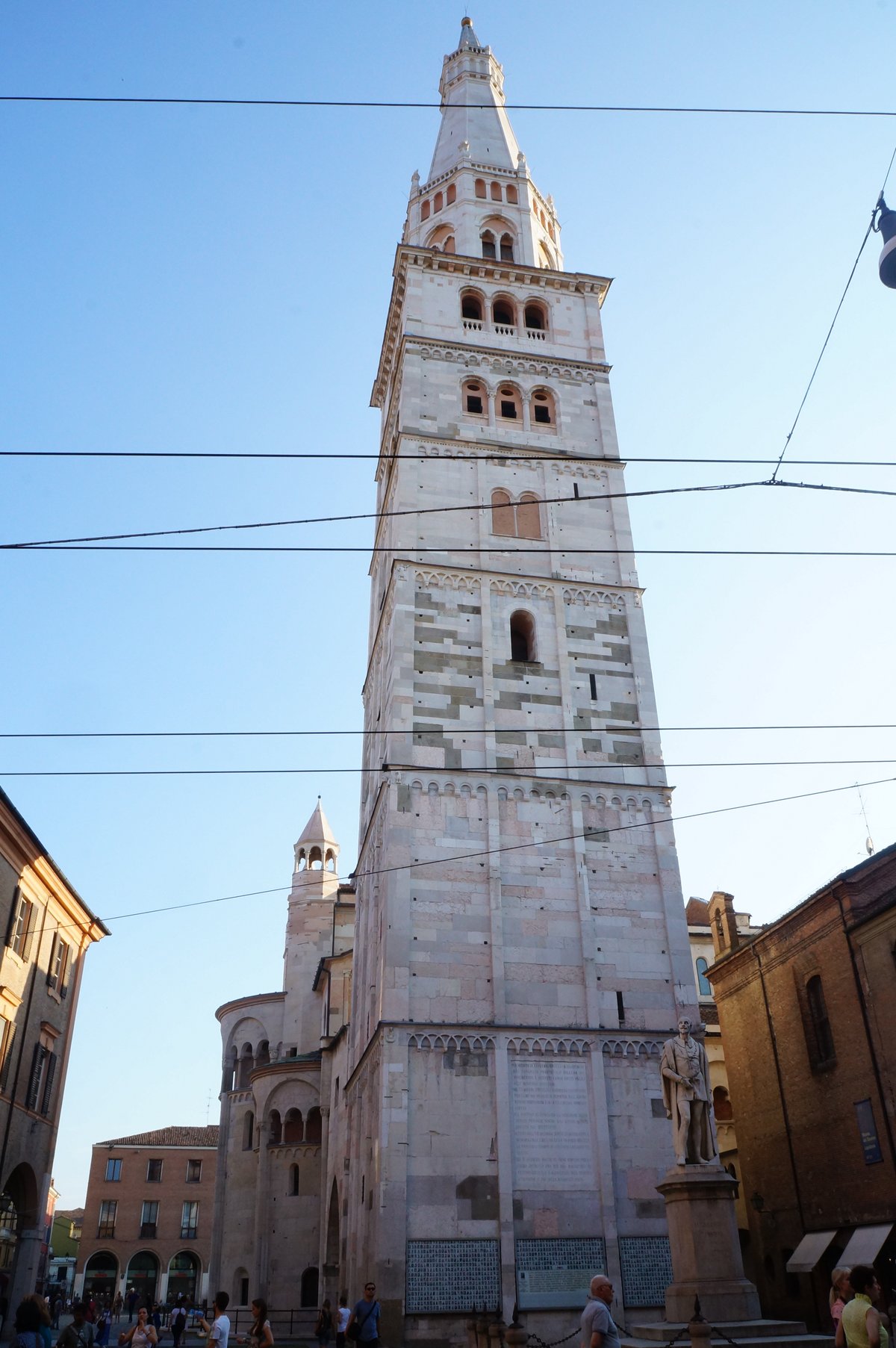 When visiting Modena, the Ghirlandina is that landmark you absolutely cannot miss. Standing 89 meters tall, this bell tower is the undisputed symbol of the city and rises imposingly next to the Cathedral, forming a complex declared a UNESCO World Heritage Site. Its curious name comes from the two 'ghirlande' – the marble railings that adorn the top, added in the 15th century. Construction began in 1099 and spanned centuries, blending the Romanesque style of the base with the Gothic style of the upper section. Climbing the 200 steps of the spiral staircase is a rewarding experience: from the top, you'll enjoy a breathtaking panoramic view of Modena, and on clear days, you can even spot the Apennines. Inside, don't miss the Secchia Rapita, a replica of the wooden bucket that, according to tradition, was stolen from the Bolognese during a medieval battle – a detail that speaks to the historic rivalry between the two cities. The tower also houses five bells, each with a distinct sound for different civic functions. Visits are managed by the Civic Museums, with tickets available online or on-site, and access is permitted in small groups to preserve the structure. I recommend booking in advance, especially on weekends, to avoid queues. A practical takeaway: wear comfortable shoes for the climb and bring a camera to capture the unique panorama.
Piazza Grande
- Go to the page: Piazza Grande Modena: Romanesque Cathedral and UNESCO Ghirlandina in the Historic Heart
- Piazza Grande, Modena (MO)
- Open in Google Maps
- View on Google Images
 Piazza Grande is the nerve center of Modena, a place that encapsulates centuries of history and culture. A UNESCO World Heritage site since 1997 along with the Ghirlandina Tower and the Cathedral, this square is much more than just an open space: it is the symbol of the city. Here you'll find some of the most important buildings, such as the Modena Cathedral, a masterpiece of Italian Romanesque architecture begun in 1099 by architect Lanfranco and decorated by Wiligelmo, and the City Hall, which combines different styles from the Middle Ages to the Renaissance. At the center of the square, the Preda Ringadora, a large marble block once used for public speeches, tells of ancient civic traditions. The square also serves as the stage for events like the Historic Market of Modena, which enlivens the area every Friday and Saturday with stalls of local products, and the Feast of Saint Geminianus, the city's patron saint, in January. Walking on these cobblestones means breathing in the essence of Modena: a blend of art, history, and daily life. For a complete experience, climb the Ghirlandina Tower to admire the square from above and don't miss the sculptural details of the Cathedral, such as Wiligelmo's reliefs depicting biblical stories.
Ducal Palace
- Go to the page: Ducal Palace of Modena: Estense Gallery and Civic Museum in the Baroque Palace
- Corso Camillo Benso di Cavour, Modena (MO)
- Open in Google Maps
- View on Google Images
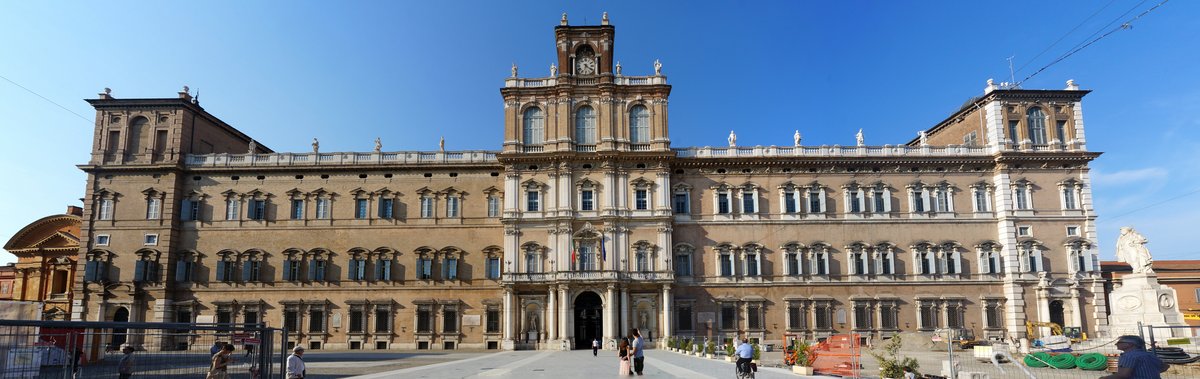 The Ducal Palace of Modena is not just a monument, but the beating heart of Este history. Built starting in 1634 based on Bartolomeo Avanzini's design, this majestic royal palace served as the official residence of the Dukes of Este until the unification of Italy. Today it houses the prestigious Military Academy, but most of its spaces are accessible through guided tours that reveal unexpected treasures. The Staircase of Honor, with its polychrome marbles, welcomes you into an atmosphere of grandeur, while the Representation Rooms preserve frescoes by artists like Jean Boulanger and Marco Antonio Franceschini. Don't miss the Gallery of Busts, where marble portraits of the dukes narrate centuries of power. The apartment of Duke Francesco III, with period furniture and tapestries, transports you directly to the eighteenth century. To visit, book online through the Military Academy's website: tours depart from Piazza Roma and last approximately one hour. Takeaway: an unmissable experience to understand Modena beyond balsamic vinegar.
Enzo Ferrari Museum
- Go to the page: Enzo Ferrari Museum Modena: Iconic Cars and Historical Memorabilia at the Birthplace
- Via Paolo Ferrari 85, Modena (MO)
- https://www.ferrari.com/museums/enzo-ferrari-modena
- Open in Google Maps
- View on Google Images
 If you think Modena is just about food and engines, the Enzo Ferrari Museum will change your mind: here the legend of the Prancing Horse becomes an immersive experience blending history, design, and technology. The complex spans two iconic buildings: Enzo Ferrari's birthplace, a typical Modenese red-brick house where he was born in 1898, and the futuristic exhibition gallery designed by Jan Kaplický, with its distinctive yellow roof reminiscent of a car bonnet. Inside, you won't just find cars to admire, but a true journey through the life of the Commendatore, from his beginnings as an Alfa Romeo driver to the founding of Scuderia Ferrari in 1929. The exhibited cars rotate periodically, but among the permanent pieces stand out the Ferrari 125 S, the first car to bear the Ferrari name, and models linked to historic moments like the 250 GTO. The multimedia setup with projections and period audio transports you to the most famous races, while the section dedicated to engines reveals the technical secrets of the power units that made history. A detail not to be missed? The reconstructed workshop with Enzo's original tools, making the artisanal atmosphere of the origins tangible. Perfect for enthusiasts and the curious, the museum also offers interactive workshops on the principles of aerodynamics. Conclude your visit with a trip to the bookshop: you'll find signed models and rare publications, ideal for a souvenir that goes beyond the classic photo.
Albinelli Covered Market
- Via Luigi Albinelli 13, Modena (MO)
- https://www.mercatoalbinelli.it/
- Open in Google Maps
- View on Google Images
 The Albinelli Covered Market is not just a place to do your shopping, but an experience that immerses you in the beating heart of Modenese tradition. Opened in 1931, this historic market is located in the city centre and is a true temple of taste, where every stall tells a story. The Art Nouveau structure with its colourful stained-glass windows and wrought-iron decorations creates a unique atmosphere, making you feel as if you've stepped back in time. Here you'll find top-quality products, from the famous Traditional Balsamic Vinegar of Modena PDO to aged Parmigiano Reggiano, not to mention cured meats like Modena ham and cotechino. The local fruit and vegetable stalls are a riot of colours and scents, with seasonal specialities that change month by month. Don't miss the chance to taste tigelle, crescentine and other typical baked goods, often available directly from the producers. The market is also a meeting point for the people of Modena, who gather here for a coffee at the internal bar or to chat with the vendors, always happy to share the origin of their products. It's the perfect place for anyone wanting to take home a piece of authentic Modena, whether it's a gourmet gift or ingredients for a special dinner. Remember: quality is guaranteed here, and many products are PDO and PGI, a sign of a tradition that stands the test of time.
Pavarotti-Freni Municipal Theatre
- Via Del Teatro 8, Modena (MO)
- https://www.teatrocomunalemodena.it/
- Open in Google Maps
- View on Google Images
- teatrocomunalemodena@pec.it
- +39 059 2033020
 Entering the Pavarotti-Freni Municipal Theatre means immersing yourself in a unique atmosphere, where Modena's lyrical tradition breathes through the walls. Inaugurated in 1841 as the Theatre of the Illustrious Community, today it bears the name of two musical giants born right here: Luciano Pavarotti and Mirella Freni. The neoclassical facade, sober and elegant, conceals an interior that impresses with its refined acoustics and horseshoe-shaped auditorium, typical of Italian-style theatres. It's not just a performance venue, but a symbol of the city, inextricably linked to the voices that made opera history. The programming ranges from great classics, such as works by Verdi and Puccini, to contemporary productions, always maintaining a connection with the local territory. During your visit, observe the foyer, enriched with portraits and memorabilia of the two artists, and the historic curtain, which evokes scenes of Modenese life. For opera lovers, attending a performance here is an unrepeatable experience: the vibrations of the notes seem to echo the glorious past. Even without a performance, it's worth admiring the building from the outside, located on Corso Canalgrande, in the heart of the historic centre, just steps from the Ghirlandina. I recommend checking the event calendar on the official website so you don't miss the opera seasons or symphony concerts. Takeaway: visit this jewel to feel part of Italian musical history, even just for a quick glance.
Modena Botanical Garden
- Viale Caduti in Guerra, Modena (MO)
- http://www.ortobot.unimo.it/
- Open in Google Maps
- View on Google Images
 The Modena Botanical Garden is a peaceful retreat just steps from the historic center, founded in 1758 by decree of Francesco III d'Este. It's not just a garden, but a true living museum managed by the University of Modena and Reggio Emilia. Strolling along the pathways, you'll discover over 1,200 plant species organized in thematic sections: the arboretum with centuries-old trees like the majestic oriental plane, the 19th-century greenhouses housing tropical and succulent plants, and the medicinal plant area with herbs used in Emilian tradition. The collections of antique roses and educational flowerbeds dedicated to biodiversity are particularly striking, perfect for families with children. The garden also serves as a research center: here, rare plants like Paeonia officinalis are studied, and workshops on botany and sustainability are organized. Admission is free, but check the official website for opening hours as it sometimes closes for university events. A tip: visit in spring when the blooms explode with colors and scents.
Museum of the Figurine
- Corso Accademia Militare, Modena (MO)
- https://www.comune.modena.it/museofigurina
- Open in Google Maps
- View on Google Images
 If you think museums are only for paintings and sculptures, the Museum of the Figurine in Modena will make you think again. Housed within the Palazzo Santa Margherita, this unique space in Italy is entirely dedicated to figurines, those small prints that have captured the imagination of young and old for centuries. The permanent collection stems from the passion of Giuseppe Panini, founder of the namesake Modenese company, who donated over 500,000 pieces to the city, including figurines, playing cards, and advertising materials from the 18th century to today. It's not just about footballers or cartoon characters: here you'll discover how these miniatures have been used to tell stories about history, science, and even fashion. An example? The 19th-century series illustrating the costumes of different Italian regions, true visual encyclopedias ahead of their time. The museum also organizes temporary exhibitions exploring specific themes, such as the evolution of design or the role of figurines in popular culture. Admission is free, but always check the hours on the official website as they may vary. A tip: don't miss the section dedicated to vintage vending machines, which will make you feel like a kid again, if only for a moment.
Estense Lapidary Museum
- Largo Porta Sant’Agostino, Modena (MO)
- https://gallerie-estensi.beniculturali.it/museo-lapidario-estense/
- Open in Google Maps
- View on Google Images
 The Estense Lapidary Museum is one of those hidden gems that absolutely deserves a visit during your stay in Modena. Located within the Palazzo dei Musei at Largo Porta Sant'Agostino, this museum houses one of Italy's most important epigraphic collections. The unique aspect? Here you won't find just simple stones, but genuine pages of history carved in marble that narrate the city's life from the Roman era to the Renaissance. The collection was established in 1828 by Francesco IV d'Este with the aim of preserving lapidary artifacts at risk of being lost. Today you can admire over 200 artifacts including funerary inscriptions, celebratory monuments, and architectural fragments that testify to Modena's evolution through the centuries. Among the most significant pieces stand out the Roman epigraphs documenting ancient Mutina, medieval slabs with Christian symbols, and Renaissance funerary monuments. The modern layout allows you to get close to the works and read the inscriptions directly, some of which reveal stories of figures who shaped local history. The museum is perfect for those who want to deepen their knowledge of the city beyond the more beaten tourist paths. Admission is included in the Civic Museums ticket, so you can also visit the other collections in the same palace. I recommend dedicating at least an hour to fully appreciate every detail of this unique collection.
Storchi Theatre
- Largo Giuseppe Garibaldi 15, Modena (MO)
- https://www.emiliaromagnateatro.com/teatri/teatro-storchi/
- Open in Google Maps
- View on Google Images
- info@emiliaromagnateatro.com
- +39 059 211426
 The Storchi Theatre is one of Modena's most beloved cultural venues, located in Largo Garibaldi, right in the historic centre. Inaugurated in 1881, this theatre is an example of neoclassical architecture, with an elegant façade that immediately catches the eye. Inside, the main hall impresses with its perfect acoustics and the frescoed ceiling depicting musical allegories, the work of Fermo Forti. With a capacity of around 900 seats, the theatre hosts a varied programme: from classical and contemporary drama to dance, as well as concerts and family shows. It is the permanent home of the Teatro Stabile dell'Emilia-Romagna, which ensures consistent artistic quality. During your visit, don't miss the foyer, where temporary exhibitions related to the world of theatre are often set up. An interesting detail: the stage has been trodden by actors of the calibre of Vittorio Gassman and Eduardo De Filippo, testifying to a tradition of excellence. For those who want a complete experience, I recommend checking the performance schedule on the official website and booking in advance, especially for the most popular evenings. The theatre is easily reachable on foot from the Ghirlandina and Piazza Grande, fitting perfectly into a Modenese cultural itinerary. Operational takeaway: visit the Storchi Theatre for a dive into living culture, choosing a show from the programme to make your day in Modena unforgettable.
Monumental Temple of Saint Joseph to the War Fallen
- Piazza Natale Bruni, Modena (MO)
- Open in Google Maps
- View on Google Images
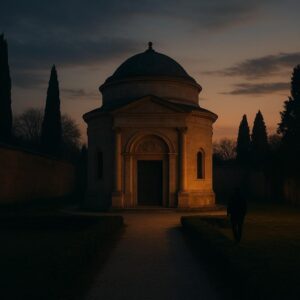
 The Monumental Temple of Saint Joseph to the War Fallen is one of those places that strikes you with its dual soul: on one hand, it's a commemorative monument dedicated to the Modenese soldiers who fell during World War I, and on the other, an example of modern sacred architecture worth discovering. Located on Via Emilia Centro, just steps from the Cathedral and the Ghirlandina, this temple was designed by architect Dante Bighi and inaugurated in 1931. The facade of red bricks, typical of Modenese tradition, conceals a surprising interior: the layout is hexagonal, with six side chapels creating an effect of symmetry and seclusion. The stained-glass windows, crafted by Giovanni Buffa, filter the light, creating color plays that change with the time of day, while the main altar is topped by a large wrought-iron cross. Here, you won't find the crowds of the more famous museums, but an atmosphere of silence and reflection that invites you to pause. The temple is still used for religious services today, but it's always accessible to visitors during opening hours. A detail few notice: in the side chapels, there are plaques with the names of the fallen, a personal tribute that makes history more tangible. If you're passing through Modena, dedicating half an hour to this place will give you a moment of peace and a different perspective on the city.
Novi Ark Archaeological Park
- Modena (MO)
- Open in Google Maps
- View on Google Images
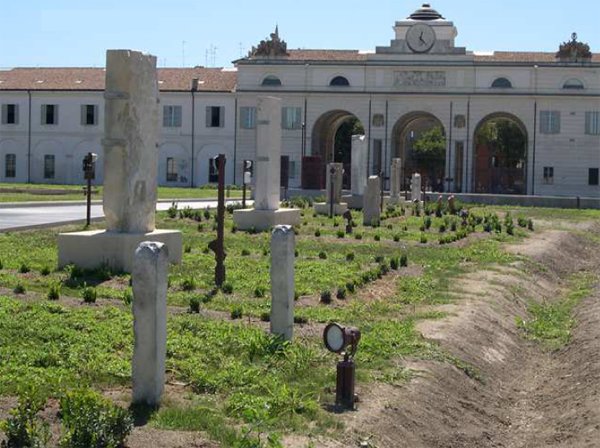 The Novi Ark Archaeological Park is a true journey through time in the heart of Modena. This site, located in the area of the former civil hospital, preserves the oldest evidence of the Roman city of Mutina. Walking among the perfectly preserved archaeological remains, you can admire the foundations of patrician domus with their refined mosaics and the thermal baths that tell the story of daily life in the 1st century BC. The area is particularly significant because it shows the urban evolution of the city, from the residential structures of the Republican era to later expansions. The park offers a unique view of Roman spatial organization, with the cardo and decumanus still recognizable in the road layout. The visit is completed with informative panels that explain each structure in detail, making the experience accessible to everyone. For those who want to delve deeper, the site is ideally connected to the Roman Lapidary of the Civic Museums, where many artifacts found in this area are preserved. Admission is free and the route is fully accessible, ideal for a cultural break during your city visit.
Piazza Roma
- Modena (MO)
- Open in Google Maps
- View on Google Images
 Piazza Roma is one of Modena's most elegant and frequented public spaces, a true urban living room that combines history, architecture, and daily life. Situated directly opposite the majestic Ducal Palace, now home to the Military Academy, the square offers a privileged perspective on one of the city's symbols. Its rectangular shape is bordered by 18th-century arcades housing historic cafés and characteristic venues, perfect for a break between monuments. At the center of the square stretches a large public garden, a meticulously maintained green oasis with flowerbeds, shaded benches, and paved pathways inviting leisurely strolls. Here, you breathe in the authentic atmosphere of Modena: Military Academy students walking in uniform, families with children playing, elderly people reading newspapers under the shade of ancient trees. The square is also an ideal starting point for exploring the historic center: just steps away are the Ghirlandina and Piazza Grande, UNESCO World Heritage sites. In the evening, when the historic lampposts light up, Piazza Roma transforms into a romantic and evocative place, with venues coming alive and the lighting enhancing the architecture of the surrounding palaces. A practical tip: stop at the bar under the arcades for a coffee while watching the square's comings and goings—it's an experience that will make you feel immediately part of the city.
Nymph Fountain
- Via San Giacomo 11f, Modena (MO)
- Open in Google Maps
- View on Google Images
 The Nymph Fountain is one of Modena's hidden treasures, located in Piazza Roma right opposite the majestic Ducal Palace. Created in 1838 by Modenese sculptor Luigi Mainoni, this elegant white marble fountain depicts a classical nymph holding an amphora from which water flows. The sculpture rests on a circular base adorned with floral motifs and marine animals, creating a harmonious ensemble that reflects the neoclassical style of the period. The strategic location of the fountain is no coincidence: it lies along the axis connecting the Ducal Palace to the historic center, once traversed by the Este dukes during their official outings. Today, it's a beloved meeting spot for Modenese locals, especially on summer evenings when the warm sunset light illuminates the pale stone. The flowing water still comes from the city's ancient aqueduct, the same one that supplied Modena's historic fountains. Upon close inspection of the sculpture's details, you'll notice the original engravings that tell the story of the nymph, a mythological figure associated with water and nature. The fountain has recently been restored, preserving its 19th-century charm while blending seamlessly with the surrounding architecture. For visitors to Modena, stopping here offers a moment of refreshing pause, listening to the murmur of water while admiring one of the city's most elegant corners.
Roman Lapidary of the Civic Museums
- Viale Vittorio Veneto, Modena (MO)
- Open in Google Maps
- View on Google Images
 If you think Modena is only about engines and balsamic vinegar, prepare for a surprise: the Roman Lapidary of the Civic Museums takes you back two thousand years, when the city was called Mutina and served as a strategic crossroads along the Via Emilia. Located inside the Palazzo dei Musei in Largo Porta Sant’Agostino, this space houses over 200 stone artifacts that narrate daily life, religious beliefs, and social organization during Roman times. Among the most significant works are the funerary inscriptions bearing the names and professions of ancient inhabitants, such as the one dedicated to Lucius Vettenus, a freedman who became a wealthy merchant, or the stele of Publius Campatius, a legionary soldier. Don’t miss the fragments of architectural decorations from the amphitheater and patrician domus, along with bas-reliefs depicting deities like Jupiter and Minerva. The collection, organized thematically and chronologically, allows you to understand how Mutina was a vibrant center, with baths, theaters, and a forum now buried beneath the modern city. The setup is minimalist yet effective: educational panels in Italian and English explain the context of each artifact, making the visit accessible even to those who aren’t archaeology experts. A curious detail: some stones still show traces of pigments, evidence that they were originally colored. The takeaway? This lapidary is a crucial piece for grasping Modena’s Roman roots, often overlooked by mainstream tourist circuits. Perfect for a one-hour cultural break, especially when paired with the nearby Ghirlandina or the Cathedral.