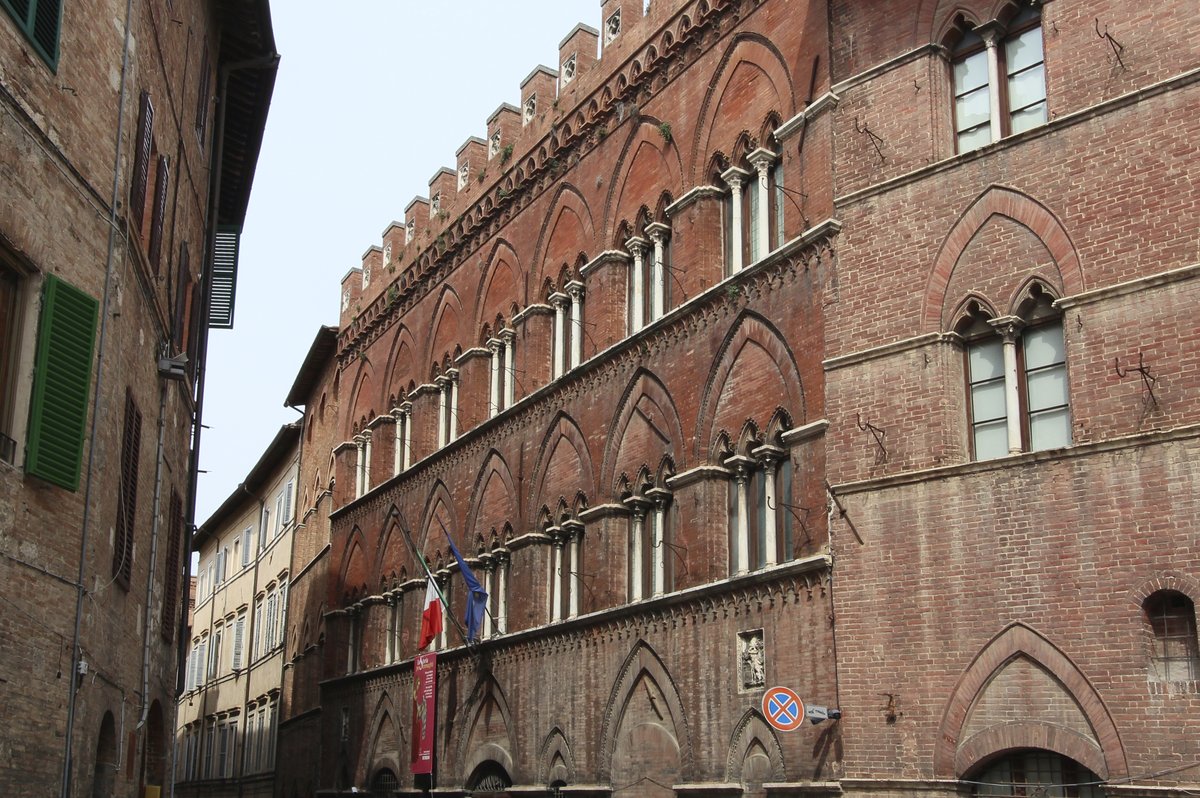
The National Gallery of Siena preserves the artistic essence of the city through the masterpieces of the Sienese school, displayed in chronological order in the Buonsignori and Brigidi Palaces. Here you’ll find works that are not so concentrated elsewhere, from the gilded panels of the 14th century to Renaissance refinements, in a journey that tells over four centuries of painting history.
• The most comprehensive collection of the Sienese school from the 13th to the 17th centuries
• Works by Duccio di Buoninsegna, Simone Martini, and the Lorenzetti brothers
• Chronological path easy to follow even for non-experts
• Historic palaces with Gothic atmosphere and natural lighting
Introduction
Stepping into the Pinacoteca Nazionale di Siena is like crossing the threshold of a golden treasure that holds the artistic soul of the city. It’s not just a museum, but a journey through time via the colors and stories of Sienese masters. It welcomes you into a historic palace, Palazzo Buonsignori, and immediately strikes you with that warm light that seems to envelop every work. Here, art is not distant—it’s alive: you can almost hear the rustle of robes in the thirteenth-century panels or the breath of the painted saints. For me, it’s the perfect place to understand why Siena has such a unique charm, woven from spirituality and beauty that you can touch with your eyes. If you love art or simply seek a corner of authenticity, this place will leave you speechless, I promise.
Historical Overview
The Pinacoteca’s history is intertwined with that of Siena itself. It was officially established in 1932, but its roots trace back to 1816, when the collection of artworks from suppressed churches and convents began. The real turning point, however, came with its move to its current home, Palazzo Buonsignori, a Gothic building that is worth a visit in its own right. Consider that many of these works, such as those by Duccio di Buoninsegna or Simone Martini, were originally part of altars and altarpieces scattered throughout the city. Today, gathered here, they tell a continuous story spanning over four centuries, from the 13th to the 17th century, showcasing the evolution of the Sienese style, with its unique character defined by elegant lines and intense colors. It’s as if the Sienese school has found its definitive home, away from the noise of the world.
Masterpieces You Can’t Miss
Walking through the rooms, there are works that stop you in your tracks. For example, the Maestà by Duccio di Buoninsegna – or rather, its fragments preserved here – is pure emotion: those gentle faces, those meticulous details make you understand why Duccio is considered the father of Sienese painting. Then there’s the room dedicated to Simone Martini, with his slender figures and brilliant colors that still seem fresh. But don’t stop at just the big names: look for works by Sassetta or Giovanni di Paolo, less known but equally fascinating. Personally, I’m always enchanted by the 14th-century panels, with those sacred stories told like fairy tales, full of symbols and details you only discover by looking calmly. It’s a journey that never tires, because each room has its own atmosphere, almost a different story.
The Palace Atmosphere
It’s not just what’s on display, but also where it’s displayed that makes the difference. Palazzo Buonsignori, with its stone staircases, vaulted ceilings, and Gothic windows, adds a special aura to the visit. You’ll wander through rooms that still seem inhabited by Sienese nobility, and the natural light filtering through the windows illuminates the artworks in an almost magical way, especially in the afternoon. Sometimes, in the smaller rooms, you feel as if you’re in a Renaissance studiolo, surrounded by beauty without distractions. I noticed that many visitors linger in the upper-floor rooms, where the atmosphere is more intimate and the artworks seem to converse with each other. It’s a place that invites slowness: take your time, sit on one of the wooden benches, and let the art speak to you. Perhaps that’s the secret: here, you don’t rush—you savor.
Why Visit It
Visiting the Pinacoteca is an experience that goes beyond the typical tourist stop. First, because it offers a comprehensive and focused view of the Sienese school, without having to rush around all of Siena: here you’ll find the cornerstones of local art, perfect if you have limited time but want to immerse yourself in the city’s essence. Second, it’s a haven of tranquility: compared to the Duomo or Piazza del Campo, there are fewer crowds here, especially on weekday mornings, allowing you to enjoy the artworks more peacefully. Third, for those who appreciate details: the labels are clear and informative, and you often discover intriguing stories about the pieces, such as their journey from churches to the museum. In short, it’s the right place for anyone wanting to understand Siena through its artists, without haste and with eyes full of wonder.
When to go
The best time? In my opinion, an autumn afternoon, when the low sunlight streams through the windows and caresses the gilded artworks, creating an almost mystical atmosphere. In summer, it’s perfect for escaping the heat: the rooms are cool and quiet, an oasis of peace away from the summer crowds. Avoid peak-season weekends if you prefer tranquility, but honestly, even when it’s busier, the setting remains intimate. I once visited on a day of light rain, and I must say it made everything even more evocative: it felt like being in another century, with the sound of rain outside blending with the silence of the halls. In any case, don’t worry too much about timing: the important thing is to allow yourself at least a couple of hours without rushing.
In the Surroundings
After leaving the Pinacoteca, the historic center of Siena awaits you with other nearby gems. Just a few steps away is the Siena Cathedral, with its marble inlay floor and the Museo dell’Opera, where you can continue your journey through Sienese art. If you prefer a more intimate experience, head towards the Basilica of San Domenico, which houses the relics of Saint Catherine and offers a panoramic view of the city. For a tasty break, look for one of the historic pastry shops in the nearby alleys: tasting a panforte or some ricciarelli after so much art is the perfect way to end on a high note. These are all places that speak the same language of beauty and history, without needing to venture too far.