The Pantheon is one of Rome’s symbols, a millennia-old temple turned into a Christian basilica. Here you’ll find the world’s largest unreinforced concrete dome, with a 9-meter oculus that illuminates the interior. It houses the tombs of Raphael and the House of Savoy. Here’s what you need to know:
– Paid entry: ticket €5 (reduced €2 for ages 18-25, free under 18 and first Sunday of the month).
– Hours: daily 9:00-19:00 (last entry 18:30).
– Unique architecture: the dome has the same diameter as its height (43.44 m), creating a perfect sphere.
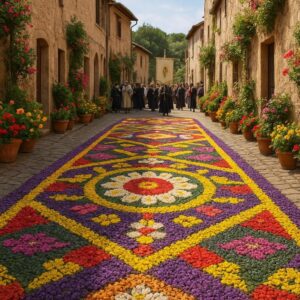
– Special event: at Pentecost, a shower of red petals from the oculus.
Introduction
Stepping into the Pantheon is like diving into eternal Rome. The largest unreinforced concrete dome in the world leaves you speechless, and the oculus above seems like a divine eye watching over everything. It makes you feel small, but in a good way. No photo can capture the effect: the constantly changing light creates a unique atmosphere. And to think it’s almost 2,000 years old…
Introduction
Stepping into the Pantheon is like diving into eternal Rome. The largest unreinforced concrete dome in the world leaves you speechless, and the oculus above seems like a divine eye watching over everything. It makes you feel small, but in a good way. No photo can capture the effect: the constantly changing light creates a unique atmosphere. And to think it’s almost 2,000 years old…
Historical Notes
The Pantheon was built in 27 BC by Marcus Vipsanius Agrippa, son-in-law of Augustus, as a temple dedicated to all pagan gods. After two fires, Emperor Hadrian rebuilt it between 118 and 125 AD, giving it the form we see today. In 609 AD, Emperor Phocas donated it to Pope Boniface IV, who consecrated it as a Christian basilica (Santa Maria ad Martyres), saving it from destruction. Since then, it has always been in use, an almost unique record.
Historical Notes
The Pantheon was built in 27 BC by Marcus Vipsanius Agrippa, son-in-law of Augustus, as a temple dedicated to all pagan gods. After two fires, Emperor Hadrian rebuilt it between 118 and 125 AD, giving it the form we see today. In 609 AD, Emperor Phocas donated it to Pope Boniface IV, who consecrated it as a Christian basilica (Santa Maria ad Martyres), saving it from destruction. Since then, it has always been in use, an almost unique record.
- 27 BC Agrippa builds the first temple
- 80 and 110 AD Fires and restorations
- 118-125 AD Hadrian rebuilds
- 609 AD Consecration as a church
- 1870 Becomes the shrine of the Italian kings
- 27 BC Agrippa builds the first temple
- 80 and 110 AD Fires and restorations
- 118-125 AD Hadrian rebuilds
- 609 AD Consecration as a church
- 1870 Becomes the shrine of the Italian kings
Dome and Light: An Engineering Masterpiece
The dome is a technical marvel. It is made of concrete with increasingly lighter materials toward the top – from travertine to pumice – to reduce weight. The 28 coffers per row are not just decorative: they reduce mass. The 9-meter oculus is the only source of light, and when it rains, water enters but is drained through holes in the slightly convex floor. On April 21, the anniversary of Rome, a sunbeam perfectly illuminates the entrance.
Dome and Light: An Engineering Masterpiece
The dome is a technical marvel. It is made of concrete with increasingly lighter materials toward the top – from travertine to pumice – to reduce weight. The 28 coffers per row are not just decorative: they reduce mass. The 9-meter oculus is the only source of light, and when it rains, water enters but is drained through holes in the slightly convex floor. On April 21, the anniversary of Rome, a sunbeam perfectly illuminates the entrance.
Famous Tombs and Legends
Here lie Raphael (with the famous epitaph by Pietro Bembo), the kings of Italy Victor Emmanuel II and Umberto I with Queen Margherita, and other artists. A tradition says that during the Christian consecration seven demons fled through the oculus. Pope Urban VIII had the bronze of the portico melted down for the baldachin of St. Peter’s, giving rise to the saying: “What the barbarians did not do, the Barberini did.” Every year at Pentecost, a rain of red petals falls from the oculus.
Famous Tombs and Legends
Here lie Raphael (with the famous epitaph by Pietro Bembo), the kings of Italy Victor Emmanuel II and Umberto I with Queen Margherita, and other artists. A tradition says that during the Christian consecration seven demons fled through the oculus. Pope Urban VIII had the bronze of the portico melted down for the baldachin of St. Peter’s, giving rise to the saying: “What the barbarians did not do, the Barberini did.” Every year at Pentecost, a rain of red petals falls from the oculus.
Why Visit It
1. It’s the best-preserved ancient building in Rome: you walk where emperors and artists walked. 2. The dome is an icon of world architecture, surpassed in size only in modern times. 3. Entry costs only €5 (reduced to €2 for ages 18-25, free for under 18 and on the first Sunday of the month), a trivial price for a millennial masterpiece. Moreover, as it is an active church, you can also attend religious services.
Why Visit It
1. It’s the best-preserved ancient building in Rome: you walk where emperors and artists walked. 2. The dome is an icon of world architecture, surpassed in size only in modern times. 3. Entry costs only €5 (reduced to €2 for ages 18-25, free for under 18 and on the first Sunday of the month), a trivial price for a millennial masterpiece. Moreover, as it is an active church, you can also attend religious services.
When to Visit
The most magical time is shortly before closing, around 6:00 PM, when the low sun enters through the oculus and lights up the dome with warm colors. In summer, the nearly vertical rays create a perfect bright disk at the center of the floor. If you can, choose a day with light rain: you’ll see water fall from the oculus and disappear into the holes, a rare sight.
When to Visit
The most magical time is shortly before closing, around 6:00 PM, when the low sun enters through the oculus and lights up the dome with warm colors. In summer, the nearly vertical rays create a perfect bright disk at the center of the floor. If you can, choose a day with light rain: you’ll see water fall from the oculus and disappear into the holes, a rare sight.
Nearby
After your visit, take a short stroll to Piazza Navona (5 minutes on foot) with its fountains and lively atmosphere, or head to Campo de’ Fiori for an aperitivo among market stalls and typical local spots. If you’re in the mood for more ancient history, Largo di Torre Argentina with its sacred area of Republican temples is just 3 minutes away. Everything is within walking distance.
Nearby
After your visit, take a short stroll to Piazza Navona (5 minutes on foot) with its fountains and lively atmosphere, or head to Campo de’ Fiori for an aperitivo among market stalls and typical local spots. If you’re in the mood for more ancient history, Largo di Torre Argentina with its sacred area of Republican temples is just 3 minutes away. Everything is within walking distance.