Introduction
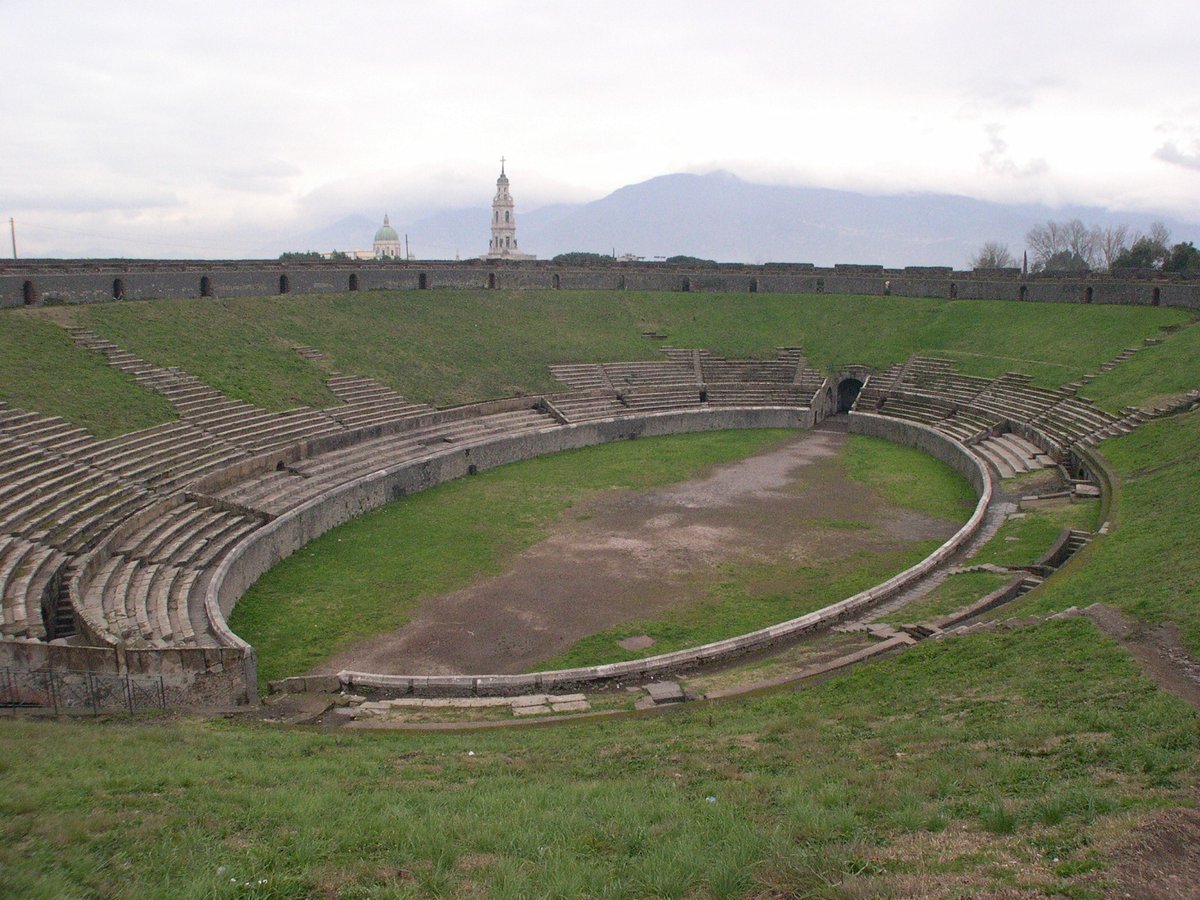
If there’s one place that makes you feel like you’re in a historical movie, it’s the Roman Amphitheater of Pompeii. Built in 70 BC, it is the oldest stone amphitheater in the world, even older than the Colosseum by about 140 years. As soon as you enter, the perfect ellipse of the arena envelops you: 135 meters long, 104 meters wide, and a capacity of nearly 20,000 spectators. Walking on the beaten earth where gladiators once dueled sends shivers down your spine. It’s one of those places where time seems to have stood still, despite the rock concerts and crowds of tourists. Truly a must for anyone visiting Pompeii.
Historical Notes
The amphitheater was built by the duumvirs Gaius Quinctius Valgus and Marcus Porcius. In 59 AD, a brawl between Pompeians and Nucerians caused deaths and injuries, prompting the Senate to close the arena for ten years. After the earthquake of 62 AD, the structure was restored and reopened, but the eruption of 79 AD buried it under ash and lapilli. It was brought to light in 1748 during the Bourbon excavations. In 1971, Pink Floyd performed there without an audience for the famous concert film.
- 70 BC – Construction of the amphitheater.
- 59 AD – Brawl between Pompeians and Nucerians; ten-year closure.
- 62 AD – Earthquake and subsequent restoration.
- 79 AD – Eruption of Vesuvius, burial.
- 1748 – Beginning of Bourbon excavations.
- 1971 – Pink Floyd concert.
Architecture: An Engineering Jewel
Unlike the Colosseum, the amphitheater of Pompeii has no underground chambers: the arena is made of beaten earth, without trapdoors. The structure uses a natural embankment leaning against the walls, a clever and economical trick. The cavea is divided into three zones: ima cavea for the elite, media for the common people, and summa for women and the lower classes. The seats were made of tuff (after 62 AD) and wood. The outer arches are in two orders: the lower one with blind arches in opus incertum, the upper one with round arches. Between them, a walkway and two large staircases. The velarium, a linen awning, provided shade from the sun. Even today, climbing the tiers, you can almost hear the echo of the crowd.
The Arena and the Fights: Stories of Gladiators
The arena was the beating heart: here gladiator combats and circus games took place. Graffiti on house facades advertised the shows, like that of Aulus Clodius Flaccus. A parapet about two meters high, once decorated with frescoes of duels (now lost), separated spectators from fighters. Two spoliarii (first aid rooms) opened onto the arena: one for the wounded, the other with a triumphal arch for the gladiators’ entrance. Magistrates enjoyed reserved boxes, connected to the arena for award ceremonies. Walking here is a unique experience: it almost feels like you can hear the clash of swords.
Why Visit It
1) It is older than the Colosseum and better preserved: walking on the original arena makes you feel like a gladiator. 2) The acoustics are incredible: sound spreads evenly, as demonstrated by modern concerts (Pink Floyd being a case in point). 3) It is less crowded than other areas of Pompeii, yet offers an authentic atmosphere. Plus, entrance is included in the Scavi ticket, and it takes less than half an hour to visit, perfect for a dive into history without long queues.
When to go
If you ask me, the best time is late afternoon, around 4-5 PM: the golden light illuminates the tiers and the arena magically. In summer, the hot hours are best avoided, but early morning at opening time has few visitors. Spring and autumn are the ideal seasons: mild climate and fewer crowds. Avoid weekends if you can, but if you happen to be there on a weekend, aim for the early hours of the day. The site is outdoors, so bring water and a hat.
In the Area
Just a stone’s throw from the amphitheater is the Palestra Grande: a vast gym complex with a well-preserved swimming pool, perfect for understanding how athletes trained. If you have time, don’t miss the National Archaeological Museum of Naples, which houses the fresco of the brawl between Pompeians and Nucerians that took place right here. And of course, the Pompeii excavations are immense: you can wander for hours among houses, shops, and temples. I recommend combining the visit with the amphitheater for a complete experience.