Roman Amphitheater of Ancona: Intact Arena with Panoramic View over the Doric Port

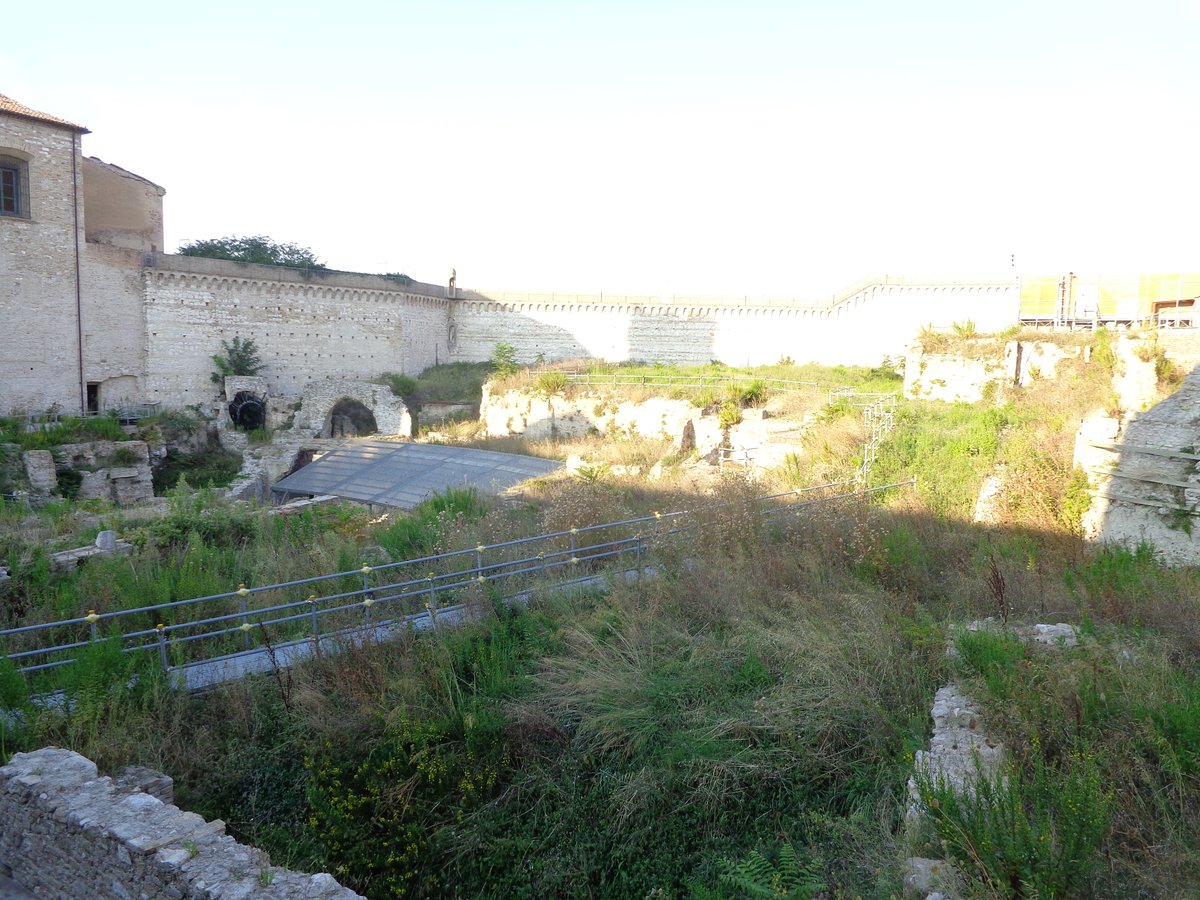
The Roman Amphitheater of Ancona, built in the 1st century AD, offers a unique experience with its intact arena and panoramic view over the Doric port. Its location on Guasco Hill, just steps from the Cathedral of San Ciriaco, makes it easily accessible from the historic center.

  • Perfectly preserved arena with original flooring and acoustics that allow you to imagine gladiatorial spectacles
  • Breathtaking 360-degree view over the Doric port and the Gulf of Ancona, with a panorama stretching to Monte Conero
  • Free and open access in a central location, perfect for including in a city discovery itinerary
  • Ideal for families with children who can safely run in the arena while adults admire the view

Copertina itinerario Roman Amphitheater of Ancona: Intact Arena with Panoramic View over the Doric Port
Perfectly preserved 1st-century AD arena with original seating and breathtaking views of the Adriatic Sea. Free and open access in the historic center, ideal for families and history enthusiasts.

Good to know


Introduction

The Roman Amphitheatre of Ancona is not just an archaeological site; it’s a balcony overlooking history that directly faces the Doric port. The view from above is spectacular: on one side, the perfectly preserved arena, on the other, the sea lapping at the city. I was struck by how this place manages to unite past and present so naturally. It’s not a closed museum, but a living space where you can still breathe the atmosphere of ancient spectacles. The location is strategic, nestled between Guasco Hill and the sea, making the visit doubly interesting. Access is easy and immediate from the historic centre—it almost surprises you to find such a gem just steps from the main streets. The feeling is one of continuous discovery, with every corner telling a different story.

Historical Overview

Built between the 1st century BC and the 1st century AD, the amphitheater was used for gladiatorial games and venationes (animal hunts). The original structure could accommodate up to 10,000 spectators, an impressive number for a provincial city. During the Middle Ages, some of its materials were repurposed for other constructions, but fortunately the main arena has remained intact. Over the centuries, it has undergone various restoration efforts, the most significant of which took place in the 1990s. What makes it unique is its location: the Romans deliberately built it here, taking advantage of the natural slope of the hill for the cavea. Today, the vomitoria (entrances) and parts of the seating tiers are still clearly visible.

  • 1st century BC – 1st century AD: Construction and peak period of use
  • Middle Ages: Partial dismantling and reuse of materials
  • 1990s: Major restoration and enhancement works
  • Today: Archaeological site open to the public

The Arena That Speaks

Walking on the arena is an experience that makes you feel part of history. The original pavement is surprisingly intact in several spots, and if you look carefully, you can still see the grooves for mounting stage structures. I paused to imagine the gladiators preparing in the hypogeum, the spectators taking their seats on the tiers. The remarkable feature is the acoustics: even speaking in a low voice, sound carries clearly throughout the arena. This detail helps you understand how well-studied Roman architecture was. In winter, when there are fewer people, the atmosphere becomes even more evocative. You’ll also notice the remains of the lateral vomitoria, which allowed for an orderly flow of people. It’s a place that invites contemplation, not haste.

360-Degree View

What makes this amphitheater unique is the panorama it offers. From the upper cavea, you can enjoy a breathtaking view of the Doric port, with boats coming and going, and the entire Gulf of Ancona. On clear days, you can see as far as Monte Conero. I’ve noticed that many visitors stay here longer than planned, not just for the history but for the natural spectacle. The sunset light is magical: the setting sun’s rays tint the ancient stones orange and illuminate the sea. It’s one of those places where photography almost comes naturally. I recommend climbing to the top, even though the ascent is a bit steep—it’s worth it. The perspective completely changes, and you understand why the Romans chose this very spot.

Why Visit It

First: it’s one of the few Roman amphitheaters with a sea view, a rare combination that makes the experience unique. Second: access is free and unrestricted, you can return as many times as you like at different times to capture different atmospheres. Third: it’s perfect for families, children can safely run in the arena while adults enjoy the view. Fourth: the location is extremely central, just a few minutes’ walk from the Cathedral of San Ciriaco and Passetto. No need to plan a special itinerary, just include it in a stroll through the historic center. Personally, I find it more authentic than many over-equipped archaeological sites: here you can touch history firsthand, without barriers.

When to go

The best time? Late summer afternoons, when the sun begins to set and the light turns golden. The atmosphere becomes magical, and the temperature is more pleasant. In winter, I recommend clear mornings after a windy day: the air is clean and the view of the sea is crystal clear. I would avoid the midday hours in summer, when the sun beats down strongly and there is no shade. Spring is ideal for the spontaneous blooming among the ancient stones. A secret? After a light rain, the stones of the arena take on a more intense color, almost red. But honestly, every moment has its charm: I’ve returned in different seasons and each time discovered something new.

In the Surroundings

Just a short walk away is the Cathedral of San Ciriaco, which overlooks Ancona from the top of Guasco Hill. It’s worth the climb for the even broader view and the Romanesque-Byzantine architecture. If you’re interested in archaeology, head down to the National Archaeological Museum of the Marche, which houses artifacts found right in the amphitheater. For a lighter experience, take a stroll along Il Passetto, with its artificial caves and staircase descending to the sea. If you’re in the mood for the sea, the urban beach at Passetto is a five-minute walk away. All these places are connected by well-marked pedestrian paths, so no car is needed.

Itineraries nearby


💡 Did You Know…?

One detail that makes this amphitheatre special is its perfectly preserved acoustics. Try speaking softly at the center of the arena: your voice will resonate clearly throughout the cavea, just as announcements did during ancient spectacles. Additionally, numerous artifacts were found during excavations, including coins and pottery fragments, testifying to the daily life of the place. The strategic location, controlling the port, underscores Ancona’s military and commercial importance in Roman times.