
Rocca Janula is a 10th-century medieval fortress built by Abbot Aligerno to protect Montecassino Abbey. After restoration, it offers wall walkways and towers with 360-degree views of the Liri Valley. The climb from Cassino’s historic center leads to a self-guided experience with informative signs.
- Panoramic view of Montecassino Abbey and the Liri Valley
- Walkways along medieval walls and watchtowers
- 10th-century military architecture with an irregular layout adapted to the hill
- Self-guided circular visit route with explanatory signs
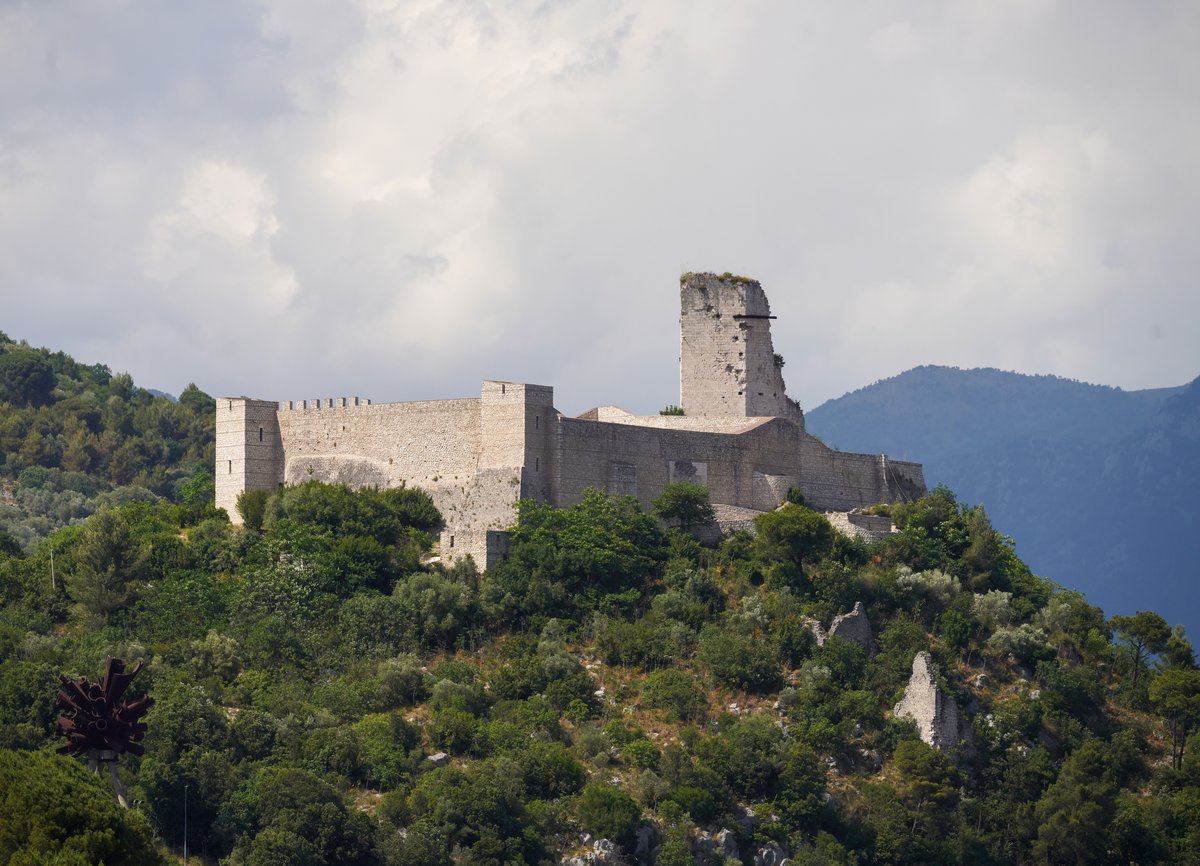
A fortress built in the 10th century by Abbot Aligerno to protect Montecassino Abbey, now restored with wall walkways and panoramic towers overlooking the Liri Valley. Self-guided visit with a circular route.
- https://www.roccajanula.com/
- Via Montecassino, Frosinone (FR)
- Open in Google Maps
- View on Google Images Rocca Janula a Frosinone
Good to know
Introduction
As soon as you arrive in Cassino, your gaze is captured by Rocca Janula, an imposing medieval fortress that dominates the city from above. It’s not just a castle, but a privileged vantage point: from here you can take in the entire Liri Valley with your eyes and, most importantly, admire the majestic Montecassino Abbey up close, almost touching it. The feeling is of being suspended between history and landscape, with ancient walls telling centuries of battles and reconstructions. Climbing up to the fortress is like taking a journey through time, where every stone speaks of resistance and rebirth. The breathtaking view over the plain and surrounding mountains immediately makes you understand why this place was strategically crucial. It’s an experience that combines emotion and discovery, perfect for those seeking something authentic in Lazio.
Historical Overview
Rocca Janula has ancient origins, closely tied to Benedict of Nursia, who founded the Montecassino Abbey directly opposite in the 6th century. The fortress was built in the 10th century at the behest of Abbot Aligerno, with the purpose of protecting the monastery and controlling the valley. Over the centuries, it has endured sieges and destruction, such as during World War II, when Cassino was the scene of fierce battles. Today, after careful restoration, the fortress has become accessible again, still showing traces of its towers and defensive walls. Its history is intertwined with that of the city and Benedictine monasticism, making it a symbol of resilience.
- 10th century: construction at the behest of Abbot Aligerno
- 6th century: connection with Saint Benedict and Montecassino Abbey
- 1944: severe damage during the Battle of Cassino
- 2000s: restoration and reopening to the public
Architecture and Structures
The fortress stands out for its irregular layout, adapted to the hill’s shape, with towers protruding for 360-degree surveillance. Inside, you can explore the wall walkways, which offer unique glimpses of the valley and the abbey. Particularly evocative are the remains of the keep, the main tower, and the water collection cisterns, testaments to medieval ingenuity. The local grey-ochre stones lend an authentic atmosphere, and the panoramic viewpoints are well-marked, allowing you to capture every detail of the landscape. There are no furnished interiors, but the essential nature of the structures helps you focus on the power of the place. It’s a well-preserved example of medieval military architecture, with elements that tell the story of the garrison’s daily life.
Visiting Route
The visit begins in the historic center of Cassino, with a walk uphill that already offers beautiful views. The route is marked and accessible, although steep in some sections, but the effort is rewarded as soon as you reach the entrance to the fortress. Inside, it is recommended to follow the circular path that leads to the highest towers, from which you can also glimpse the Rapido River. Along the way, informative signs explain the functions of the different areas, such as the guard posts. No guides are needed: the atmosphere speaks for itself. Bring a camera with you, because the best spots for taking photos are at the top of the keep, with the abbey in the background. It’s an experience to be done independently, ideal for those who love exploration without rush.
Why Visit It
Visit Rocca Janula to immerse yourself in living history, where every corner tells tales of battles and reconstructions, such as those linked to World War II. It’s the perfect spot for unforgettable photographs, with the Abbey of Montecassino so close it feels tangible. Moreover, it offers an experience away from crowded tourist circuits, allowing you to discover an authentic side of the Frosinone province, far from the crowds. The combination of landscape and history will gift you moments of reflection and wonder, without the need for extensive preparations.
When to Go
The best time to visit is at sunset, when the warm sunlight illuminates the fortress stones and creates shadow plays on the abbey, offering magical atmospheres. Avoid the midday hours during summer days, as the sun can be intense and reduce visibility. In spring or autumn, the valley colors are more vivid, and the mild climate makes the ascent more pleasant. Even after a light rain, the clean air enhances the beauty of the panorama.
In the Surroundings
Just a few minutes away, don’t miss Montecassino Abbey, with its cloisters and historic library, for an in-depth look at Benedictine monastic life. For a themed experience, explore the Historiale Museum of Cassino, dedicated to World War II, which complements the history of the fortress with local artifacts and testimonies. Both sites enrich your visit, connecting spirituality and memory.
💡 Did You Know…?
During World War II, Rocca Janula was severely damaged by the bombings that struck Cassino. Legend has it that a treasure of Abbot Aligerno, never found, is hidden in the fortress’s underground chambers. The restoration preserved the ancient rainwater collection cistern, a crucial element for survival during sieges. From the main tower, you can enjoy the same view that medieval sentinels had over the pilgrims’ route to Montecassino.