Evocative Introduction
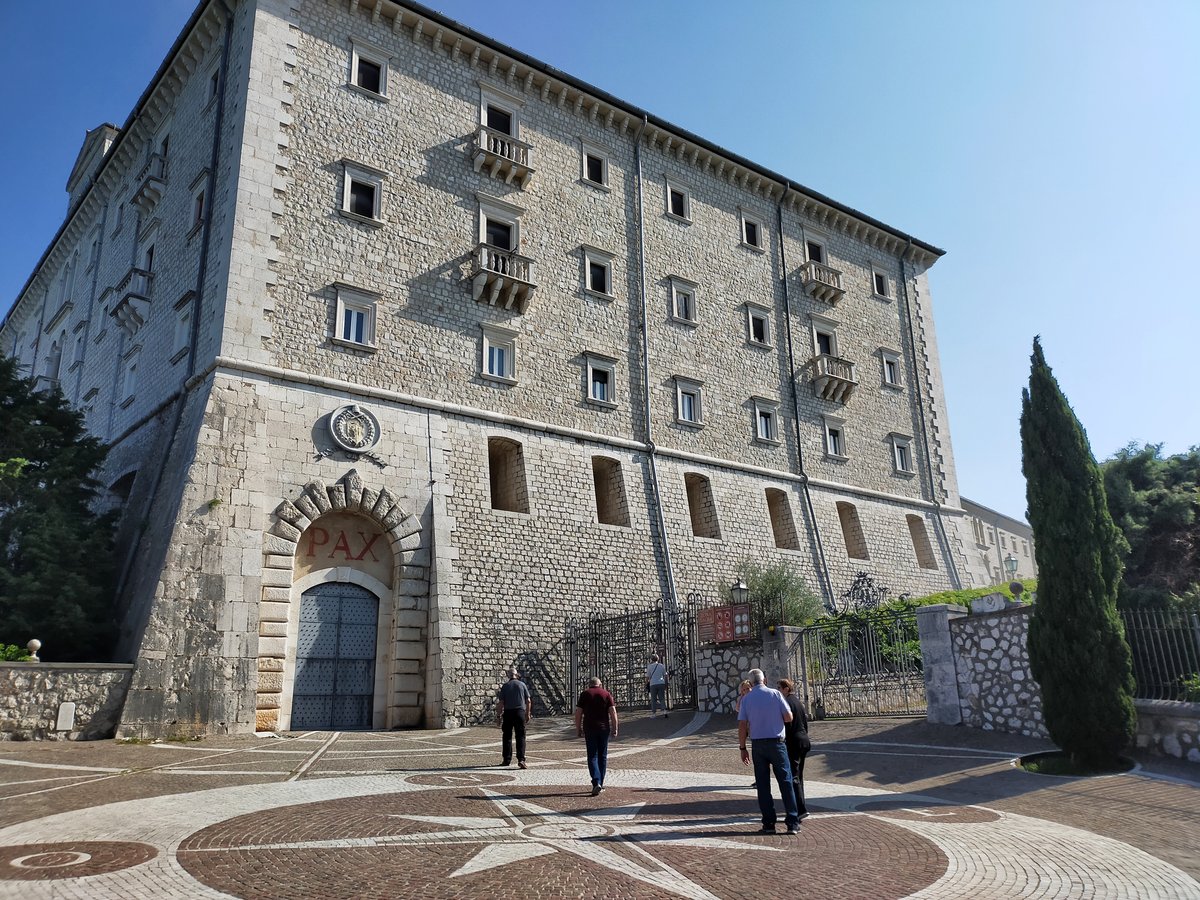
Perched at 519 meters above sea level, Montecassino Abbey dominates the Liri Valley with breathtaking majesty. It is not just a monument; it is a symbol of resilience, reborn from the ashes after the 1944 bombing. Entering here means breathing centuries of faith and culture, among Renaissance cloisters and the echo of the Benedictine Rule. The inscription PAX at the entrance welcomes you like an embrace: peace and silence, after the fury of war. It is a place that leaves you speechless, yet invites you to stop and listen.
Historical Overview
Founded by Saint Benedict in 529 on a pagan temple, the abbey has experienced alternating fortunes: destroyed by the Lombards (577), the Saracens (883), and an earthquake (1349), each time rising again. The Allied bombing of February 15, 1944, razed it to the ground, but it was faithfully rebuilt between 1948 and 1956 and reconsecrated in 1964 by Pope Paul VI. Today it is a powerful symbol of peace and rebirth. Here are the key moments:
- 529: Foundation by Saint Benedict
- 577: Lombard destruction
- 883: Saracen fire
- 1349: Earthquake
- 1944: Allied bombing
- 1964: Reconsecration
The Cloisters and the Loggia del Paradiso
Upon entering, you are greeted by the Entrance Cloister with the bronze sculpture of the Death of Saint Benedict (1952) by Attilio Selva, a gift from German Chancellor Adenauer. Then the Bramante Cloister, Renaissance with its octagonal cistern, from which you access the Loggia del Paradiso: a balcony overlooking the Liri Valley, offering a panorama that embraces the Polish Cemetery. Finally, the Cloister of the Benefactors, with 24 statues of popes and sovereigns who protected the abbey, under a portico from 1510. Every corner speaks of history and beauty.
The Baroque Basilica and the Tombs of the Saints
The faithfully reconstructed cathedral is a triumph of marble, stucco, and Baroque gilding. Beneath the high altar, the work of Cosimo Fanzago, rest the remains of Saint Benedict and his sister Saint Scholastica. The dome is frescoed by Pietro Annigoni (1980) with scenes from the saint’s life. Don’t miss the crypt, the only part to survive the bombing, featuring original mosaics by Beuron (1900-1913). The pipe organ and the wooden choir complete a solemn atmosphere that invites reflection.
Why Visit
First reason: it is the cradle of Western monasticism, where Saint Benedict wrote the Rule that shaped Europe. Second: its history of destruction and rebirth is unique – walking among the rebuilt walls ‘as it was, where it was’ makes you feel part of a thousand-year cycle. Third: the view from the Loggia del Paradiso is breathtaking, and the silence of the cloisters offers a break from daily chaos. In addition, the museum holds treasures like the Placiti cassinesi, the first documents in Italian vernacular.
When to Go
If you can, choose a spring morning when the sun lights up the Baroque facade and the valley is green. The abbey opens at 9:30 AM, and arriving early lets you enjoy the almost mystical silence of the cloisters. Avoid weekends if you seek solitude, but on Sunday mornings the Gregorian chant Mass at 10:30 AM is an experience worth having. In summer the days are long, perfect for combining the visit with a walk in the surroundings.
In the Surroundings
Just a few steps from the abbey, heading down the road, you’ll find the Polish Military Cemetery, a memorial site of the Battle of Cassino. For history lovers, Rocca Janula – a medieval fortress 6 km along the same road – is worth a detour, with cultural events and views. If you have time, venture to the Riviera di Ulisse: Formia and Gaeta with the Sanctuary of the Split Mountain and the Grotta del Turco are perfect for a dip in the blue after so much spirituality.