
The Valley of the Temples in Agrigento is the world’s largest archaeological park, spanning 1,300 hectares of Greek history. Here you’ll find perfectly preserved Doric temples, the famous Temple of Concordia, and unique artifacts. Don’t miss:
– Temple of Concordia, one of the best-preserved in the world
– Temple of Juno with breathtaking views
– Garden of Kolymbetra, a citrus oasis (FAI)
– Archaeological Museum featuring the Ephebe of Agrigento
Events nearby


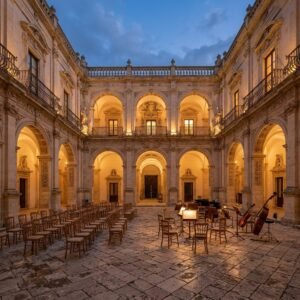

The world’s largest archaeological site, featuring 5th-century BC Greek temples, most notably the perfectly preserved Temple of Concordia. This UNESCO World Heritage park also encompasses the Garden of Kolymbetra and the archaeological museum. Find opening hours and ticket information.
- https://www.parcovalledeitempli.it/
- Via Angelo Bonfiglio, Agrigento (AG)
- Open in Google Maps
- View on Google Images Valle dei Templi a Agrigento
Good to know
Welcome to the Valley of the Temples
Imagine walking among Greek temples over 20 meters tall, immersed in a landscape that embraces the sea. The Valley of the Temples is not just an archaeological site: it is the largest park of its kind in the world, with 1300 hectares of history declared a UNESCO World Heritage Site in 1997. I was left breathless in front of the Temple of Concordia, perfect as if time had stopped in the 5th century BC. The atmosphere here is almost magical, with the light constantly changing and the scent of almond trees and citrus fruits carried by the wind. Get ready for a journey into Magna Graecia, among Doric columns and artifacts that tell the story of an extraordinary civilization.
A Dive into the Past: Akragas
Founded in 581 BC by Greek colonists, ancient Akragas became one of the wealthiest cities in Magna Graecia under the tyrant Theron (488–473 BC), thanks to the trade of sulfur and salt. The temples were built after the victory over the Carthaginians at Himera (480 BC). In 406 BC the Carthaginians sacked the city, which later came under Roman rule. In the Middle Ages, the area was abandoned and rediscovered during the Grand Tour. Today the park preserves Greek, Roman, and early Christian remains. Here are the key moments:
- 581 BC: foundation of Akragas
- 480 BC: Battle of Himera
- 406 BC: Carthaginian sack
- 1997: UNESCO designation
Temples That Will Leave You Speechless
The Temple of Concordia (440–430 BC) is the park’s gem: 78 perfectly preserved Doric columns, thanks to its conversion into a Christian basilica in the 6th century. Equally fascinating is the Temple of Juno (450 BC), perched on the highest point of the hill, bearing traces of the Carthaginian fire. But the Temple of Olympian Zeus will amaze you with its sheer size: a base of 113×56 meters, the largest Doric temple ever conceived. Here you can admire an original 7.5-meter telamon (a copy stands on site). Strolling along the Sacred Way, don’t miss the Temple of Hercules, the oldest on the site (6th century BC). Each temple has a unique story to tell.
Beyond the Temples: Garden and Museum
After visiting the temples, take a break at the Giardino della Kolymbetra, a 5-hectare oasis managed by the FAI, with centuries-old citrus trees, pistachio trees, and olive trees. Once an artificial pool dug by Carthaginian prisoners, it is now a peaceful retreat. Then stop by the Museo Archeologico Regionale Pietro Griffo, which houses extraordinary artifacts such as the original telamon from the Temple of Zeus, the Ephebe of Agrigento (a 5th-century BC marble sculpture), and a rich collection of Attic vases. I recommend visiting the museum after touring the temples: it will help you better understand life in ancient Akragas.
Three Good Reasons Not to Miss It
First: it’s the only place in the world where you can see a complete Doric temple (the Temple of Concordia) in a breathtaking natural setting. Second: the nighttime lighting in summer transforms the park into an almost mystical experience. Third: the cumulative ticket (€19.20) includes the museum and lets you fully immerse yourself in Greek history. And then there’s the Almond Blossom Festival in February-March, when the valley fills with colors and scents. It’s not just an archaeological site: it’s a journey through time that leaves its mark.
The Right Time to Go
If you want to avoid heat and crowds, spring is perfect: almond trees bloom and the weather is mild. But if you’re looking for a special atmosphere, go at sunset: the golden light caresses the temples and the landscape becomes fairy-tale-like. In summer there are evening openings, but the heat can be intense. In winter there are few people and you can enjoy everything calmly. In short, every season has its charm: choose based on what you seek. I recommend spring for the blooming or sunset for photos.
What to See Nearby
If you have time, explore Agrigento’s historic center: stroll through medieval alleys and reach the Cathedral of San Gerlando. From there, the view over the Valley of the Temples is spectacular. Alternatively, immerse yourself in the Hellenistic-Roman Quarter (within the park), where you can see remains of domus with original mosaics. If you love the sea, Scala dei Turchi is just a few kilometers away: a white cliff shaped like a staircase plunging into the blue. Perfect for a swim after all that history.
Itineraries nearby


💡 Did You Know…?
During his Grand Tour, Goethe described the Valley of the Temples as ‘the most beautiful promontory in the world’. Still today, at sunset, the Doric columns glow golden, evoking the same wonder that has inspired poets and travelers for centuries.