
🧭 What to Expect
- Ideal for a day trip from Milan or a cultural weekend
- Highlights: Royal Villa, Cathedral with Iron Crown, Monza Park
- For families: the Park offers playgrounds and easy paths
- Don't miss: the Royal Gardens and the Rose Garden for a stroll
- Practical tip: half a day for the center, full day including the park
Events nearby


Monza is much more than just a town on the outskirts of Milan: it is a city rich in history, art, and nature, perfect for a day trip or a weekend. Its undisputed symbol is the Monza Cathedral, which houses the Iron Crown, used to crown kings and emperors. Nearby, the magnificent Royal Villa with its splendid Royal Gardens is an example of an eighteenth-century noble residence. If you love open spaces, Monza Park is a must: 700 hectares of greenery, former hunting estate, now a place for sports and relaxation. Don't forget the Arengario, the heart of the historic center, and the Expiatory Chapel, linked to the tragic death of King Umberto I. The city's museums offer art collections and archaeological finds. Additionally, the Niso Fumagalli Rose Garden and historic villas like Villa Mirabello enrich the offerings. Monza will surprise you with its elegant atmosphere and cultural vibrancy.
Overview
- Royal Villa of Monza: History, Art, and Nature
- Monza Cathedral: A Lombard Treasure and the Iron Crown
- Monza Park: A Record-Breaking Green Lung
- Arengario: The Medieval Heart of Monza
- Chapel of Atonement: The Memorial of the Regicide
- Monza Civic Museums: Hidden Treasures in the Casa degli Umiliati
- Museo del Duomo: Monza's Underground Treasure
- The Royal Gardens: A Dive into Nature and History
- Niso Fumagalli Rose Garden, a Corner of Fragrance
Itineraries nearby
Royal Villa of Monza: History, Art, and Nature
- Go to the page: Royal Villa of Monza: History, Art, and Gardens to Explore
- Viale Brianza 2, Monza (MB)
- http://www.villarealedimonza.it/
- Open in Google Maps
- View on Google Images
- info@villarealedimonza.it
- +39 199 151140
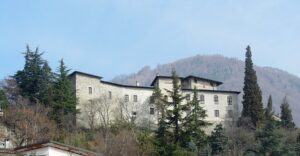
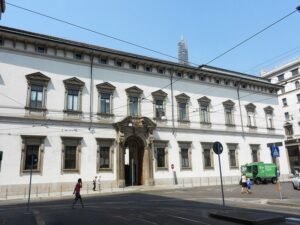
 The Royal Villa of Monza is much more than a palace: it’s a plunge into Italian history. Built between 1777 and 1780 by architect Giuseppe Piermarini at the behest of Archduke Ferdinand of Austria (with funds from Empress Maria Theresa), this neoclassical residence is a gem that has witnessed entire dynasties: from the Habsburgs to Napoleon (who made it the residence of his stepson Eugène de Beauharnais), and then the Savoys. Umberto I and Margherita chose it as their summer home, and from here the king departed for the last time on July 29, 1900, the day of his assassination.
Today, you can visit the royal apartments and state rooms: 28 rooms that recount courtly splendor, furnished with period pieces and stuccowork by Giocondo Albertolli. The ballroom is the highlight, with frescoes and mirrors that leave you awestruck. But the surprise is on the second floor: since 2022, the “Reggia Contemporanea” project has brought over a hundred works of 20th-century Italian art and design, from Gio Ponti to Carol Rama, creating an unexpected dialogue between ancient and modern.
Outside, the Royal Gardens (40 hectares) are an English-style masterpiece: grottoes, ponds, and a Doric temple. Even larger is the Monza Park (700 hectares), the largest enclosed park in Europe, perfect for a walk or a picnic. The villa also hosts temporary exhibitions (in 2026, there’s “From Napoleon to Umberto II”) and a spectacular rose garden.
Tip: arrive around lunchtime, visit the palace in the morning, then enjoy the gardens. If you have time, the park is immense. And don’t miss the Niso Fumagalli Rose Garden in bloom in May. The Royal Villa is a place that stays in your heart.
Monza Cathedral: A Lombard Treasure and the Iron Crown
- Go to the page: Monza Cathedral: The Iron Crown and Lombard Treasures
- Via Canonica, Monza (MB)
- http://www.duomomonza.it
- Open in Google Maps
- View on Google Images
 If you're passing through Monza, the Cathedral is a must-see. Not only for its Gothic facade with white and green stripes, but because it houses one of Italy's most fascinating treasures: the Iron Crown. According to tradition, a nail from Christ's cross is set inside it. It was used to crown kings and emperors, from Charlemagne to Napoleon.
The Cathedral's origins date back to the late 6th century, when the Lombard queen Theodelinda had a palatine chapel built. The current building, however, is the result of a 14th-century reconstruction commissioned by the Visconti family and entrusted to Matteo da Campione, who designed the stepped facade and the rose window. Upon entering, your eyes are immediately drawn to the Theodelinda Chapel, on the left of the presbytery. It is a riot of 15th-century frescoes by the Zavattari brothers, telling the queen's story with vivid colors and plenty of gold. There, in a climate-controlled case, rests the Iron Crown.
Don't miss the Cathedral Museum and Treasury, in the basement. Here you'll find Lombard goldsmith works, including the famous Hen with Chicks, and other unique pieces. Visiting the chapel requires a reservation (phone 039 326383) and an additional fee. The museum is open Tuesday to Sunday, 9:00 AM to 6:00 PM. Entry to the basilica is free. In short, a place that extraordinarily unites faith, history, and art.
Monza Park: A Record-Breaking Green Lung
 When I think of Monza Park, the first thing that comes to mind is its vastness. With 732 hectares and a wall that stretches an impressive 14 kilometers, it's one of the largest enclosed parks in Europe – enough to make Versailles pale in comparison. Created in 1805 by order of Eugenio di Beauharnais, Napoleon's stepson, it was a model agricultural estate and hunting reserve. Designed by Luigi Canonica, today it is the green lung of Brianza, a perfect blend of nature and history. Inside you'll find everything: the Bosco Bello, one of the last lowland forests in Lombardy; the famous Monza Racetrack, temple of speed; and then farmhouses, mills, villas like Villa Mirabello, and even a land art work like 'Lo scrittore' by Giancarlo Neri. The flora is spectacular: hornbeams, horse chestnuts, lindens, and monumental trees that look like giants. The fauna? Red squirrels, foxes, woodpeckers, and if you're lucky you'll see a grey heron along the Lambro River. The park is open all year, free of charge, with hours that vary: in summer until 9:30 PM, in winter until 7:00 PM. My advice? Rent a bike at Cascina Bastia and ride along the tree-lined avenues: it's the best way to discover every corner. Bring a picnic, but if you prefer, there are bars and equipped areas. A place that gets under your skin, between the roar of engines and the silence of the woods.
Arengario: The Medieval Heart of Monza
- Piazza Roma, Monza (MB)
- Open in Google Maps
- View on Google Images
 In the heart of Monza, just steps from the Duomo, stands the Arengario, the ancient town hall that has represented the city's civil power since 1293. It was commissioned by podestà Pietro Visconti to free the administration from the influence of the Church, after podestà Bono was excommunicated in 1250 for using the Duomo's curtain. The building has a rectangular layout of 30.3 x 12.4 meters, with a wide portico of twenty arches supported by 18 stone pillars. Markets were once held here, and under the vaults the ancient units of measurement were kept. On the first floor, the great hall with wooden trusses hosted town council meetings and is now used for exhibitions and events. On the south side stands the Parléra, a stone loggia added in 1380 from which decrees were read to the people. The bell tower, 44 meters high, was erected in the mid-14th century and features Ghibelline battlements. Inside, in 1347, one of Italy's first wheel clocks was installed. The Arengario is currently closed for renovations, but it can be admired from the outside, its imposing mass visible in Piazza Roma, a short walk from the Royal Villa. If you're lucky, you might find one of the temporary exhibitions that periodically animate the hall open. A curiosity: under the portico, near the tower, a pillar bears deep grooves left by soldiers who sharpened their blades there for centuries.
Chapel of Atonement: The Memorial of the Regicide
- Via Matteo da Campione, Monza (MB)
- Open in Google Maps
- View on Google Images
 If you stroll from the center of Monza toward the Royal Villa, you can't miss that imposing stele standing against the sky: it's the Chapel of Atonement, a monument that sends a chill down your spine the moment you learn its history. This is the exact spot where, on July 29, 1900, anarchist Gaetano Bresci killed King Umberto I. A murder that marked Italy, and one that Victor Emmanuel III wanted to commemorate with an imposing memorial. The project was entrusted to Giuseppe Sacconi, the same architect of the Altar of the Fatherland in Rome, but the work was completed in 1910 by Guido Cirilli. The structure is all about contrasts: outside, an iron gate by Alessandro Mazzucotelli separates you from a manicured garden, while at the center rises a 35-meter-high stele in Oggiono stone, with two alabaster crosses that light up from within on the night of July 29. At its base, a bronze Pietà by Lodovico Pogliaghi invites reflection. But the true heart-stopper is descending into the Greek-cross crypt: there, on a black marble cippus, is engraved the date of the attack. Around it, mosaics replicating a starry sky and about 180 bronze crowns donated from all over Italy. A nearly mystical atmosphere that makes you forget you're just steps from the Monza Park. Admission is free, but hours are limited: Tuesday to Thursday 9:00-13:30, Friday and Saturday until 18:30, Sunday 9:00-13:30 (closed Monday). The entrance is at Via Matteo da Campione 8. I'd recommend pairing it with a walk in the park: the contrast between the peace of the greenery and the weight of history is something you'll hardly forget.
Monza Civic Museums: Hidden Treasures in the Casa degli Umiliati
- Go to the page: Monza Civic Museums: Lombard Art from the Middle Ages to the Twentieth Century in the Arengario
- Via Regina Teodolinda 4, Monza (MB)
- https://www.museicivicimonza.it/
- Open in Google Maps
- View on Google Images
- info@museicivicimonza.it
- +39 039 2307126
 Just a stone's throw from the Duomo, the Monza Civic Museums occupy the ancient Casa degli Umiliati, a medieval building steeped in history. Upon entering, you're greeted by the Ara dei Modiciates, an inscription revealing the ancient name of the people of Monza. The route unfolds over two floors, covering about 900 square meters, blending archaeological finds (from the Bronze Age to the Middle Ages) with masterpieces from the 16th to the 20th century. The core of the collection stems from the Galbesi Segrè donation of 1923: paintings, prints, and ceramics that gave rise to the art gallery in 1935. On the first floor, ten rooms display works by Monza masters like Mosè Bianchi, Pompeo Mariani, and Eugenio Spreafico, alongside sculptures by Arturo Martini (the famous Leda and the Swan) and Marino Marini. Don't miss the two commodes by Giuseppe Maggiolini and the section dedicated to contemporary ceramics. The museum is very attentive to accessibility: it offers braille guides, audio descriptions, LIS videos, and tactile paths. It is part of the "Museum for All" project with guides in Easy to Read and AAC. Opening hours change with the seasons: in summer, on Thursdays it also opens from 8:00 PM to 11:00 PM. Admission costs €6, but is free on the first Sunday of the month and for under 18s. In short, a dive into Monza's history that's well worth a stop.
Museo del Duomo: Monza's Underground Treasure
- Go to the page: Monza Cathedral Museum: Lombard Treasures and the Iron Crown
- Via Lambro 2, Monza (MB)
- http://www.museoduomomonza.it/Pages/
- Open in Google Maps
- View on Google Images
- info@museoduomomonza.it
- +39 039 326383
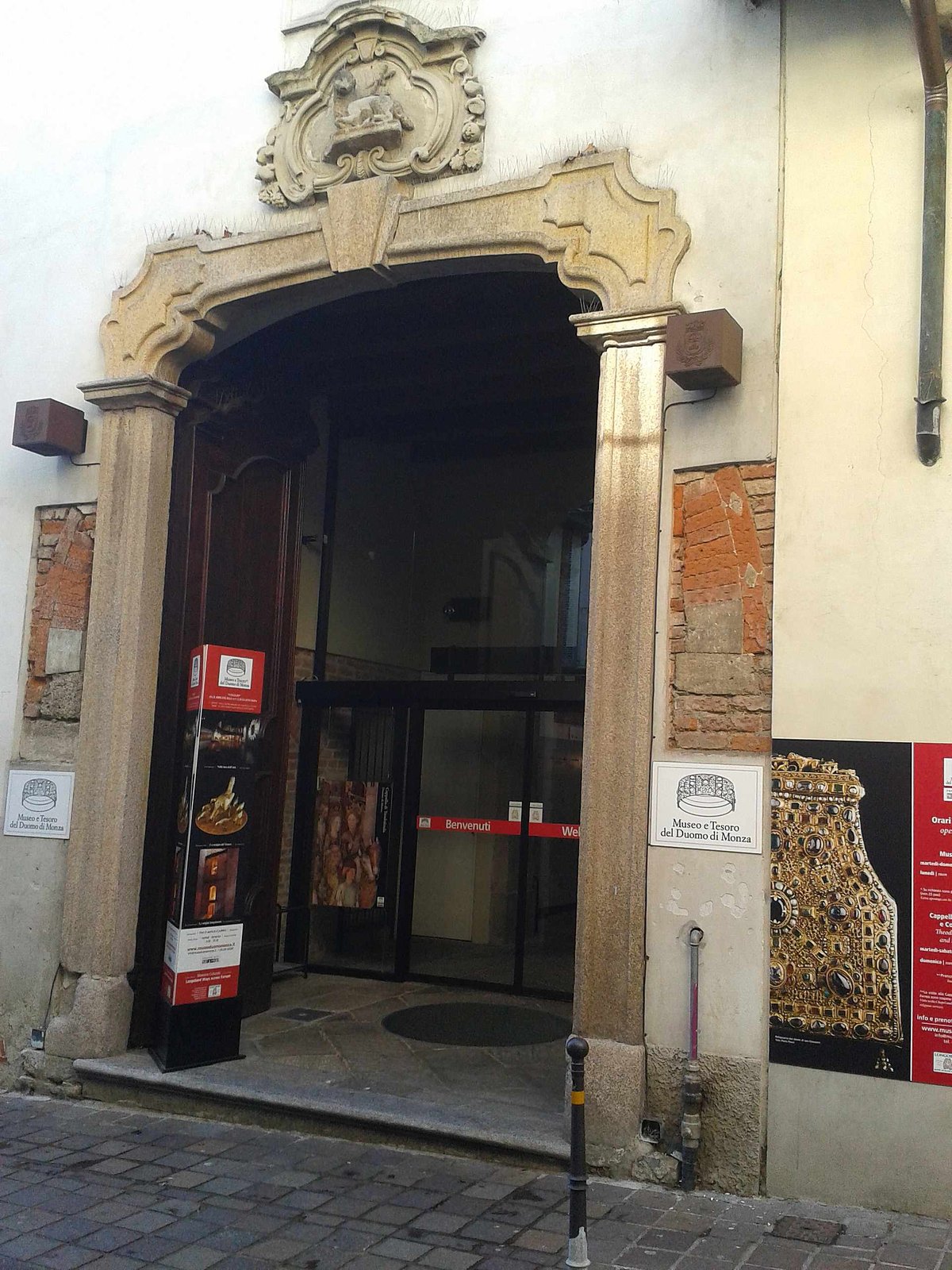 Going down into the underground of Monza's Duomo is like diving into 1400 years of history. The Museum and Treasure of the Duomo, opened in 2007 after a decade of work, is an underground gem designed by architect Cini Boeri. Here, treasures donated by the Lombard queen Theodelinda and her husband Agilulf are preserved, along with works that tell the story from the Middle Ages to the present day. There are two main sections: the Filippo Serpero (1963) with early medieval finds, and the Carlo Gaiani (2007) which collects works from the 14th century onward.
Among the highlights, one cannot fail to mention the famous Iron Crown – but to see it you have to go up to the Chapel of Theodelinda, with a mandatory guided tour. I, however, fell in love with the Hen with Chicks, a silver hen with seven chicks that looks ready to cluck: a Lombard masterpiece from the 7th century. And then the Stilicho Diptych, the Cross of Agilulf, the Chalice of Gian Galeazzo Visconti... in short, an endless list of wonders.
The layout is modern and well-cared for: the soft light enhances the objects, and the path winds through four rooms that follow the eras: Visconti, Sforza, Borromeo, and contemporary times. I particularly appreciated the section dedicated to Flemish tapestries and the large rose window, reassembled on a 12-meter wall.
Practical info: entrance from via Lambro 2, to the left of the Duomo. Open Tuesday to Sunday (9-13 and 14-18, ticket office until 17:30). Museum-only ticket €8 (reduced €6), but I recommend the combined museum + Chapel of Theodelinda for €14, which includes the guide. Beware: for the Chapel you need to book, even online. Closed on Mondays.
A museum you wouldn't expect, beneath one of the most beautiful squares in Brianza. Unmissable.
The Royal Gardens: A Dive into Nature and History
- Monza (MB)
- Open in Google Maps
- View on Google Images
 Behind the majestic Villa Reale lies one of Monza's green gems: the Royal Gardens, 40 hectares of pure beauty. Designed by Giuseppe Piermarini between 1778 and 1783 for Archduke Ferdinand of Austria, they are considered the first English garden created in Italy. Don't expect geometric Italian flowerbeds: here asymmetry reigns, with winding paths, rolling lawns, and views that look like paintings. The Swan Lake is the heart of the garden, surrounded by a neoclassical temple and a statue of Neptune, and populated by swans, ducks, and turtles. A little further, the Neogothic Tower and the Cave of Polyphemus add a romantic touch. If you love trees, you'll be amazed by the twin oaks planted by Eugenio Beauharnais, standing 26 meters tall with a circumference of nearly 6.5 meters. Don't miss the Niso Fumagalli Rose Garden (over 4,000 varieties of roses) and the perspective telescope aligning the villa with the mountains. The garden is free and opens daily: from November to February from 7:00 AM to 6:30 PM, and from March to October until 8:30 PM. A traveler's tip: go in spring when daffodils paint the lawn in front of the palace yellow, or in autumn for the foliage. Bring a book, find a bench in the shade of a sequoia, and let the rustling leaves lull you. Here, time seems to stand still.
Niso Fumagalli Rose Garden, a Corner of Fragrance
- Viale Cesare Battisti, Monza (MB)
- Open in Google Maps
- View on Google Images
 If you are passing through Monza, don't miss the Niso Fumagalli Rose Garden. It is located in the forecourt of the Royal Villa, a fragrant and colorful corner. Born in 1964 at the behest of industrialist Niso Fumagalli, the rose garden is a small masterpiece. The slightly undulating ground, a small lake, and well-kept paths frame over 4,000 varieties of roses. Among these, the Secret Garden of Fragrance stands out, with yew hedges and roses like 'Teodolinda 96' and 'Bella di Monza'. For years, the International Rose Competition was held here, with exceptional godmothers such as Grace of Monaco and Rita Levi Montalcini. Admission is free and opening hours are: Tuesday to Sunday, 9:00 AM–8:00 PM (closed Monday). I recommend visiting in spring or early summer, when the bloom is at its peak. Address: Viale Brianza, 1. Truly a place not to be missed, relaxing and full of history.