
🧭 What to Expect
- Ideal for a cultural weekend blending art, history and science, all within walking distance.
- UNESCO Heritage with the Botanical Garden from 1545 and Giotto's frescoed Scrovegni Chapel.
- Points of interest include the Basilica of Saint Anthony, Prato della Valle and Palazzo del Bo with Galileo's lectern.
- Practical tools: interactive map with 15 marked locations and suggestions for bookings and opening hours.
Events nearby


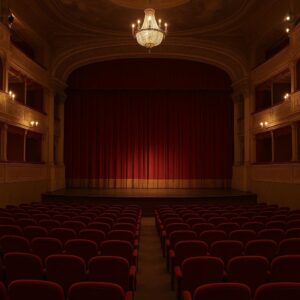
If you're planning a visit to Padua, get ready to discover a city that blends art, history, and science in surprising ways. It's not just the city of Saint Anthony: here you'll find the world's first university botanical garden (a UNESCO World Heritage site since 1997), the Scrovegni Chapel with breathtaking frescoes by Giotto, and the Basilica of the Saint, which attracts pilgrims from around the world. Walking through the historic center, you'll breathe in a lively atmosphere thanks to the University, one of the oldest in Europe. I recommend starting at Prato della Valle, Italy's largest square, perfect for a break before immersing yourself in museums and medieval palaces. Padua is compact: in a weekend, you can see the essentials without rushing, also enjoying typical local spots to taste spritz and cicchetti. I've gathered information from expert travel sites to give you realistic suggestions on opening hours, tickets, and walking routes.
Overview
- Orto Botanico 1545
- Basilica of Saint Anthony of Padua
- Scrovegni Chapel
- Prato della Valle: Italy's Largest Square
- Palazzo della Ragione: The Medieval Heart of Padua
- Padua Cathedral
- Santa Giustina Abbey
- Palazzo del Bo
- Caffé Pedrocchi: Padua's Historic Living Room
- Eremitani Church
- Civic Museums at the Eremitani
- Equestrian Monument of Gattamelata
- Piazza dei Signori
- Piazza delle Erbe
- Clock Tower
Itineraries nearby


Orto Botanico 1545
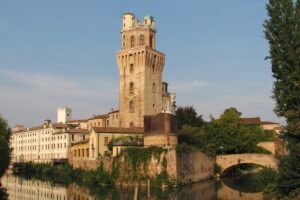
 If you think Padua is just the city of Saint Anthony, prepare for a pleasant surprise: Orto Botanico 1545 will change your mind. Founded in 1545 for the cultivation of medicinal plants, this site is the world's oldest university botanical garden still in its original location. Entering here means stepping back into the Renaissance, when science began exploring nature's secrets. The garden spans approximately two hectares and is divided into two main areas: the historic garden, with its elegant geometric layout, and the modern greenhouses, which house thematic collections. Don't miss the Goethe palm, a specimen of Chamaerops humilis that the German poet studied during his journey to Italy, and the garden of simples, where medicinal plants are still cultivated according to ancient traditions. Among the greenhouses, the succulent plant greenhouse stands out, featuring rare specimens from deserts worldwide. The atmosphere is incredibly peaceful, a green oasis just steps from the historic center, perfect for a refreshing break. Remember that the garden is part of the University of Padua and still maintains a strong educational and research focus. If visiting Padua with children, it's an ideal spot: many explanatory signs make the visit engaging even for the little ones. Admission is charged, but the ticket includes access to all areas, including temporary exhibitions that often enrich the experience.
Basilica of Saint Anthony of Padua
- Go to the page: Basilica of Saint Anthony of Padua: Tomb of the Saint and Donatello's Bronzes
- Piazza del Santo 11, Padova (PD)
- https://www.santantonio.org
- Open in Google Maps
- View on Google Images
 The Basilica of Saint Anthony, commonly known as the Saint, is the spiritual heart of Padua and one of the most important places of worship in the world. Built starting in 1232 to house the remains of the Franciscan saint, its architecture is a fascinating blend of styles: Romanesque, Gothic, and Byzantine, with its copper domes towering over the city skyline. As soon as you enter, you are struck by the grandeur of the interiors, where the works of Donatello stand out, such as the famous Crucifix and the bronze statues of the high altar. Don't miss the Treasury Chapel, which preserves precious relics related to Saint Anthony, and the Tomb of the Saint, a destination for pilgrims for centuries, always adorned with flowers and prayer notes. Outside, the Chapter Cloister and the Novitiate Cloister offer peaceful corners, while the equestrian statue of Gattamelata by Donatello, right in front of the basilica, is a masterpiece of the Renaissance. Remember that admission is free, but appropriate attire is required to visit this sacred place. If you want to avoid crowds, steer clear of holidays and peak hours, especially during celebrations related to the saint. The basilica is easily reachable on foot from the historic center, near Prato della Valle, and often hosts sacred music concerts that enrich the experience.
Scrovegni Chapel
- Go to the page: Scrovegni Chapel: Giotto's Frescoes and the Last Judgment
- Viale Giorgio Perlasca, Padova (PD)
- http://www.cappelladegliscrovegni.it
- Open in Google Maps
- View on Google Images
- +39 049 8204551
 If you visit Padua, you cannot miss the Scrovegni Chapel, an artistic gem that will leave you breathless. Commissioned by Enrico Scrovegni in the early 14th century to atone for his father's sins, this small chapel houses one of the world's most important fresco cycles, created by Giotto between 1303 and 1305. Upon entering, you'll find yourself immersed in an extraordinary visual narrative: the walls are entirely covered with scenes from the lives of Mary and Christ, from the Last Judgment to the Crucifixion, with a mastery that revolutionized Western painting. The spatial depth and expressiveness of the characters, rendered with vibrant colors and realistic details, will make you feel part of the story. The chapel is part of the Musei Civici agli Eremitani complex, where you can delve into Padua's history with archaeological finds and artworks. To preserve the frescoes, access is regulated by mandatory reservations and a climate control system that limits visit time to 15-20 minutes, but every moment is worth it. Remember to book online in advance, especially during peak season, and arrive at least 10 minutes before your scheduled time for the introductory briefing. The Scrovegni Chapel is not just a monument, but an experience that connects you directly and engagingly with medieval art, making it an unmissable stop for those who love history and beauty.
Prato della Valle: Italy's Largest Square
 When you arrive at Prato della Valle, the first thing that strikes you is the vastness of this space: with its 90,000 square meters, it's Italy's largest square and one of the largest in Europe. But it's not just about record-breaking dimensions: this place is a true urban gem that tells centuries of Paduan history. The current layout dates back to 1775, when Venetian architect Andrea Memmo transformed a marshy area into this neoclassical masterpiece. At the center, you'll find the Isola Memmia, an elliptical green island surrounded by a canal crossed by four bridges. Around the canal are arranged 78 statues of illustrious figures connected to the city, creating a sort of open-air pantheon that includes scientists, artists, military leaders, and popes. Among the most significant statues are those of Galileo Galilei, who taught in Padua, and Andrea Memmo himself. The central lawn is now a meeting place for students and families, perfect for a picnic or a relaxing stroll. On weekends, it comes alive with the largest antique market in Veneto, while in summer it hosts concerts and cultural events. Don't miss the view from the Abbey of Santa Giustina overlooking the square: the contrast between religious architecture and secular space is particularly striking. Prato della Valle is not just a square, but a microcosm of Paduan life where history, art, and daily life blend in a unique way.
Palazzo della Ragione: The Medieval Heart of Padua
 If you're looking for the true beating heart of Padua, you can't miss the Palazzo della Ragione, which dominates the Piazza delle Erbe and Piazza dei Frutti with its imposing medieval bulk. Built starting in 1218 as the seat of the city's courts, this building is a masterpiece of Paduan civic architecture. What leaves you breathless is the Hall on the first floor: at 81 meters long, it's one of the largest suspended halls in Europe, covered by a ceiling shaped like an inverted ship's keel that seems to float without visible supports. The walls are entirely covered by a cycle of 14th-century frescoes, attributed to Giotto and his school, depicting astrological, religious, and allegorical themes following a complex iconographic program. Unfortunately, a fire in 1420 damaged much of the originals, but the frescoes you see today, created afterward by Nicolò Miretto and Stefano da Ferrara, retain their medieval charm intact. At the center of the hall stands a large Stone of Vituperation, where insolvent debtors were once punished, and a replica of the Wooden Horse donated to the city in 1466. Today, the palace hosts temporary exhibitions, but visiting it is a journey back in time to communal Padua. Remember that access is ticketed and there are steep stairs to reach the hall, but it's absolutely worth it to admire a unique perspective on the city from its large windows.
Padua Cathedral
- Go to the page: Padua Cathedral: Menabuoi's Frescoes and Romanesque Crypt in the Historic Center
- Via Dietro Duomo, Padova (PD)
- Open in Google Maps
- View on Google Images
 Padua Cathedral, dedicated to the Assumption of Mary, is the city's main Catholic place of worship and a landmark of historical and artistic significance. Its history is fascinating: the current building, designed by Michelangelo in the 16th century, stands on earlier structures dating back to the 4th century, traces of which remain in the crypt. The simple, unfinished façade conceals a majestic interior, with a wide and luminous central nave enriched by valuable artworks. Among these, the presbytery with its inlaid wooden choir from the 1500s and the Chapel of the Blessed Sacrament, decorated with Renaissance frescoes, stand out. Don't miss the adjacent Romanesque baptistery, with its famous frescoes by Giusto de' Menabuoi vividly depicting biblical stories. The cathedral also houses the Diocesan Museum, where visitors can admire sacred artifacts, paintings, and sculptures tracing Padua's religious history. For visitors, it's an immersive experience: the intimate atmosphere invites contemplation, while architectural details like the cross vaults and Gothic windows bear witness to centuries of devotion and art. It's advisable to check opening hours, as they may vary for religious services, and to take a moment for the tranquility of the inner cloister.
Santa Giustina Abbey
- Go to the page: Santa Giustina Abbey in Padua: Renaissance Basilica and Monumental Cloister
- Via Giuseppe Ferrari, Padova (PD)
- https://www.abbaziasantagiustina.org/
- Open in Google Maps
- View on Google Images
 If you're looking for a place where history, art, and spirituality blend into an atmosphere of peace, Santa Giustina Abbey is an unmissable stop in Padua. Located just steps from Prato della Valle, this imposing Benedictine basilica holds centuries of stories, starting from its foundation in the 5th century on the tomb of Saint Giustina, a Christian martyr. The current building, in Renaissance style, dates back to the 16th century and impresses with its majestic white marble facade and dome that dominates the city skyline. Upon entering, you are welcomed by a solemn and luminous interior, with wide naves and a finely carved wooden choir. Here you can admire masterpieces such as the Altarpiece of Saint Giustina by Paolo Veronese, depicting the saint in glory, and the frescoes by Giovanni Battista Zelotti. Don't miss the crypt, where the relics of saints and martyrs rest, including those of Saint Luke the Evangelist and Saint Matthias the Apostle, making the abbey an important pilgrimage site. The atmosphere is intimate and silent, perfect for a moment of reflection away from the crowds. If you visit Padua, dedicating an hour to this place will give you an authentic experience, off the beaten path, and a taste of the city's deep religious and artistic tradition.
Palazzo del Bo
- Via Otto Febbraio 2, Padova (PD)
- Open in Google Maps
- View on Google Images
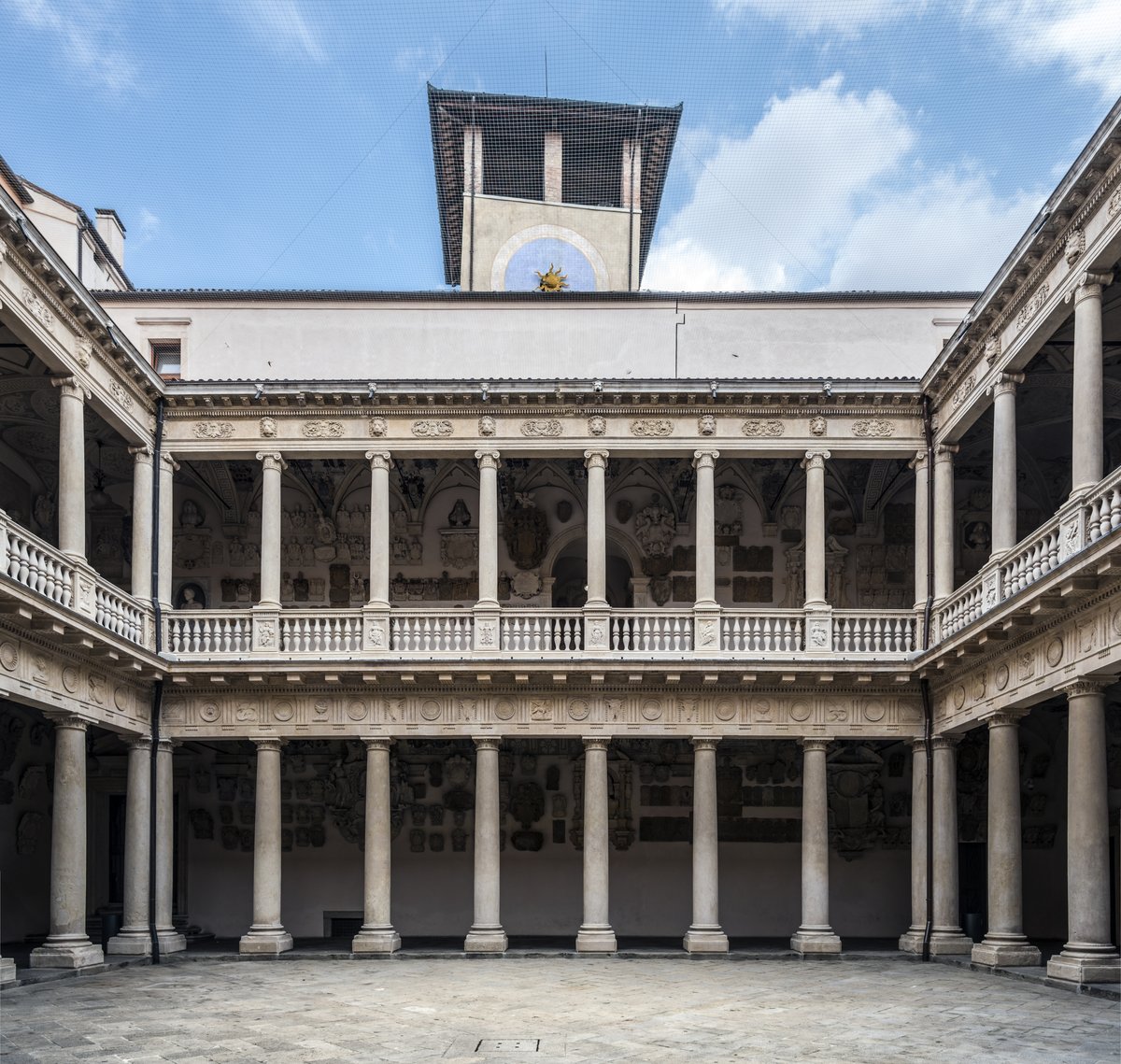 If you're looking for a place that embodies Padua's essence as a city of knowledge, Palazzo del Bo is an unmissable stop. This building, the historic seat of the University of Padua since 1493, is not just a Renaissance palace but a true symbol of knowledge that has spanned centuries. Upon entering, you'll breathe in a unique atmosphere: here taught Galileo Galilei, who held mathematics lectures for 18 years, and Nicolaus Copernicus, while among the illustrious students are William Harvey, discoverer of blood circulation, and the world's first woman to graduate, Elena Lucrezia Cornaro Piscopia in 1678. The guided tour (mandatory, bookable online or on-site) takes you through elegant courtyards, like the Ancient Courtyard with its double loggia, and halls steeped in history. Don't miss the Aula Magna, where academic ceremonies still take place today, and the evocative Sala dei Quaranta, which houses Galileo's original lectern and a collection of coats of arms from foreign students. A curious detail: the name "Bo" comes from the sign of an ancient inn ("Al Bo," meaning at the ox) that stood here before the university. Today, besides being a museum, the palace is an active campus, so you might encounter students within its centuries-old walls. For science and history enthusiasts, it's an experience that directly connects you with the roots of modern European thought.
Caffé Pedrocchi: Padua's Historic Living Room
- Via Otto Febbraio 15, Padova (PD)
- https://www.caffepedrocchi.it/
- Open in Google Maps
- View on Google Images
- +39 049 8781231
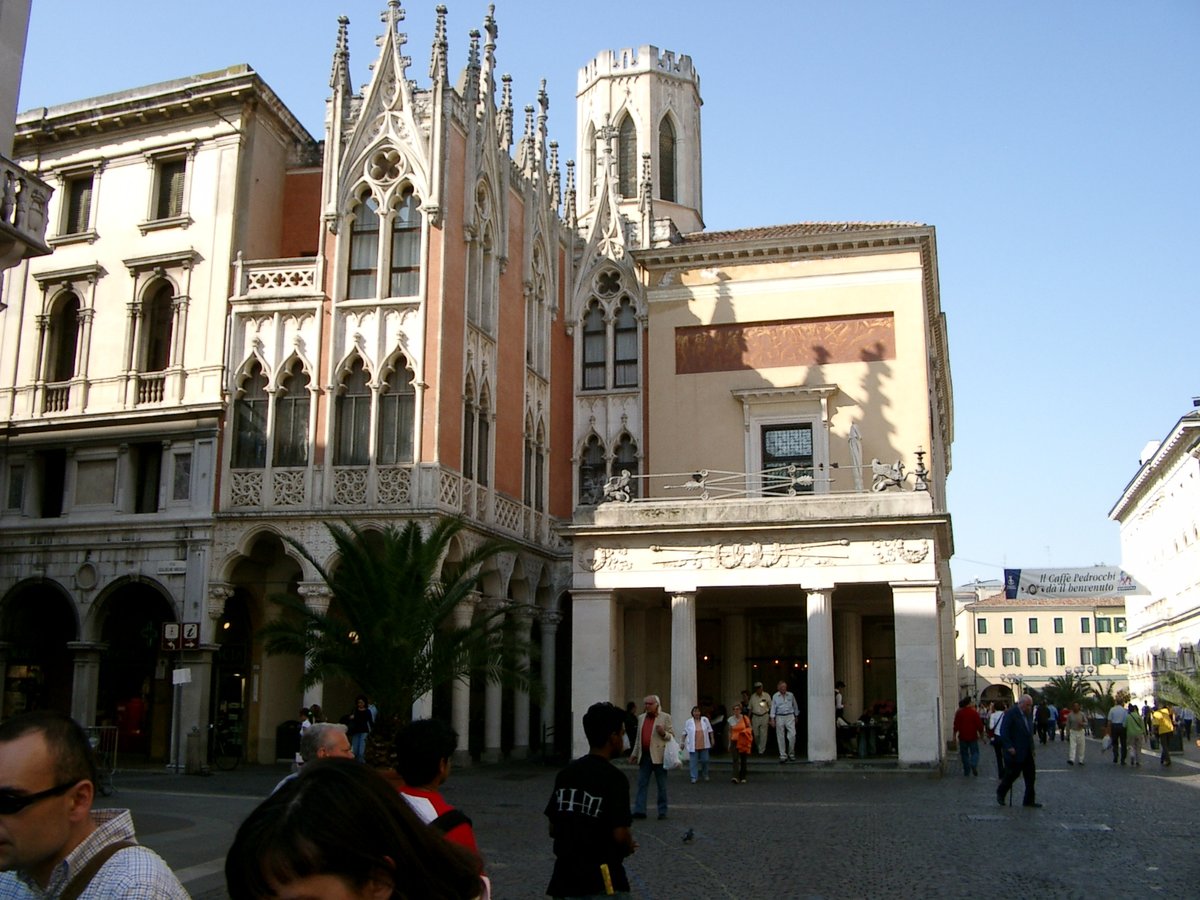 If you're looking for a place that tells the soul of Padua, Caffé Pedrocchi is an unmissable stop. It's not just a café: it's a living monument, nicknamed 'the doorless café' because until 1916 it remained open day and night, becoming a crossroads for intellectuals, students, and revolutionaries. Upon entering, you're immediately struck by the neoclassical architecture, with its white marble façade and elegant interior rooms. The Red Room, the Green Room, and the White Room are not just spaces for drinking coffee, but historical settings where politics and art were discussed in the 19th century. Here, in 1848, the student revolt against the Austrians broke out, and even today you can see a bullet hole in the wall of the Red Room, a tangible reminder of that period. Today, Pedrocchi is perfect for a break: try the famous Pedrocchi coffee, served with cream and mint, or the lemon sgroppino, a local delight. On the upper floor, the Museum of the Risorgimento offers an in-depth look at national history, with documents and memorabilia. It's a place where time seems to have stood still, ideal for immersing yourself in the cultured and rebellious atmosphere of Padua.
Eremitani Church
- Piazza Eremitani, Padova (PD)
- Open in Google Maps
- View on Google Images
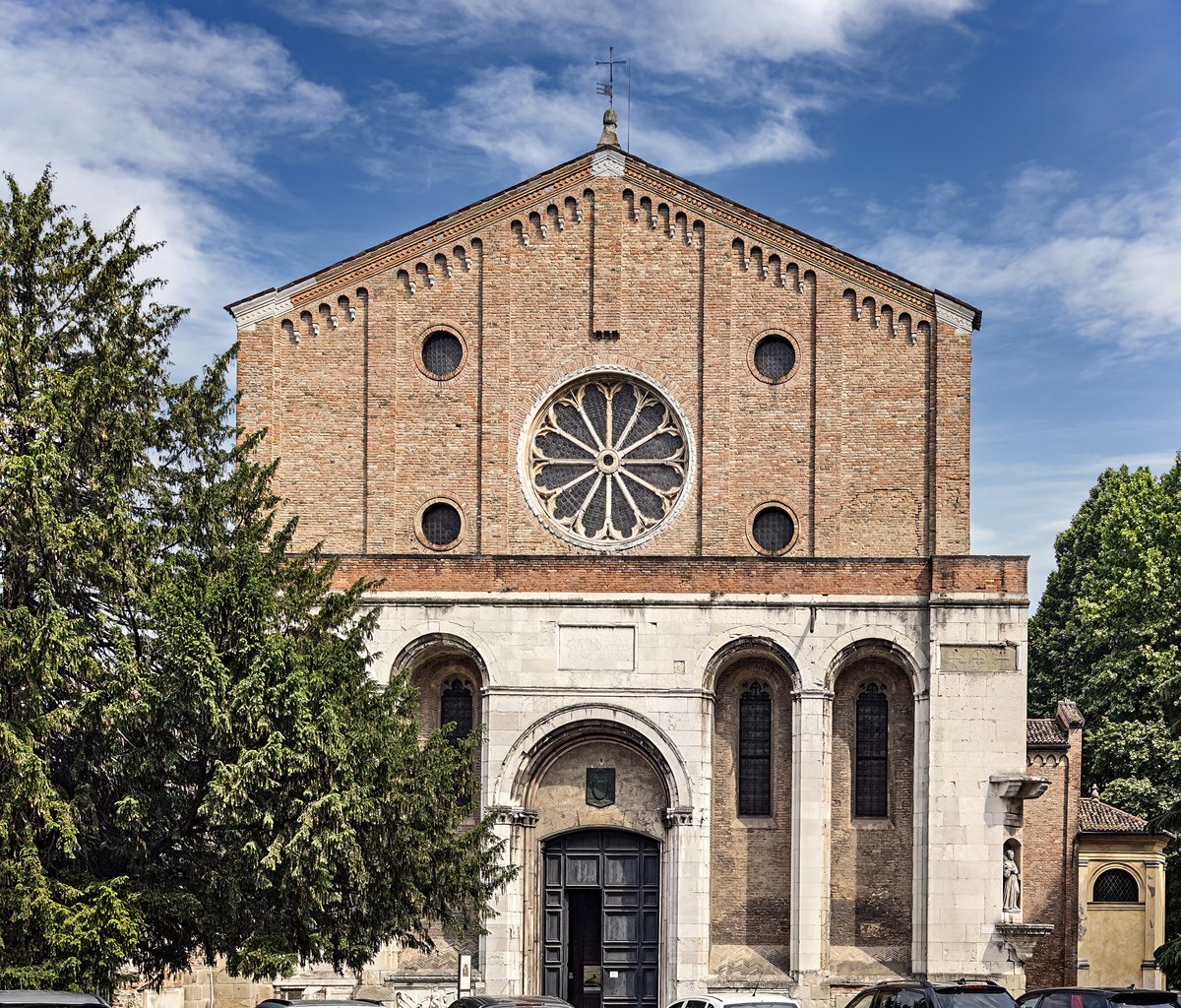 If you think Padua is only the Scrovegni Chapel, the Eremitani Church will surprise you. This place, often overlooked by the busiest tourist circuits, is an authentic treasure trove of art and history. Built in the 13th century for the Augustinian order, the church is a rare example of Gothic architecture in the city, with its brick facade and slender bell tower. But it's inside that its soul is revealed. Here, in the Ovetari Chapel, you'll find the frescoes by Andrea Mantegna, created when the artist was just over twenty years old. The scenes from the lives of Saint James and Saint Christopher are masterpieces of the Renaissance, known for their revolutionary perspective and realistic details. Unfortunately, during World War II, a bombing severely damaged the chapel, destroying much of the frescoes. Today, thanks to meticulous restoration, you can admire the surviving fragments and reconstructions, which tell a story of resilience. The church also houses the tomb of Marco Mantova Benavides, a 16th-century jurist, with an imposing funerary monument. The atmosphere is intimate and quiet, far from the tourist chaos. Next door, the Civic Museums at the Eremitani complete the visit with archaeological finds and works of art. A tip: take time for the details, like the carved capitals and stained glass windows, which make this place unique in the Paduan landscape.
Civic Museums at the Eremitani
- Piazza Eremitani, Padova (PD)
- Open in Google Maps
- View on Google Images
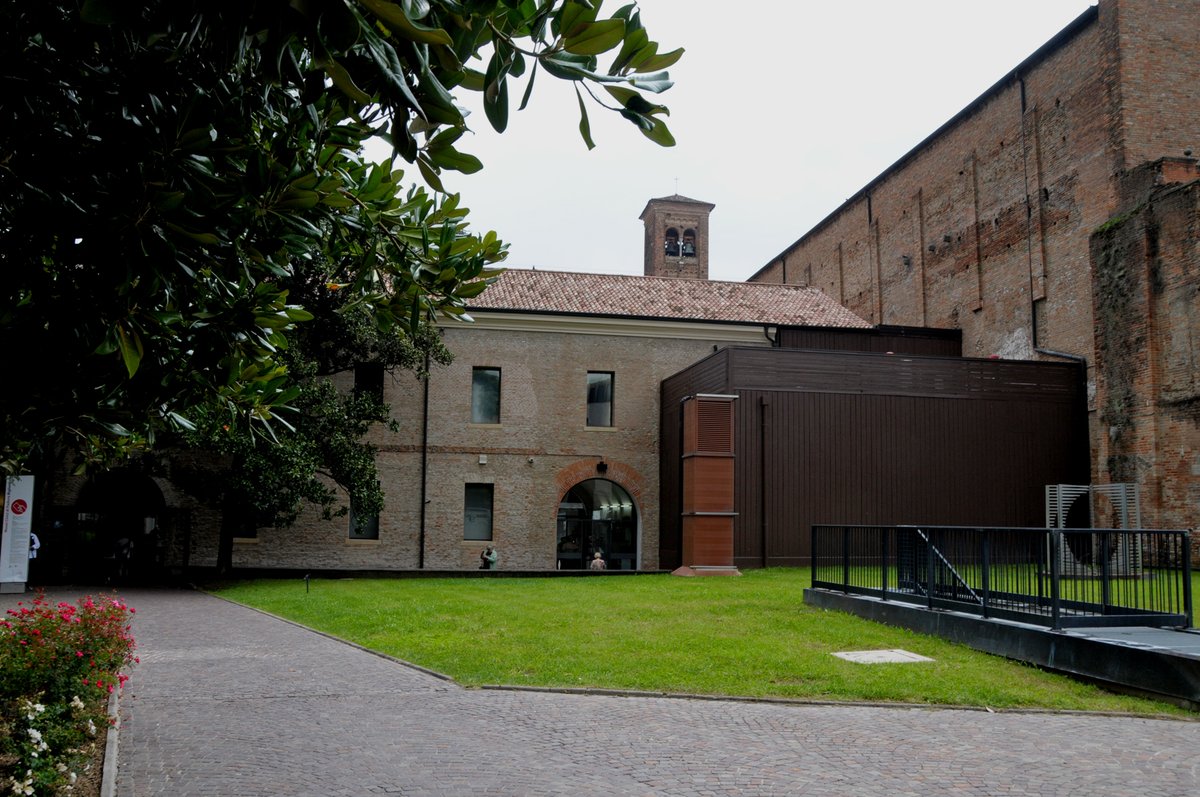 If you're looking for a place that tells the complete story of Padua, the Civic Museums at the Eremitani are an unmissable stop. Located in the former Eremitani convent, next to the church of the same name, these museums offer a fascinating journey through centuries of art and culture. The visit begins with the archaeological section, where you can admire artifacts ranging from pre-Roman to Roman times, including mosaics and everyday objects. But it's the art gallery that takes your breath away: here you'll find works by masters like Giotto, with his frescoes detached from the Scrovegni Chapel, and masterpieces by Guariento, Jacopo Bellini, and Andrea Mantegna. Don't miss the famous Giotto's Crucifixion, a work that marks the beginning of modern painting. The museum also houses a collection of applied arts, with ceramics, glassware, and antique furniture. The atmosphere is intimate and quiet, perfect for immersing yourself in art without rush. Remember that admission often includes access to the nearby Scrovegni Chapel, so plan your visit to enjoy both sites. The Civic Museums at the Eremitani are a treasure little known to hurried tourists, but for art lovers, they represent the beating heart of Padua.
Equestrian Monument of Gattamelata
- Go to the page: Equestrian Monument to Gattamelata: Donatello's Masterpiece in Padua
- Piazza del Santo, Padova (PD)
- Open in Google Maps
- View on Google Images
 If you visit Padua, you cannot miss the Equestrian Monument of Gattamelata in Piazza del Santo, right in front of the Basilica of Saint Anthony. Created by Donatello between 1447 and 1453, it is considered the first great equestrian bronze of the Italian Renaissance and an absolute masterpiece of sculpture. It depicts Erasmo da Narni, known as Gattamelata, a famous Venetian condottiero who served the Republic of Padua. The statue, over 3 meters tall, rests on a high marble base and shows the condottiero on horseback in a proud and controlled pose, with a calm yet determined expression. Donatello carefully studied horse anatomy, drawing inspiration from classical Roman models like the Marcus Aurelius in Rome, but adding a realism and vitality typical of the Renaissance. Observe the details: the horse's mane, the condottiero's armor, the sword at his side. The monument is strategically positioned to be seen from different angles, creating a monumental effect that dominates the square. To appreciate it fully, walk around it: from each side you'll discover different perspectives that highlight Donatello's mastery. Its location is not random: it stands near Gattamelata's tomb in the Basilica, creating a visual link between the memory of the condottiero and his public representation. Today it's a meeting point for tourists and locals, often photographed with the Basilica in the background. No ticket is needed to admire it: it's always accessible outdoors, day and night. For a complete view, approach the base to read the Latin inscriptions that tell its story. If you're an art enthusiast, you'll notice how this bronze influenced generations of later sculptors, becoming a model for equestrian monuments throughout Europe. In Piazza del Santo, Gattamelata silently dialogues with the majestic Basilica, creating a perfect blend of art, history, and devotion that characterizes Padua.
Piazza dei Signori
- Piazza dei Signori, Padova (PD)
- Open in Google Maps
- View on Google Images
 If you're looking for the meeting point between medieval and Renaissance Padua, Piazza dei Signori is the perfect place. This rectangular square, surrounded by historic buildings, has been the center of the city's political power for centuries, as its name suggests. Today, it's a vibrant public space where you can breathe in the daily life of Padua's residents, with its outdoor cafes and the characteristic market that animates the mornings. The architectural focal point is undoubtedly the Loggia della Gran Guardia, an elegant Renaissance portico completed in 1533, which once hosted meetings of the city council. Next to it stands the Palazzo del Capitanio, with its imposing facade and arched entrance leading to the inner courtyard. But the element that immediately catches the eye is the Torre dell'Orologio, built between 1426 and 1430. It's not just a beautiful example of Gothic architecture: its astronomical clock, added in 1437, is one of the oldest still functioning in the world. It shows lunar phases, zodiac signs, and hours—a true gem of medieval technology. The square is also the ideal starting point for exploring the historic center: from here, you can reach the Palazzo della Ragione and the nearby Piazza delle Erbe in just a minute. In the morning, especially on Saturdays, the square fills with stalls selling fruit, vegetables, and local products, offering an authentic glimpse into Paduan life. In the evening, the atmosphere becomes more tranquil, illuminated by lights that highlight the pale stones of the buildings. A tip: stop to watch the tower clock when it strikes the hour, a ritual that has marked time in the city for centuries.
Piazza delle Erbe
- Piazza delle Erbe, Padova (PD)
- Open in Google Maps
- View on Google Images
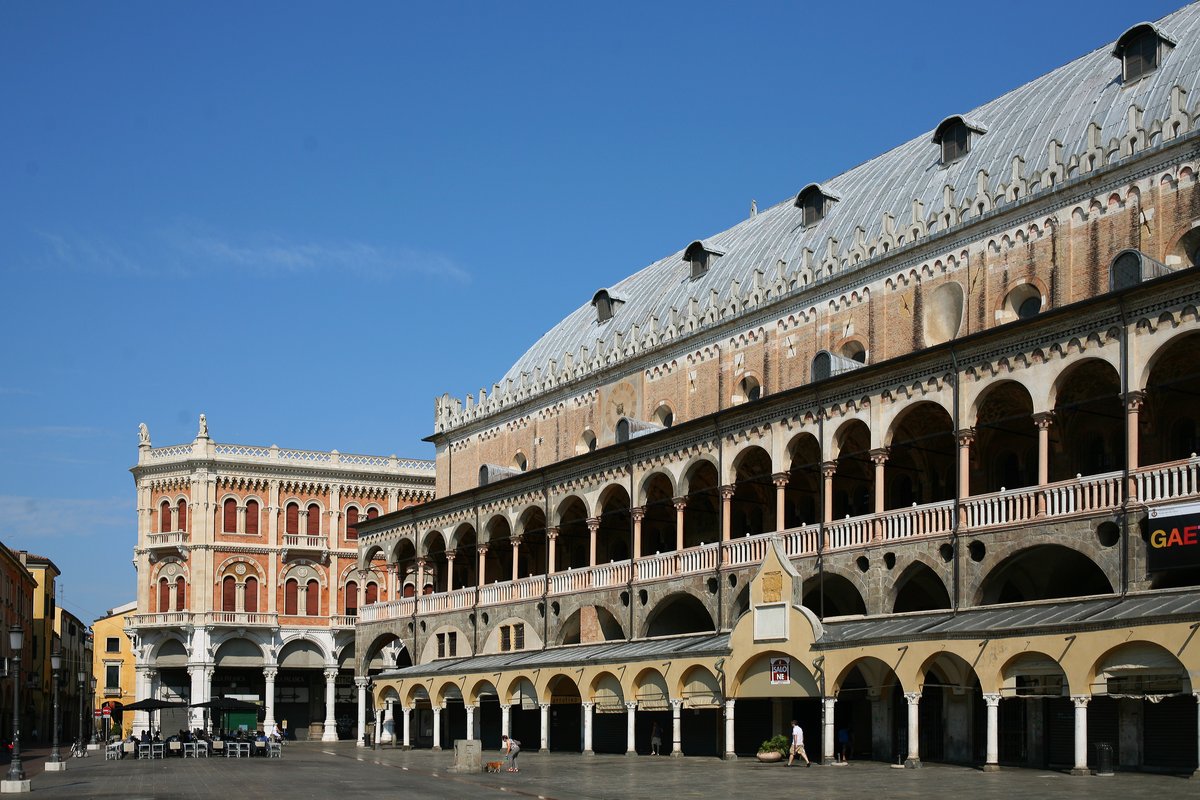 If you're looking for the authentic soul of Padua, Piazza delle Erbe is the right place. This rectangular square, flanked by its twin Piazza dei Frutti, has been the commercial and social center of the city for centuries. Here, every morning (except Sunday), the oldest open-air market in Padua takes place, with colorful stalls selling fruit, vegetables, flowers, and local products—an experience that immerses you in the daily life of Paduans. The square is dominated by the majestic Palazzo della Ragione, with its imposing ship's keel roof and medieval frescoes inside, one of the city's symbols. Under its arcades, you'll find historic shops and places to take a break. At one end of the square, note the Colonna del Peronio, an ancient Roman column that once marked the starting point for official measurements. Piazza delle Erbe isn't just about shopping: it's a place where history and daily life blend, perfect for observing city life and savoring the genuine atmosphere of Padua.
Clock Tower
- Volto dell'Orologio, Padova (PD)
- Open in Google Maps
- View on Google Images
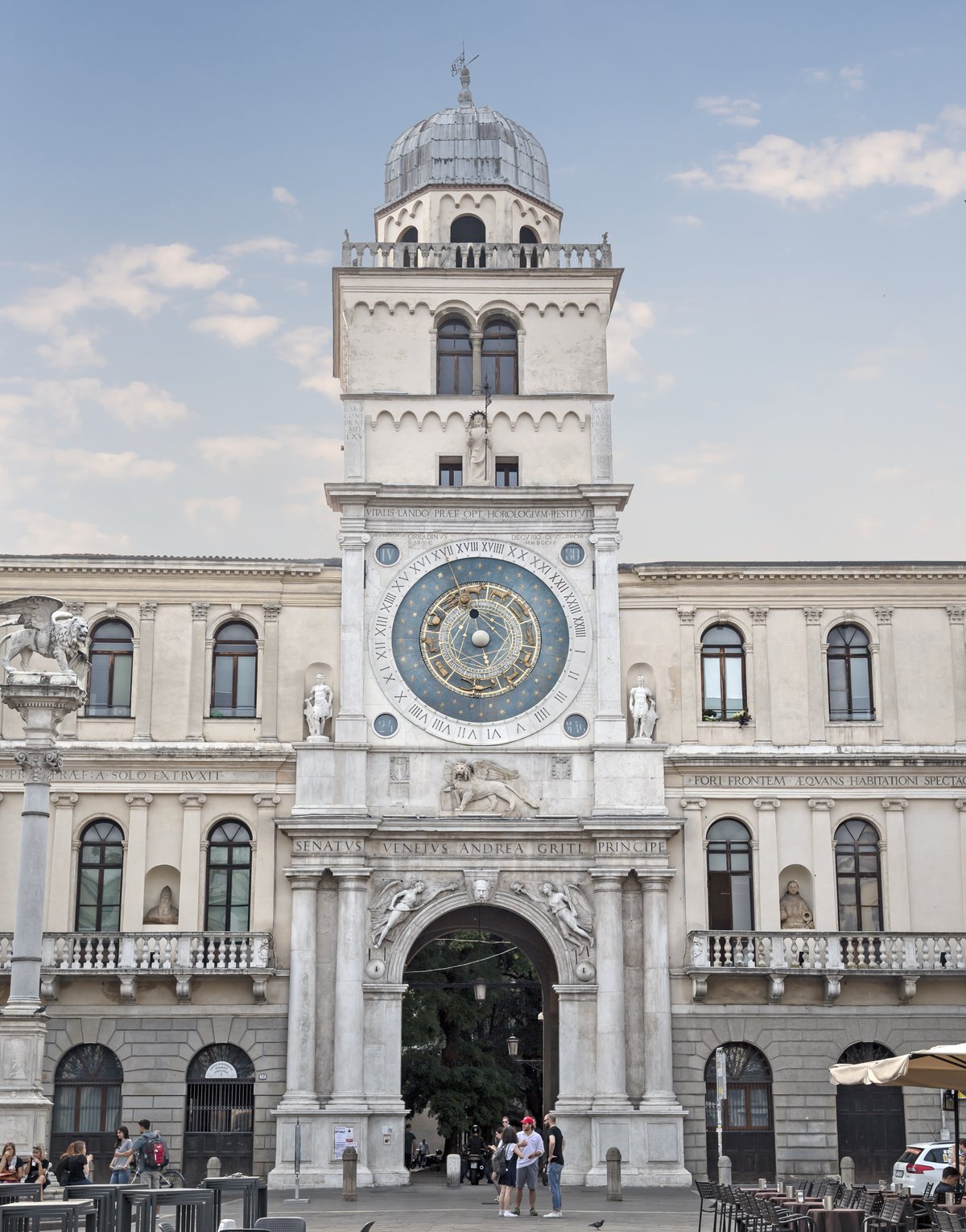 If you're looking for a landmark in Padua's historic center, the Clock Tower is impossible to miss. It stands majestically between Piazza dei Signori and Piazza dei Frutti, right above the passageway connecting these two lively squares. Built in the 14th century and later renovated in 1437, this tower is not just a clock but a masterpiece of Renaissance engineering and art. The astronomical dial, added in 1437, is one of the oldest in Italy and shows not only the hours but also the moon phases, zodiac signs, and the sun's position. It's a true celestial calendar that still works perfectly today, thanks to an original mechanism restored several times over the centuries. Climbing its 78 steps (yes, I counted them!) leads to a panoramic terrace offering a breathtaking view over Padua's rooftops, with the Basilica of Saint Anthony and Prato della Valle on the horizon. The tower is managed by the Civic Museums of Padua, and access requires a fee, but it's worth every euro to admire its historical gears and the view up close. Note: visiting hours may vary, so always check before going. If you pass by here, look up: the golden hands and blue dial will tell you centuries of Paduan history.