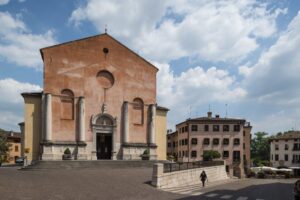
Coronini Cronberg Palace is a museum in the heart of Gorizia that combines art and nature. The 18th-century palace houses art collections with works attributed to Titian and period furniture, while the 7-hectare historic park features tree-lined paths, statues, and a relaxing atmosphere. It is easily accessible on foot from the center and away from crowded tourist circuits.
- Art collections with Venetian school paintings and original period furniture
- 7-hectare historic park with centuries-old trees, fountains, and shaded paths
- Tranquil and authentic atmosphere, away from tourist crowds
- Accessibility just a few minutes’ walk from Gorizia’s historic center
Introduction
In the heart of Gorizia, just steps from the historic center, stands Palazzo Coronini Cronberg, an oasis of art and tranquility that surprises with its discreet elegance. It’s not just a museum, but a living place where history and nature blend: the 18th-century palace, with its sober facade, hides interiors rich with art collections, while the historic park of over 7 hectares offers a green refuge with centuries-old trees and shaded paths. Strolling here, you forget you’re in the city, immersed in an atmosphere that combines aristocratic charm with the peace of an English garden. It’s the perfect destination for those seeking a cultural break without sacrificing relaxation, away from the crowds yet just a few minutes’ walk from the main streets. A corner of Gorizia that tells stories of nobles, artists, and botanists, all to be discovered at a leisurely pace.
Historical Overview
The history of the palace begins in the 18th century, when the Coronini family, originally from Gorizia, initiated its construction on an area already inhabited during the medieval period. In 1830, Count Alfredo Coronini expanded the residence, enriching it with art collections and a library that today houses thousands of volumes. The palace then passed to the Cronberg family through marriage, becoming a cultural salon frequented by intellectuals and artists. During World War I, it was damaged but later restored, maintaining its role as a center of aristocratic life. Today, managed by the Coronini Cronberg Foundation, it is a museum preserving furniture, paintings, and period objects, witnesses to centuries of local history. Its evolution reflects the events of Gorizia, from a border city to a crossroads of cultures.
- 18th century: Construction begins at the behest of the Coronini family.
- 1830: Expansion and enrichment of collections under Count Alfredo Coronini.
- 19th-20th century: Transition to the Cronberg family and role as a cultural salon.
- World War I: Damage and subsequent restoration.
- Today: Management as a museum and public park by the Coronini Cronberg Foundation.
The Park: A Secret Garden in the City
The true treasure of Palazzo Coronini Cronberg is its historic park, an English garden that stretches across gentle slopes and hidden valleys. Designed in the 19th century, it hosts monumental trees such as Lebanese cedars, sequoias, and centuries-old beeches, some over 200 years old. Strolling along the pathways, you’ll encounter picturesque corners: the Neptune Fountain, a natural pond inhabited by ducks, and remnants of old greenhouses that once cultivated exotic plants. In spring, the blooms of rhododendrons and azaleas create splashes of color, while in autumn the foliage turns red and gold. It’s an ideal place for a peaceful break, a picnic in the shade, or reading on a bench, away from urban noise. The park also hosts summer events, such as open-air concerts, which enliven its quiet atmospheres.
Art Collections: From Titian to Historic Furniture
Inside the palace, the rooms preserve diverse art collections spanning from the Renaissance to the 19th century. Venetian school paintings stand out, such as works attributed to Titian and Palma il Giovane, alongside family portraits that recount the stories of the Coronini and Cronberg families. The halls are furnished with period pieces, including canopy beds, inlaid desks, and crystal chandeliers, recreating the atmosphere of a noble residence still lived in. Particularly interesting is the ballroom, with Neoclassical frescoes and an original wooden floor, where parties and receptions were once held. Guided tours, often available by reservation, reveal anecdotes about previous owners and the restorations that have preserved these spaces. It’s a journey through time that captivates art and history enthusiasts.
Why Visit It
Visiting Palazzo Coronini Cronberg is worthwhile for at least three practical reasons. First, it offers a unique blend of culture and nature: in a single stop, you can admire precious artworks and relax in a centuries-old park, without needing to travel to the outskirts. Second, it is easily accessible: located just a few minutes’ walk from Gorizia’s city center, it’s perfect for a short trip even if you have limited time, perhaps combined with a visit to the Castle or the Cathedral. Third, the temporary exhibitions and events, often focused on local themes such as border history or Friulian art, enrich the experience with ever-changing content. Additionally, park admission is free during certain hours, making it an economical choice for a refreshing stroll.
When to Visit
The most enchanting time to visit Palazzo Coronini Cronberg is in late spring or early autumn, when the park is at its peak splendor: in May, blooms burst into vibrant colors, while in September and October, the autumn foliage creates warm, romantic atmospheres. To avoid crowds, I recommend going early in the morning on weekdays, when the soft light illuminates the palace rooms and the park is nearly deserted, perfect for taking photos without distractions. In summer, evenings with outdoor events, such as concerts or readings, offer a magical atmosphere under the stars. In winter, the palace becomes a cozy refuge, with its heated rooms inviting you to explore the collections sheltered from the cold.
In the Surroundings
To enrich your visit, there are two thematic experiences not to be missed in the surroundings of Palazzo Coronini Cronberg. Just a short walk away, the Castle of Gorizia, with its medieval towers and the Great War Museum, offers an in-depth look at the city’s borderland history, perfect for those who love historical contexts. Alternatively, for a food and wine experience, I recommend stopping at a typical osmiza in the Gorizia Karst, where you can sample local wines like Terrano and artisanal cured meats in a rustic and authentic atmosphere. Both locations connect well with the art and tradition theme of the palace, creating a coherent itinerary in the lesser-known Gorizia.