
🧭 What to Expect
- Ideal for art enthusiasts and travelers seeking authenticity beyond tourist trails.
- Includes an interactive map with 15 points of interest and less-traveled sestieri for a unique experience.
- Covers Renaissance masterpieces (Tintoretto, Titian) and modern art (Peggy Guggenheim).
- Offers panoramic views from the Clock Tower and St. George's Basilica.
Events nearby


The City of Venice is more than just a postcard: it's a labyrinth of canals, bridges, and alleyways where every corner tells a story. Get lost among the quiet squares away from the crowds and discover the secrets of a city that has lived on water for centuries. Here, you need a plan, because wandering aimlessly can waste precious time. In this guide, you'll find the must-see places, from St. Mark's Square to the less-traveled sestieri, with practical tips on getting around by vaporetto and ferry. Forget poetic descriptions: I'll tell you what's truly worth seeing, how to avoid queues, and where to find that authentic atmosphere you're looking for. Be prepared to walk, because in Venice, your legs are the best means of transport.
Overview
- St. Mark's Basilica
- Doge's Palace
- St. Mark's Square
- Rialto Bridge
- Santa Maria della Salute
- Basilica of Santa Maria Gloriosa dei Frari
- Bridge of Sighs
- Peggy Guggenheim Collection
- Basilica of San Giorgio Maggiore
- Scuola Grande di San Rocco
- Gallerie dell'Accademia
- Teatro La Fenice
- Ca' d'Oro: The Most Beautiful Palace on the Grand Canal
- Clock Tower
- Contarini del Bovolo Palace
Itineraries nearby



St. Mark's Basilica
- Go to the page: St. Mark's Basilica: Byzantine Mosaics, Pala d'Oro, and View from St. Mark's Square
- Piazza San Marco, Venezia (VE)
- http://www.basilicasanmarco.it/
- Open in Google Maps
- View on Google Images
 It's impossible to visit Venice without stopping at St. Mark's Basilica, the religious and artistic symbol of the city that dominates the square of the same name. Built in 828 to house the relics of St. Mark stolen from Alexandria, Egypt, this church is a unique example of Byzantine architecture in Italy, with Gothic and Renaissance influences added over the centuries. The exterior impresses with its five domes and façade covered in mosaics and polychrome marble, while the interior is a triumph of gold and light, with over 8,000 square meters of mosaics depicting biblical stories and the life of the saint. Don't miss the Pali d'Oro, an altar with 250 Byzantine enamels, and the Pala d'Oro, a masterpiece of medieval goldsmithing. Climbing to the terrace offers a breathtaking view of St. Mark's Square and the lagoon, and if you're lucky, you might attend an organ concert. Remember that admission is free, but to avoid long lines, book online or visit early in the morning. Appropriate attire is required: shoulders and knees must be covered.
Doge's Palace
- Go to the page: Doge's Palace: Hall of the Great Council, Bridge of Sighs, and Tintoretto's Art
- Ponte de la Canonica, Venezia (VE)
- Open in Google Maps
- View on Google Images
 The Doge's Palace is not just a building, but the very symbol of Venice's power and grandeur. Located in St. Mark's Square, this masterpiece of Venetian Gothic architecture served for centuries as the seat of the Serenissima's government, housing the Doge, courts, and prisons. Its facade of pink and white marble, with elegant loggias and columns, will leave you in awe even before you cross the threshold.
Inside, a fascinating journey awaits through sumptuous halls like the Hall of the Great Council, where Venetian nobles gathered, and the Scrutinio Room, rich with paintings celebrating the Republic's victories. Don't miss the Golden Staircase, an imposing staircase adorned with golden stuccoes leading to the Doge's apartments. Here, works by artists like Tintoretto and Veronese tell stories of glory and intrigue.
An unmissable stop is the Bridge of Sighs, connecting the palace to the prisons: cross it to imagine the sighs of the condemned seeing the lagoon for the last time. Today, the palace also houses the Opera Museum, with artifacts illustrating its architectural history. It's advisable to book tickets online to avoid queues, especially in high season, and to dedicate at least a couple of hours to the visit to appreciate every detail.
St. Mark's Square
 St. Mark's Square is the beating heart of Venice, a place that takes your breath away the moment you step into it. Affectionately called the drawing room of Europe, this square is much more than an open space: it's a concentration of history, art, and Venetian life. The first thing you notice is the grandeur of St. Mark's Basilica, with its Byzantine domes and golden mosaics that shine in the sun. Next to it, the St. Mark's Campanile offers a panoramic view of the lagoon, but remember that climbing it requires a ticket and can have queues, especially during peak season. To the right of the basilica, the Doge's Palace tells centuries of the Serenissima's power, with its frescoed halls and the famous Bridge of Sighs connecting to the prisons. Don't miss the Clock Tower, with its astronomical mechanism that has marked the hours since the Renaissance. The square is animated by historic cafes like Florian and Quadri, perfect for a coffee or aperitif, although prices are high. Watch out for the pigeons: they're iconic, but avoid feeding them to avoid fines. The pavement of trachyte and marble forms geometric patterns that guide the eye toward the sea, creating a unique optical effect. In the evening, the lighting and music from outdoor ensembles create a magical atmosphere. Practical tip: visit the square early in the morning to avoid the crowds and enjoy the silence, or at sunset to see the golden reflections on the basilica. It's accessible to everyone, but be mindful of raised sidewalks and wet areas during high water. St. Mark's Square is not just a must-see stop: it's the essence of Venice, where every corner tells a story.
Rialto Bridge
- Go to the page: Rialto Bridge: Renaissance arch with historic shops overlooking the Grand Canal
- Sotoportego de Rialto, Venezia (VE)
- Open in Google Maps
- View on Google Images
 The Rialto Bridge is not just a bridge; it's the living symbol of Venice. Built in 1591 based on Antonio da Ponte's design, it replaced a previous wooden structure that collapsed multiple times. Its imposing Istrian stone arch is a masterpiece of Renaissance engineering, designed to allow the passage of the largest vessels on the Grand Canal. As you climb the steps, you'll notice the twenty-four shops lining the central passage, divided into two rows by a portico. Here you'll find jewelers, glassmakers, and souvenir shops, a commercial tradition that has continued since the 16th century. The view from the bridge is spectacular: to the left, you can glimpse the Rialto Market with its fish and vegetable stalls; to the right, the Grand Canal winds between historic palaces like Ca' d'Oro and Palazzo Grassi. At night, the soft lighting creates a magical atmosphere, far from the daytime crowds. I recommend visiting at dawn to enjoy the golden light on the canal, or in the evening when the lights reflect on the water. Note: the bridge is always crowded, but it's worth every minute of waiting for that perfect snapshot capturing the essence of Venice.
Santa Maria della Salute
- Go to the page: Santa Maria della Salute: Baroque Basilica with Works by Titian and Views of the Grand Canal
- Campo de la Salute, Venezia (VE)
- Open in Google Maps
- View on Google Images
 When you arrive in Venice, it's impossible not to notice the majestic Santa Maria della Salute, standing at the entrance to the Grand Canal like a beacon of beauty and history. Built in the 17th century as a votive offering for the end of the plague that struck the city, this basilica is a masterpiece of Venetian Baroque, designed by Baldassare Longhena. Its octagonal shape, topped by a large dome and surrounded by volutes and statues, creates an iconic image reflected in the lagoon's waters. Upon entering, you'll be struck by the brightness of the interiors, with polychrome marbles and artworks by Titian and Tintoretto, including the famous 'Saint Mark Enthroned' in the sacristy. Its strategic location, opposite St. Mark's Square, makes it a privileged vantage point for admiring St. Mark's Basin and the Doge's Palace. Every November 21st, during the Feast of the Salute, Venetians cross a temporary bridge to attend mass, an ancient tradition that testifies to the city's deep connection with this place. Don't miss the chance to climb to the terrace for a unique panoramic view of Venice, perfect for taking unforgettable photos. Remember that entry is free, but a small contribution is required to access the sacristy and terrace, worth every penny for the experience it offers.
Basilica of Santa Maria Gloriosa dei Frari
- Go to the page: Basilica dei Frari: Masterpieces by Titian and Renaissance Monuments in Venice
- Calle Prima Larga, Venezia (VE)
- https://www.basilicadeifrari.it/
- Open in Google Maps
- View on Google Images
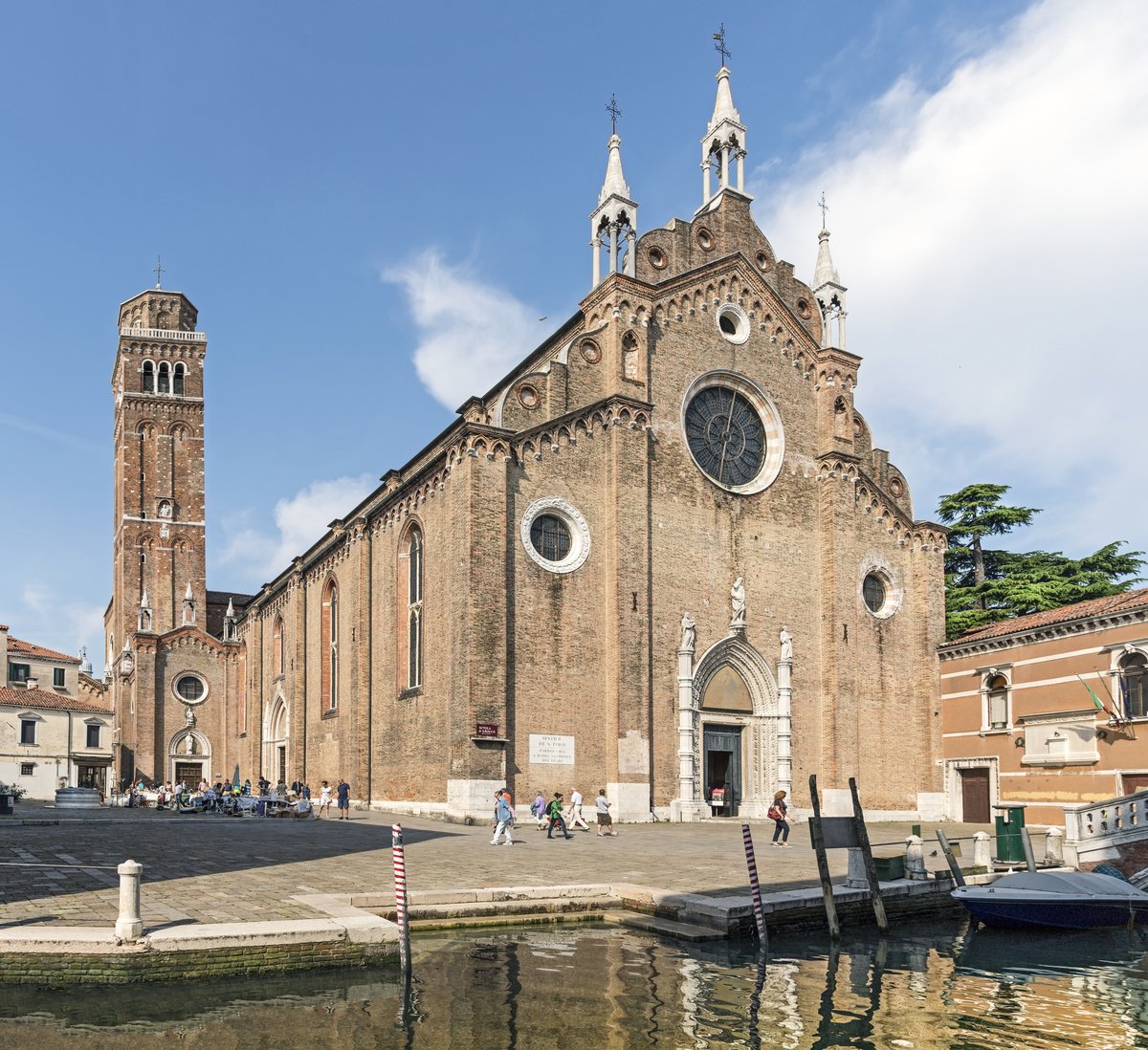 If you're seeking an authentic experience in Venice, away from the crowds of St. Mark's Square, the Basilica of Santa Maria Gloriosa dei Frari is an unmissable stop. This imposing Gothic church, built by the Franciscans between the 14th and 15th centuries, welcomes you in the tranquil Campo dei Frari, in the San Polo district. Its red brick facade and bell tower, second in height only to that of St. Mark's, immediately give you a sense of its grandeur. Upon entering, you'll be struck by the spaciousness of the three-nave interior, marked by Istrian stone columns and cross-vaulted ceilings. But the true treasure lies in the artworks: here you'll find the famous Assumption of the Virgin by Titian, a Renaissance masterpiece that dominates the high altar with its vibrant colors. Don't miss the funerary monument to Titian, created by his pupils, and the wooden sculpture of St. John the Baptist by Donatello, a rare example of the Tuscan master's work in Venice. The basilica also houses the tombs of doges and artists, such as the composer Claudio Monteverdi, adding a touch of Venetian history. Remember to dress appropriately (shoulders and knees covered) and check opening hours, as they may vary due to religious services. A tip: purchase the combined ticket with the nearby Scuola Grande di San Rocco to optimize your visit.
Bridge of Sighs
- Go to the page: Bridge of Sighs: Baroque Architecture and Prisoners' Passage in Venice
- Calle Santa Scolastica, Venezia (VE)
- Open in Google Maps
- View on Google Images
 The Bridge of Sighs is one of Venice's most iconic symbols, an architectural masterpiece that immediately captures attention. Built from Istrian stone in the early 17th century based on Antonio Contin's design, it connects the Doge's Palace to the New Prisons, spanning the Rio di Palazzo. Its romantic and evocative name originates from a legend: it's said that prisoners, passing through this covered bridge, would sigh while catching their last glimpse of freedom through the small windows. In reality, the term 'Sighs' was coined only in the 19th century by the poet Lord Byron, who immortalized its melancholic charm. The structure is an example of Venetian Baroque architecture, with intricate decorations and two latticed windows that allowed only glimpses of the outside world. Today, the bridge is accessible during a visit to the Doge's Palace, offering a unique perspective on the lives of prisoners from that era. Don't miss the external view from the Ponte della Paglia or from a boat, which provides unforgettable photographs, especially at sunset when the golden light illuminates the facade. Remember that the interior is only visitable with a ticket for the Doge's Palace, so plan ahead to avoid queues. The Bridge of Sighs is not just a tourist attraction, but a living piece of history that tells centuries of power, justice, and humanity in the Serenissima.
Peggy Guggenheim Collection
- Calle San Cristoforo, Venezia (VE)
- https://www.guggenheim-venice.it/
- Open in Google Maps
- View on Google Images
 If you think Venice is only about Renaissance and Baroque, prepare for a pleasant surprise: the Peggy Guggenheim Collection is an oasis of modern and contemporary art that will captivate you with its energy. Housed in the Palazzo Venier dei Leoni, an unfinished 18th-century building directly facing the Grand Canal, this home-museum preserves the lively spirit of its founder, the eccentric American patron Peggy Guggenheim. Upon entering, you'll be greeted by an intimate and personal atmosphere: it's not a conventional museum, but the home where Peggy lived for thirty years, furnished with period furniture and artworks that converse with each other. The permanent collection, one of the most important in Italy for 20th-century art, ranges from Cubism to Surrealism, from European Abstraction to American Abstract Expressionism. Here you can admire masterpieces by Picasso, Kandinsky, Magritte, Pollock, and Dalí, many of which Peggy purchased personally, often at bargain prices, demonstrating incredible foresight. Don't miss the famous "The Wait" by De Chirico or the sculptures by Marino Marini in the garden, including the controversial "Angel of the City" with its boldly mounted rider. The sculpture garden, with works by Moore and Giacometti, is a peaceful corner ideal for a break, while the terrace on the Grand Canal offers a unique view of the water. The collection is managed by the Solomon R. Guggenheim Foundation and often hosts high-level temporary exhibitions. It's recommended to book online to avoid queues, especially on weekends, and to dedicate at least a couple of hours to explore at a leisurely pace. It's an experience that combines art, history, and a dream location, perfect for those seeking something different from the usual Venetian itineraries.
Basilica of San Giorgio Maggiore
- Go to the page: Basilica of San Giorgio Maggiore: Palladian Architecture and Venice Views from the Bell Tower
- San Giorgio, Venezia (VE)
- Open in Google Maps
- View on Google Images
 If you're looking for a breathtaking view of Venice and an architectural masterpiece without the crowds of St. Mark's Square, the Basilica of San Giorgio Maggiore is your ideal destination. Located on the eponymous island facing the St. Mark's Basin, this church is a sublime example of Andrea Palladio's architecture, completed after his death in 1610. The white marble façade, with its Corinthian columns and triangular pediment, creates an elegant contrast against the sky and water, while the interior surprises with its brightness and austerity, typical of the Palladian style. Don't miss the Tintoretto altarpiece, 'The Deposition', which dominates the apse with its dramatic chiaroscuro. But the real highlight is the bell tower, accessible by elevator: from its top, at 75 meters high, you can enjoy a 360-degree panoramic view of Venice, the St. Mark's Basin, and the lagoon islands, often less crowded than that of St. Mark's. The island itself, with its adjacent Benedictine monastery (now home to the Giorgio Cini Foundation), offers a tranquil atmosphere, perfect for a break from the chaos of the city center. To reach it, just take a short ferry (vaporetto line 2) from San Zaccaria, with frequent departures. Remember to check opening hours, as the basilica is active for religious services, and consider a visit at sunset to see Venice light up as the sun sets over the lagoon.
Scuola Grande di San Rocco
- Ponte de la Scuola, Venezia (VE)
- http://www.scuolagrandesanrocco.it/
- Open in Google Maps
- View on Google Images
 If you think you've seen everything in Venice, prepare for a surprise: the Scuola Grande di San Rocco is one of those places that often escapes the busiest tourist routes, yet offers an unforgettable artistic experience. Located in the San Polo district, just steps from the majestic Basilica dei Frari, this Renaissance building was the headquarters of a lay confraternity dedicated to Saint Roch, protector of plague victims. What makes it unique in the world is the pictorial cycle by Jacopo Tintoretto, who worked here for over twenty years, from 1564 to 1587, decorating ceilings and walls with more than 60 canvases. Upon entering, you'll be breathless in front of the Sala dell'Albergo, where the dramatic Crucifixion stands out, considered one of the artist's masterpieces. Ascending to the upper floor, the Sala Capitolare offers a triumph of biblical scenes, such as Moses Striking Water from the Rock or the Gathering of Manna, all characterized by Tintoretto's intense use of light and movement. Don't miss the Sala Terrena, with the artist's early works, including the Annunciation and the Flight into Egypt, which already showcase his innovative style. The scuola is also an example of Venetian architecture, with its Istrian stone facade and sober interiors that contrast with the richness of the paintings. A practical tip: purchase the combined ticket with the nearby Church of San Rocco, where the saint's remains rest, for a complete experience. Remember it's open year-round, but avoid peak hours to enjoy the artworks in peace. For art enthusiasts, it's a must-see stop that rivals the city's most famous museums, offering a journey into sixteenth-century Venice without the crowds of St. Mark's Square.
Gallerie dell'Accademia
- Go to the page: Gallerie dell'Accademia: Masterpieces by Giorgione and Titian in Three Historic Buildings
- Campo de la Carità 1050, Venezia (VE)
- https://www.gallerieaccademia.it/en
- Open in Google Maps
- View on Google Images
- infogallerie.venezia@beniculturali.it
- +39 041 522 2247
 If you think Venice is only canals and palaces, prepare to reconsider: the Gallerie dell'Accademia house the most extraordinary collection of Venetian painting in the world, an artistic journey that will leave you breathless. Located in the complex of the Scuola Grande di Santa Maria della Carità, along the Grand Canal, these galleries are not just a museum but an immersive experience in the artistic history of the Serenissima. The visit unfolds through 24 rooms, organized chronologically, starting from the Byzantine Trecento to the Settecento of Tiepolo. Here you'll find absolute masterpieces like Giorgione's 'The Tempest', a work shrouded in mystery that continues to spark debate among scholars, or the famous Veronese's 'Feast in the House of Levi', originally painted for a refectory and later modified to escape the Inquisition's censorship. Don't miss Bellini's delicate Madonnas, which mark the transition to the Venetian Renaissance, and Tintoretto's dramatic chiaroscuros, such as 'The Miracle of the Slave', where light becomes the protagonist. The setup itself is part of the magic: many works are still placed in their original frames, and the rooms preserve period frescoes and decorations. A practical tip: book online to avoid queues, especially on weekends, and note that admission is free on the first Sunday of the month. Remember that the Galleries are closed on Mondays, so plan your visit accordingly. For enthusiasts, the audio guide is an investment worth every euro, with detailed explanations of the masterpieces and curious anecdotes. Upon exiting, stop in the inner courtyard: it's a peaceful corner away from the crowds, perfect for absorbing so much beauty.
Teatro La Fenice
- Go to the page: Teatro La Fenice: Perfect Acoustics, Backstage Tours, and a Story of Rebirth
- Campo San Fantin 1965, Venezia (VE)
- https://www.teatrolafenice.it/
- Open in Google Maps
- View on Google Images
- info@teatrolafenice.org
- +39 041 786511
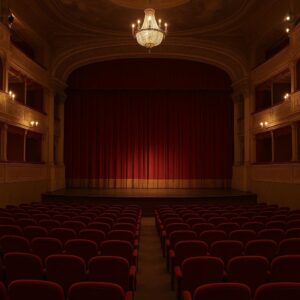
 If you think Venice is just gondolas and canals, get ready for a surprise: Teatro La Fenice is one of the city's most precious cultural jewels, a place where the history of Italian opera comes alive between gilded walls and red velvet. Built in 1792, the theater takes its name from the phoenix, the mythological bird that rises from its own ashes—a fitting symbol since it was destroyed by fire twice (in 1836 and 1996) and always rebuilt with meticulous fidelity. Today, entering its main hall is a breathtaking experience: the five tiers of boxes decorated in gold and the frescoed ceiling create a sumptuous atmosphere, while the acoustics are considered among the best in the world. It's not just a museum: high-level opera seasons, symphony concerts, and ballets are still held here, with international artists performing on the same stage where operas like Giuseppe Verdi's La Traviata debuted in 1853. The guided tour also lets you explore the ridotto, the Apollinee rooms, and the foyer, discovering anecdotes about composers who shaped music history. I recommend checking the performance schedule: attending an opera here is an unforgettable experience, but if you can't, the daytime visit is still worth the ticket to immerse yourself in two centuries of Venetian elegance. Remember that the theater is located in the San Marco district, just steps from Campo Sant'Angelo, and is easily reachable on foot from major points of interest. Bring your camera (without flash) to capture the golden details, but above all, prepare to feel part of history.
Ca' d'Oro: The Most Beautiful Palace on the Grand Canal
- Go to the page: Ca' d'Oro: Gothic Palace with the Franchetti Collection and Mantegna's Saint Sebastian
- Calle Ca' D'Oro, Venezia (VE)
- https://polomusealeveneto.beniculturali.it/musei/galleria-giorgio-franchetti-alla-ca-doro
- Open in Google Maps
- View on Google Images
- pm-ven.franchetti@beniculturali.it
- +39 041 522 2349
 If you're looking for a masterpiece of Venetian Gothic architecture, Ca' d'Oro is an unmissable stop. Overlooking the Grand Canal directly, this 15th-century palace is nicknamed 'the golden house' for the gilding that once adorned its polychrome marble facade, now only partially visible but still evocative. Designed by architects such as Giovanni Bon and his son Bartolomeo, the building impresses with the harmony of its trifora windows and Istrian stone tracery, a perfect example of the Venetian Flamboyant style.
Today, Ca' d'Oro houses the Giorgio Franchetti Gallery, an art collection donated to the Italian State in 1916. Inside, you'll find works by masters like Mantegna, Titian, and Van Dyck, along with Renaissance sculptures and antique furniture. Don't miss the inner courtyard with its marble well and floor mosaic, a quiet corner away from the crowds. Ascending to the first floor, the loggia offers a breathtaking view of the Grand Canal, perfect for taking photos without the usual crowds of the Rialto Bridge.
The palace has a fascinating history: it passed through various owners, including a period of abandonment, before being restored by Baron Franchetti. Today, its rooms also preserve archaeological finds and a collection of medieval ceramics. Admission is charged, but there are often discounts for students and seniors over 65, and access is convenient thanks to the 'Ca' d'Oro' vaporetto stop on line 1. Remember it's closed on Mondays, so plan your visit for other days to avoid finding a locked door.
Clock Tower
- Sottoportego e Calle del Cappello Nero, Venezia (VE)
- Open in Google Maps
- View on Google Images
 The Clock Tower of Venice, also known as the Torre dei Mori, is one of the most fascinating symbols of St. Mark's Square. Built between 1496 and 1499 based on a design by Mauro Codussi, this Renaissance tower is not just a clock but a true masterpiece of engineering and art. Its facade of white and blue marble stands out among the buildings in the square, immediately catching visitors' attention. The astronomical clock, created by Gian Paolo and Gian Carlo Ranieri, is a technological marvel of the Renaissance: it displays the hours, lunar phases, zodiac signs, and the position of the sun relative to Earth. Above the clock face, two bronze statues, the 'Moors', strike the hours on a large bell—a moment tourists love to photograph. Climbing the tower's steps (reservation required) leads to a panoramic terrace offering a breathtaking view of St. Mark's Square and the lagoon. Inside, visitors can admire the original clock mechanisms, still functioning after over 500 years. The tower has been restored several times, most recently in 2006, to preserve its beauty. The visit takes about 30-40 minutes and is a unique experience for those wanting to immerse themselves in Venetian history. Remember that access is limited to small groups, so it's advisable to book in advance, especially during peak season. Don't miss the detail of the Madonna and Child above the arch, added in 1755, which completes the elegance of this monument.
Contarini del Bovolo Palace
- Calle Contarini del Bovolo, Venezia (VE)
- Open in Google Maps
- View on Google Images
 If you think you've seen everything in Venice, prepare for a surprise: Contarini del Bovolo Palace is one of those hidden gems that few tourists know about, but is absolutely worth seeking out. Located in the San Marco district, just steps from Campo Manin, this 15th-century palace gets its name from the spectacular external spiral staircase (bovolo in Venetian) that rises 28 meters, wrapped in a series of Renaissance-style arches and columns. Built in the late 1400s for the Contarini family, the staircase wasn't just practical—it was a true symbol of prestige, designed to impress guests with its elegance and the panoramic view from the top. Today, after careful restoration completed in 2019, the palace is open to the public, allowing visitors to climb the 80 steps of the staircase to admire a unique panorama of Venice, away from the crowds of St. Mark's Square. Inside, the halls occasionally host temporary exhibitions, but the true star remains the architecture: the fusion of Gothic and Renaissance styles, with its rounded arches and Istrian stone decorations, creates a scenic effect reminiscent of a medieval tower. A practical tip: purchase tickets online to avoid queues, especially during peak season, and check the opening hours, which may vary. Perfect for a one-hour visit, Contarini del Bovolo Palace is an ideal stop for those wanting to discover an authentic corner of Venice, off the beaten path, and capture unforgettable photos from its terrace.