
Descend 5 meters below Bari Cathedral for a journey across eras: from the Timoteo mosaic to the remains of Via Traiana. The Succorpo is a museum that tells 2,000 years of history. Entrance €3, just steps from Bari Vecchia.
– Timoteo Mosaic: a 6th-century polychrome floor with fish and an octopus.
– Roman Remains: a paved road and inscriptions of a freedman.
– Early Christian Basilica: three naves and a 5th-century apse.
– Byzantine Church with frescoes and a tufa altar.
Events nearby
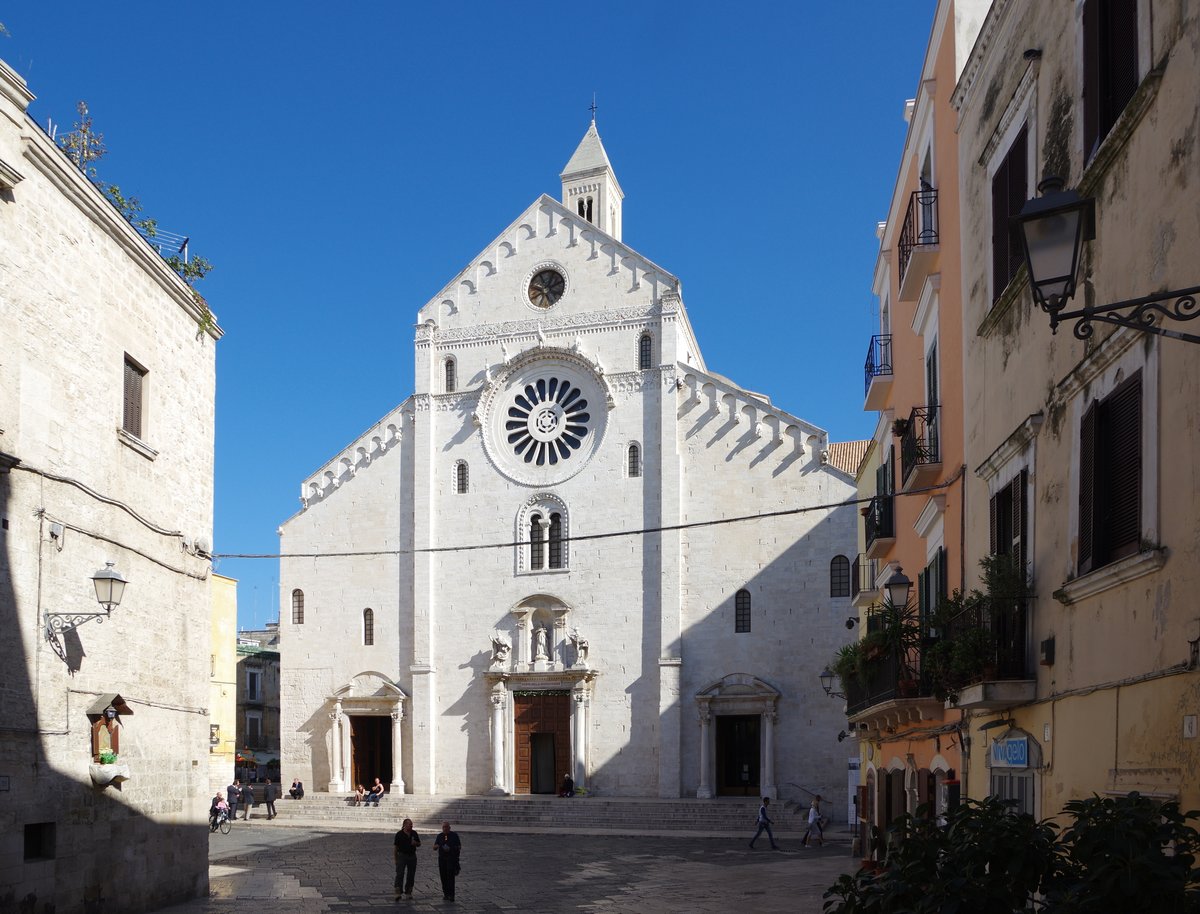
The Succorpo of Bari Cathedral is an underground archaeological area with 6th-century mosaics, Roman remains, and an early Christian basilica. Accessible for €3 in the historic center.
- Piazza dell’Odegitria, Bari (BA)
- Open in Google Maps
- View on Google Images Succorpo Cattedrale a Bari
Good to know
Evocative Introduction
Descending into the Crypt of Bari Cathedral is like taking a dive into the past. About 5 meters below the church floor, an underground world opens up, preserving 6th-century mosaics, Roman remains, and an early Christian basilica. The atmosphere is intimate, almost secret—few tourists, silence, and those colorful tiles telling ancient stories. A surprising place, often overlooked by those visiting Bari Vecchia. I discovered it almost by chance and was utterly captivated.
Historical Notes
The Succorpo is an archaeological area that tells of four historical periods: Roman, early Christian/early medieval, medieval, and modern. As early as the 5th century, an early Christian basilica stood here, later replaced by the first cathedral, destroyed in 1156 by William the Bad. From the 16th century onward, the premises were used as burial sites for noble families and later as an ossuary. Rediscovered in 1890 by engineer Pietro Fantasia, it was emptied and restored only between the 1960s and 1970s, and then converted into a museum and reopened to the public in 2009.
Timothy’s Mosaic and the Early Christian Basilica
The highlight is the Mosaic of Timothy, a 6th-century polychrome floor with a central scale pattern and a border of aquatic animals: octopuses, fish, and a Latin inscription recalling a vow by the devout Timothy. It symbolizes Bari’s seafaring vocation. The early Christian basilica, with three naves and an east-facing apse, is still clearly visible, with surviving wall and floor remains. Walking on these tiles, knowing they are nearly 1500 years old, is thrilling.
Historical Stratification: From Romans to the Present Day
Beyond the basilica, the Succorpo preserves Roman remains: a stretch of basalt-paved road (possibly the Via Traiana), an altar with rosettes, and a slab with an inscription mentioning a bisellium, suggesting the existence of an amphitheater in Bari. A little further on, a 9th-11th century Byzantine church with three apses and frescoes. And then tombs, glazed ceramics, majolica. Every corner is a piece of a millennia-long story. It is a true archaeological palimpsest.
Why Visit It
Three reasons: 1. Historical uniqueness: seeing four eras layered in a single space is rare. 2. Affordable price: only €3 for an experience that would cost much more elsewhere. 3. Off the beaten path: while everyone crowds at the Basilica of Saint Nicholas, here you find peace and the opportunity to observe calmly. Plus, the staff is friendly and often offers spontaneous explanations.
When to Go
I recommend going early in the morning, right when it opens at 9:30, when the light still slants through the hatches creating shadow plays on the mosaics. Or in the late afternoon, when the summer heat subsides and the crypt offers a cool retreat. In winter, it’s even more evocative, with total silence that makes you feel like the only discoverer of this underground treasure.
Nearby
Just a stone’s throw away is the Basilica of Saint Nicholas, a symbol of Bari and a must-see. But I also suggest getting lost in the alleys of Bari Vecchia, where ladies make orecchiette by hand on the street and the fish market has an authentic atmosphere. If you have time, the Norman-Swabian Castle is worth a visit: it’s a 10-minute walk away and offers a great view of the sea.
Itineraries nearby


💡 Did You Know…?
Every June 21, around 5 PM, the sun’s rays pass through the cathedral’s rose window and illuminate a mosaic on the floor. Discovered by chance by a sacristan, the event is celebrated with music and dance. An experience that ties light and history.