Basilica of San Vitale: 6th-century Byzantine mosaics and octagonal architecture

The Basilica of San Vitale in Ravenna is a masterpiece of Paleochristian art with perfectly preserved 6th-century Byzantine mosaics. The octagonal architecture creates a unique sense of space, while the mosaics depicting Emperor Justinian and Theodora shine with vibrant colors after fifteen centuries. The basilica is located in the center of Ravenna, near other UNESCO sites like the Mausoleum of Galla Placidia, making it ideal for a cultural itinerary.

  • 6th-century Byzantine mosaics with the faces of Justinian and Theodora
  • Unusual octagonal architecture for its time
  • Intense colors like blue and gold maintained vividly
  • Hidden details like the mosaic peacocks in the presbytery

Copertina itinerario Basilica of San Vitale: 6th-century Byzantine mosaics and octagonal architecture
The Basilica of San Vitale in Ravenna houses perfectly preserved 6th-century Byzantine mosaics, a UNESCO World Heritage site. Admire the faces of Justinian and Theodora, the octagonal architecture, and hidden details like the peacocks in the presbytery.

Good to know


Introduction

Entering the Basilica of San Vitale in Ravenna is like stepping into a Byzantine dream. Don’t expect a church like any other: here, the octagonal architecture immediately envelops you, but it’s the mosaics that leave you breathless. The light filtering through the windows slowly illuminates the walls, revealing that emerald green and gold that still seem freshly painted after fifteen centuries. I’ve seen many churches in Italy, but here there’s something different: it’s not just art, it’s a visual experience that hits you in the gut. The faces of Justinian and Theodora gaze down at you with a look that transcends the centuries, and for a moment you truly feel like you’re in Constantinople. The sensation is that of being inside a jewel, fragile and powerful at the same time.

Historical Overview

This basilica was born during a crucial period for Ravenna, when the city served as the capital of the Western Roman Empire. Construction began in 526 AD at the behest of Bishop Ecclesius, but the work stretched over twenty years, funded by the banker Julianus Argentarius—an intriguing figure, a patron ahead of his time. The consecration took place in 547, by which time Ravenna was already under Byzantine control. What stands out is how this building tells a story of power: the mosaics are not merely decoration but imperial propaganda. Justinian and Theodora, who never set foot in Ravenna, are depicted here as divine rulers, a reminder of who truly held command. The basilica has endured centuries of neglect and restoration, yet those mosaics have miraculously withstood earthquakes, wars, and humidity.

  • 526 AD: Construction begins at the behest of Bishop Ecclesius
  • 547 AD: Consecration of the completed basilica
  • 1996: Designated as a UNESCO World Heritage site as part of Ravenna’s early Christian monuments

The Play of Light on the Mosaics

What few mention is that visiting San Vitale without paying attention to the light is like attending a concert while deaf. The mosaics change completely depending on the time of day and the season. I was there on an October day, around eleven in the morning, and the sun entered obliquely through the drum windows, lighting up the face of Christ Pantocrator in the apse as if it were painted yesterday. But it’s the afternoon light that works magic: the golden tesserae of the barrel vault seem to vibrate, creating an almost hypnotic effect. I noticed that the most experienced guides know exactly where to stand to show how certain details—the pearls on Theodora’s mantle, the angels’ wings—come to life only with a specific angle of incidence. It’s not something from a guidebook; it’s an experience to be lived by watching calmly, perhaps sitting on one of the side benches and waiting for the sun to play with the walls.

The Details That Escape Notice

Everyone gazes at the grand imperial mosaics, but San Vitale conceals details that tell parallel stories. In the presbytery, at the foot of the altar, there are two small peacocks in mosaic – a symbol of immortality in early Christian tradition – so perfect they seem ready to flutter away. Then there are the capitals: they’re not all identical, some have acanthus leaves so finely carved you wonder how they managed without modern tools. One of my favorite corners is the crypt, often overlooked: here, remnants of later, medieval frescoes are preserved, showing how the basilica was lived in over the centuries after its construction. And if you look up toward the dome, you’ll notice that the coffered decoration isn’t symmetrical – small imperfections that make the place feel more human, less monumental. It’s these details that transform a visit from ‘seen’ to ‘experienced’.

Why Visit It

First: it’s one of the few places in the world where Byzantine art is so intact. In Istanbul, the mosaics of Hagia Sophia are often covered by scaffolding; here, you have them before your eyes in their entirety. Second: the human scale. Despite its majesty, San Vitale has dimensions that allow you to grasp everything without feeling overwhelmed—you can spend an hour studying just the panel of Theodora and her ladies. Third, perhaps the most practical reason: it’s the heart of a walking route that includes five other UNESCO sites. You buy a combined ticket and in half a day, you take a journey through time from the 5th to the 8th century, without taking any transport. And there’s a fourth reason, more personal: the acoustics. When there’s silence (rarely, but it happens), even a sigh resonates under the dome in a magical way.

When to Go

The best time? The first hours of the morning, right after opening, when organized groups haven’t arrived yet and you have the basilica almost to yourself. I happened to be there on a Wednesday in November, around 9:30 AM, and it was deserted—I could sit in the center and gaze at the mosaics without rushing, with only the sound of my footsteps echoing on the floor. Avoid summer weekends in July and August, when Ravenna is full of tourists heading to the beaches and the lines can be long. Another idea: check if there are evening choral or organ concerts—the acoustics are phenomenal, and the atmosphere becomes even more evocative with artificial light creating different shadows on the mosaics. In winter, the low afternoon light is special, even though it’s colder.

In the Surroundings

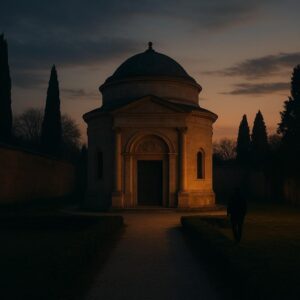
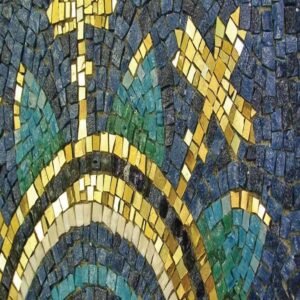
Just a stone’s throw from the basilica lies the Mausoleum of Galla Placidia, which appears as a modest brick structure but inside conceals the most famous starry sky in Paleochristian art—those golden stars against a midnight blue background will leave you breathless. It’s small, taking about ten minutes to visit, yet it perfectly complements the San Vitale experience. Then, if you wish to delve deeper into the context, the National Museum of Ravenna houses artifacts from local excavations, including capitals and mosaic fragments that help understand how these works were created. For a lighter break, the garden of the Basilica of Sant’Apollinare Nuovo (also just a few minutes’ walk away) offers unexpected tranquility in the historic center, with benches shaded by centuries-old trees.

💡 Did You Know…?

One of the most fascinating details concerns the mosaics in the apse: if you look closely, you’ll notice that Emperor Justinian is depicted with a halo, even though he was not a saint. This was not a mistake but a precise political message to emphasize his role as God’s representative on earth. Another curious detail: the mosaics use over 4 million glass and stone tesserae, many of which were made with materials imported from the East, demonstrating Ravenna’s commercial importance in antiquity. The light filtering through the windows creates different effects throughout the day, making the mosaics appear to change color.