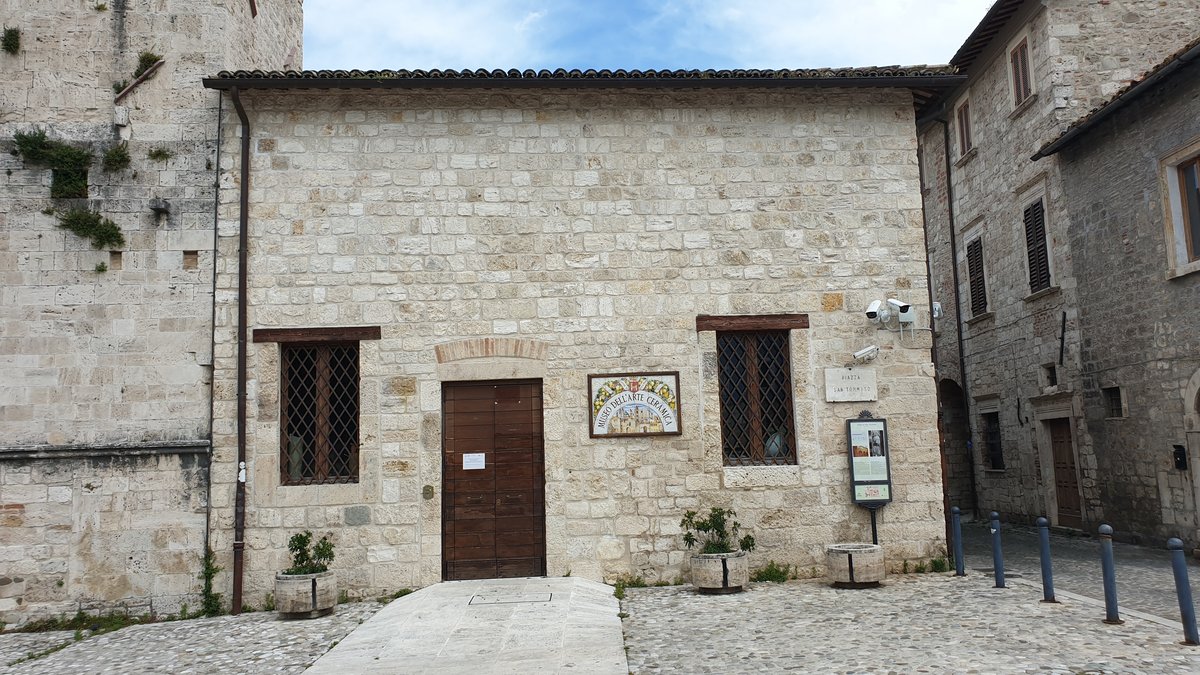
The Museum of Ceramic Art in Ascoli Piceno, housed in the Renaissance Palazzo dei Capitani del Popolo, preserves the living history of an art that made the city famous. It’s not just a collection, but a narrative that envelops you in an intimate atmosphere, showing how ceramics shaped the identity of the region through centuries of artisanal tradition. The visit is a plunge into tradition, perfect for understanding Ascoli’s artisanal soul and later recognizing decorative motifs in the streets of the historic center.
- Renaissance polychrome maiolica with the typical cobalt blue, sun yellow, and ramina green colors.
- Pieces from the Middle Ages to the 19th century, including display plates with noble coats of arms and everyday objects.
- Technical section with potters’ tools, samples of local clays, and explanations of the firing process.
- A collection that speaks of life, with pharmaceutical ceramics, tavern mugs, and sacred objects.
A Hidden Gem in the Heart of Ascoli
Have you ever walked into a museum and immediately felt at home? That’s exactly what happens at the Museum of Ceramic Art in Ascoli Piceno. It’s not just a collection of objects, but a living story that envelops you as soon as you cross the threshold. The atmosphere is intimate, almost familiar, as if every plate, every vase has a story to whisper to you. What strikes you immediately is how the natural light, filtering through the windows, caresses the glossy surfaces of the majolica, making them shine with those typical colors – cobalt blue, sun yellow, ramina green. It feels like walking through Renaissance workshops, with the scent of clay almost perceptible. It’s not a monumental, distant place; it’s a gathered treasure, speaking of hands, fires, and a tradition that has never died here. For me, it was like discovering the city’s artisanal soul, enclosed in a few elegant rooms.
From Medieval Workshops to the Museum
Ascoli’s ceramics didn’t emerge by chance. They have deep roots, stretching back to the Middle Ages, when workshops along the Tronto River produced tableware for daily life.
The true leap in quality occurred during the Renaissance, thanks to masters like Carlo and Pompeo Morganti, who introduced polychrome majolica, enriching it with intense blues and vegetal motifs. The museum itself has an interesting history: it was founded in the 1950s through the initiative of local enthusiasts, gathering pieces saved from private collections and excavations. It’s not a linear story, but one of revivals and periods of oblivion.
Ascoli’s ceramics have had their ups and downs, with a significant revival in the 19th century and ongoing valorization today. It’s beautiful to think that these artifacts, once used in kitchens, now tell centuries of skill and taste.
- Middle Ages: First local productions for everyday use.
- 15th-16th century: Renaissance apogee with the Morganti families and grotesque motifs.
- 19th century: Rediscovery and revival of the ceramic tradition.
- 1950: Foundation of the museum to collect and protect the heritage.
- Today: Center for the study and dissemination of Marche ceramic art.
The Secrets of Technique: More Than Simple Decoration
What fascinated me, beyond the beauty, was understanding the ‘how’. The museum doesn’t just display finished objects; it unveils the creative process. In a dedicated section, you’ll find the tools of ancient potters—wheels, ribs, brushes—and samples of the local clays used for the mixture. Then, the magic of firing: the difference between the first firing (the ‘biscuit’) and the second, after glazing, which sets the colors. Clear explanations make you appreciate the complexity behind a simple plate. I discovered, for example, that the typical Ascoli blue required precise control of the kiln temperature. It’s not just art; it’s applied science. Seeing the ‘mistakes’—slightly deformed pieces or with craquelé glaze—makes everything more human and interesting. It makes you think about the effort and skill needed to achieve those perfect shapes.
The Collection That Speaks of Daily Life
Walking through the display cases, you don’t just see works of art, but fragments of life. There are serving dishes decorated with noble coats of arms, but also simple tavern mugs. I was struck by the ‘doughnut-shaped’ egg coolers for boiled eggs, everyday objects transformed into small masterpieces. And then the ‘pyxes’ for sacred objects, which show the link between art and devotion. Each piece tells a story of a need, a ritual, a moment of the day. There’s a section dedicated to pharmaceutical ceramics, with albarelli and apothecary jars decorated with names of medicinal herbs – a blend of functionality and beauty. This is what makes the museum special: it helps you understand how art was integrated into everyday life, not reserved for a few. These aren’t dusty relics, but vibrant testimonies of how people lived, ate, and healed in Ascoli in past centuries.
Why It’s Worth a Visit
You might wonder: why spend time at a ceramics museum? I’ll give you three concrete reasons. First, it’s a unique way to understand the identity of Ascoli Piceno, a city that has expressed its creativity for centuries through terracotta and maiolica. Second, the visit is surprisingly engaging: it’s not a boring sequence of display cases, but a journey that blends history, technique, and life anecdotes, suitable even for non-experts. Third, it leaves you with a clear idea of what to look for later in the city center: after seeing the typical decorative motifs at the museum, you’ll recognize them on palace facades or the signs of still-active artisan workshops. It becomes a lens through which to view the city with different eyes.
The Right Time to Immerse Yourself
The museum is small and intimate, so my advice is to avoid peak tourist hours, especially on summer weekends. The best time? A quiet weekday afternoon, perhaps in autumn or spring. The light is softer, and the atmosphere in the rooms is more intimate, almost like a study. In winter, when it’s cold outside, stepping into this warm, quiet environment surrounded by the vibrant colors of ceramics is a true pleasure. In summer, it can be a pleasant break from the heat, but aim for the early morning hours. In any case, don’t rush: the beauty of this place lies in the slow pace at which it should be savored, observing the details of each piece.
Continuing the Journey into Craftsmanship
Leaving the museum doesn’t mean the story of ceramics ends. Just steps away, in the heart of the historic center, you can visit a still-active artisan workshop, where you can watch master craftsmen at work and, why not, purchase a unique piece. It’s an opportunity to experience living tradition firsthand. If you want to broaden your perspective, a short excursion takes you to Castorano, a nearby village historically known for its kilns and production of bricks and terracotta. The landscape itself, with its clay hills, tells the story of the raw material of this art. Two complementary experiences that perfectly round out your museum visit.