
🧭 What to Expect
Ideal for those who love history, art, and culture in a seaside city. Highlights: Archaeological Museum, Trajan's Arch, Mole Vanvitelliana. Compact itinerary: all stops are reachable on foot or with short trips. Suitable for city-breakers, families, and archaeology enthusiasts. Best time: spring and autumn for mild weather. Bonus: the Ancona Lighthouse offers unforgettable sunsets.
Events nearby

Ancona surprises you with its lively port soul and ancient capital of the Marca. The National Archaeological Museum of the Marche houses artifacts that tell millennia of history, from the Iron Age to the Romans. Strolling through the center, Trajan's Arch and the Roman Amphitheatre are unmissable stops for archaeology enthusiasts. The Mole Vanvitelliana, an iconic pentagon-shaped structure, hosts exhibitions and events. For a green break, Cardeto Park offers breathtaking sea views and remains of fortifications. Don't miss the Civic Art Gallery Francesco Podesti and the Omero Tactile Museum, which allows you to 'touch' art. In the evening, the Teatro delle Muse enlivens the cultural scene. This article guides you through the main attractions of Ancona, with practical tips for organizing your visit.
Overview
- National Archaeological Museum of the Marche: A Journey Through History
- Trajan's Arch: The Roman Symbol of the Port of Ancona
- The Roman Amphitheatre of Ancona
- Mole Vanvitelliana: a floating pentagon between history and culture
- Cardeto Park: A Green Lung Steeped in History and Poetry
- Francesco Podesti Civic Art Gallery: Masterpieces on Display
- The Teatro delle Muse: Ancona's Neoclassical Gem
- State Tactile Museum Omero: An Encyclopedia to Touch
- Ancona Lighthouse: History and Breathtaking Views
- The Citadel: Renaissance Fortress on Astagno Hill
- San Francesco alle Scale Church: History and Masterpieces
- Piazza del Plebiscito: History and Charm
- Santa Maria di Portonovo: a Romanesque gem perched on the sea
- Arco Clementino: Triumph Over the Port
- Palazzo degli Anziani: The Medieval Heart of Ancona
Itineraries nearby
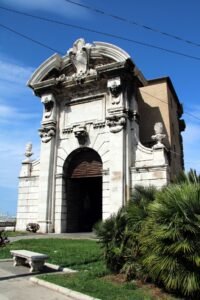

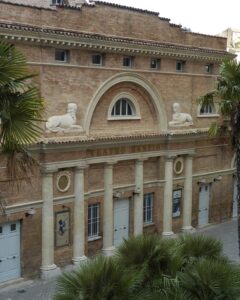
National Archaeological Museum of the Marche: A Journey Through History
- Go to the page: National Archaeological Museum of the Marches: Mother Goddess Statuette and Piceni Tombs
- Via Gabriele Ferretti 6, Ancona (AN)
- https://www.musei.marche.beniculturali.it/musei/?mid=200&nome=museo-archeologico-nazionale-delle-marche
- Open in Google Maps
- View on Google Images
- sar-mar.museoancona@beniculturali.it
- +39 071 202602
 If you arrive in Ancona and want to truly understand the history of the Marche region, you must step into the National Archaeological Museum. It is housed in Palazzo Ferretti, a 16th-century gem with frescoes by Pellegrino Tibaldi and a terrace overlooking the port – absolutely breathtaking. The itinerary is chronological: we start on the second floor with the Venus of Frasassi, a 28,000-year-old statuette carved from a stalactite. Incredible, right? Then you move up among the Piceni artifacts, with their lavish funerary offerings: jewelry, weapons, imported Attic vases. And don't forget the Senone Gauls, with their gold crowns from Montefortino. The Roman section has recently reopened, featuring the wine merchant's sarcophagus and a portrait of Augustus. The museum is open Tuesday to Sunday, with variable hours (check the website as they change often). Full ticket is 5 euros, free for under 18. My advice: come with time to spare, as there are three floors full of wonders. And if you have kids, ask for the 'Discover Your Museum' sheet at the ticket office – it turns the visit into a treasure hunt. In short, an unexpected dive into history.
Trajan's Arch: The Roman Symbol of the Port of Ancona
- Go to the page: Trajan's Arch in Ancona: Roman arch from 115 AD with harbor view
- Molo Nord, Ancona (AN)
- Open in Google Maps
- View on Google Images
 If you arrive in Ancona by ship or just strolling along the waterfront, Trajan's Arch greets you from the pier. It's a piece of ancient Rome that seems to defy time: built around 100 AD by the Senate to thank Emperor Trajan (the one of Trajan's Column in Rome) who expanded and made the port safer at his own expense. Designed by the famous architect Apollodorus of Damascus, it is entirely made of Proconnesian marble, with a single fornix flanked by two pairs of fluted Corinthian columns. Its proportions are more slender than other Roman arches, making it almost elegant, airy. On the keystone, one side features the bust of Tellus (Earth), the other Oceanus (Ocean): a reference to its role as a passage between land and sea. Originally it was decorated with fourteen bronze rostra (ship prows) and six gilded bronze statues: towards the sea, Neptune, Mercury, and Portunus; towards land, Trajan, his wife Plotina, and his sister Marciana. Unfortunately, in 839 the Saracens removed all the bronze, including the letters of the inscriptions. Today, traces of the fixings remain from its former splendor, but the arch is still imposing. In the Middle Ages, a tower leaned against it (later demolished in 1532), and in 1847 it was framed by the Gregorian Barrier (also gone). The bombings of World War II spared it, but the postwar expansion of the port moved it away from the sea, altering its visual relationship with the water. Fortunately, the restoration in 2000 removed the 19th-century gate and enhanced its position with lighting that highlights its profile at sunset. Today it is the symbol of Ancona, beloved by locals for its breathtaking sunsets. It is always free to visit: just reach the north pier at Lungomare Vanvitelli. If you're a history enthusiast, you'll also notice some cannonball marks from 1849 or 1860: small scars that tell the city's turbulent past.
The Roman Amphitheatre of Ancona
- Go to the page: Roman Amphitheater of Ancona: Intact Arena with Panoramic View over the Doric Port
- Vicolo delle Carceri, Ancona (AN)
- https://musei.beniculturali.it/musei?mid=4093&nome=anfiteatro-romano-di-ancona
- Open in Google Maps
- View on Google Images
- +39 071 5029811
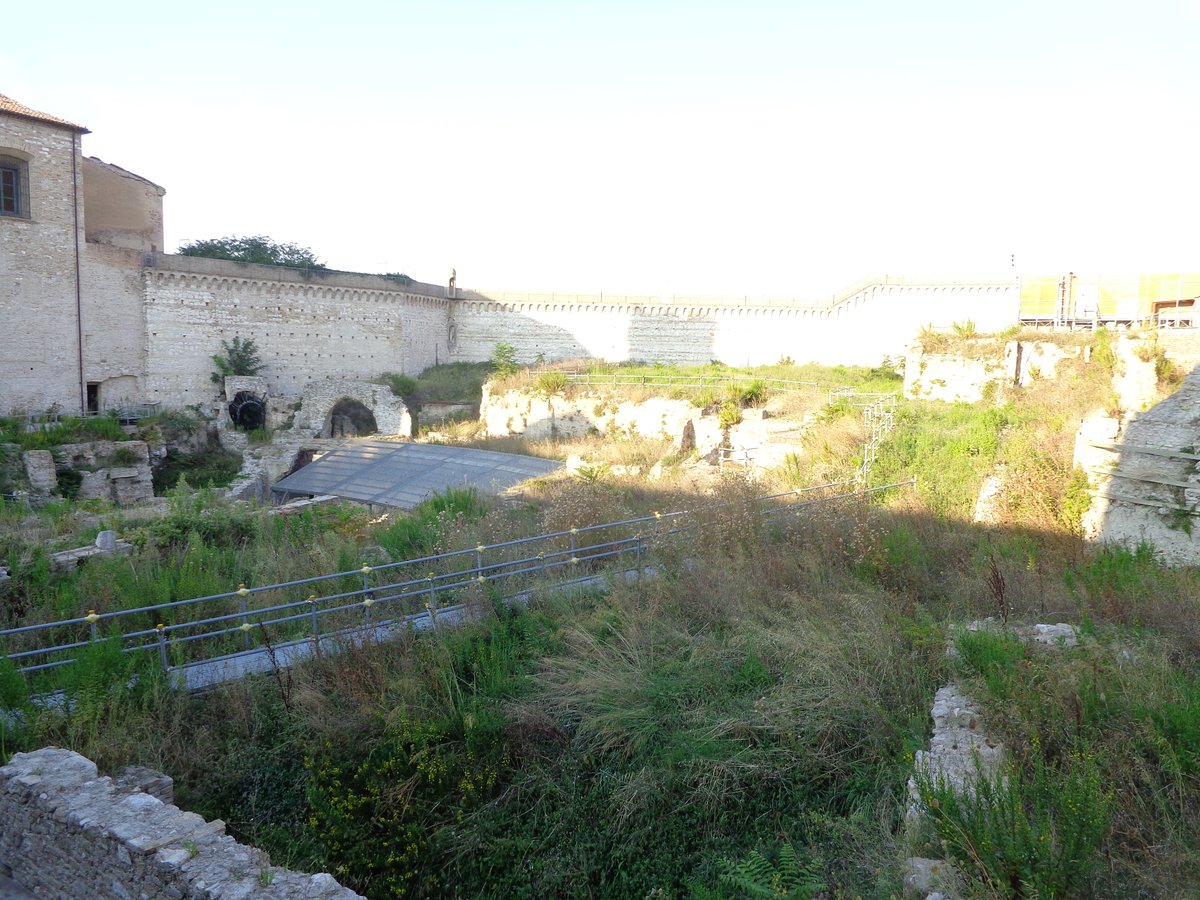 If you think Ancona is just a port and traffic, the Roman Amphitheatre will make you think again. Perched between Monte Guasco and Monte dei Cappuccini, about 50 meters above the sea, this archaeological gem is, after the Arch of Trajan, the most important Roman monument in the city. Built in the Augustan era (late 1st century BC) and expanded under Trajan, it could accommodate between 8,000 and 10,000 spectators on twenty tiers arranged in three orders. The ellipse measured 93 x 74 meters, with an arena of 52 x 35 meters. What strikes you is the skill with which the Romans exploited the natural slope of the terrain: the cavea rested on rock to the northeast, while to the southwest it rested on concrete vaults. From the highest tiers, covered by a hemp velarium, you could enjoy an incredible view: on one side the open sea, on the other the port. Today the area is divided into two sectors. The one towards Piazza del Senato is the most imposing: here you will see a long stretch of the perimeter wall in opus mixtum, the Porta Pompae (known as Arco Bonarelli) and remains of a thermal building with dolphin mosaics and a small pool. In the sector towards Via Birarelli the excavation is incomplete, but you can make out the cavea and the Porta Libitinensis, through which dead gladiators were taken out. After centuries of oblivion – rediscovered in 1810 by Abbot Leoni – the amphitheatre came back to life thanks to excavations in 1930 and 1972. Today, in addition to guided tours curated by the National Archaeological Museum of the Marche (combined ticket €8), it hosts the “Echi” festival in summer with theatre, music and opera. A place that combines history and atmosphere, perfect for those seeking a dive into the past with the sea breeze in their hair.
Mole Vanvitelliana: a floating pentagon between history and culture
- Corte, Ancona (AN)
- Open in Google Maps
- View on Google Images
 Impossible not to notice it: the Mole Vanvitelliana sits right there, in the middle of the port of Ancona, like an artificial pentagon-shaped island. Designed by Luigi Vanvitelli between 1733 and 1743, it was built as a lazaretto for the quarantine of goods and people – a sort of avant-garde health hub. Walking along the quay, its size immediately strikes you: 20,000 square meters that seem to revolve around the small Tempietto di San Rocco in the center of the courtyard. It's a brilliant detail: that little temple, open on all sides, allowed the quarantined to attend mass from their rooms without ever crossing paths. Pure contagion engineering. Today, the Mole is a different story: since 1993 it has been a vibrant cultural center. You'll find the Tactile Museum Omero, where you can touch the sculptures, and a packed calendar of exhibitions, festivals, and concerts. In summer, the courtyard turns into an outdoor cinema (Ancona Cinema). And if you get hungry, the Bistrot The Mole awaits with a literary café. Stroll along the walkways – the 'marciaronda' – and enjoy the view of the port and sea. Free admission, open Tuesday to Sunday, 8:00–19:15. Address: Banchina Nazario Sauro 28. A heartfelt tip: come at sunset, when the light caresses the Istrian stone of the portal and the pentagon seems to float suspended between past and future.
Cardeto Park: A Green Lung Steeped in History and Poetry
- Go to the page: Cardeto Park: Historical Fortresses and Adriatic Views in Ancona
- Ancona (AN)
- Open in Google Maps
- View on Google Images
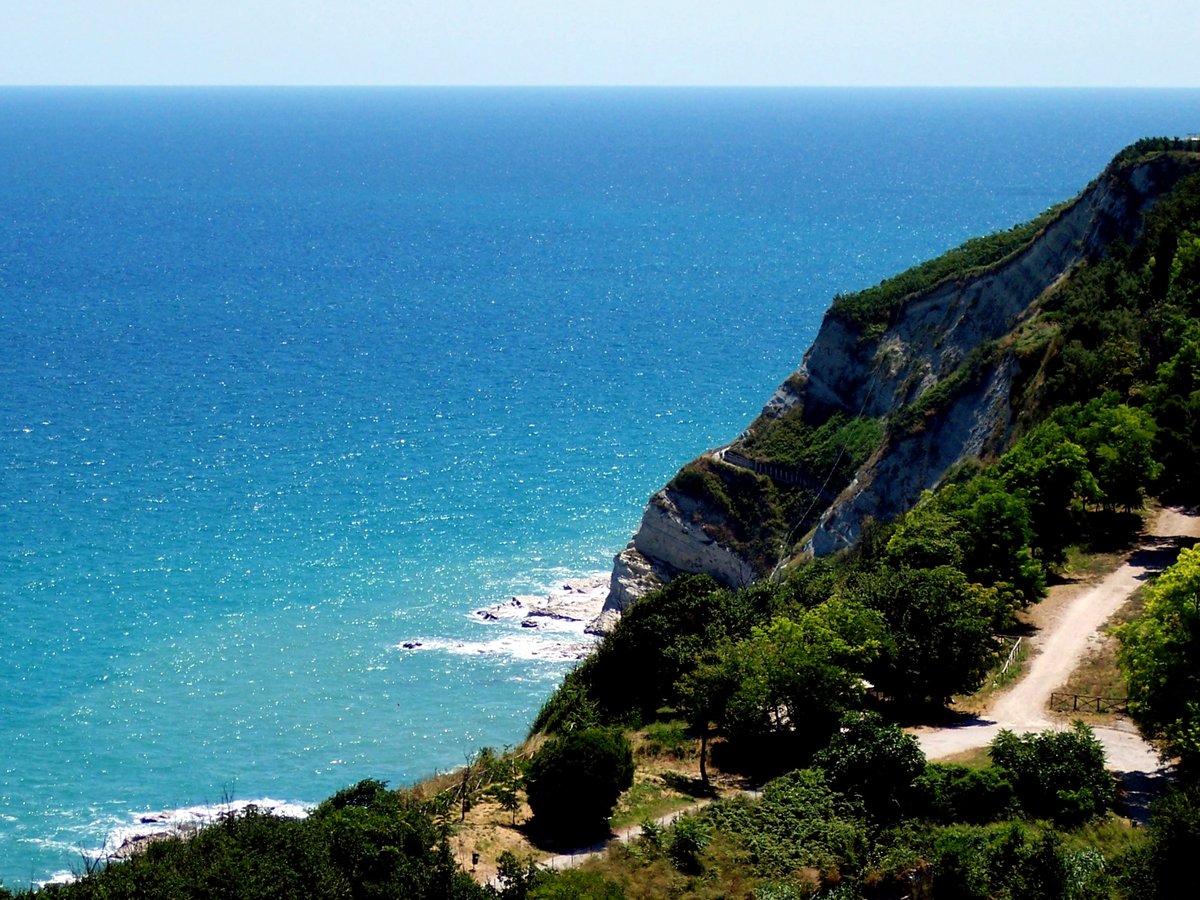 If there's one place that captures the soul of Ancona, it’s Cardeto Park “Franco Scataglini”. With its 35 hectares atop the Cappuccini and Cardeto hills, it’s the largest urban park in the city, offering breathtaking sea views. Inaugurated in 2005 and dedicated in 2010 to the Anconan poet Franco Scataglini, it blends nature, history, and culture in a single journey.
Strolling among broom, cypresses, and ancient walls, you'll come across traces of distant eras. The Campo degli Ebrei is one of the largest Jewish cemeteries in Europe, with 178 tombstones from the 15th to the 19th century, tilted towards Jerusalem. Nearby, the Old Lighthouse from the 19th century, commissioned by Pope Pius IX, dominates the cliff, while the 16th-century Bastione di San Paolo hides fascinating underground chambers. Napoleonic fortresses and the Polveriera Castelfidardo, now a venue for cultural events, are also present.
The park is also a place of poetry: Scataglini himself dedicated verses to the Jewish cemetery, and events like the Festival “La punta della lingua” take place here. For nature lovers, the spontaneous Mediterranean scrub offers unique vistas, with blooms of wallflowers and capers on sunny slopes. Perfect for a relaxing walk or a run, it’s open year-round: in summer until 8:30 PM, in winter until 5:30 PM. In short, an unexpected haven of peace just steps from the city center.
Francesco Podesti Civic Art Gallery: Masterpieces on Display
- Go to the page: Pinacoteca Podesti: Masterpieces by Titian, Lotto, and Crivelli
- Via Ciriaco Pizzecolli, Ancona (AN)
- Open in Google Maps
- View on Google Images
 The 'Francesco Podesti' Civic Art Gallery is a must-visit for art lovers. Located in Palazzo Bosdari, in the heart of Ancona, it houses a collection spanning from the 14th to the 20th century. Founded in 1884 thanks to the donation of the Ancona-born painter Francesco Podesti, the gallery is now one of the most important museums in the Marche region. The exhibition path takes you through absolute masterpieces: Titian's Pala Gozzi, the first signed and dated work by the Venetian master (1520), Carlo Crivelli's Madonna with Child, and Lorenzo Lotto's Sacra Conversazione (known as the Pala dell'Alabarda). Works by Guercino, Sebastiano del Piombo, Andrea Lilli, and many others are also on display. On the upper floor, the Modern Art Gallery exhibits works by Corrado Cagli, Enzo Cucchi, Valeriano Trubbiani, and other artists linked to the Premio Marche. After a long restoration (funded by the PNRR), the gallery reopened on December 6, 2025, with a renewed layout that enhances the 133 works on display. The new spaces are fully accessible, with tactile paths for the blind. The entrance is at Vicolo Foschi 4, next to the church of Santa Maria della Piazza. Practical info: Closed on Mondays; Tuesday–Friday 10:00–13:00 and 16:00–19:00; Saturday and Sunday 10:00–19:00. Full ticket €6, reduced €3. Guided tours by reservation. I recommend checking the hours on the official website.
The Teatro delle Muse: Ancona's Neoclassical Gem
- Piazza della Repubblica, Ancona (AN)
- Open in Google Maps
- View on Google Images
 If you're passing through Ancona, the Teatro delle Muse in Piazza della Repubblica is a must-see. It's the largest theater in the Marche region and the 13th in Italy by capacity, with 1,147 seats. Inaugurated in 1827 with two works by Rossini, its neoclassical facade features a five-arched portico in Istrian stone and a sculpted tympanum depicting the Muses and Apollo. Inside, after the 2002 restoration, original elements like the grand staircase and atrium coexist with modern spaces in wood and metal. The fire curtain, by Valeriano Trubbiani, is unique in Europe and portrays the triumph of Trajan. Today, it hosts opera, ballet, concerts, and drama, with a rich season from November to April. I found it elegant yet accessible, with excellent acoustics. If you'd like to catch a show, check the website or call 071 52525. Tickets start from €15. At the entrance, there's a bust of tenor Franco Corelli, a native of Ancona. A tip: arrive fifteen minutes early to soak in the foyer's atmosphere. And for dinner, try Osteria Teatro Strabacco just a few steps away.
State Tactile Museum Omero: An Encyclopedia to Touch
- Molo Sud, Ancona (AN)
- https://www.museoomero.it/main?pp=pagina_iniziale
- Open in Google Maps
- View on Google Images
- info@museoomero.it
- +39 071 2811935
 Ancona houses a one-of-a-kind jewel: the State Tactile Museum Omero, housed in the 18th-century halls of the Mole Vanvitelliana, a striking pentagonal architecture overlooking the water. Founded in 1993 by Aldo Grassini and Daniela Bottegoni, both visually impaired, the museum has become an international reference point for cultural accessibility, recognized as a state museum in 1999. Here, art is experienced through touch: the permanent collection is a three-dimensional encyclopedia featuring over 200 works, including reproductions of classical masterpieces such as the Venus de Milo and the Capitoline Wolf, architectural models of iconic monuments (Parthenon, Pantheon, St. Peter's) and original 20th-century sculptures by artists like De Chirico, Marini, Pomodoro and Pistoletto. Since 2021, a Design section has been added, featuring 32 iconic Italian design objects awarded the Compasso d'Oro, from the Bialetti Moka pot to the Piaggio Vespa. Admission to the museum is free (only the Design section costs 5 euros), and the space is barrier-free, with mobile platforms to explore higher areas, Braille descriptions, and audio guides. The Education Department organizes multisensory workshops for schools and families, including the famous blindfolded tours that transform the perception of art. Our advice? Set aside at least a couple of hours to touch, smell, and discover every detail. Open Tuesday to Saturday 3-6 PM, Sunday and holidays 10 AM-6 PM. An experience that changes the way you look... or rather, touch art.
Ancona Lighthouse: History and Breathtaking Views
- Via del Cardeto, Ancona (AN)
- Open in Google Maps
- View on Google Images
 The Ancona Lighthouse, symbol of the city, stands on Monte Cappuccini within Parco del Cardeto. Not one, but two lighthouses: the old lighthouse, built in 1860 by order of Pope Pius IX to a design by Henry Lepaute, and the new lighthouse, operational since 1972. The old one, 20 meters tall with a cylindrical brick tower and spiral staircase in Istrian stone, was decommissioned and closed to the public in 2003, despite a restoration in 2000 by Legambiente that made it accessible for a few years. In 2025, the State Property Agency published a tender to lease it to private individuals or third-sector entities. The new lighthouse, on the other hand, is still operational: a square reinforced concrete tower with gray and white stripes, 15 meters tall, located 200 meters southeast of the old one. From its base at 104 meters above sea level, it emits four flashes every 30 seconds with a range of 25 nautical miles (about 46 km). The view is spectacular: you can take in the Gulf of Ancona, the port, and the open sea. Near the old lighthouse stands the building of the Royal Navy's radiotelegraph station, where in 1904 Guglielmo Marconi conducted experiments on radio waves, demonstrating that short waves propagate better at night. A commemorative plaque marks the event. Strolling through Parco del Cardeto, the lighthouse is a beloved meeting point for locals of Ancona, perfect for a scenic break. It's a pity the old lighthouse remains inaccessible, but the new one is open to visitors and offers unique emotions.
The Citadel: Renaissance Fortress on Astagno Hill
- Via Circonvallazione, Ancona (AN)
- Open in Google Maps
- View on Google Images
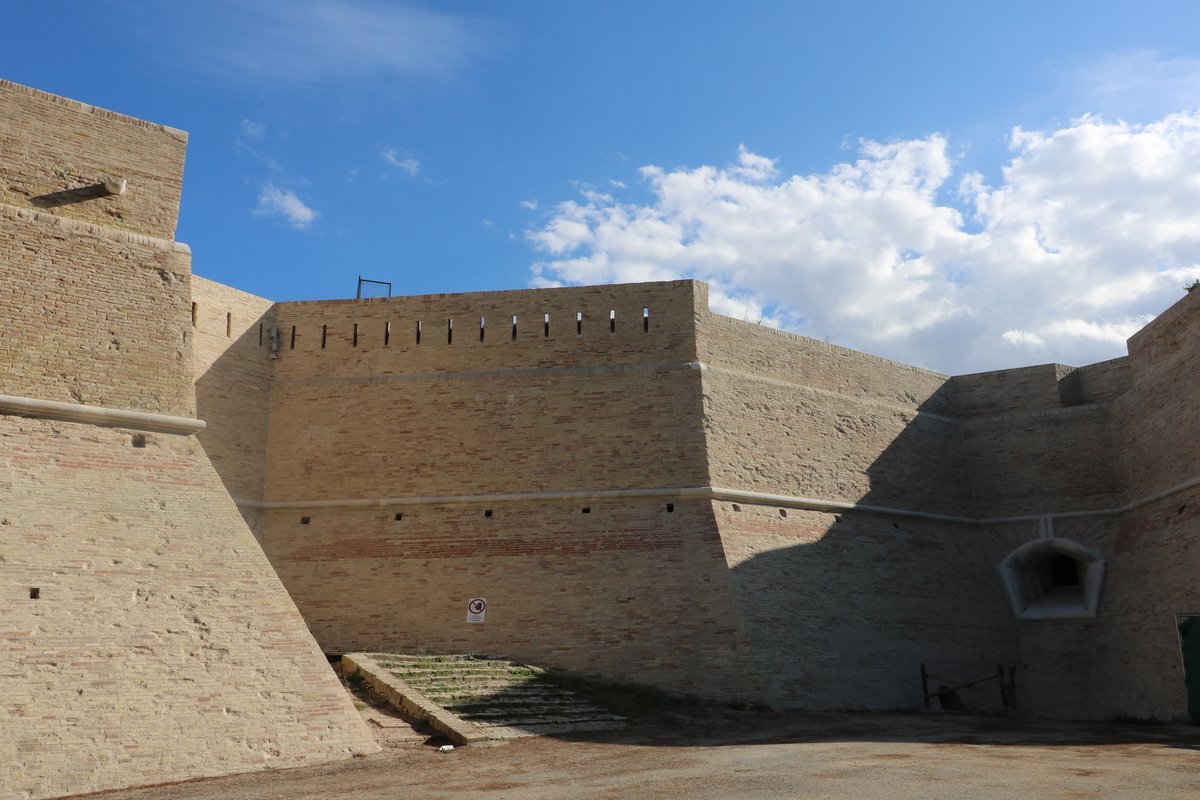 If you arrive in Ancona and want to truly breathe history, you must climb to the Citadel. This pentagonal fortress designed by Antonio da Sangallo the Younger in 1532 dominates the city from Astagno Hill. Covering 13,000 square meters, it is a masterpiece of the Italian-style bastion front, built to withstand cannon fire. But its story is also political: it was used by Pope Clement VII to subdue the free Republic of Ancona.
Today, after decades of neglect (and a 1972 earthquake that left it unusable), the fortress is being brought back to life. You can visit the Bastione della Guardia, restored and home to the Secretariat of the Adriatic Ionian Initiative. There, entering through the gate with its ancient drawbridge, you'll find yourself in the courtyard with a view of the port. Don't miss the Torraccia, the highest point, offering a 360-degree panorama: the cathedral on one side, the sea on the other.
Strolling along the walls, you'll notice capers and Mediterranean scrub that have grown spontaneously during the years of abandonment: a fascinating contrast between military architecture and nature. Inside, the old armory still holds racks for 25,000 rifles, a reminder of Ancona's role as a stronghold after Italian unification.
Please note: most of the structure is still under restoration (work funded with about 7 million euros), so access is limited. Check opening hours at the Secretariat or at the Parco della Cittadella, the adjacent green area that is fully accessible. Consider that Ancona will be the Italian Capital of Culture in 2028, and hopefully by then the fortress will be fully restored. A tip: visit at sunset, when the light sets the walls ablaze and the port turns gold.
San Francesco alle Scale Church: History and Masterpieces
- Scale San Francesco, Ancona (AN)
- Open in Google Maps
- View on Google Images
 Overlooking a small square, San Francesco alle Scale Church is one of the most fascinating places in Ancona. Founded on August 15, 1323, by the Franciscans and Bishop Nicola degli Ungari under the name of Santa Maria Maggiore, it owes its name to the grand staircase built in 1447 by master Domenico based on a design by Giorgio da Sebenico. The two flights of 30 steps each create a monumental entrance that alone is worth a stop. The Gothic-Venetian portal, made by Sebenico himself in 1454, is a triumph of sculptures: in the lunette stands out Saint Francis receiving the stigmata, flanked by Saint Anthony, Saint Louis, Saint Bernardine, and Saint Clare. Inside, the single nave interior in 18th-century style (resulting from renovations by Francesco Maria Ciaraffoni) hides absolute treasures: The Baptism of Christ by Pellegrino Tibaldi, Angels Transporting the Holy House of Loreto by Andrea Lilli, and behind the main altar, The Assumption by Lorenzo Lotto (1550), a masterpiece in which Mary, with open arms, rises to heaven among angels while the apostles look at the empty tomb with flower petals. The church has had a troubled past: closed during the Napoleonic era, used as a hospital, then as a museum and library, until its reconsecration in 1953. Today it is open for worship with free admission. Address: Scale S. Francesco 4, opening hours 8:00-12:00 and 15:00-19:00 (but better to check). A place that combines art, history, and spirituality, perfect for a memorable visit.
Piazza del Plebiscito: History and Charm
- Ancona (AN)
- Open in Google Maps
- View on Google Images
 Piazza del Plebiscito is the grand living room of Ancona, a place steeped in history and life. Opened in 1418 after the demolition of the Church of Sant'Egidio, it is the oldest square in the city. With its elongated rectangular shape and level differences, it resembles a natural stage: the monumental staircase, topped by the Church of San Domenico, and the statue of Clement XII in the center create a scenic effect that doesn't go unnoticed. The pope is remembered here for granting the free port and expanding the harbor thanks to Luigi Vanvitelli. The people of Ancona affectionately call it Piazza del Papa. Overlooking the square are the Palazzo del Governo (now the Prefecture) with its civic tower, and historic buildings like Palazzo Mengoni-Ferretti, which houses the library. Two fountains enrich the space: the Fontana dei Decapitati (Fountain of the Beheaded) from the 15th century, with a frieze of heads that according to tradition belong to young rebels killed in 1532, and the Emiciclica Fountain from 1817, work of Pietro Zara. The square has been the scene of events like the founding of Giovine Italia in 1831 and the plebiscite of 1860. Today it is a pedestrian area, a meeting point for aperitifs and nightlife, and hosts cultural events. Going down the stairs, you find the entrance to the Museo della Città, which tells the story of Ancona through artifacts and maps. In short, a must-see for anyone visiting the city.
Santa Maria di Portonovo: a Romanesque gem perched on the sea
- Strada Frazione Poggio, Ancona (AN)
- Open in Google Maps
- View on Google Images
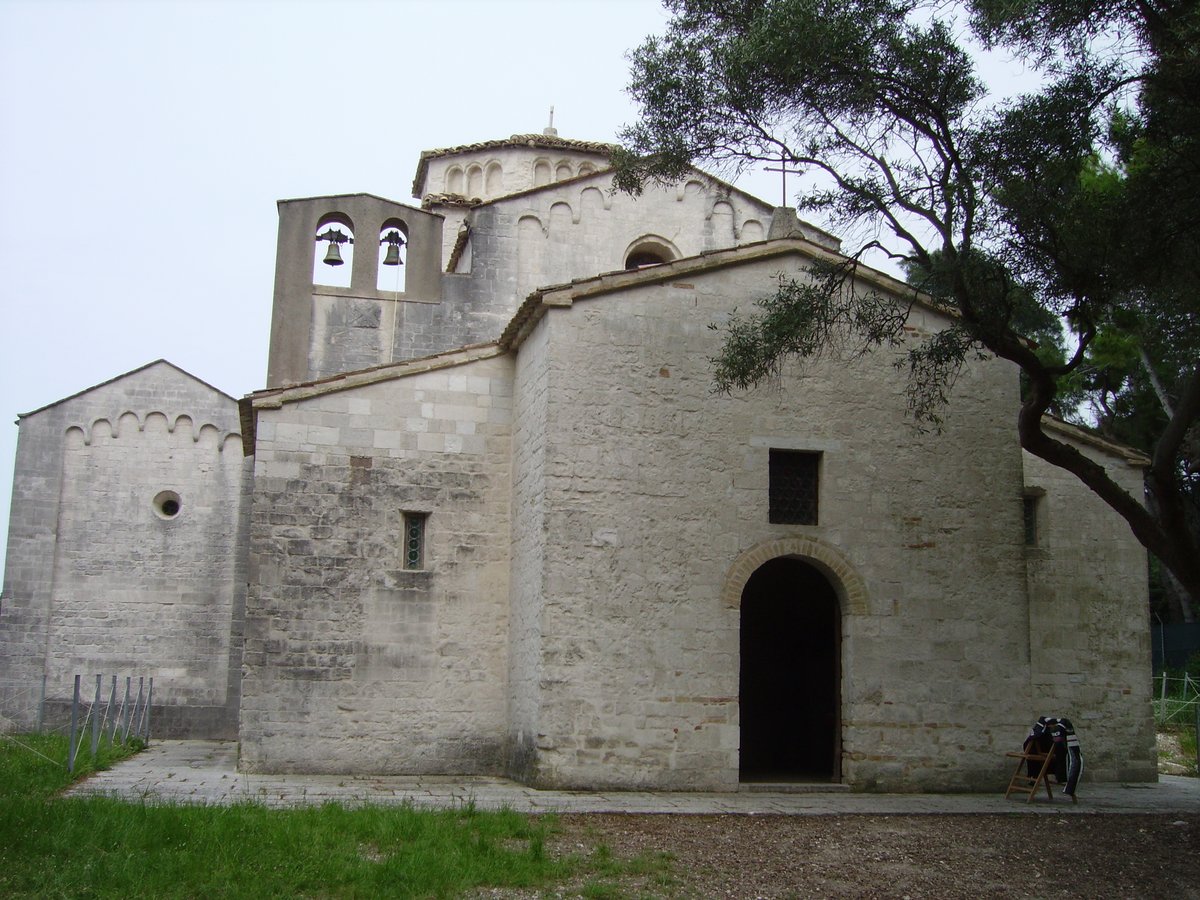 If there is a place that embodies the magic of the Conero Riviera, it is the Church of Santa Maria di Portonovo. Perched on a white limestone cliff, this 11th-century Benedictine abbey is a true masterpiece of Romanesque architecture. Its Greek cross plan with five naves and the octagonal dome of Byzantine inspiration make it unique. Think: for almost 700 years it was the only building in the bay, after the monastery was destroyed by a Turkish raid in 1518. Inside, the atmosphere is intimate and meditative. Light filters through the double-lancet and single-lancet windows, creating plays of shadows on the bare walls. The original floor in terracotta and yellow-ochre stone tells centuries of history. Don't miss the modern icon of Santa Maria Stella del Mare, donated by the Fumasoni Biondi family, which also struck director Andrei Tarkovsky. For history enthusiasts, a plaque with verses from Dante (Paradiso, XXI) commemorates the stay of Saint Peter Damian. The church is managed by Italia Nostra and can be visited free of charge, but opening hours vary by season; contact ancona@italianostra.org for info. In summer, a shuttle brings you here; in winter, a 4 km walk rewards you with breathtaking views. Come at sunset: the sea becomes a palette of colors and you'll feel suspended between sky and earth.
Arco Clementino: Triumph Over the Port
- Molo Nord, Ancona (AN)
- Open in Google Maps
- View on Google Images
 If you arrive in Ancona by sea, the first thing you see is the Arco Clementino. That’s no accident: it was built precisely to make a good impression on foreign merchants as soon as they disembarked. Designed by Luigi Vanvitelli in 1738, it’s a triumphal arch with a single opening, clad in Istrian stone on the sea side and exposed brick on the city side. Yes, it has two faces—one elegant, the other more humble—because at the time the main facade faced outward. The arch marks the point where the new pier joins the Roman one from Trajan’s era, just steps from the Arch of Trajan. Vanvitelli played with perspectives: if you look through the arch, you see the Roman arch and, in the background, the Cathedral of San Ciriaco. It’s like a telescope. Intended to welcome visitors, the arch was supposed to have a statue of Pope Clement XII on top, but it was too heavy—today you’ll find it in Piazza del Plebiscito. The work remained unfinished at Vanvitelli’s death and was completed by Filippo Marchionni under Benedict XIV. It’s always open, free. Stop for a few minutes: from there, your gaze sweeps from the sea to the hill—a perfect selfie of Ancona’s history.
Palazzo degli Anziani: The Medieval Heart of Ancona
- Piazza Benvenuto Stracca, Ancona (AN)
- Open in Google Maps
- View on Google Images
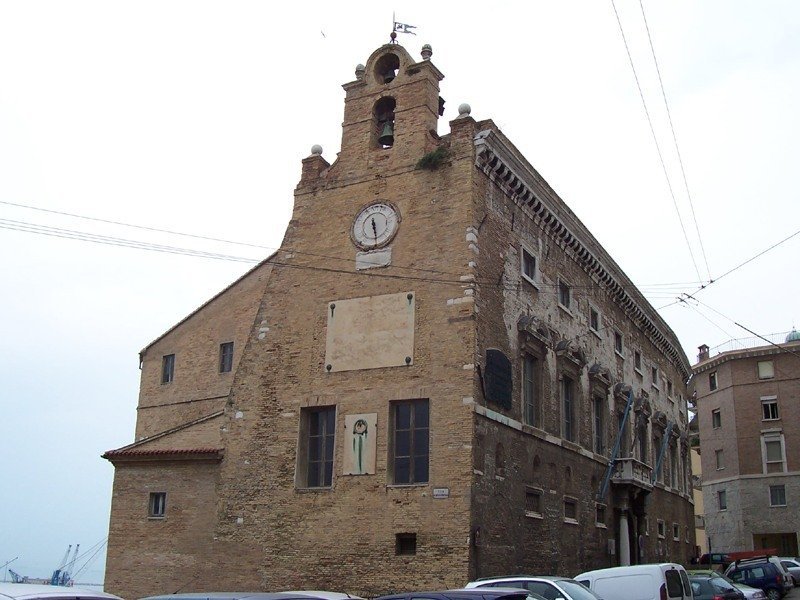 If there's one building that encapsulates the history of Ancona, it's Palazzo degli Anziani. Once the seat of the city council from the Middle Ages until 1947, today it's once again hosting municipal meetings. And what a story, folks: its foundations supposedly date back to 425 AD, when Empress Galla Placidia wanted a senatorial residence. Destroyed by the Saracens in 839, it was rebuilt in 1270 by Margaritone d'Arezzo in Gothic style, using that beautiful white Conero stone you still see on the façade facing the port. The unique feature? The palace has two completely different fronts: the lower one, facing the sea, rises seven stories with pointed arches and Romanesque mullioned windows; the upper one, on Piazza Stracca, is lower and was remodeled in the 16th century by Pellegrino Tibaldi in Mannerist style, with broken pediment windows and walled-up loggias. Strolling around, you can't miss the six-hour clock and the medieval bas-reliefs on the façade, such as Original Sin and Lamech shooting Cain (the others have been moved to the art gallery for safekeeping). Go inside if you can: there's a 17th-century staircase and the Hall of Honor. A practical tip: use the free public elevator that from the port level takes you directly to Piazza Stracca (it's been operating since 2014). Beneath the palace, there's an archaeological area with a 12th-century Byzantine sacellum. Free entry, but for opening hours it's best to call (071 2222001).